
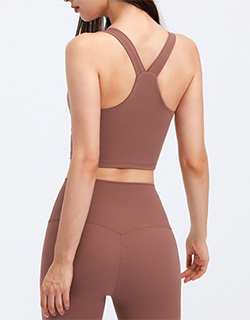
OEM Tank Tops Manufacturer: From Sample Development to Bulk Production
Launching a successful tank top collection requires more than choosing a style and placing an order. Brands need the right fabric, fit, logo method, sample approval process, and quality control system before moving into bulk production.
This guide explains how an OEM tank tops manufacturer supports apparel brands from sample development to mass production. It is especially useful for fitness brands, sportswear labels, wholesalers, and private label activewear startups.
For brands that need complete product development support, working with a professional custom activewear manufacturer can make the process more efficient.
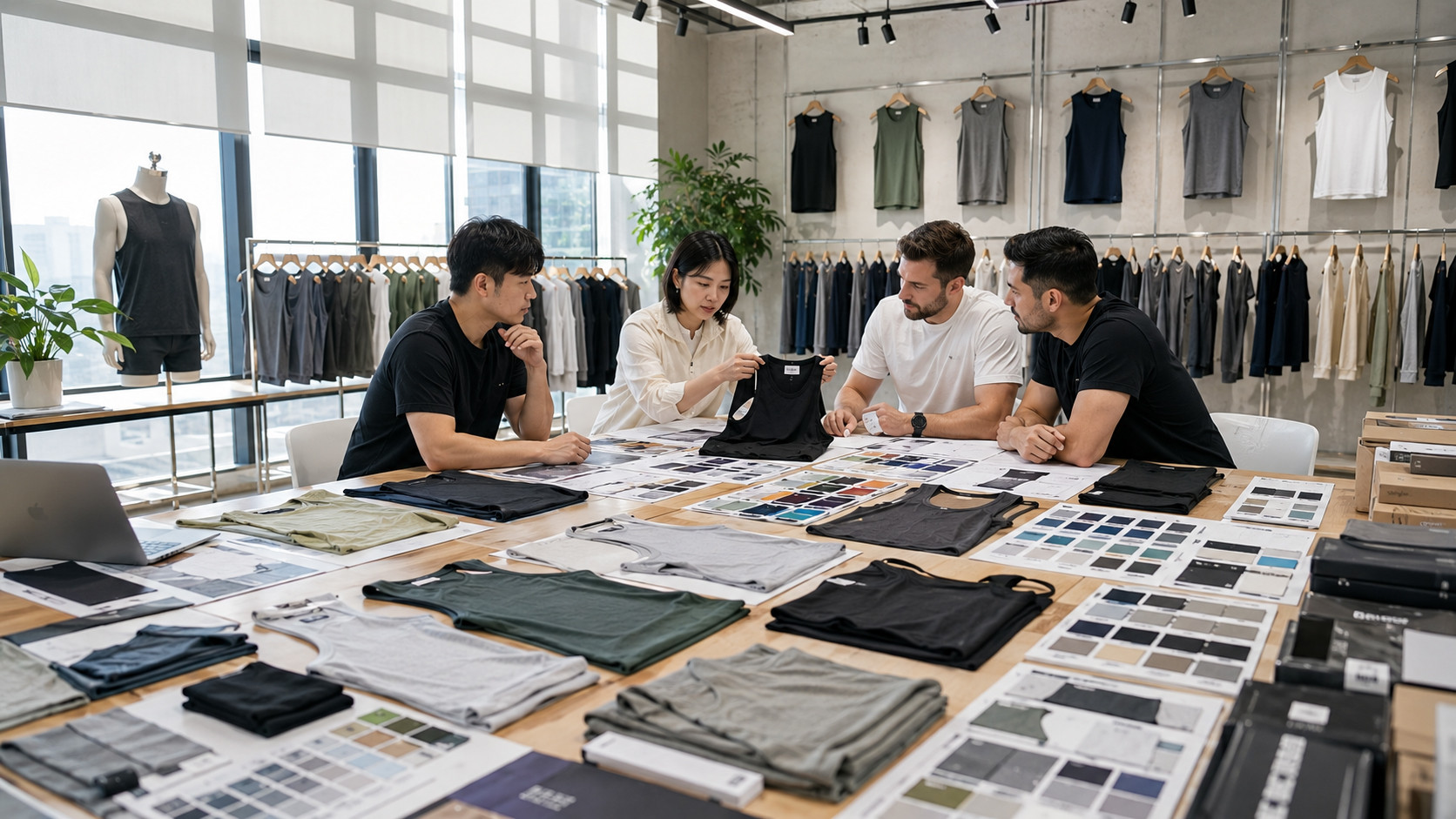
What Does an OEM Tank Tops Manufacturer Do?
An OEM tank tops manufacturer produces garments according to your brand’s design, fit, fabric, color, logo, and packaging requirements. Unlike wholesale suppliers, OEM manufacturers create products based on your specifications.
OEM Tank Top Manufacturing Services
- Custom pattern development
- Fabric sourcing and testing
- Sample making and revisions
- Logo printing and branding
- Bulk cutting and sewing
- Quality control and packing
Brands that want to build their own label can also combine OEM production with private label services for woven labels, neck labels, hang tags, and packaging.
Why Are Tank Tops Popular for Activewear Brands?
Tank tops are lightweight, versatile, and suitable for many categories, including gym wear, yoga wear, running apparel, tennis training, casual fitness clothing, and men’s sportswear.
| Market Segment | Common Tank Top Style | Main Requirement |
|---|---|---|
| Fitness Brands | Gym tanks, stringers | Breathability and mobility |
| Yoga Brands | Racerback tanks, fitted tanks | Stretch and soft hand feel |
| Running Brands | Performance tanks | Moisture-wicking and quick drying |
| Lifestyle Brands | Cotton tanks, cropped tanks | Comfort and daily wearability |
How Does Sample Development Start?
Sample development usually starts with a product brief or tech pack. The more detailed your information is, the easier it is for the manufacturer to create an accurate first sample.
Information Brands Should Prepare
- Reference images or design sketches
- Fabric type and GSM requirement
- Size chart and fit preference
- Color references or Pantone numbers
- Logo placement and decoration method
- Label and packaging requirements
If your brand does not have a complete tech pack, an experienced apparel manufacturing team can help turn your concept into production-ready specifications.
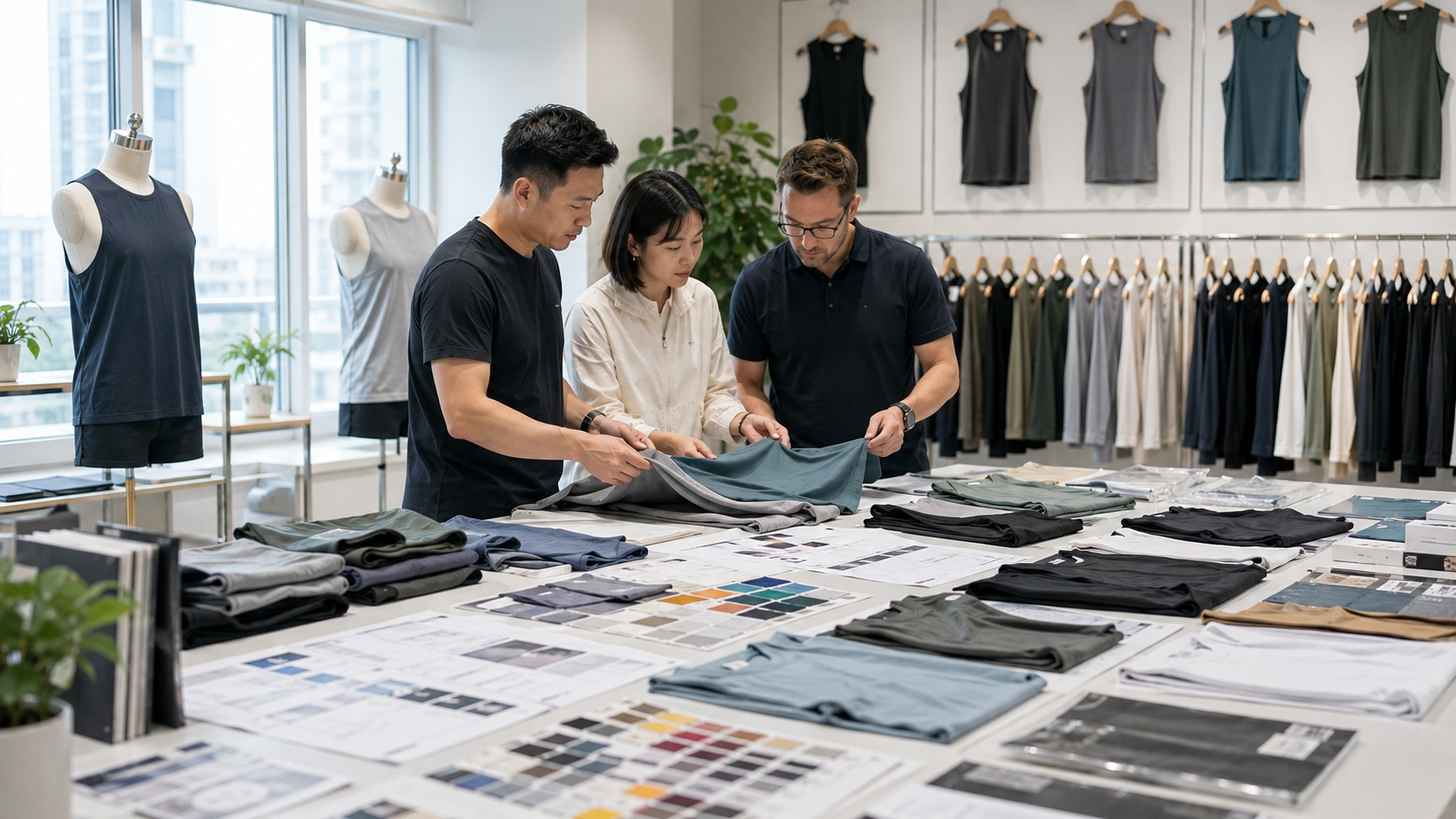
How Is Fabric Selected for OEM Tank Tops?
Fabric directly affects comfort, performance, price, and customer satisfaction. A professional manufacturer should recommend fabric based on your target market and intended use.
Common Fabric Options
| Fabric Type | Advantages | Suitable Products |
|---|---|---|
| Cotton | Soft, breathable, natural feel | Casual tank tops |
| Cotton Spandex | Comfort with added stretch | Fitted tanks |
| Polyester | Lightweight and quick drying | Training tanks |
| Nylon Spandex | Smooth, stretchy, premium feel | High-end activewear tanks |
| Recycled Polyester | Eco-conscious performance option | Sustainable sportswear |
Brands can compare materials through a professional fabric guide before confirming bulk production.
For textile performance and testing standards, manufacturers may refer to organizations such as ASTM International.
Manufacturing Tip: Do not approve bulk production only by checking fabric appearance. Shrinkage, colorfastness, stretch recovery, and pilling resistance should be reviewed before cutting bulk fabric.
How Are Patterns and Fit Developed?
Pattern making turns a design idea into a wearable garment. For tank tops, small changes in neckline, armhole depth, shoulder width, and body length can create a completely different fit.
Common Tank Top Fit Types
- Regular fit tank tops
- Oversized gym tanks
- Racerback tank tops
- Cropped tank tops
- Bodybuilding stringers
- Compression-style performance tanks
For broader sportswear collections, brands often develop tank tops together with custom leggings, custom sports bras, and custom gym wear.
What Happens During Sample Making?
Once fabric and pattern details are confirmed, the factory makes the first sample. This sample is used to check fit, construction, fabric performance, logo placement, and overall product quality.
Sample Review Checklist
- Is the fit correct for the target customer?
- Does the fabric feel suitable for the product price point?
- Are the armholes and neckline comfortable?
- Is the logo position accurate?
- Are the stitches clean and strong?
- Does the garment match the approved measurement chart?
Sample revisions are normal. Most brands need one or two adjustments before final approval.
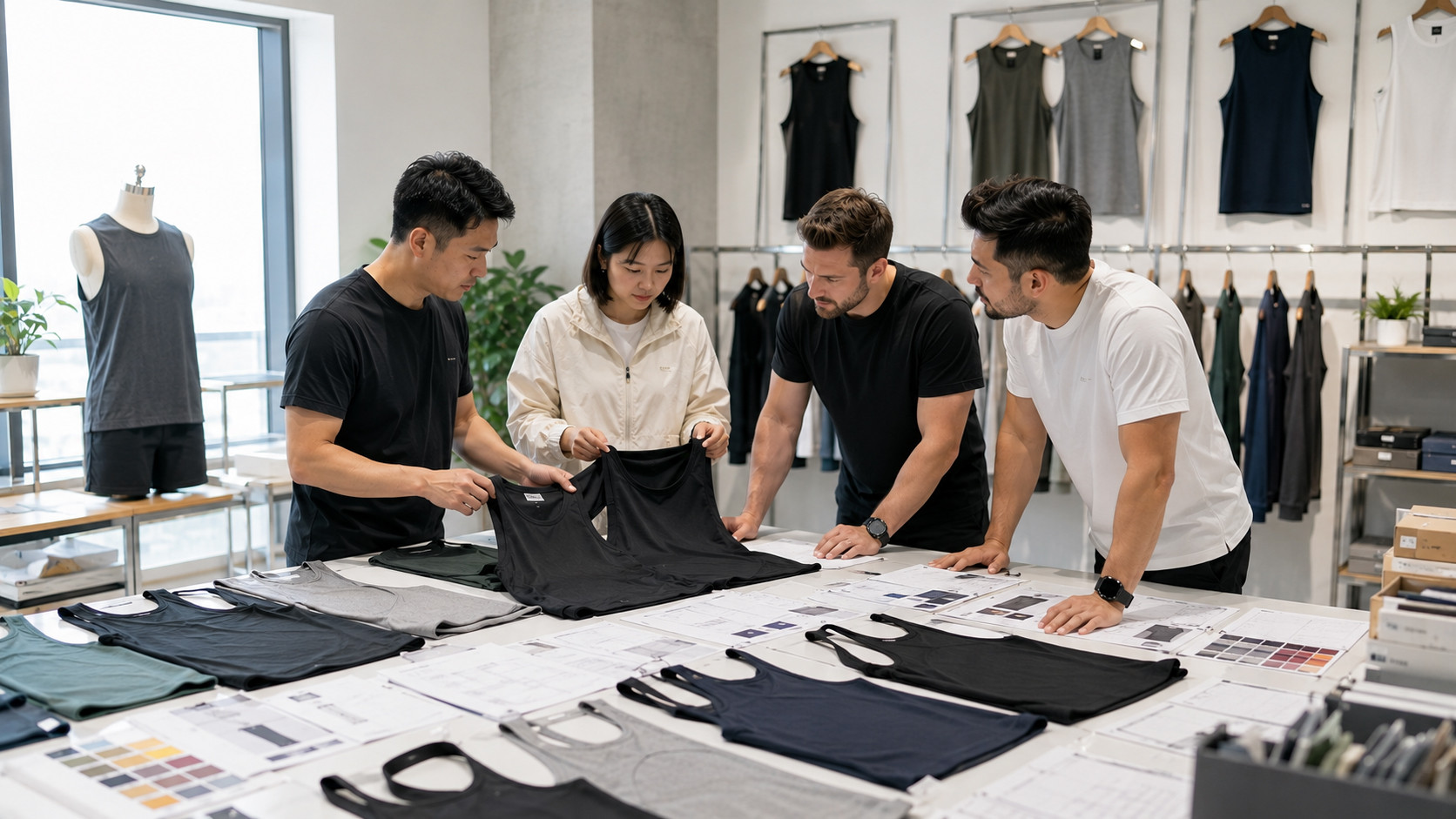
How Are Logos and Private Label Branding Added?
Branding helps turn a basic tank top into a recognizable retail product. The right logo technique depends on fabric type, stretch level, washing requirements, and brand positioning.
Common Logo Methods
- Screen printing
- Heat transfer printing
- Silicone logo transfer
- Reflective printing
- Embroidery
- Woven labels
Private label development may also include neck labels, care labels, hang tags, branded polybags, tissue paper, and packaging boxes. These details help improve retail presentation and brand value.
What Happens Before Bulk Production Starts?
Before mass production begins, the manufacturer should hold a pre-production review. This step confirms that the approved sample, fabric, color, logo, size chart, and packaging details are all ready for bulk production.
Pre-Production Confirmation Items
- Approved sample
- Approved bulk fabric
- Approved color standard
- Approved logo technique
- Approved size chart
- Approved packaging method
A stable supply chain system helps manufacturers control fabric sourcing, production scheduling, trims, packaging, and delivery timelines.
What Is the Typical MOQ and Lead Time?
MOQ and lead time depend on fabric availability, customization level, order quantity, and branding complexity. For OEM tank tops, 100 pieces per color or style is often a practical starting point for custom production.
| Stage | Typical Timeline | Notes |
|---|---|---|
| Sample Development | 7–10 Days | Depends on fabric and design complexity |
| Sample Revision | 5–7 Days | Needed when fit or details require adjustment |
| Bulk Production | 25–35 Days | After all materials and samples are approved |
| MOQ | 100 Pieces | Usually per color or per style |
How Is Quality Controlled During Bulk Production?
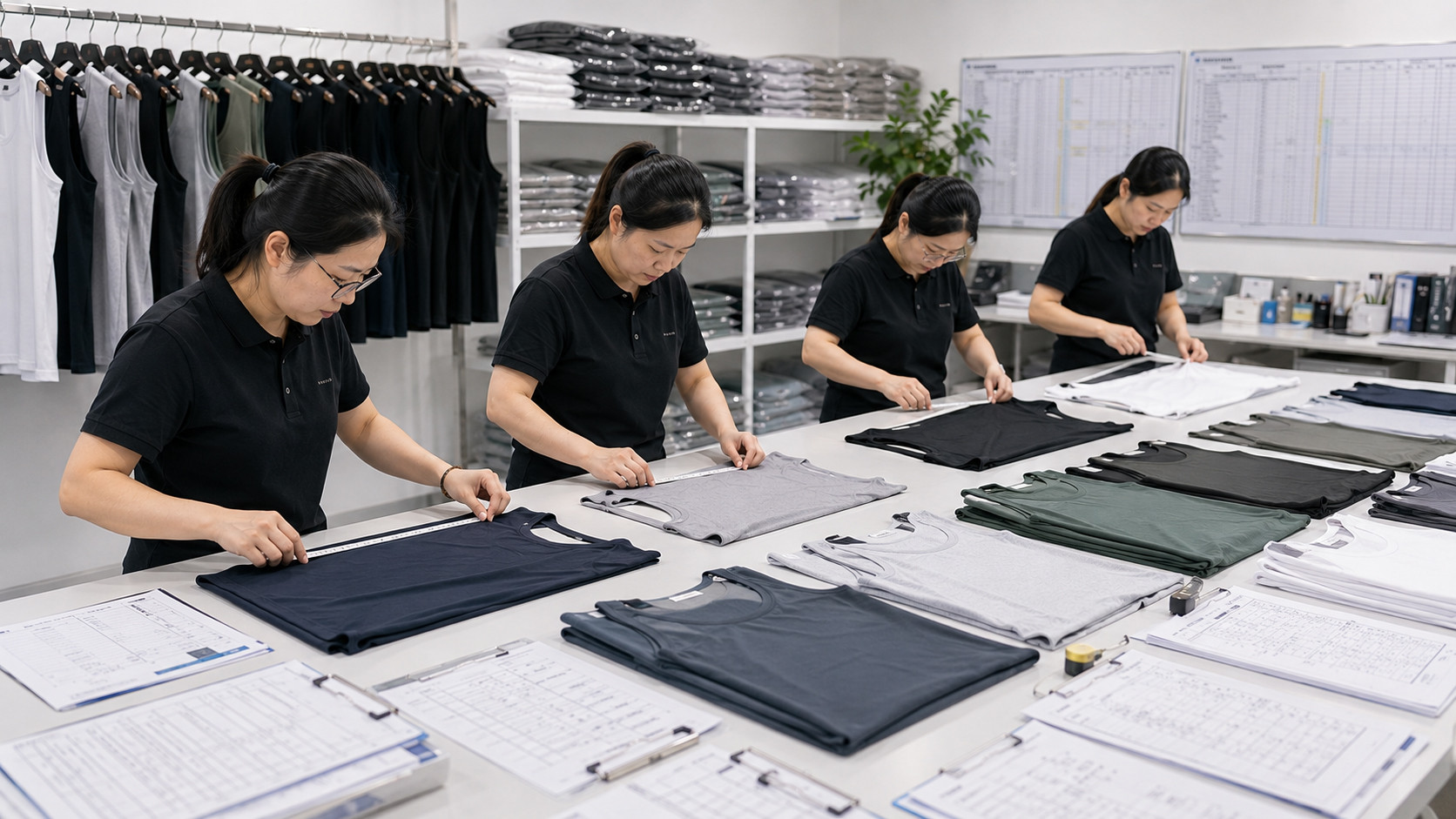
Quality control should happen throughout production, not only after all garments are finished. This helps identify problems early and reduce unnecessary rework.
In-Line Quality Control
During sewing, inspectors check stitching, seam strength, fabric defects, measurement consistency, and logo placement. This process helps keep bulk production close to the approved sample.
Final Inspection
Final quality inspection checks measurements, appearance, printing, packing, quantity, and carton details before shipment. Brands can learn more from a professional quality control system.
For general quality management principles, many companies refer to ISO 9001 quality management standards.
How Can Brands Reduce Production Risk?
Production risk usually comes from unclear specifications, unstable fabrics, poor communication, weak sampling, and insufficient quality control. Choosing a manufacturer with strong development capabilities can reduce these problems.
What to Check Before Choosing a Manufacturer
- Does the factory have activewear manufacturing experience?
- Can they support fabric sourcing and sample development?
- Do they understand stretch fabrics and performance garments?
- Can they provide private label branding options?
- Do they have in-house QC procedures?
- Can they support both small test orders and repeat bulk orders?
If your brand plans to expand into more categories, you can also work with manufacturers that support custom yoga wear, women’s sportswear, men’s sportswear, and custom T-shirts.
Why Work With an OEM Tank Tops Manufacturer in China?
China has a mature apparel manufacturing ecosystem with strong fabric sourcing, skilled sewing workers, experienced sample rooms, and scalable production capacity. This makes it easier for brands to develop custom tank tops and expand into full activewear collections.
For growing brands, one reliable supplier can support tank tops, leggings, sports bras, hoodies, track pants, tennis wear, maternity activewear, and other product lines through one coordinated production system.
Conclusion
A professional OEM tank tops manufacturer does more than produce garments. The right partner supports fabric selection, pattern development, sample revisions, logo application, bulk production, quality control, and final delivery.
For activewear brands, understanding the complete process from sample development to bulk production helps reduce risk, improve product consistency, and build better collections.
Start Your OEM Tank Tops Project
If you are developing custom gym tanks, yoga tanks, running tanks, or private label activewear tops, Ohsurewear can support your project from fabric selection to bulk production.
View Custom Tank Tops Manufacturing```