
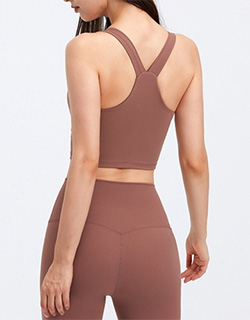
Custom Sports Bra Development: What to Confirm Before Sampling
SPORTS BRA DEVELOPMENT GUIDE
A practical guide for activewear brands preparing their first sample or developing a new private-label sports bra.
What should you confirm before sampling a custom sports bra?
Before sampling a custom sports bra, confirm the intended activity, support target, customer size range, fabric specification, cup construction, underband, straps, measurements, branding, and budget. Put these decisions into a version-controlled tech pack with a bill of materials and sample acceptance criteria. This gives the manufacturer a clear basis for development and helps reduce avoidable revisions.
What Is Custom Sports Bra Development?
Custom sports bra development turns a product concept into a repeatable garment specification. It covers pattern making, fabric and trim selection, sample construction, fit assessment, wear testing, and size grading before bulk production.
Adding a logo to an existing style usually involves fewer development decisions than creating a new cup shape, strap layout, or support structure. Define the scope early so the quotation reflects the work your collection needs.
1. Define the Intended Activity and Support Target
Start with the wearer and the activity. A studio bra for yoga may have different coverage, adjustability, and movement-control priorities from a bra developed for running. Specify the intended bust and underbust range as well as the exercise type.
| Intended use | Design priorities | Sample review |
|---|---|---|
| Yoga and studio | Comfort, coverage during bending, freedom of movement | Neckline gaping, underband movement, strap comfort |
| Gym and strength training | Stable fit through lifting and upper-body movement | Armhole rubbing, strap stability, coverage during reaching |
| Running and jumping | Movement control, secure underband, suitable cup structure | Activity-specific wear trials across the intended size range |
| Athleisure and everyday wear | Comfort, appearance under clothing, ease of dressing | Extended-wear comfort, pad visibility, fit after washing |
Treat support as a development target. A wide strap or a high elastane percentage alone does not establish a high-support product. Agree how the finished sample will be assessed before using support claims in product marketing.
2. Specify the Fabric Beyond Its Fiber Composition
“Nylon/spandex” leaves several decisions open. Two fabrics with the same fiber percentages can behave differently because of knit construction, weight, finishing, and stretch recovery. Approve an identified fabric article or physical swatch.
- Composition and construction: specify the fiber blend and knit structure.
- Weight and finish: record the agreed GSM, allowable variation, surface finish, and hand feel.
- Stretch and recovery: assess both directions and how the fabric recovers after repeated extension.
- Lining and opacity: check the complete layered construction in the intended colors while stretched.
- Performance requirements: define relevant moisture-management, colorfastness, pilling, and wash-durability checks.
If moisture management is part of the brief, discuss a suitable laboratory method such as AATCC TM195. Agree the required result with the laboratory; naming a test method alone does not define a passing result or prove every comfort claim.
3. Confirm Cup Construction and Padding
Choose how the garment will shape and cover the bust. Compression, encapsulation, and combined constructions should be reviewed against the intended wearer and activity. Padding is a separate decision and does not, by itself, determine support.
| Option | Development consideration | What to check |
|---|---|---|
| Removable pads | Specify pad shape, thickness, pocket opening, and pocket dimensions | Pad shifting, folding, visibility, and reinsertion after washing |
| Fixed pads | Define the attachment method and position | Symmetry, attachment comfort, and appearance after washing |
| Molded cups | Confirm cup supplier, size availability, shape, and any tooling requirements | Cup fit across sizes, edge visibility, and sourcing lead time |
| Unpadded, lined construction | Define lining material, coverage, and seam placement | Opacity, comfort, and stability during intended movement |
Record the pad or cup reference in the bill of materials. Specify how the component changes across sizes rather than leaving the sample room to assume one component fits the entire range.
4. Detail the Underband, Straps, and Closures
Underband
Confirm finished width, elastic specification, relaxed garment measurement, and the measurement method. Review riding up, rolling, pressure, and comfort during movement. Agree acceptable tolerances with the pattern maker; do not apply one generic tolerance to every measurement.
Straps and Back Construction
Specify strap width, finished length, attachment position, adjustability, and reinforcement. Test cross-back or decorative straps for twisting and pressure. For adjustable styles, check that sliders remain secure during movement and washing.
Closures and Seams
For zip-front or hook-and-eye styles, confirm hardware references, placement, skin protection, and reinforcement. Identify seam types and seam locations, then assess rubbing during wear. Inspect the inside of the garment as carefully as its outer appearance.
5. Build a Size Specification Around Your Customer
A label such as “US medium” is not a complete fit specification. Provide the target body measurements, including bust and underbust, alongside finished garment measurements. Consider whether alpha sizing provides enough fit coverage for your intended customer or whether band-and-cup sizing is more appropriate.
- Identify the base sample size and the body measurements of the fit model.
- Provide measurement diagrams and define whether each point is measured flat, around the garment, or under a specified extension.
- Set grading rules for the band, cup area, straps, neckline, and armholes.
- Plan fit reviews at the smallest and largest sizes as well as the base size.
When developing a matching collection, coordinate the bra with your custom gym leggings . Approve fabric and color references for each garment because different constructions may require different materials.
6. Approve Branding and Color References
Provide vector artwork, logo dimensions, placement measurements, and color references. Review the proposed application on the actual fabric for stretch, adhesion, appearance, and comfort. A logo approved on paper still needs a physical application check.
Specify size labels, care labels, hangtags, and packaging in the brief. For custom-dyed fabric, approve a lab dip before ordering bulk material. For stock fabric, record the supplier article and color reference and confirm availability for the planned order.
Explore Ohsure private-label services when planning coordinated branding and packaging.
7. Agree on Sample Acceptance Criteria
Make the first sample review specific. Record what passed, what failed, the requested correction, and whether another sample is required. Photographs should support written comments and measurements.
- Measure: compare the sample with the approved specification using the agreed methods.
- Fit: review the intended wearer’s bust and underbust fit, coverage, band position, and strap adjustment.
- Move: perform the intended activities and record shifting, rubbing, gaping, or discomfort.
- Wash: follow the proposed care instructions and assess dimensions, pads, seams, color, and branding afterward.
- Approve: document the accepted sample version and all remaining conditions before production.
For dimensional stability, discuss appropriate methods with the laboratory. AATCC distinguishes TM135 for fabrics from TM150 for garments. Specify the laundering conditions, cycles, and acceptance limits for your project.
8. Understand Sampling Costs and Timing
Request an itemized development quotation. Separate sample charges, pattern work, custom components, testing, courier fees, and bulk unit pricing. Confirm whether revisions are included and whether any sample fee is credited against a production order.
| Factor | Potential effect | Confirm before starting |
|---|---|---|
| Stock versus custom fabric | Dyeing and material sourcing can add stages | Availability, material MOQ, and approval timing |
| Cups, elastic, and hardware | Custom components may add setup costs or supplier lead time | Component references, minimums, and tooling ownership if applicable |
| Pattern complexity | Additional panels and adjustments increase development work | Pattern scope and revision charges |
| Fit and size-set revisions | Each revision requires review and possible resampling | Review milestones and number of included rounds |
| Testing and shipping | External checks and transit add time outside sample construction | Lab booking, test scope, and delivery destination |
Ohsure’s homepage lists a 7–10 day sample timeframe and a bulk MOQ of 100 pieces per style and color. Treat these as starting references: confirm the schedule, materials, quantity breakdown, and timing trigger for your sports bra project in the quotation. Initial sample construction does not include every revision, test, or transit stage.
Common Mistakes That Lead to Sample Revisions
- Sending only a reference photo: add measurements, construction details, and written priorities.
- Choosing fabric by composition alone: approve its construction, recovery, finish, and layered performance.
- Using tighter fit as the only support solution: assess cups, band, straps, and comfort together.
- Approving only the base size: check the fit at size-range extremes before bulk approval.
- Changing several variables without tracking them: identify each revision in the tech pack and sample comments.
- Approving appearance without washing: review the garment and logo after the agreed care procedure.
A Manufacturing Perspective: Preserve the Approved Specification
For repeatable production, the approved sample and its documents need to describe the same garment. Keep the fabric reference, elastic, pads, seams, measurements, and logo application together in a controlled bill of materials and tech pack.
If a material or trim changes after approval, review the effect and decide whether resampling is necessary. A visual match alone may not establish equivalent fit or performance. Retain an approved pre-production sample and written inspection criteria as production references.
Ohsure offers OEM and ODM activewear manufacturing . When reviewing its custom sports bra collection , use existing styles to communicate construction preferences, then document the changes required for your own brand.
Copy This Sports Bra Sampling Brief
Frequently Asked Questions
Can I develop a sports bra without a complete tech pack?
You can start with sketches, reference garments, and a written brief. Ask the manufacturer which development services are included, then approve the measurements, materials, and construction details before sample production.
Which fabric blend is best for a custom sports bra?
There is no single best blend for every design. Compare candidate fabrics in the intended construction and assess stretch recovery, comfort, opacity, durability, and the required performance results.
Do removable pads make a sports bra high support?
Removable pads mainly address shaping and coverage. Support must be assessed through the complete garment, including the cups, underband, straps, fabric, and fit on the intended wearer.
How many sample rounds should I budget for?
Agree the allowance with your manufacturer. A project may require separate prototype, fit revision, size-set, and pre-production approvals. The necessary rounds depend on design complexity and the results of each review.
When should I approve bulk production?
Approve after the required fit and size reviews, material and branding approvals, testing, and pre-production sample review are complete. Record the accepted specification and resolve any outstanding conditions in writing.
What should I send Ohsure for an initial quotation?
Send your design or reference, intended activity, size range, fabric requirements, cup construction, branding details, quantity per style and color, and target delivery date. Identify any undecided items so they can be quoted as development work.
Prepare Your Custom Sports Bra Sample with Ohsure
Share your tech pack, reference garment, or design brief. Include your intended activity, size range, fabric preferences, order quantity, and launch schedule so the team can review the development scope.
Discuss Your Sampling RequirementsReference notes: Test-method information: AATCC TM195, TM135, and the AATCC standards directory linked above. Manufacturer service, MOQ, and sample-time references: Ohsure official website. Confirm project-specific terms in the written quotation.