
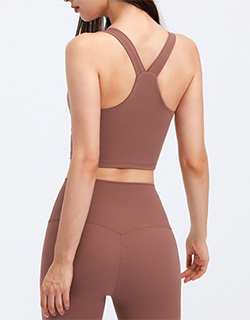
How to Choose the Right Custom Sports Leggings Manufacturer for Your Activewear Brand
What Are the Key Takeaways for Choosing a Custom Sports Leggings Manufacturer?
The most important factors when choosing a custom sports leggings manufacturer are fabric expertise, fit development, OEM customization capability, quality control, MOQ flexibility, and stable production management.
- A reliable manufacturer should understand nylon-spandex, polyester-spandex, polyamide-elastane, and recycled performance fabrics.
- Sports leggings require accurate pattern making, waistband engineering, gusset construction, and size grading.
- Quality control should cover fabric inspection, inline production checks, measurement control, and final inspection.
- Startup brands should look for low MOQ options, sample development support, and clear communication.
- Established brands should evaluate production capacity, supply chain stability, and sample-to-bulk consistency.
What Will This Guide Help Activewear Brands Understand?
This guide helps activewear brands evaluate sports leggings manufacturers using practical, production-based criteria instead of relying only on price or sales claims.
- How custom sports leggings manufacturers work
- Why fabric selection determines product quality
- How fit development affects customer returns
- What OEM and private label capabilities matter
- How to evaluate quality control systems
- What questions brands should ask before production
What Does a Custom Sports Leggings Manufacturer Actually Do?
A custom sports leggings manufacturer develops, samples, produces, inspects, and ships leggings for activewear brands according to custom fabric, fit, branding, and performance requirements.
Unlike generic apparel suppliers, a specialized custom leggings manufacturer focuses on stretch fabrics, compression fit, squat-proof performance, waistband stability, and movement-focused construction.
Sports leggings require 4-way stretch, moisture-wicking, opacity, compression, and stable recovery after repeated movement.
Pattern development must control waist, hip, thigh, knee, ankle, gusset, and waistband proportions.
Brands often need custom logos, labels, packaging, Pantone colors, hang tags, and branded trims.
Why Is Fabric Selection So Important for Sports Leggings?
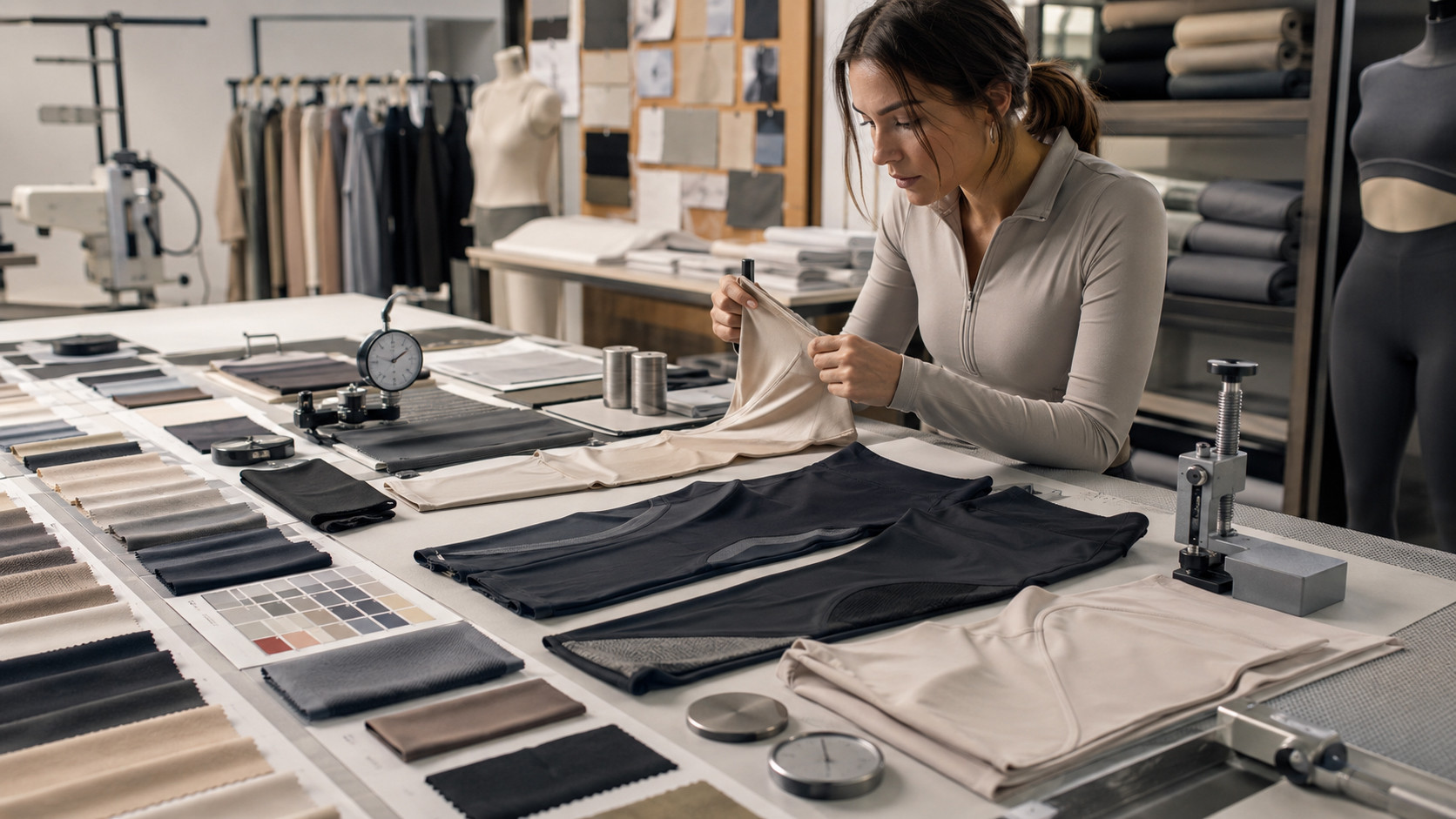
Fabric selection is important because sports leggings must provide stretch, recovery, opacity, compression, sweat management, and long-term durability during movement.
A professional custom activewear manufacturer should help brands compare fabric composition, GSM, handfeel, compression level, pilling resistance, and wash stability before sampling.
| Fabric Type | Main Benefits | Best For | Manufacturing Notes |
|---|---|---|---|
| Nylon + Spandex | Soft, stretchy, smooth, durable | Premium gym leggings and yoga leggings | Good option for high-end private label activewear |
| Polyester + Spandex | Quick-dry, cost-effective, color stable | Training leggings and budget activewear | Often used for performance-focused collections |
| Polyamide + Elastane | Luxury handfeel, strong recovery, compression | Premium activewear and athleisure leggings | Suitable for brands targeting higher retail price points |
| Recycled Nylon Blends | Sustainable, durable, modern market appeal | Eco-conscious activewear brands | Requires stable sourcing and clear material verification |
How Can Activewear Brands Evaluate Leggings Fabric Quality?
Activewear brands can evaluate leggings fabric quality by checking stretch recovery, opacity, GSM, compression balance, colorfastness, pilling resistance, and wash stability.
A reliable factory should provide fabric swatches, sample garments, physical testing suggestions, and professional fabric guide support before bulk production.
- Stretch recovery: The fabric should return to shape after repeated stretching.
- Squat-proof performance: The leggings should stay opaque during deep movement.
- Moisture-wicking: The fabric should help move sweat away from the body.
- Compression balance: The fabric should feel supportive without limiting movement.
- Wash stability: The fabric should keep shape, color, and elasticity after washing.
Why Does Fit Development Matter for Custom Sports Leggings?
Fit development matters because sports leggings must stay comfortable, supportive, and stable during squats, running, stretching, yoga, gym training, and daily athleisure wear.
Poor fit development can cause waist rolling, camel toe issues, fabric transparency, loose ankles, tight knees, and high return rates. A professional custom gym wear manufacturer should understand movement-based pattern engineering.
| Fit Area | Common Problem | Manufacturer Solution |
|---|---|---|
| Waistband | Rolling down during movement | Improve waistband height, elastic structure, and compression balance |
| Gusset | Discomfort or poor movement range | Use correct gusset shape and seam placement |
| Hip & Thigh | Too tight or too loose | Adjust pattern curve and size grading |
| Ankle Opening | Loose or baggy appearance | Refine lower-leg proportion and fabric recovery |
What Manufacturing Capabilities Should a Sports Leggings Factory Have?
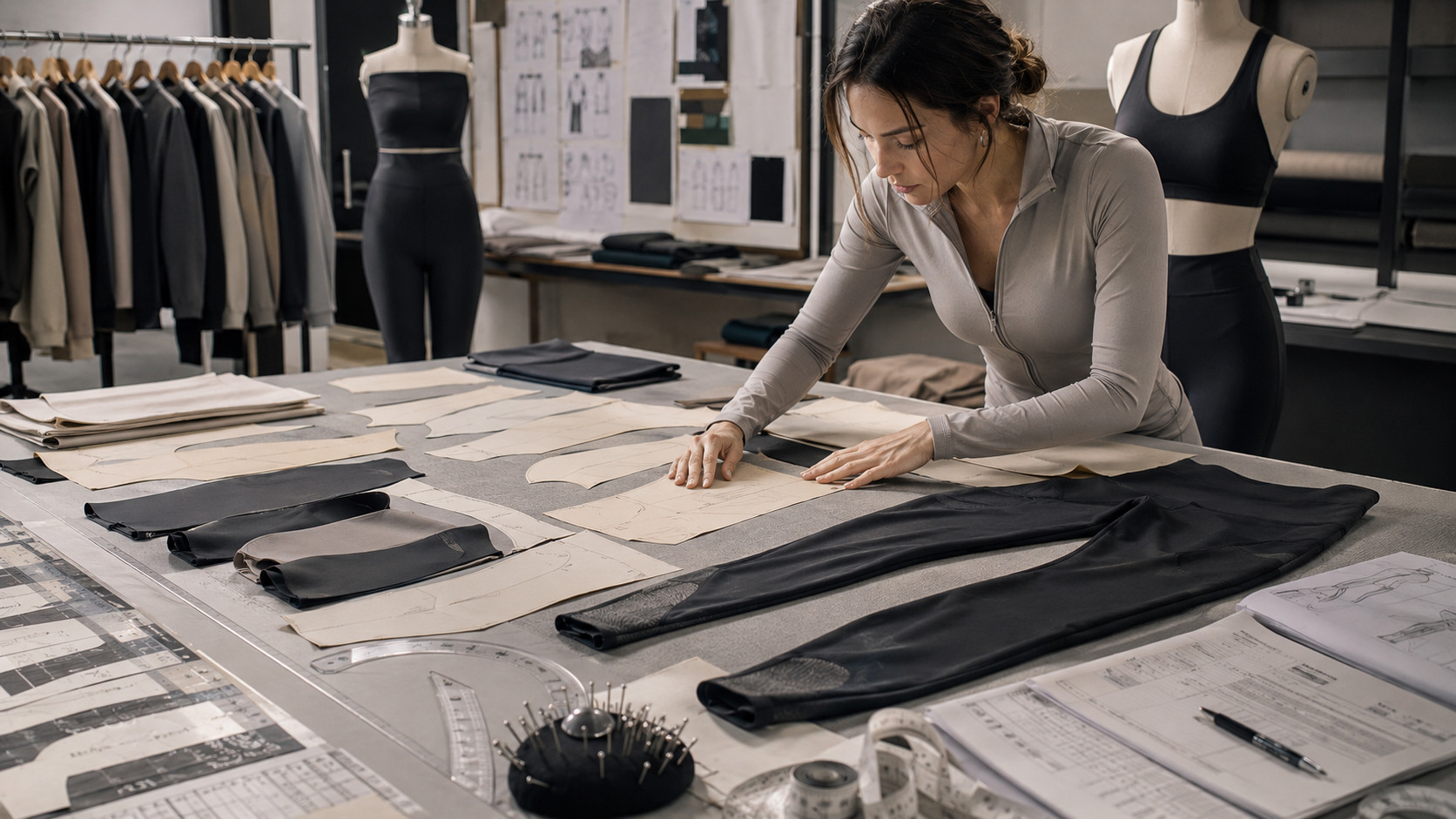
A sports leggings factory should have activewear sewing equipment, stretch fabric handling experience, performance fabric sourcing, sample development, pattern making, and multi-stage quality control.
A factory with strong manufacturing capability can better control seam strength, measurement accuracy, logo placement, fabric cutting, and sample-to-bulk consistency.
- Flatlock stitching for reduced friction
- Four-needle six-thread sewing for stronger seams
- Heat transfer logo application for stretch garments
- Precision cutting for consistent sizing
- Inline inspection during production
- Final measurement and packaging inspection
How Important Is Quality Control in Sports Leggings Production?
Quality control is critical because leggings use stretch fabrics, and small problems in fabric, stitching, sizing, or construction can become obvious during movement.
A reliable quality control system should check fabric defects, measurement tolerance, seam strength, logo placement, color consistency, packaging accuracy, and final appearance.
| QC Stage | Inspection Focus | Why It Matters |
|---|---|---|
| Fabric Inspection | GSM, color, stretch, defects, handfeel | Prevents fabric-related quality problems |
| Inline Inspection | Stitching, seam alignment, size control | Reduces bulk production defect rates |
| Final Inspection | Measurements, packaging, labels, appearance | Ensures shipment meets brand requirements |
What MOQ Should Brands Expect for Custom Sports Leggings?
Most custom sports leggings manufacturers offer MOQ ranges from around 100 to 500 pieces depending on fabric, color, customization level, and production complexity.
Startup brands usually need lower MOQ support, while growing brands often benefit from larger production runs with better unit pricing and wider customization options.
| Brand Stage | Typical MOQ | Best Strategy |
|---|---|---|
| Startup Brand | 100–200 pcs | Test one core leggings style first |
| Growing Brand | 300–500 pcs | Expand colors and size range carefully |
| Established Brand | 1000+ pcs | Develop seasonal collections and custom fabrics |
How Can Brands Evaluate OEM and Private Label Capabilities?
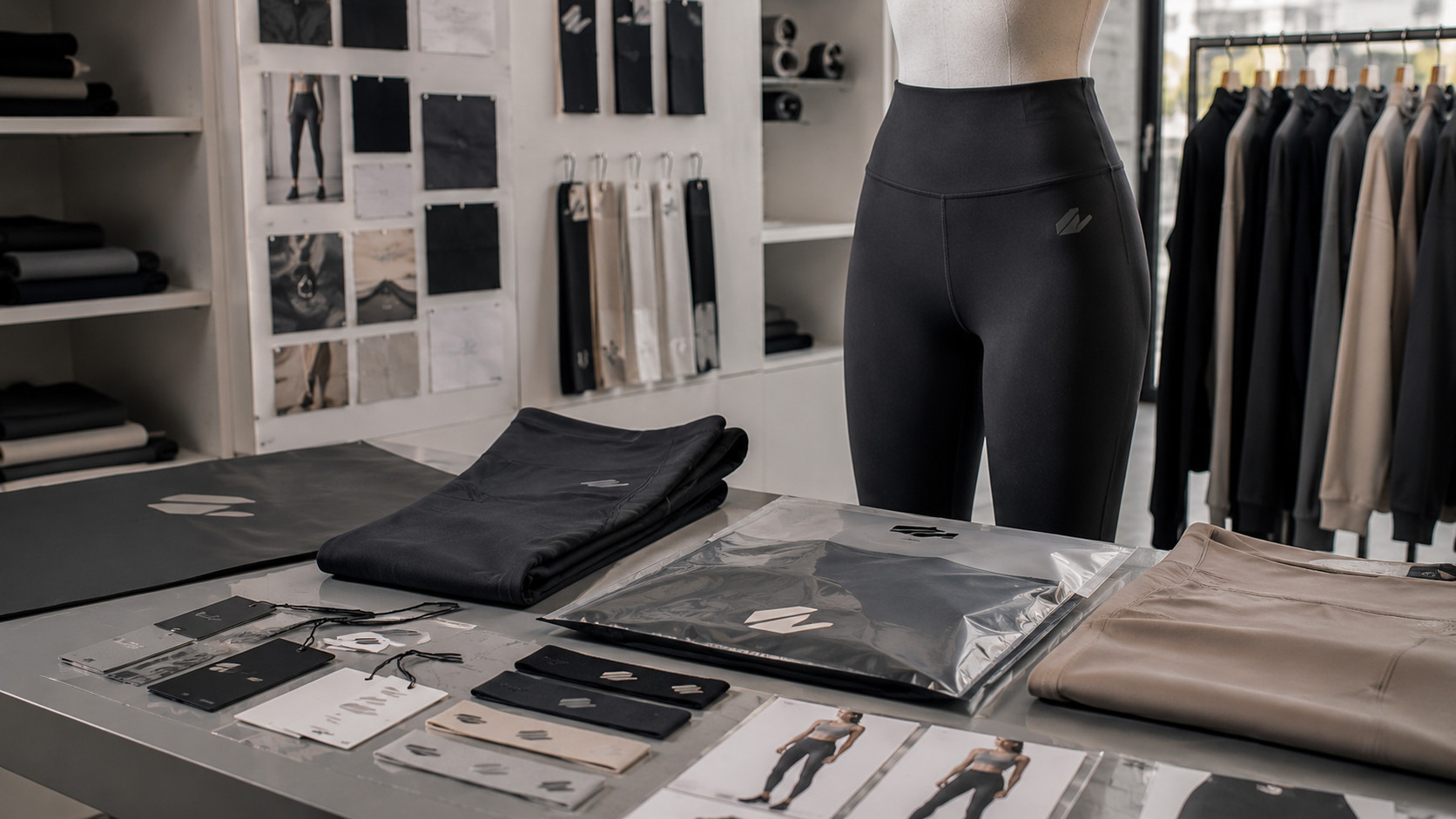
Brands can evaluate OEM and private label capabilities by checking whether the manufacturer can support custom logos, labels, packaging, colors, fabric sourcing, size grading, and product development.
A complete private label manufacturing system helps brands create differentiated leggings instead of generic blank products.
- Custom woven labels
- Custom heat transfer logos
- Silicone branding
- Reflective prints
- Hang tags
- Branded poly bags
- Pantone color matching
- Custom fabric sourcing
What Questions Should Brands Ask Before Choosing a Manufacturer?
Brands should ask specific production questions about MOQ, sampling, fabric testing, lead time, quality control, OEM services, and export experience before choosing a manufacturer.
Manufacturer Evaluation Checklist
- What is the MOQ for custom sports leggings?
- Can the factory source nylon-spandex and recycled performance fabrics?
- How does the factory test stretch recovery and opacity?
- What is the sample lead time?
- How does the factory control sample-to-bulk consistency?
- What stitching methods are available for activewear?
- Can the factory support custom labels and packaging?
- What quality control steps are used before shipment?
- Which export markets does the factory mainly serve?
How Does Supply Chain Management Affect Sports Leggings Production?
Supply chain management affects sports leggings production because fabric availability, dyeing schedules, trim sourcing, production capacity, and shipping timelines all influence delivery reliability.
A stable supply chain helps reduce delays, color mismatch problems, material substitution risks, and inconsistent fabric quality.
What Is the Step-by-Step Process for Custom Sports Leggings Production?
The custom sports leggings production process usually includes design review, fabric sourcing, sample development, sample revision, bulk production, quality inspection, and shipping.
Step-by-Step Production Workflow
- Step 1: Tech Pack Review — Confirm measurements, construction, fabric, logo placement, and packaging details.
- Step 2: Fabric Selection — Choose composition, GSM, compression, texture, and color direction.
- Step 3: Sample Development — Create the first sample for fit, fabric, and construction review.
- Step 4: Sample Revision — Adjust waistband, inseam, gusset, size grading, and branding details.
- Step 5: Bulk Production — Produce approved styles according to confirmed specifications.
- Step 6: Quality Control — Inspect fabric, stitching, measurements, labels, and packaging.
- Step 7: Shipping — Arrange export packaging, logistics, and delivery.
How Can Startup Activewear Brands Reduce Manufacturing Risks?
Startup activewear brands can reduce manufacturing risks by starting with proven fabrics, limiting color options, testing one flagship leggings style, and approving physical samples carefully.
- Start with one core leggings silhouette.
- Use stable nylon-spandex or polyester-spandex fabrics.
- Avoid too many colors in the first production run.
- Confirm logo size, label position, and packaging before bulk production.
- Request measurement reports and production photos.
- Choose a manufacturer with experience in custom yoga wear and gym wear production.
How Should Brands Compare Different Sports Leggings Manufacturers?
Brands should compare sports leggings manufacturers based on activewear experience, fabric sourcing ability, pattern development, quality control, MOQ, lead time, communication, and private label support.
| Evaluation Factor | Weak Supplier | Reliable Manufacturer |
|---|---|---|
| Fabric Expertise | Offers limited generic fabrics | Provides performance fabric recommendations and testing support |
| Fit Development | Copies basic leggings patterns | Adjusts waistband, gusset, compression, and size grading |
| Quality Control | Only checks finished goods | Uses fabric, inline, and final inspection stages |
| Communication | Replies slowly and gives vague answers | Provides clear timelines, production updates, and technical feedback |
| Customization | Only supports simple logo printing | Supports custom labels, packaging, colors, trims, and fabric sourcing |
What FAQs Do Brands Ask About Custom Sports Leggings Manufacturing?
Brands usually ask about fabric, MOQ, production time, private label options, quality control, and the best way to start custom leggings production.
What is the best fabric for custom sports leggings?
Nylon-spandex is one of the best fabric options for custom sports leggings because it provides softness, stretch recovery, durability, and a premium handfeel.
What is the normal MOQ for custom sports leggings?
The normal MOQ for custom sports leggings is usually around 100–500 pieces, depending on fabric, color, logo method, and customization level.
How long does sports leggings sampling take?
Sports leggings sampling usually takes around 7–10 days after fabric, measurements, logo details, and construction requirements are confirmed.
How long does bulk production take?
Bulk production for custom sports leggings usually takes around 25–35 days after sample approval and material confirmation.
Can startups create private label sports leggings?
Yes. Startup brands can create private label sports leggings by choosing low MOQ styles, proven fabrics, simple branding, and a reliable activewear manufacturer.
Why do sports leggings become see-through?
Sports leggings usually become see-through because of low GSM fabric, weak knitting structure, poor yarn quality, or incorrect fabric selection for high-stretch movement.
How Can Activewear Brands Choose the Right Manufacturing Partner?
Activewear brands should choose a custom sports leggings manufacturer with proven fabric knowledge, strong fit development, reliable quality control, OEM/private label support, and clear production communication.
Ohsure supports custom leggings, gym wear, yoga wear, women’s sportswear, sports bras, tank tops, track pants, hoodies, and full activewear collection development for growing brands.
Explore Custom Leggings ManufacturingWhat Is the Final Recommendation for Choosing a Custom Sports Leggings Manufacturer?
The right custom sports leggings manufacturer should not only produce garments but also help brands control fabric performance, fit accuracy, production risk, quality consistency, and private label presentation.
Brands can explore Ohsure’s custom activewear manufacturing, custom leggings manufacturing, custom sports bras manufacturing, and activewear product categories to build a complete private label sportswear collection.