
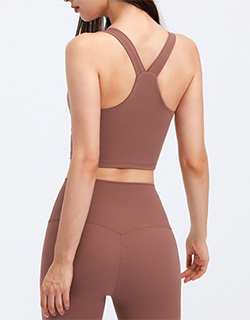
10 Things to Check Before Working With a Maternity Activewear Manufacturer
Choosing the right maternity activewear manufacturer is not only about price. Pregnancy activewear requires special attention to fit, stretch recovery, belly support, fabric softness, safety, quality control, and long-term product development.
This guide explains 10 key things brands should check before working with a maternity activewear supplier, especially if you plan to build a private label, OEM, or custom activewear collection.
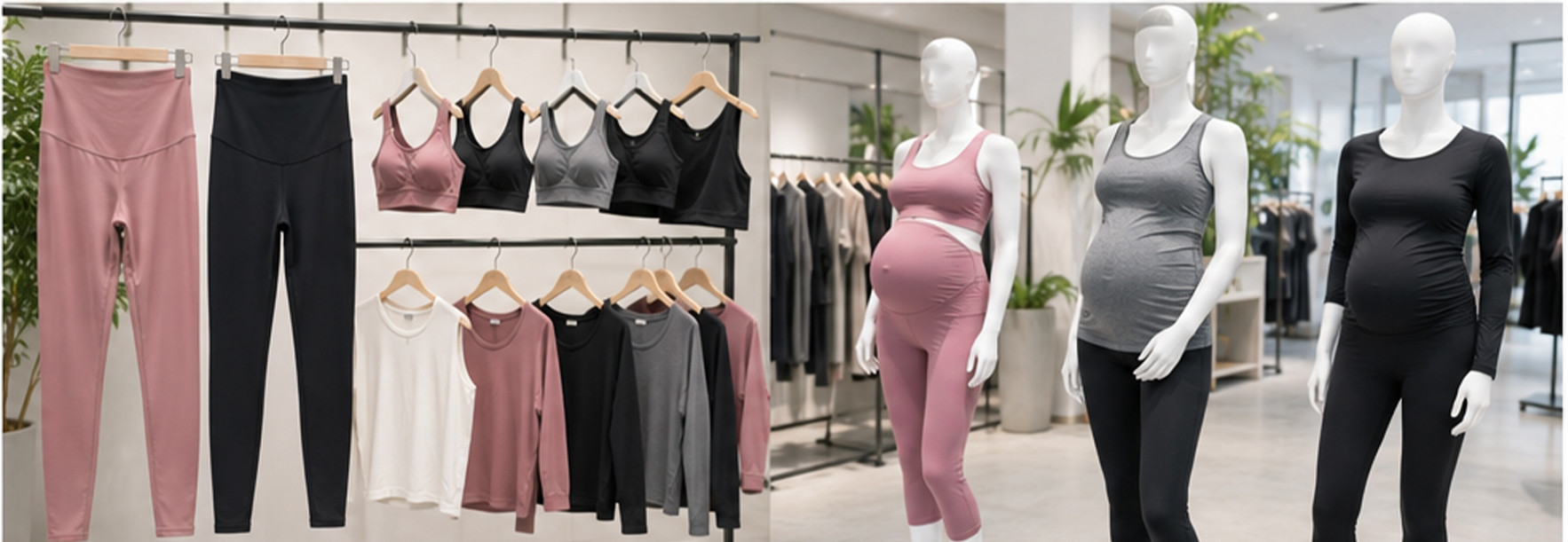
1. Does the Manufacturer Have Real Maternity Activewear Experience?
Why pregnancy-specific experience matters
Maternity activewear is different from regular fitness apparel. The garment must support body changes during pregnancy while remaining comfortable for movement, walking, yoga, gym training, and daily wear.
A qualified supplier should understand over-belly waistbands, belly support panels, soft seam placement, stretch recovery, and pregnancy-specific grading. You can review dedicated custom maternity activewear solutions to understand what a specialized manufacturer should provide.
For textile testing references, brands can also review standards from ASTM International.
2. Can They Develop Custom Patterns Instead of Only Copying Samples?
Pattern engineering affects comfort and fit
A reliable maternity activewear manufacturer should be able to develop patterns based on your tech pack, reference sample, size chart, or design concept. Copying a standard legging pattern is not enough for maternity products.
Ask whether the factory can adjust belly panel height, waistband pressure, inseam length, compression level, and grading for different markets. A complete activewear manufacturing process should include sampling, fit correction, pattern revision, and bulk production control.
3. Are the Fabrics Suitable for Pregnancy Comfort and Performance?
Fabric quality directly affects customer reviews
Pregnant customers usually care about softness, breathability, stretch, support, and non-restrictive comfort. The fabric should move with the body without becoming loose after repeated wear.
Important fabric properties include four-way stretch, moisture wicking, squat-proof coverage, colorfastness, pilling resistance, and recovery rate. You can compare material options through this activewear fabric guide.
For sustainable material references, many apparel brands also follow resources from Textile Exchange.
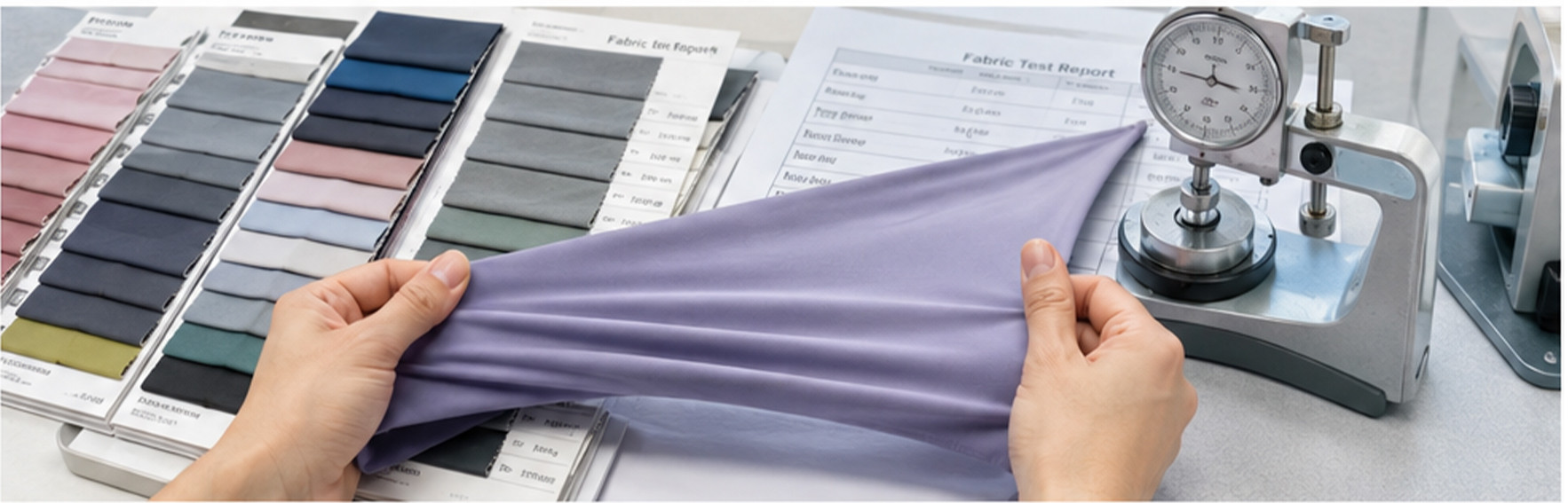
4. How Strong Is Their Quality Control System?
Quality inspection reduces production risk
Maternity activewear must remain stable after stretching, washing, and repeated movement. Poor stitching, weak seams, uneven sizing, or fabric defects can quickly damage customer trust.
Ask the manufacturer how they inspect fabric, cutting, sewing, measurements, labels, packaging, and final goods. A professional quality control process should cover both in-line inspection and final inspection before shipment.
For general quality management principles, ISO provides widely recognized guidance through ISO 9001 quality management.
5. Can They Support Private Label Branding?
Your product should look like your own brand
If you are building a brand, the factory should support more than garment production. Branding details help your maternity activewear look professional and retail-ready.
Check whether the supplier can provide woven labels, printed neck labels, heat transfer logos, hang tags, custom polybags, care labels, tissue paper, and packaging boxes. A complete private label activewear service can help startups and established brands create a more consistent product identity.
6. Is the MOQ Suitable for Your Business Stage?
Flexible MOQ helps reduce inventory pressure
MOQ is one of the most important factors for new maternity activewear brands. Ordering too much inventory too early can create cash flow pressure, especially when testing new colors, sizes, or styles.
Ask whether sizes can be mixed, whether colors have separate MOQ requirements, and whether sample production is available before bulk orders. A practical MOQ structure makes it easier to test the market before scaling.
Tip: For startup maternity activewear brands, it is usually safer to begin with core styles such as maternity leggings, nursing sports bras, and pregnancy workout tops before expanding into a full seasonal collection.
7. Can They Produce a Complete Maternity Activewear Collection?
One supplier can improve consistency
A strong manufacturer should be able to support coordinated product lines, not only one item. This is useful for brands that want to sell matching maternity workout sets or seasonal collections.
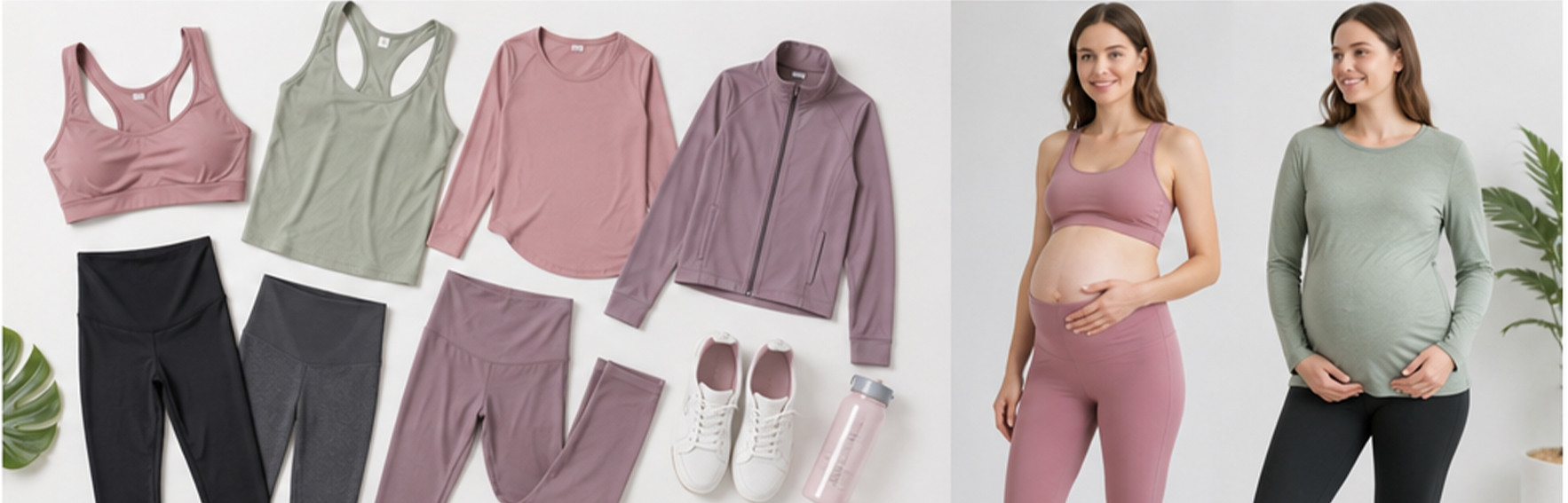
Common maternity activewear products include leggings, sports bras, tank tops, long sleeve tops, jackets, hoodies, and workout sets. Related production capabilities may include custom leggings manufacturing, custom sports bras manufacturing, and custom tank tops manufacturing.
8. Is Their Supply Chain Transparent and Stable?
Supply chain visibility prevents delays
Production delays often happen when fabric sourcing, dyeing, printing, or packaging is not managed clearly. A reliable manufacturer should explain where materials come from and how each production stage is controlled.
Before placing an order, ask about fabric lead time, dyeing schedule, sampling timeline, bulk production capacity, packaging preparation, and shipping options. A transparent apparel supply chain helps brands plan launches more accurately.
For responsible production principles, the International Labour Organization provides widely referenced information about labor and manufacturing practices.
9. Do They Understand International Labeling and Compliance?
Compliance protects your brand in export markets
If you sell in the United States, Europe, Australia, or other international markets, product labels and material claims must be accurate. Incorrect fiber content, care labels, or origin information may create problems during selling or customs clearance.
Ask whether the supplier can provide proper care labels, fiber composition labels, packaging information, and export documents. For U.S. textile labeling guidance, brands can refer to the Federal Trade Commission business guidance.
10. Will They Support Long-Term Product Development?
A good supplier grows with your brand
The best maternity activewear manufacturer should not only finish one order. They should help improve your next collection based on customer feedback, market trends, fabric upgrades, and fit adjustments.
Long-term support may include new color development, seasonal sampling, fabric sourcing, packaging upgrades, and category expansion. Brands can also expand from maternity activewear into custom breastfeeding clothing, custom adaptive clothing, or broader women sportswear manufacturing.
Maternity Activewear Manufacturer Evaluation Checklist
| Check Point | Why It Matters | What to Ask |
|---|---|---|
| Maternity Experience | Ensures better pregnancy fit and comfort | Have you produced maternity activewear before? |
| Pattern Development | Improves belly support and garment structure | Can you develop custom maternity patterns? |
| Fabric Selection | Affects softness, stretch, and recovery | Can you provide fabric specifications? |
| Quality Control | Reduces defects and sizing problems | What inspections are included? |
| Private Label Service | Helps create branded retail-ready products | Can you make labels, tags, and packaging? |
| MOQ | Controls inventory and startup risk | What is the MOQ per color and style? |
| Collection Capability | Supports matching sets and future expansion | Can you produce leggings, bras, tops, and sets? |
| Supply Chain | Improves delivery reliability | How do you manage fabric and production timing? |
| Compliance | Supports international selling | Can you provide correct labels and export documents? |
| Long-Term Support | Helps improve future collections | Can you support new styles and fabric upgrades? |
Final Thoughts
Choosing the right maternity activewear manufacturer requires careful evaluation of fit development, fabric quality, MOQ, quality control, branding, compliance, and supply chain stability.
If you want to create maternity leggings, nursing sports bras, pregnancy workout tops, or complete maternity activewear sets, working with a professional custom activewear manufacturer can help reduce production risk and build a stronger brand foundation.
You can also explore more product categories through the Ohsurewear product list.