
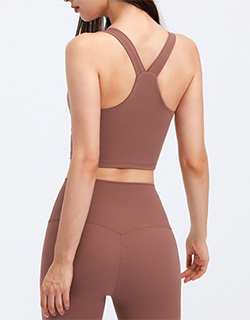
10 Things to Check Before Working With a Nursing Activewear Manufacturer
Choosing a nursing activewear manufacturer is not only about price. Brands need to evaluate fabric comfort, breastfeeding functionality, postpartum fit, production quality, MOQ, branding support, and delivery stability before placing an order.
1. What Experience Does the Manufacturer Have With Nursing Activewear?
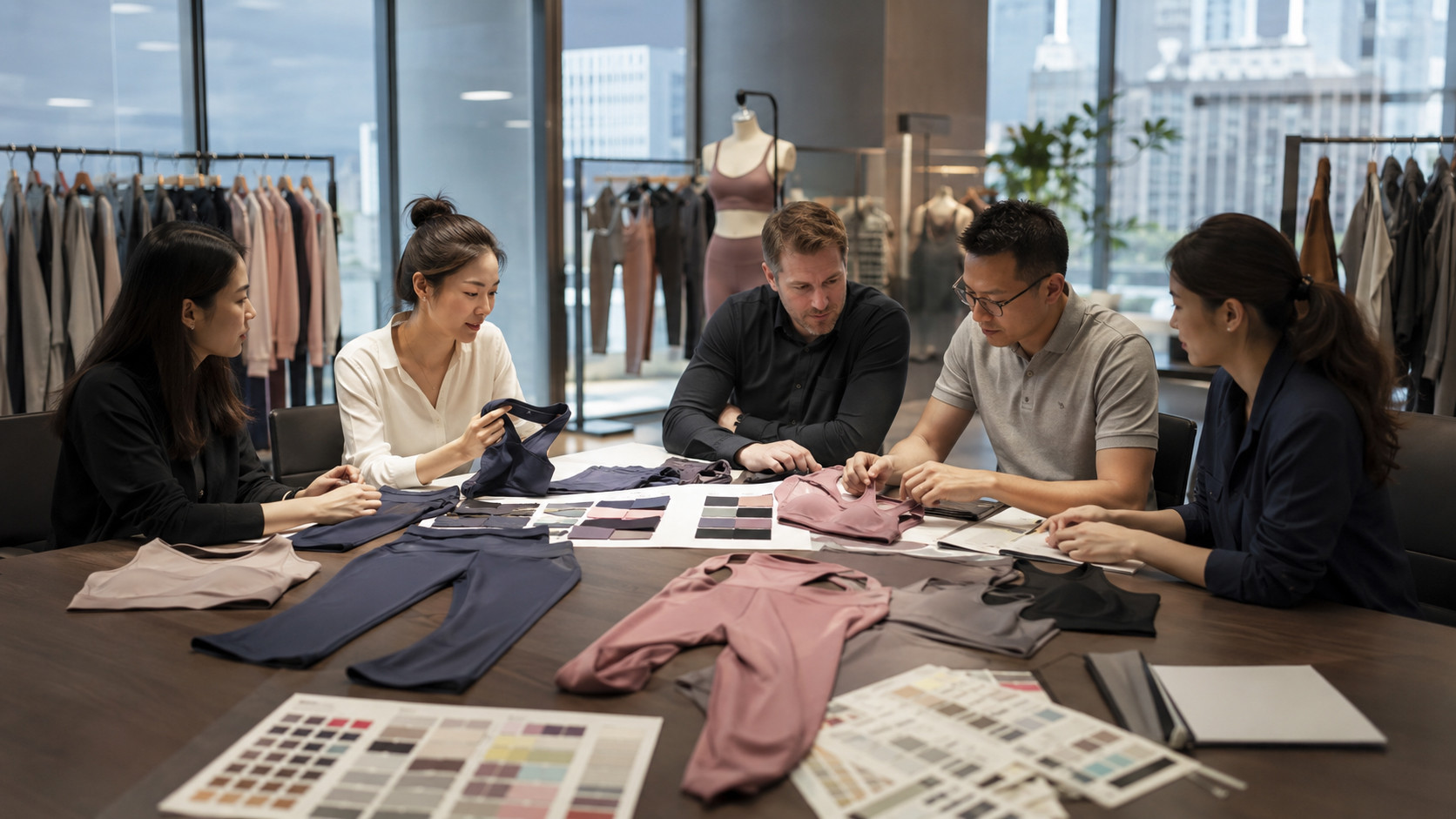
Nursing activewear is different from regular leggings, sports bras, or yoga sets. It must combine support, stretch, softness, and breastfeeding access in one product. A reliable manufacturer should understand maternity and postpartum body changes, not just standard activewear production.
Key Questions to Ask
- Have they produced nursing sports bras, maternity leggings, or breastfeeding-friendly activewear before?
- Can they provide real nursing activewear samples?
- Do they understand postpartum sizing and fit adjustments?
- Can they support both OEM and private label production?
If your brand is developing maternity-related products, working with an experienced custom maternity activewear manufacturer can reduce sampling errors and improve product comfort.
2. Can They Develop Functional Nursing Features?
Nursing activewear must allow mothers to breastfeed conveniently while maintaining coverage, support, and style. Poor nursing construction can make the garment uncomfortable or difficult to use.
Common Nursing Design Features
| Feature | Purpose | Best Used For |
|---|---|---|
| Hidden nursing panel | Provides discreet breastfeeding access | Nursing bras and tops |
| Lift-up front layer | Makes feeding easier with one-hand access | Breastfeeding tank tops |
| Side opening construction | Improves comfort and coverage | Nursing activewear tops |
| Integrated support layer | Improves bust support after childbirth | Nursing sports bras |
Brands can also review custom breastfeeding clothing solutions when developing more functional nursing apparel collections.
3. Are Their Fabrics Suitable for Nursing Activewear?
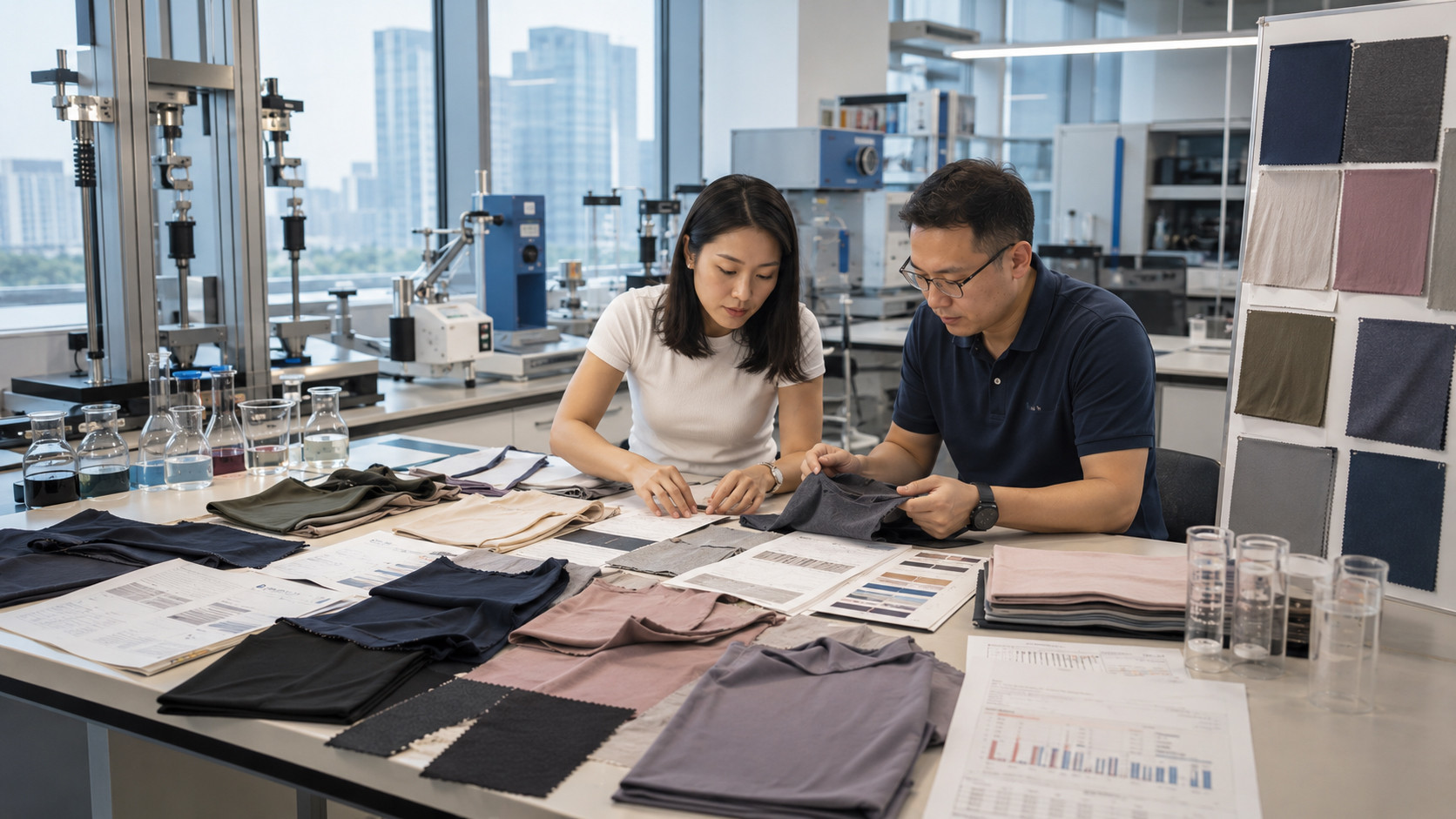
Fabric selection is one of the most important parts of nursing activewear development. The fabric should be soft against sensitive skin, stretchy enough for movement, and stable enough to keep its shape after repeated washing.
Recommended Fabric Options
For close-to-skin garments, brands should also consider fabric safety standards such as OEKO-TEX® STANDARD 100. You can also compare more materials through the activewear fabric guide and the fabric selection process.
4. Do They Understand Maternity and Postpartum Fit Development?
Nursing activewear should fit bodies that are still changing after pregnancy. Standard activewear patterns may not provide enough bust room, waist comfort, or nursing support.
Important Fit Details
- Bust expansion and support structure
- Postpartum waist comfort
- Rib cage and shoulder adjustment
- Compression balance for leggings
- Easy movement during daily activity and exercise
A professional women sportswear manufacturer should be able to adjust patterns for maternity, nursing, and postpartum needs.
5. What Is Their Sampling Process?
Sampling is where design ideas become real products. A clear sampling process helps brands find fit, fabric, and construction problems before bulk production begins.
A Reliable Sampling Process Should Include
- Tech pack review
- Fabric confirmation
- First prototype sample
- Fit testing and wearing feedback
- Revision sample
- Pre-production sample approval
A transparent activewear manufacturing process helps reduce production risk. Industry organizations such as the American Apparel & Footwear Association also emphasize the importance of responsible sourcing and production management.
6. Can They Meet Your MOQ Requirements?
Minimum order quantity affects inventory pressure, launch budget, and product testing flexibility. New nursing activewear brands should avoid starting with excessive quantities before the market is validated.
MOQ Details to Confirm
| MOQ Item | Why It Matters |
|---|---|
| MOQ per style | Controls total launch quantity and budget |
| MOQ per color | Affects how many colorways your brand can test |
| MOQ per size | Influences size inclusivity and stock planning |
| Sample cost | Impacts early-stage product development budget |
For startups, a flexible private label activewear manufacturer may be easier to work with than a supplier that only accepts large bulk orders.
7. How Strong Is Their Quality Control System?
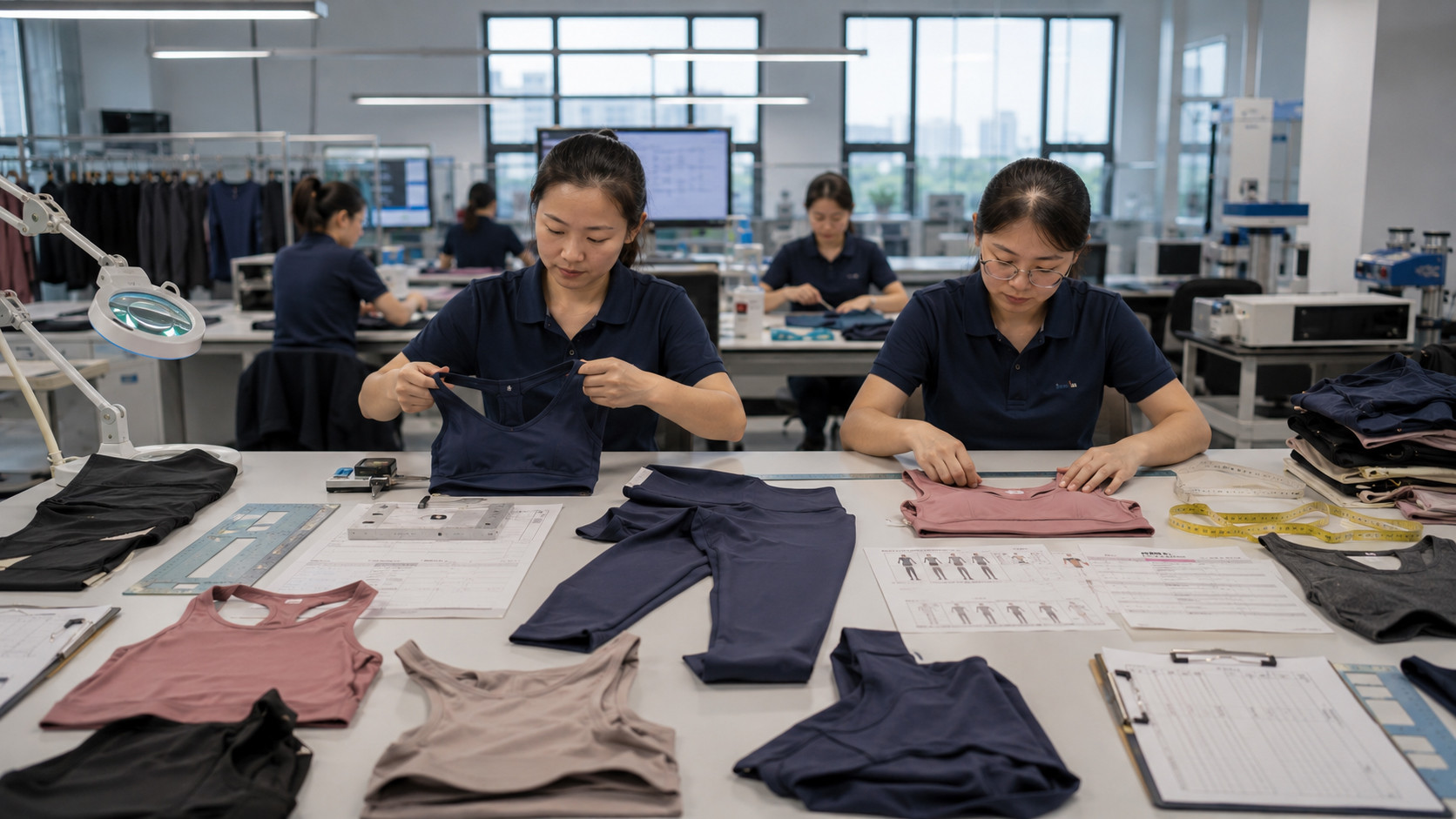
Quality control is especially important for nursing activewear because customers rely on product comfort, functionality, and durability every day. Small problems such as weak seams, poor stretch recovery, or inaccurate sizing can damage brand trust.
Quality Control Stages to Check
- Fabric inspection before cutting
- Pattern and size verification
- Inline production inspection
- Seam strength and stretch recovery checks
- Final measurement inspection
- Packaging and shipment inspection
Brands should check whether the factory has a documented quality control system. The international quality management standard ISO 9001 is also a useful reference when evaluating supplier quality systems.
8. Can They Support Private Label Branding?
Strong branding helps nursing activewear brands stand out in a competitive market. A manufacturer should support not only garment production but also labels, logo application, hang tags, and packaging.
Branding Options to Consider
- Woven labels
- Printed neck labels
- Silicone logos
- Embroidery
- Hang tags
- Custom polybags
- Retail-ready packaging
If you want to build a complete branded collection, review the supplier's private label service before confirming the order.
9. Do They Have a Reliable Supply Chain?
A good sample does not guarantee successful bulk production. Fabric supply, dye lot consistency, production planning, and shipping stability all affect the final delivery result.
Supply Chain Factors to Review
- Fabric availability
- Color consistency
- Trim and accessory sourcing
- Bulk production schedule
- International shipping options
- Lead time communication
A stable activewear supply chain helps brands avoid delays and inventory problems. The International Trade Administration also provides useful information for companies evaluating global sourcing and supplier reliability.
10. Can They Scale as Your Brand Grows?
A manufacturer should support your first order and your future growth. As your brand expands, you may need more styles, more colors, faster production, and broader product categories.
Growth Support Checklist
| Brand Stage | Manufacturing Needs |
|---|---|
| Startup | Low MOQ, flexible sampling, private label branding |
| Growth Stage | More SKUs, stable fabric supply, repeat orders |
| Established Brand | Bulk production, stronger QC, product line expansion |
| Global Brand | Supply chain planning, faster delivery, consistent quality |
Manufacturers that can produce related products such as custom sports bras, custom leggings, custom yoga wear, and full activewear product collections are often better prepared to grow with your brand.
Final Supplier Evaluation Checklist
Before confirming a nursing activewear manufacturer, check whether the supplier can provide experience, functional nursing construction, suitable fabrics, postpartum fit knowledge, reliable sampling, flexible MOQ, quality control, private label branding, supply chain stability, and scalable production capacity.
Build Your Nursing Activewear Collection With the Right Manufacturer
Ohsurewear supports custom nursing activewear, maternity activewear, sports bras, leggings, yoga wear, tank tops, and private label activewear collections for growing brands.
Explore our custom activewear manufacturing service or visit the Ohsurewear homepage to learn more about OEM, ODM, and private label production.
```