
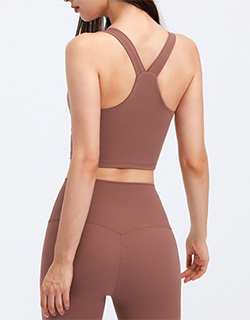
How Much Does It Cost to Manufacture 100 Pieces of Custom Activewear?
100-piece custom activewear cost guide · Planning model · Evidence checked September 12, 2026
How Much Does It Cost to Manufacture 100 Pieces of Custom Activewear?
Direct answer: there is no dependable price for 100 custom activewear pieces until the style, fabric, construction, color split, sizes, branding, packaging, tests, delivery term and destination are defined. A useful budget adds fixed development charges to the factory unit price, then includes verification, logistics, import charges and a risk allowance. The worked example below totals US$3,157, or US$31.57 per ordered unit, but every input is hypothetical and must be replaced with current written quotes.

Why 100 Pieces Cannot Have One Universal Price
“100 pieces” describes quantity, not the product. One stock-color sports bra with a simple logo is commercially different from a custom-dyed compression legging with pockets, bonded details and branded packaging. Two quotes can use the same quantity while covering different specifications and different delivery points.
Product specification
Fabric code, composition, weight, finish, panels, seams, pockets, padding, hardware and tolerances determine material and labor.
Assortment split
One style and one color is simpler than dividing 100 units across several styles, colors and size-specific components.
Development route
Private label, adapted ODM and full OEM can require different pattern, grading, sample and approval work.
Commercial basis
Currency, payment fees, quote validity, Incoterms rule, named place and destination determine what the quoted number includes.
Ohsure currently publishes a starting MOQ of 100 pieces per style per color, with sizes mixed within that combination. This is a planning reference, not a guarantee that every fabric, trim, logo or packaging supplier accepts the same minimum. The written quotation should identify every separate threshold.
The Seven Cost Layers
| Layer | Typical contents | Question for the quotation |
|---|---|---|
| 1. Technical development | Brief review, tech pack, pattern, grading, marker and artwork setup | Which files, sizes, revisions and ownership rights are included? |
| 2. Samples | Prototype, fit sample, pre-production sample and sample courier | How many rounds and shipments does the fee cover? |
| 3. Bulk product | Fabric, lining, elastic, thread, trims, cutting, sewing and finishing | What exact material code and construction revision control the price? |
| 4. Branding and packing | Logo, labels, hangtags, barcodes, polybags and cartons | Are setup fees, component minimums and leftover stock included? |
| 5. Verification | Material tests, measurements, workmanship checks and inspection | Which methods, tolerances, sample sizes and remedies apply? |
| 6. Delivery and import | Export handling, freight, insurance, brokerage, duty, tax and inland delivery | Which Incoterms rule, named place and excluded charges apply? |
| 7. Risk allowance | Defects, shortages, damage, exchange-rate movement and rework | Who pays when actual results differ from the approved specification? |

Worked Example: One 100-Piece Legging Style
Assume one custom legging style, one stock fabric color, five sizes, one heat-transfer logo and standard individual packaging. The buyer supplies a clear specification; the project still needs pattern and grading work, two development samples, verification and international delivery. The example uses US dollars and excludes duty and tax because those require the destination, tariff classification, origin and current rules.
| Budget item | Illustrative assumption | Calculation | Amount |
|---|---|---|---|
| Pattern, grading and setup | Fixed project amount | — | US$350 |
| Development samples | 2 samples at US$85 | 2 × 85 | US$170 |
| Sample courier | One shipment | — | US$80 |
| Bulk garments | 100 units at US$14 | 100 × 14 | US$1,400 |
| Branding and packaging | 100 units at US$1.20 | 100 × 1.20 | US$120 |
| Testing and inspection | Project allowance | — | US$300 |
| Freight, insurance and handling | Planning allowance | — | US$450 |
| Subtotal | Before duty, tax and contingency | Sum above | US$2,870 |
| Contingency | 10% planning reserve | 2,870 × 10% | US$287 |
| Total project cash | Excludes duty and tax | 2,870 + 287 | US$3,157 |
| Cost per ordered unit | 100 ordered units | 3,157 ÷ 100 | US$31.57 |
This is a replaceable model, not an Ohsure quotation
The example is designed to show the arithmetic. A simpler adapted product may need less development; premium fabric, custom dyeing, complex construction, several sample rounds, special testing or express freight may cost more. Replace every line with a dated supplier or service-provider quote.
Ordered Cost Is Not Sellable-Unit Cost
If five units are unavailable for full-price sale because of testing retention, shortage, damage or defects, 95 units must recover the same project cash:
This still does not include photography, ecommerce fees, warehousing, fulfillment, returns, discounts, marketing, payroll or other operating overhead. A retail margin model should use expected net selling price and sellable quantity, not the factory unit price alone.
What Changes the 100-Piece Budget Most?
- Custom fabric or color: mill, knitting or dye-lot minimums can exceed garment demand.
- Complex construction: more panels, pockets, bindings, zippers, flatlock or bonded seams add operations and setup.
- More variants: extra colors, artworks or logo placements can create separate setup and control work.
- Sample revisions: unclear measurements or changing details create additional rounds and courier charges.
- Testing scope: fiber, colorfastness, dimensional stability, stretch, opacity or buyer-specific programs vary.
- Freight choice: shipment weight, volume, mode, season, destination and delivery term change landed cost.

How to Request a Comparable 100-Piece Quote
- Freeze the product basis. Send one tech-pack revision with material, color, sizes, construction, measurements and artwork.
- State the exact split. Identify units by style, color and size; do not send only the total quantity.
- Ask for itemized fixed and variable costs. Separate development, samples, bulk product, branding, packaging, testing and inspection.
- Define the delivery basis. Request the Incoterms rule, named place, freight mode, destination and exclusions.
- Record assumptions and validity. Note currency, payment charges, quote expiry, material availability and production clock-start conditions.
- Normalize before comparing. Add excluded costs to each quote and calculate cost per expected sellable unit.
Frequently Asked Questions
Is US$31.57 Ohsure’s price for 100 leggings?
No. It is the result of the hypothetical inputs in this article. It is not a quotation, price list or promise. A current written quote must define the exact project.
Why can the landed cost be much higher than the factory unit price?
Development, samples, logo setup, packaging, tests, inspection, freight, duties, taxes, payment fees and unavailable units may sit outside the displayed garment price.
Can 100 pieces include several colors?
Do not assume so. Ohsure’s current published starting point is 100 pieces per style per color, with sizes mixed. Materials, trims, logos and packaging can have separate minimums.
Does a repeat order cost less?
It can when approved patterns, grading, artwork and specifications remain usable, but fabric availability, prices, exchange rates, testing and delivery still need reconfirmation.
Should duty and tax be estimated as one percentage?
Not without the destination, product classification, origin and current rules. Use current customs data and qualified advice rather than copying a generic percentage.
What should a first-time buyer compare besides price?
Compare specification control, sample approval, material traceability, inspection evidence, defect remedies, payment milestones, lead time and reorder continuity on the same basis.
Bottom Line
The cost to manufacture 100 custom activewear pieces is the sum of product development, samples, bulk manufacturing, branding, verification and delivery—not simply 100 multiplied by a garment price. Build a line-by-line model, calculate the cost per sellable unit and replace assumptions at every approval gate.
For broader context, read the OEM activewear manufacturing cost guide, the explanation of why manufacturers require MOQs, and the private-label launch budget guide. Current project terms should always be confirmed in writing.
Evidence note: Ohsure’s published MOQ basis and related cost guidance were checked September 12, 2026. The three images are original illustrative scenes and do not document an Ohsure facility. No legal registration number, certificate number or named reviewer is asserted in this cost model; add those only from verified current records. Prices, freight, tariff treatment and taxes change, and a dated written quotation controls.