
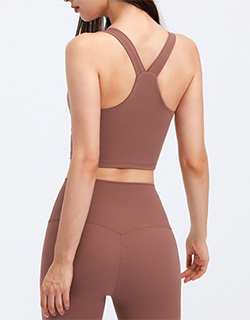
How Much Does Private Label Activewear Cost to Launch?
Private label activewear launch budget
How Much Does Private Label Activewear Cost to Launch?
A practical planning range is often US$8,000 to US$30,000 for a focused first private-label activewear launch. The total depends less on the logo and more on the number of styles, colors and sizes, the supplier's minimum order quantity, garment cost, packaging, testing, freight, duties and the cash reserve kept for defects and reorders. A one-style test launch can sit below this range; a multi-style collection with custom fabrics, extensive development or paid launch marketing can exceed it.
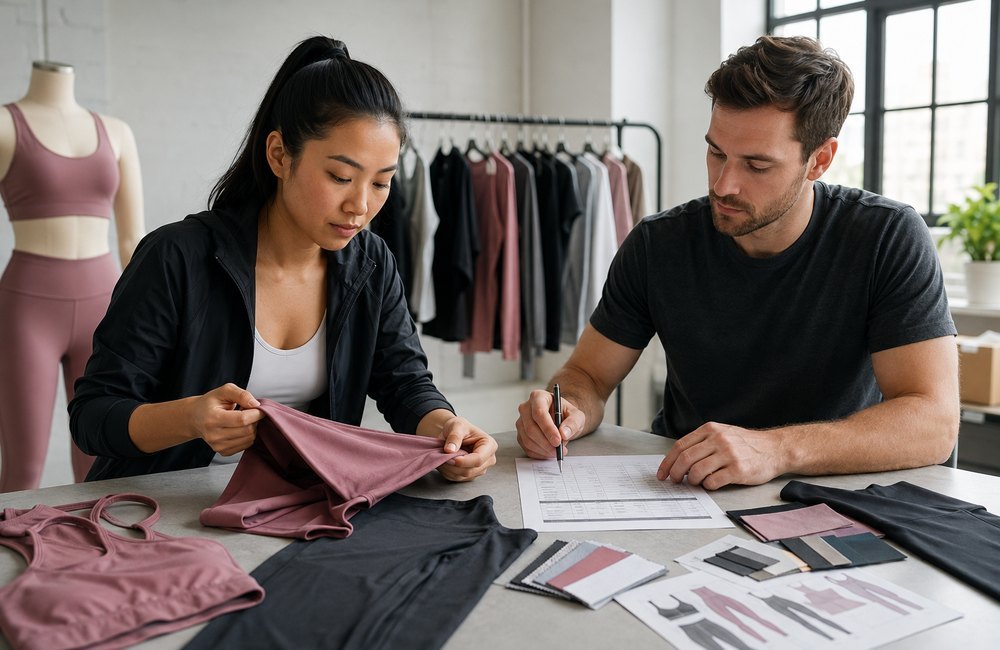
What a private-label launch budget must include
Private label usually starts with an existing supplier-developed product platform that a brand adapts through fabric choices, colors, labels, logos, packaging or a limited set of construction changes. That can reduce development work compared with a fully custom OEM project, but it does not remove commercial, compliance or logistics costs.
| Cost layer | Typical items | Best evidence before payment |
|---|---|---|
| Product setup | Supplier search, sample purchase, logo setup, label files, color confirmation | Sample invoice, specification sheet and approved artwork |
| Inventory | Garments across every style, color and size | SKU-level quotation with quantity and unit price |
| Branding | Main label, size label, care label, heat transfer, hangtag, polybag or carton marks | Component list, placement artwork and unit charges |
| Quality and compliance | Pre-production checks, testing, inspection, labeling review | Test scope, inspection standard and written acceptance criteria |
| Logistics | Origin charges, freight, insurance, customs brokerage, duty, domestic delivery | Incoterm, carton data and destination-specific estimate |
| Launch operations | Photography, website, samples for creators, fulfillment setup and returns reserve | Service quotes and a capped channel budget |
| Contingency | Resampling, exchange-rate movement, shortage, rework or delayed delivery | A ring-fenced reserve rather than unallocated inventory cash |
A 1,000-unit private-label activewear example
Assume a first collection contains two styles, two colors per style and five sizes. The order therefore has 20 SKUs. At 1,000 units, the average is only 50 units per SKU, so the supplier must confirm whether its minimum applies per order, style, color or size.
| Budget item | Illustrative input | Calculation | Illustrative total |
|---|---|---|---|
| Samples and setup | Fixed allowance | — | US$1,200 |
| Bulk garments | 1,000 × US$8.50 | 1,000 × 8.50 | US$8,500 |
| Labels and packaging | 1,000 × US$0.65 | 1,000 × 0.65 | US$650 |
| Testing and inspection | Project allowance | — | US$1,050 |
| Freight, customs and delivery | Planning allowance | — | US$2,600 |
| Content and store setup | Launch allowance | — | US$2,000 |
| Contingency | 10% of the first five lines | US$14,000 × 10% | US$1,400 |
| Total launch cash | Before ongoing advertising and payroll | Sum | US$17,400 |
The US$12.80 figure is not yet the cost of a sellable unit. If 3% of units are unavailable because of defects, shortages or damage, only 970 units carry the same inventory spend. The adjusted cost becomes US$12,800 ÷ 970 = US$13.20 per sellable unit, before fulfillment fees, returns and customer acquisition.
Why minimum order quantity changes the answer
MOQ is a cash and assortment constraint. A low total order can still become difficult when it is divided across many styles, colors and sizes. Calculate units per SKU before treating a headline MOQ as workable.
500-unit test
One style, two colors and five sizes creates 10 SKUs, or 50 units per SKU. Fixed setup and freight are spread over fewer pieces.
1,000-unit launch
Two styles, two colors and five sizes creates 20 SKUs, again 50 units per SKU. Variety doubles without improving SKU depth.
2,000-unit scale order
The same 20 SKUs average 100 units each. Unit economics may improve, but inventory and sell-through risk increase.
| Quantity | Illustrative garment price | Illustrative fixed setup | Setup per unit | Garment + setup per unit |
|---|---|---|---|---|
| 500 | US$9.60 | US$1,200 | US$2.40 | US$12.00 |
| 1,000 | US$8.50 | US$1,200 | US$1.20 | US$9.70 |
| 2,000 | US$7.90 | US$1,200 | US$0.60 | US$8.50 |
A lower unit cost is useful only when the added stock is likely to sell. Compare the cash saved per unit with storage, markdown, return and obsolescence risk.
Costs founders often miss
- Second samples: color, logo or fit corrections can trigger another sample and courier charge.
- Size allocation: buying equal quantities in every size can create avoidable leftover stock.
- Payment timing: deposits may be due months before sales revenue arrives.
- Carton volume: freight follows chargeable weight and route conditions, not garment count alone.
- Import charges: duty and taxes depend on product classification, origin and destination.
- Returns: refunds, reverse logistics and unsellable returned units affect margin.
- Compliance work: labels, claims and care instructions need evidence appropriate to the sales market.
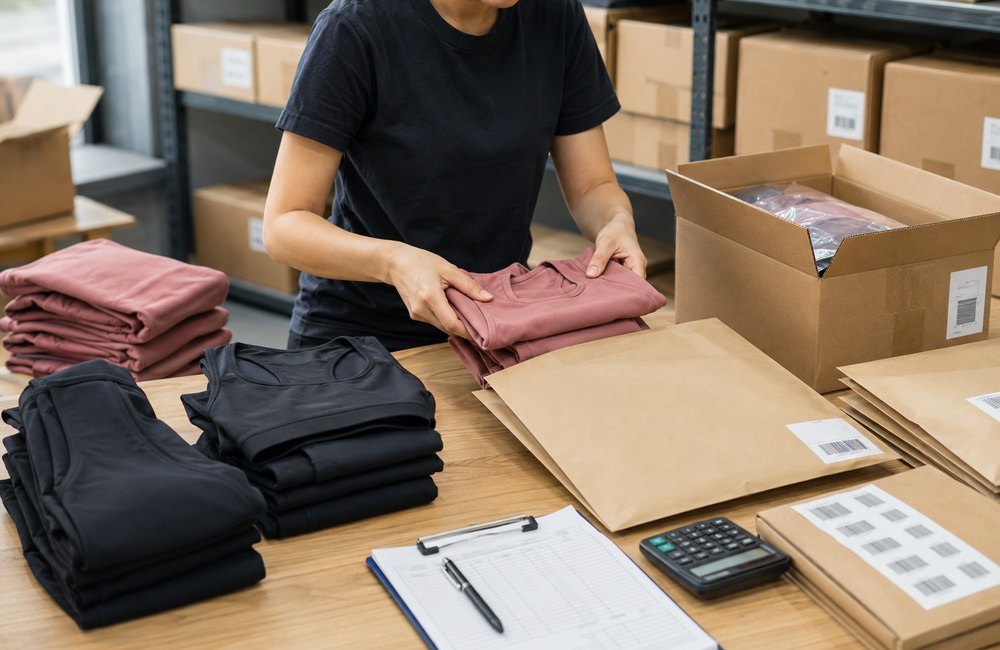
Map cash by milestone, not only by category
- 1
Brief and supplier screening
Set the retail price, target landed cost, product scope and maximum launch cash.
- 2
Samples and approvals
Pay for samples, artwork or setup; record every approved material, color, measurement and placement.
- 3
Bulk deposit
Reserve production cash only after the SKU breakdown, inclusions, quality criteria and dates are written.
- 4
Pre-shipment balance
Plan inspection and the remaining supplier payment before goods are released.
- 5
Freight and import
Fund transport, brokerage, duty, tax and final-mile delivery according to the agreed Incoterm.
- 6
Launch and reorder reserve
Keep operational cash separate from inventory cash so early sales can be supported without emergency funding.
The U.S. Small Business Administration recommends calculating startup costs before launch to support profit estimates, break-even analysis and funding decisions. For cross-border orders, ICC Incoterms rules clarify the allocation of transport obligations, costs and risks; they do not replace a complete product quotation or determine customs duty.
Normalize supplier quotes before choosing
Product
Style reference, fabric composition and weight, construction, color, size range and tolerance.
Branding
Logo method, label set, hangtag, packaging and setup charges.
Commercial
MOQ basis, unit tiers, sample charges, payment schedule, validity and currency.
Delivery
Lead-time definition, Incoterm and named place, carton data and excluded charges.
Quality
Approved sample, inspection stage, defect criteria and remedy for shortage or failure.
Compliance
Label data, test scope, records and responsibility for destination-market requirements.
Private label activewear cost FAQ
Can I launch private-label activewear with US$5,000?
Possibly, if the launch is tightly limited to one proven style, few colors, simple branding and a low workable MOQ. The budget must still cover freight, compliance, selling costs and a reserve. Do not commit all available cash to inventory.
What is the biggest cost?
Bulk inventory is often the largest single payment, but the most important planning number is total cash to first sale. That includes setup, quality, logistics and launch operations.
Is private label cheaper than OEM?
It can require less development because the supplier already has a product platform. The comparison changes if private label has high minimums, limited differentiation, expensive branding or a poor fit for the target market.
How much contingency should I keep?
A percentage such as 10% can be a useful starting assumption, but the right reserve depends on sample uncertainty, currency, freight, import complexity and how much cash is needed to operate after delivery.
Should marketing be included in product cost?
Keep manufacturing landed cost and launch cash visible as separate layers. For pricing and break-even analysis, also include fulfillment, returns, payment fees and customer acquisition.
What should I send a supplier for an accurate quote?
Send the product reference, fabric and performance needs, size range, colors, quantity by SKU, branding placements, packaging, destination, target date and required Incoterm. Ask the supplier to list assumptions and exclusions.
Bottom line
Budget a private-label activewear launch as a chain of commitments, not one factory unit price. Start with the smallest assortment that can test a clear customer proposition, calculate units per SKU, convert quotes to the same scope and protect cash for logistics, defects and reorders. For related sourcing decisions, browse the Ohsurewear Blog.
Reference basis checked September 4, 2026: U.S. Small Business Administration startup-cost guidance; U.S. Federal Trade Commission textile and care-labeling guidance; and International Chamber of Commerce Incoterms 2020 resources.