
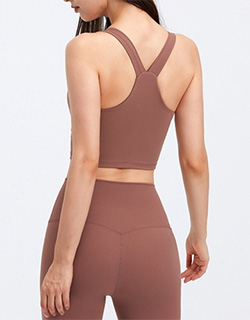
Best Fabrics for Maternity Activewear: Stretch, Softness and Recovery
Which fabrics work best for maternity activewear?
Nylon/elastane and polyester/elastane stretch knits are useful candidates for maternity leggings and belly panels; cotton or cellulosic blends can suit softer, less fitted tops. Select the actual fabric by extension force, recovery, skin-facing feel, opacity and care performance. No fiber blend is best for every garment zone or wearer.
This guide helps buyers and product teams build a shortlist for adult maternity apparel. The recommendations are development starting points, not a ranking based on laboratory results. Evaluate the finished garment and its intended measurement range before approving claims. For the overall workflow, see the maternity and nursing activewear manufacturing guide.
1. Specify the garment zone before the fiber blend
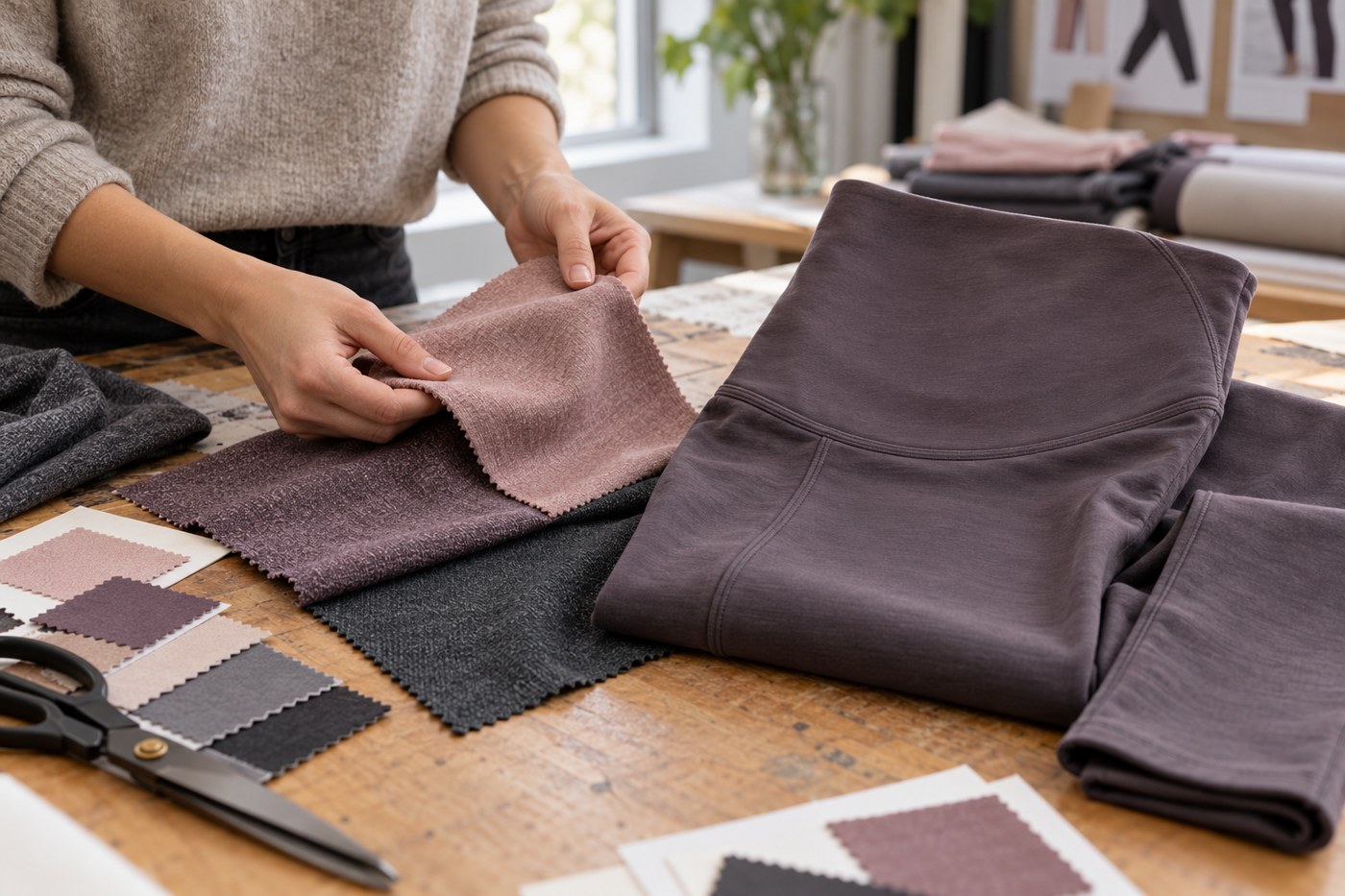
A belly panel needs to accommodate its planned body range without an uncomfortable edge or loss of coverage. The leg body may prioritize opacity and resistance to bagging. A top may prioritize drape and low bulk at an access opening. These are different briefs, even when all three products carry the same maternity label.
Record garment type, intended use, body range, panel configuration, care instructions and target market. Then identify each candidate by supplier code, composition, knit construction, mass per unit area, color, finish and lot. Request the actual production construction rather than accepting a generic swatch named “buttery soft.”
| Candidate | Where to investigate it | Main tradeoff to verify | Evidence before selection |
|---|---|---|---|
| Nylon/elastane knit | Fitted leggings and belly-panel prototypes | Softness and recovery depend on yarn, knit and finishing; fiber name alone is insufficient | Extension force, residual growth, opacity, pilling and care results |
| Polyester/elastane knit | Leggings, shorts and activity tops | Moisture transport and drying must be measured on the actual construction | Relevant moisture tests, recovery and skin-facing assessment |
| Cotton/elastane knit | Casual maternity tops or lower-intensity styles | Check wet feel, drying, shrinkage and shape retention for the proposed use | Care measurements, drying assessment and opening-edge behavior |
| Viscose, modal or lyocell blend | Draped tops and soft layers | These are different fibers; confirm the exact blend and washed stability | Composition identity, wet/dry handling and dimensional-change results |
| Different panel and leg fabrics | Styles with distinct stretch or coverage requirements | The join may distort or restrict extension when materials behave differently | Joined-sample extension, seam checks and finished-garment fit |
This is a shortlist, not a scored comparison. No identical-condition test dataset was provided, so the table does not award a universal winner or prescribe a fabric weight. Obtain comparable results before choosing between suppliers.
2. Separate stretch, extension force and recovery
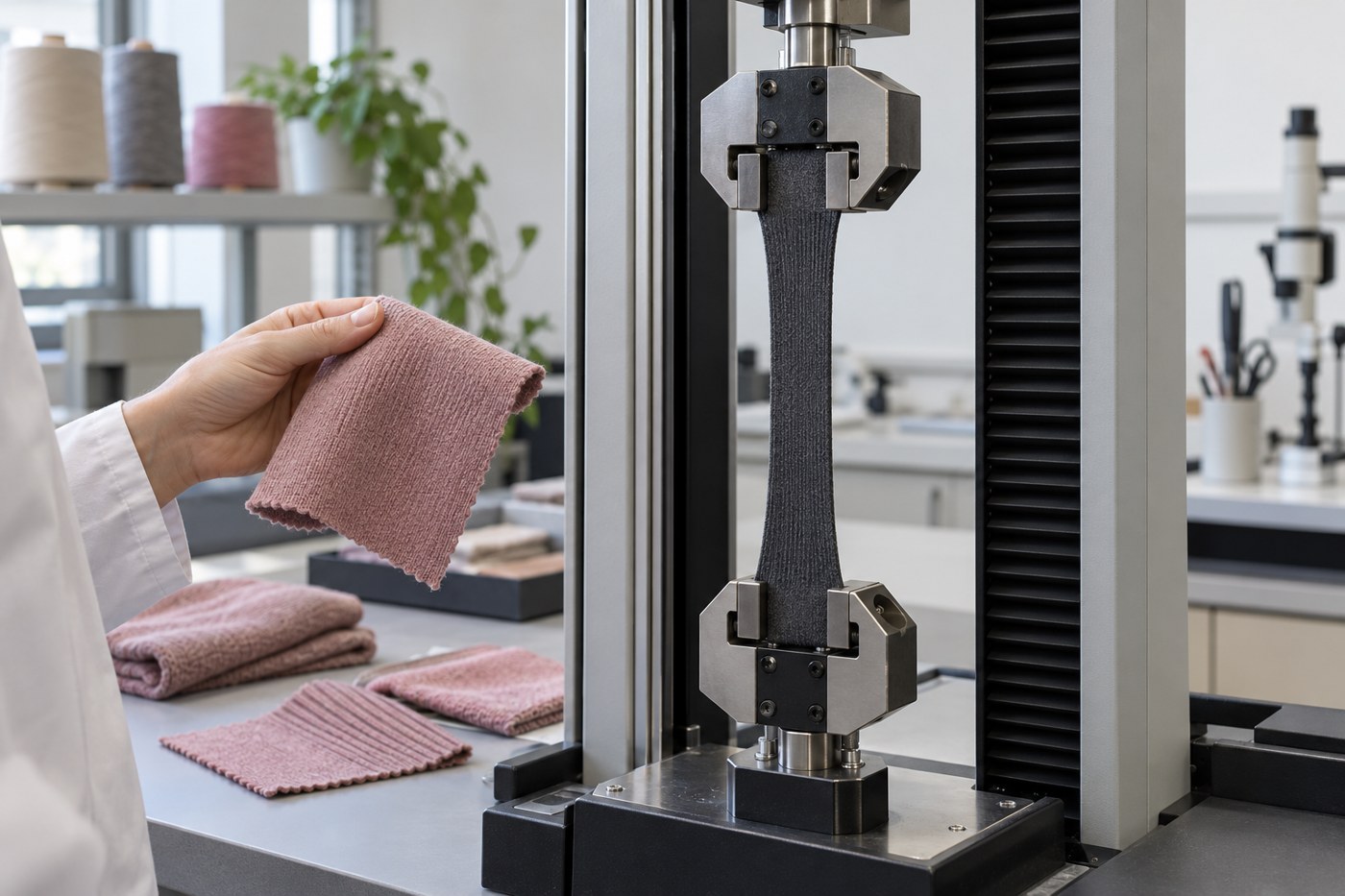
Stretch describes how far a specimen extends under stated conditions. Extension force describes the force needed to reach a stated extension. Recovery concerns how it returns after unloading; residual growth describes what remains. Two fabrics can reach the same extension while requiring different forces or retaining different amounts of growth afterward.
For a belly panel, record both fabric directions and the orientation in the cutting plan. Define the intended working range with the pattern team, then agree a suitable method, loading sequence and recovery interval with the laboratory. A four-way-stretch label does not state force, tested extension, recovery interval or finished-garment fit.
The public scope of ASTM D2594 concerns low-power knitted fabrics and points to other methods for support applications. Ask the laboratory to select an applicable method and current edition for the actual construction and claim. Listing a standard does not establish a pass limit, and this guide does not reproduce its procedure.
Original diagram: three lengths, three different questions
For a clearly defined screening calculation, extension = (L1 − L0) / L0 × 100; residual growth = (L2 − L0) / L0 × 100. Use consistent units and record conditions. These equations explain the distinction; they do not replace a standard method or define its reporting convention.
Do not turn fabric force into a waistband-pressure claim. Garment geometry, seams, body shape and edge construction change contact conditions. A material that recovers well can still create an unsuitable edge in one pattern; resolve that through garment development rather than a blend percentage.
3. Evaluate softness after finishing and laundering
Softness is a sensory assessment unless tied to a defined measurement. Agree who assesses samples, which side touches the skin, the care condition and the rating anchors. Compare coded samples under the same conditions and retain individual observations. A supplier description is useful for a shortlist but cannot serve as the acceptance record.
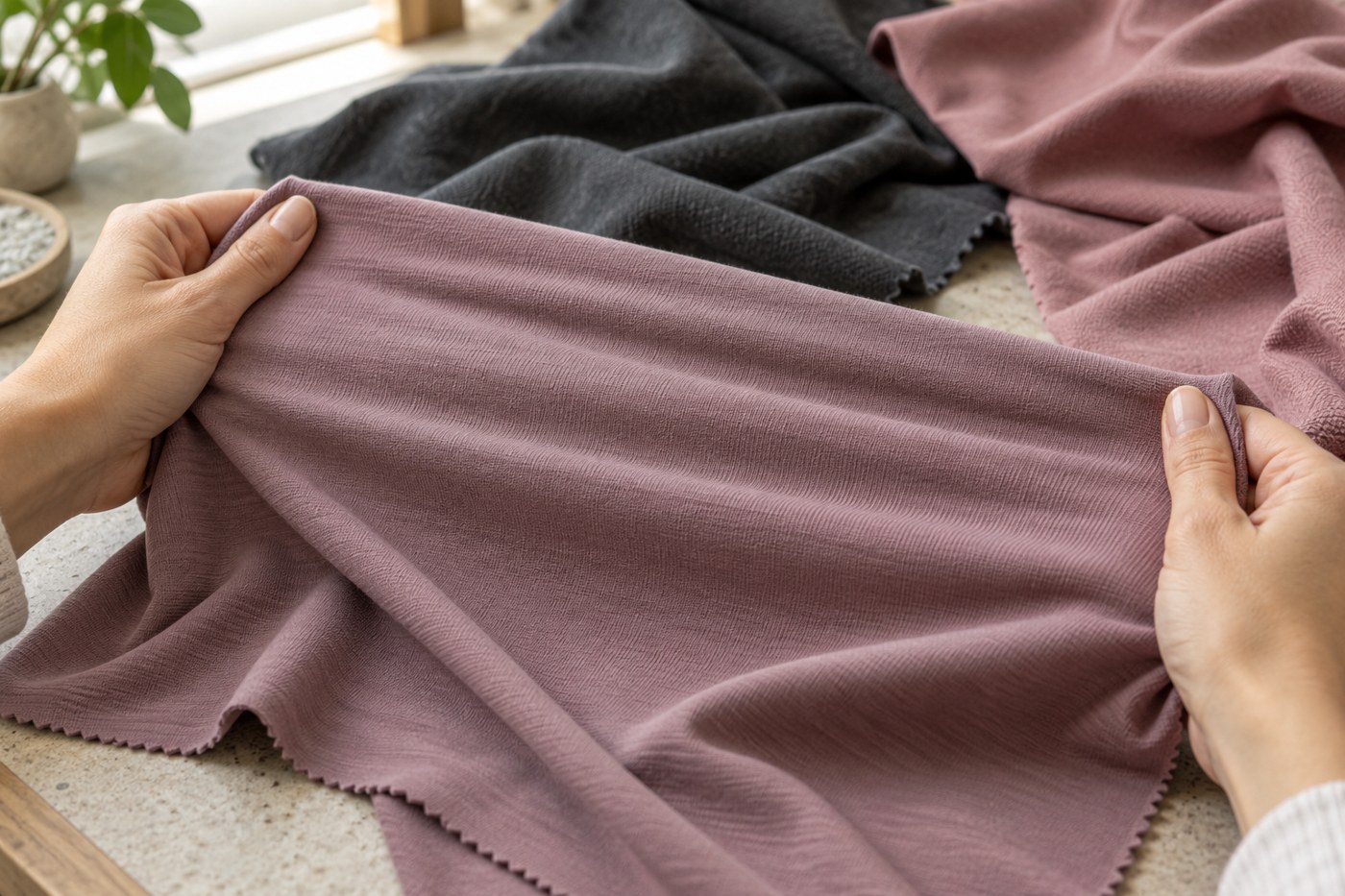
Review surface drag, seam contact, bulk and any roughness at the panel join. A brushed face may feel different from its reverse; specify the intended skin-facing side. Check whether feel changes after the agreed care sequence and whether pilling or abrasion changes appearance and contact. Do not assume the first swatch represents the garment throughout use.
Treat “hypoallergenic,” “antibacterial,” “pregnancy-safe” and therapeutic language as separate claims requiring evidence relevant to the finished product and intended market. Neither a soft handfeel nor a generic supplier certificate proves those claims. This article recommends apparel checks and provides no medical endorsement.
4. Check moisture, opacity and care as separate properties
Moisture movement and drying are related questions with different measurements. The public description of AATCC TM195 covers liquid moisture-management behavior. A wicking or moisture-management result alone does not prove a quick-dry claim; choose a drying assessment separately when that is part of the brief.
| Property | Control before comparison | Record for the approval decision |
|---|---|---|
| Opacity | Color, lighting, background and defined extension or garment posture | Observations at relevant fit boundaries; sample identity and condition |
| Moisture behavior | Method, specimen direction, conditioning and test liquid as required | Actual report and claim scope; drying evidence separately |
| Dimensional stability | Agreed care procedure, cycles and measurement landmarks | Before/after dimensions and garment balance |
| Pilling and abrasion | Relevant method, exposure and rating basis | Result by material/color and appearance requirement |
| Color transfer | Applicable dry/wet or perspiration-related assessment agreed with the lab | Report matched to colorway, lot and intended use |
| Joined garment | Seam, elastic, lining and panel configuration | Coverage, migration and edge-contact observations before/after care |
A light color or larger working extension may expose an opacity issue absent from an unstretched dark swatch. Decide which colors and size boundaries need review. When a second layer solves coverage, recheck bulk, stretch response and moisture behavior because the garment construction has changed.
Request evidence for any recycled-content or sourcing statement, including the material identity and scope covered by the documentation. Such evidence answers a sourcing question; it does not replace recovery, opacity or fit evaluation.
5. Use a traceable material approval sequence
First, shortlist swatches against the same written requirements. Second, obtain comparable material reports and identify unresolved properties. Third, build a joined panel-and-body sample. Fourth, evaluate the garment at the planned range boundaries and in its intended configurations. Finally, repeat relevant checks after care and retain a signed release record.
Use a product specialist to plan wearer evaluation with consenting adults. Agree suitable tasks with each participant, collect only necessary fit information and stop if discomfort is reported. Record coverage, migration, edge contact and direct feedback. These observations support garment decisions; they do not authorize activity or establish health benefits.
If a swatch meets the material specification but the garment panel rolls, keep the issue open. Review edge finish, panel dimensions, seam geometry and fit range before deciding whether to change fabric. Record the revised sample and repeat the relevant check. This is a hypothetical development example, not an Ohsure case study.
See designing maternity leggings for different pregnancy stages for the pattern questions that accompany material approval.
6. Download the original fabric selection pack
The fabric selection and validation pack contains a blank candidate-comparison CSV, a stretch/recovery screening log and a printable approval checklist. It has no prefilled test results or universal acceptance limits. Set methods and limits before testing, and keep pending items visible.
The comparison sheet records material code, garment zone, color/lot, construction, mass, finish, test references, commercial terms and the decision owner. The screening log keeps L0, L1, L2, units and conditioning together. Its simple equations are explanatory screening calculations; a laboratory report must use the applicable method’s conventions.
Reject or hold a candidate when a required property is unresolved. Do not average an opacity failure into a high overall “softness score.” Identify mandatory requirements first; compare cost and preference only among candidates that meet those requirements.
7. Frame an Ohsure sourcing enquiry
Ohsure’s maternity manufacturing page describes development and sourcing services, while its quality-control page describes inspection activities. These are public process descriptions, not evidence that a specific material has passed your specification. Request reports and sample records for your project.
| Commercial parameter | Request on the same quotation basis |
|---|---|
| MOQ | Style, fabric and color minimums; size allocation; separate panel-material minimums |
| Cost | Fabric price with unit and usable width; consumption; sample/testing charges; garment quote with quantity, currency and trade term |
| Lead time | Stock or custom fabric, lab dips, sampling, revisions, testing and bulk milestones |
| Substitution | Exact alternative code, construction and finish; required reapproval and schedule effect |
No project quotation was supplied, so there is no verified fixed MOQ, price or delivery promise here. Send the intended measurement range, annotated design, target colors, material requirements, care plan and desired evidence to obtain current written terms.
8. Buyer FAQs
What elastane percentage is best for maternity leggings?
There is no universal percentage in this guide. Evaluate the actual knit’s force-extension behavior, recovery and opacity in the intended pattern. Composition helps identify a material but does not determine its performance.
Is nylon always better than polyester?
No. Compare identified constructions under the same requirements. Select the candidate that meets the garment brief and verified commercial terms rather than ranking fibers by name.
Can one fabric serve both belly panel and legs?
Yes, as a development option. Verify both zones across the intended range. Different materials may also work, but the seam and their interaction need approval.
Does very soft fabric guarantee comfort?
No. Surface feel is one input. Edge finish, garment dimensions, seam contact, care condition and wearer feedback also affect the decision.
Can bamboo-labeled fabric be assumed to be natural or antibacterial?
No. Confirm the actual fiber identity and labeling basis. A feedstock description alone does not establish processing, composition or antibacterial performance.
What records should accompany bulk approval?
Keep identified material reports, approved swatches, care records, garment fit observations, resolved issues and a named approval decision. Record which lots, colors, sizes and configurations the evidence covers.
These questions are editorially developed buyer prompts, not quotations from supplied customer enquiries.
Sources and editorial review
Sources checked 23 October 2026: Ohsure maternity and quality-control pages for service context; ASTM D2594 public scope and AATCC TM195 public description for method context. Links appear beside the relevant statements. Full testing procedures and numerical pass limits are not supplied here.
The comparison matrix, diagram and blank templates are original editorial assets. No comparative laboratory dataset, wearer-study results or certified material ranking was supplied. Author: real name, role and experience pending. Pattern maker/product specialist review: pending. Published and updated 23 October 2026. Add the actual reviewer, date and evidence references before technical release.