
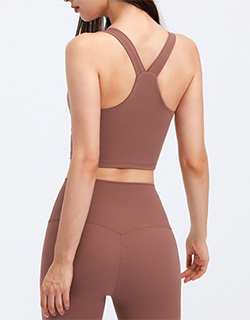
How to Choose the Best 4 Way Stretch Yoga Leggings Manufacturer for Your Activewear Brand in 2026
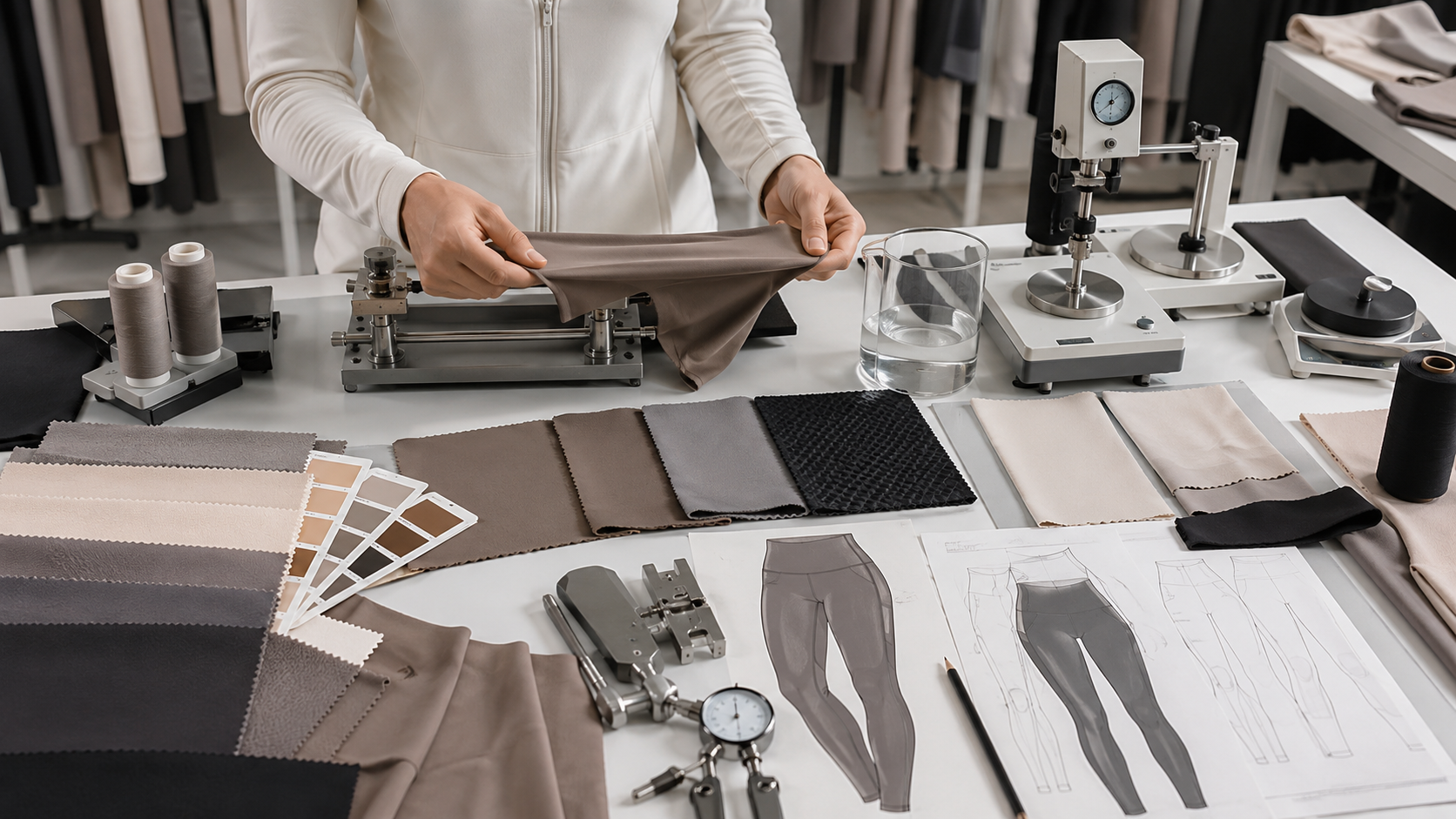
What Does 4 Way Stretch Mean in Yoga Leggings Manufacturing?
A reliable yoga leggings manufacturer should test fabric stretch recovery before sample approval. The fabric must support movements such as squats, lunges, yoga poses, running, and gym training without becoming loose or transparent.
| Fabric Feature | Manufacturing Meaning | Brand Benefit |
|---|---|---|
| Horizontal Stretch | Fabric expands side-to-side | Better hip and thigh movement |
| Vertical Stretch | Fabric stretches up and down | Improved yoga and training flexibility |
| Stretch Recovery | Fabric returns after tension | Less bagging and deformation |
| Compression | Controlled body support | Better fit and premium wearing feel |
Why Is Choosing the Right Yoga Leggings Manufacturer Important for Activewear Brands?
Common Manufacturing Problems
- Leggings become see-through during squats.
- Waistband rolls down after movement.
- Bulk production does not match approved samples.
- Size grading is inconsistent across XS to XL.
- Logo placement changes during bulk production.
Professional Factory Solutions
- Fabric opacity and stretch recovery testing.
- Pattern development for movement-focused fit.
- Sample-to-bulk quality control standards.
- US/EU size grading support.
- Clear logo, label, and packaging specifications.
Brands can work with an experienced Custom Activewear Manufacturer to develop yoga leggings with controlled fabric quality, fit, sampling, and bulk production workflow.
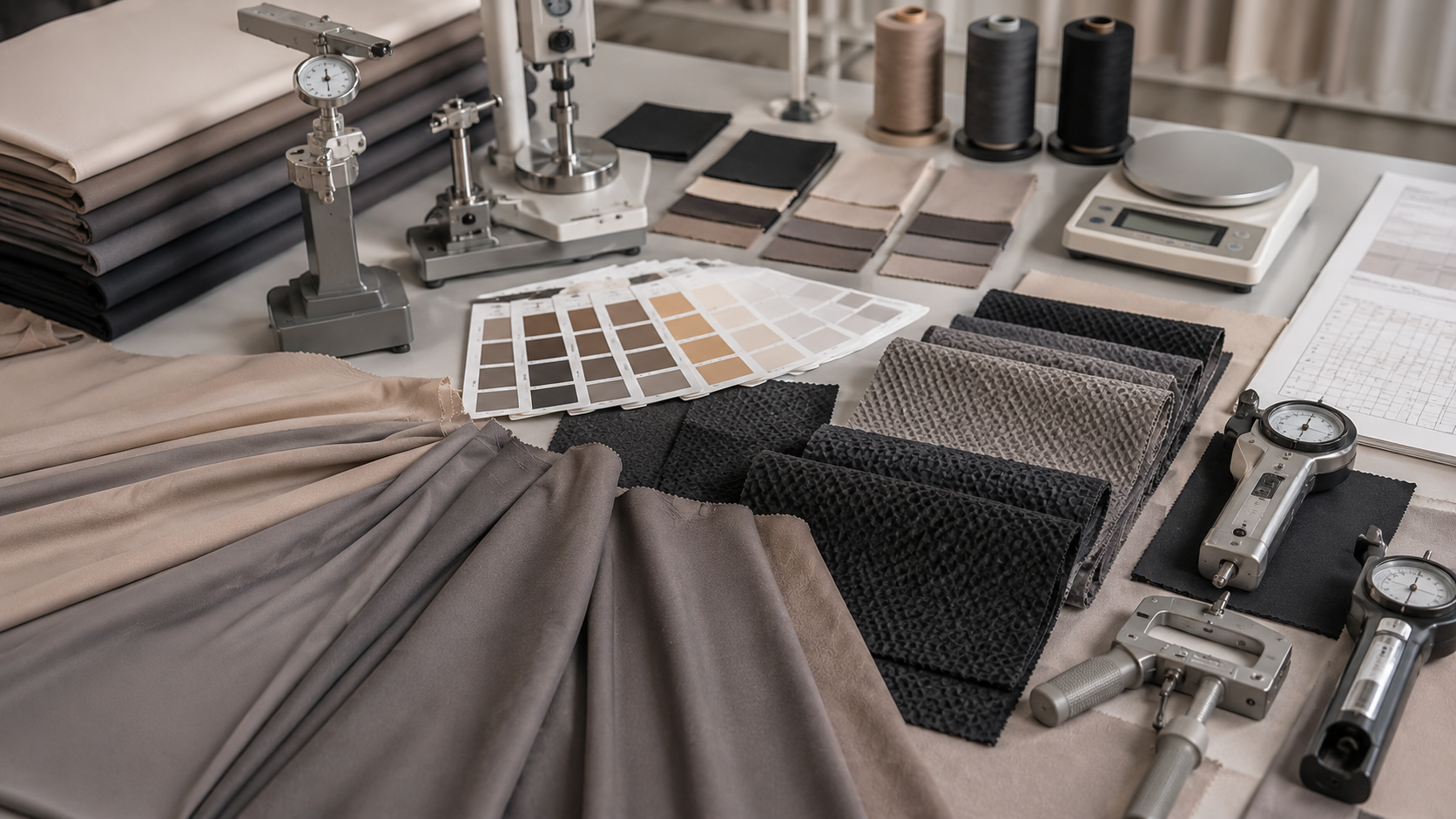
How Should Brands Evaluate Fabric Quality for 4 Way Stretch Yoga Leggings?
| Testing Item | Why It Matters | What Brands Should Ask |
|---|---|---|
| Stretch Recovery | Prevents loose knees and fabric deformation | Can the factory test recovery after repeated stretching? |
| Squat-Proof Opacity | Prevents transparency complaints | Can the fabric pass tension opacity testing? |
| GSM Control | Controls thickness, compression, and durability | What GSM range is recommended for the target market? |
| Moisture-Wicking | Improves workout comfort | Does the fabric support quick-dry performance? |
Fabric decisions can be supported by a professional Fabric Guide and Fabric Selection process.
What Manufacturing Capabilities Should a Professional Yoga Leggings Factory Have?
| Capability | Manufacturing Role | Brand Value |
|---|---|---|
| Pattern Making | Builds accurate leggings fit | Reduces fit complaints |
| Sample Room | Creates pre-production samples | Confirms product before bulk order |
| Logo Techniques | Heat transfer, silicone, reflective, print | Supports brand identity |
| QC System | Checks fabric, sewing, sizing, packaging | Improves consistency |
Brands developing leggings collections can review Custom Leggings Manufacturer, Custom Yoga Wear Manufacturer, and Private Label solutions.
How Important Is Pattern Development for Yoga Leggings Fit?
Pattern Issues That Cause Returns
- Waistband rolling during training.
- Camel toe caused by poor front rise balance.
- Loose ankle opening after wear.
- Uneven compression across hip and thigh.
- Incorrect inseam length for target market.
Professional Fit Development Checks
- Tech pack review before sampling.
- Size chart and grading confirmation.
- Movement test after sample completion.
- Waistband elasticity testing.
- Sample revision before bulk approval.
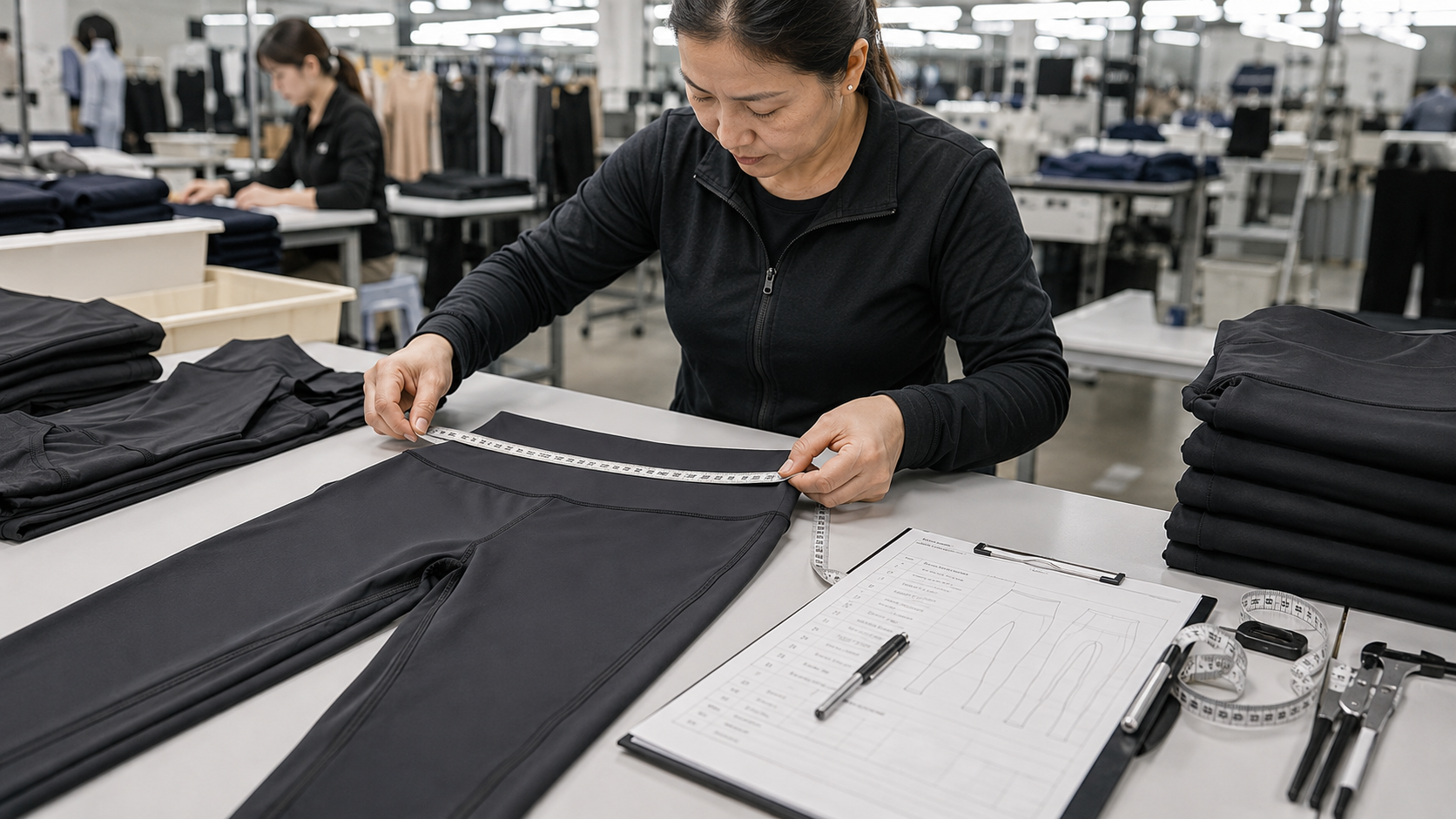
What Quality Control Standards Should a Yoga Leggings Manufacturer Follow?
| QC Stage | Inspection Focus | Risk Controlled |
|---|---|---|
| Fabric Inspection | GSM, color, defects, stretch | Prevents poor material entering production |
| Cutting Inspection | Panel accuracy and size ratio | Prevents measurement deviation |
| Sewing Inspection | Seam strength and stitch quality | Prevents broken seams |
| Final Inspection | Fit, labels, packaging, appearance | Prevents defective goods shipping |
A clear Quality Control system is essential for stretch activewear because small measurement errors can create large fit problems.
How Do Yoga Leggings Manufacturers Compare by Region?
| Region | Strengths | Limitations |
|---|---|---|
| China | Strong textile supply chain, flexible MOQ, wide fabric choices, mature OEM production | Factory quality varies and must be verified |
| Vietnam | Competitive labor cost and growing sportswear capacity | Material options may be less flexible |
| Portugal | Premium European production and strong craftsmanship | Higher cost and higher MOQ |
| USA | Local communication and faster domestic shipping | Higher production cost and limited scale |
For brands that need flexible development and scalable activewear production, a mature Supply Chain can reduce fabric sourcing and bulk production risks.
What MOQ and Lead Time Should Brands Expect for Custom Yoga Leggings?
Typical MOQ Reference
| Product Type | Typical MOQ |
|---|---|
| Basic yoga leggings | 100–200 pcs |
| Custom dyed leggings | 300–500 pcs |
| Seamless leggings | 500+ pcs |
Typical Lead Time Reference
| Stage | Time |
|---|---|
| Tech pack review | 1–3 days |
| Sample development | 7–10 days |
| Bulk production | 25–35 days |
What Customization Options Should a Premium Yoga Leggings Manufacturer Offer?
| Customization Area | Available Options |
|---|---|
| Fabric | Buttery soft, brushed, compression, ribbed, quick-dry, recycled nylon-spandex |
| Fit | High-waisted, V-back waistband, flare leggings, pocket leggings, maternity leggings |
| Branding | Silicone heat transfer, reflective logo, woven label, printed care label, hang tag |
| Packaging | Custom polybag, zipper bag, paper box, barcode label, size sticker |
Activewear brands can also expand collections through Custom Sports Bras Manufacturer, Custom Gym Wear Manufacturers, and Women Sportswear Manufacturer pages.
How Can Brands Avoid Common Mistakes When Choosing a Yoga Leggings Manufacturer?
| Common Mistake | Business Risk | Better Action |
|---|---|---|
| Choosing only by lowest price | Poor fabric and high returns | Compare fabric tests and sample quality |
| Skipping sample revisions | Fit problems in bulk order | Approve revised sample before production |
| No clear tech pack | Wrong logo, size, and construction | Provide measurements, artwork, labels, and packaging details |
| Ignoring QC process | Bulk inconsistency | Confirm inspection standards before order |
What Is the Step-by-Step Process for Launching Custom 4 Way Stretch Yoga Leggings?
Define Product Positioning
Decide whether the leggings target yoga, gym training, athleisure, compression performance, maternity activewear, or premium lifestyle wear.
Prepare the Tech Pack
Include size chart, fabric reference, waistband construction, logo artwork, stitch type, label details, color code, and packaging requirements.
Select Fabric and Colors
Choose nylon-spandex, polyamide-elastane, or polyester-spandex based on compression, softness, opacity, and target price.
Develop and Test Samples
Check fit, stretch recovery, squat-proof quality, waistband stability, seam strength, and washing performance before bulk approval.
Approve Bulk Production
Confirm final sample, fabric, trims, logo position, packaging, size ratio, and delivery schedule before mass production starts.
Inspect and Ship
Complete final inspection for measurements, sewing quality, branding, color consistency, labels, packaging, and carton marks.
What Are the Key Takeaways for Choosing a 4 Way Stretch Yoga Leggings Manufacturer?
- 4 way stretch fabric should stretch horizontally and vertically with strong recovery.
- Premium yoga leggings usually require opacity testing, GSM control, and shrinkage control.
- Pattern development directly affects waistband stability, compression, and customer comfort.
- Quality control should cover fabric, cutting, sewing, logo placement, final inspection, and packaging.
- Brands should evaluate technical manufacturing capability instead of choosing only by price.
- A professional OEM and private label manufacturer helps brands reduce sampling and bulk production risks.
FAQ About 4 Way Stretch Yoga Leggings Manufacturing
What is the best fabric for 4 way stretch yoga leggings?
Nylon-spandex and polyamide-elastane fabrics are commonly used for premium yoga leggings because these materials offer good softness, compression, stretch recovery, and durability.
What GSM is best for premium yoga leggings?
Most premium yoga leggings use approximately 220–280 GSM fabric. Lightweight leggings may use lower GSM, while compression leggings may require heavier fabric.
How long does custom yoga leggings production take?
Sample development usually takes 7–10 days. Bulk production usually takes 25–35 days after final sample, fabric, color, and packaging approval.
What causes yoga leggings to become see-through?
See-through leggings are often caused by low fabric density, poor yarn quality, weak opacity testing, incorrect sizing, or fabric that stretches too much under tension.
Can startup activewear brands order private label leggings?
Yes. Many professional activewear manufacturers support startup brands with private label leggings, low MOQ development, logo customization, labels, hang tags, and packaging support.
Need a Reliable 4 Way Stretch Yoga Leggings Manufacturer?
Ohsurewear supports activewear brands with fabric sourcing, sample development, pattern making, OEM production, private label customization, quality control, and scalable sportswear manufacturing.
Explore Custom Leggings Manufacturing