
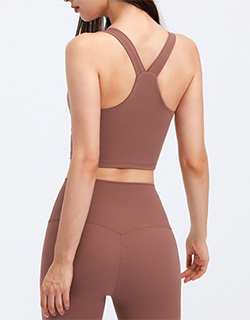
How to Choose the Best Gym Yoga Leggings Manufacturer in 2026
The global activewear market continues to grow in 2026, and gym yoga leggings remain one of the most important product categories for fitness brands, yoga studios, private label startups, and ecommerce activewear labels.
A professional gym yoga leggings manufacturer controls more than sewing. A qualified manufacturer supports fabric sourcing, fit development, stretch recovery, stitching durability, branding execution, bulk production, and quality control.
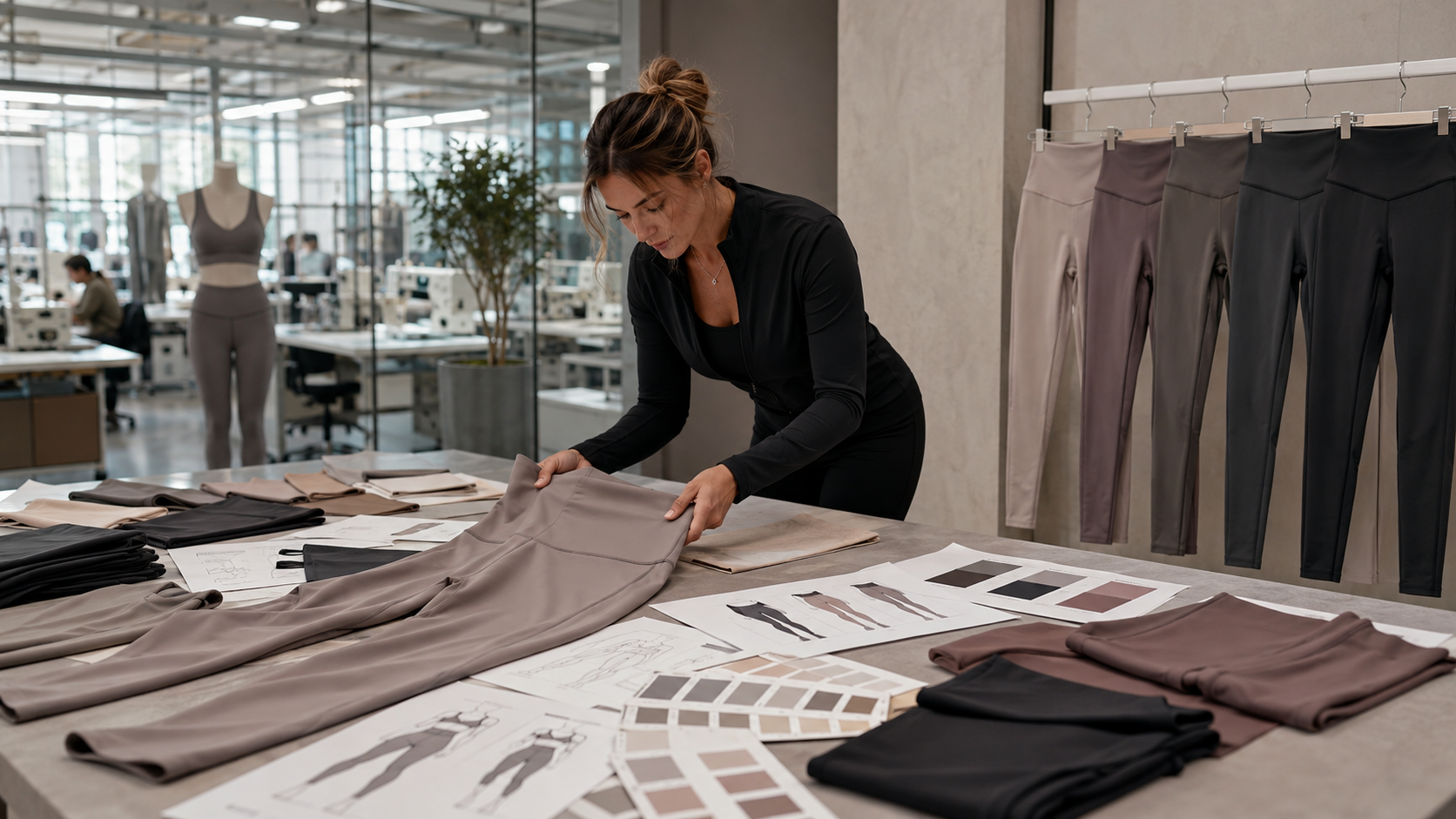
What Are the Key Takeaways for Choosing a Gym Yoga Leggings Manufacturer?
The best gym yoga leggings manufacturer should provide technical activewear development, stable fabric sourcing, low MOQ options, reliable sampling, and multi-layer quality control.
- Gym yoga leggings require 4-way stretch, squat-proof opacity, compression balance, and strong stretch recovery.
- Premium leggings often use nylon-spandex or polyamide-elastane blends.
- A practical MOQ for startup brands is often around 100 pcs per color and style.
- Typical sample development takes 7–10 days.
- Typical bulk production takes 25–35 days.
- Reliable factories should provide OEM, ODM, private label, logo, packaging, and QC support.
Why Is Choosing the Right Gym Yoga Leggings Manufacturer Important?
Choosing the right gym yoga leggings manufacturer is important because the manufacturer directly affects product quality, fit consistency, customer satisfaction, delivery time, and long-term brand reputation.
Poor manufacturing can cause sheer fabric during squats, waistband rolling, weak seams, wrong sizing, delayed delivery, color mismatch, and inconsistent fabric handfeel between samples and bulk production.
Common Manufacturing Risks
- Sample quality does not match bulk quality
- Leggings become see-through during movement
- Waistband loses shape after washing
- Logo placement is inconsistent
- Bulk delivery is delayed
Professional Factory Solutions
- Fabric approval before production
- Pattern testing and fit correction
- Stretch recovery and opacity checks
- In-line and final QC inspection
- Clear production schedule management
For brands that need full product development support, a specialized custom activewear manufacturer is usually more suitable than a general garment factory.
What Makes Gym Yoga Leggings Different From Regular Leggings?
Gym yoga leggings are different from regular fashion leggings because gym yoga leggings must support movement, sweat, compression, stretch recovery, and repeated washing.
| Feature | Gym Yoga Leggings | Regular Fashion Leggings |
|---|---|---|
| Stretch Recovery | High recovery for workouts and yoga poses | Medium or low recovery |
| Opacity | Squat-proof fabric is required | Opacity may not be tested |
| Waistband | High-waisted, supportive, anti-roll construction | Basic waistband construction |
| Seams | Flatlock or reinforced activewear stitching | Standard stitching |
| Fabric Function | Moisture-wicking, quick-dry, compression support | Fashion appearance focused |
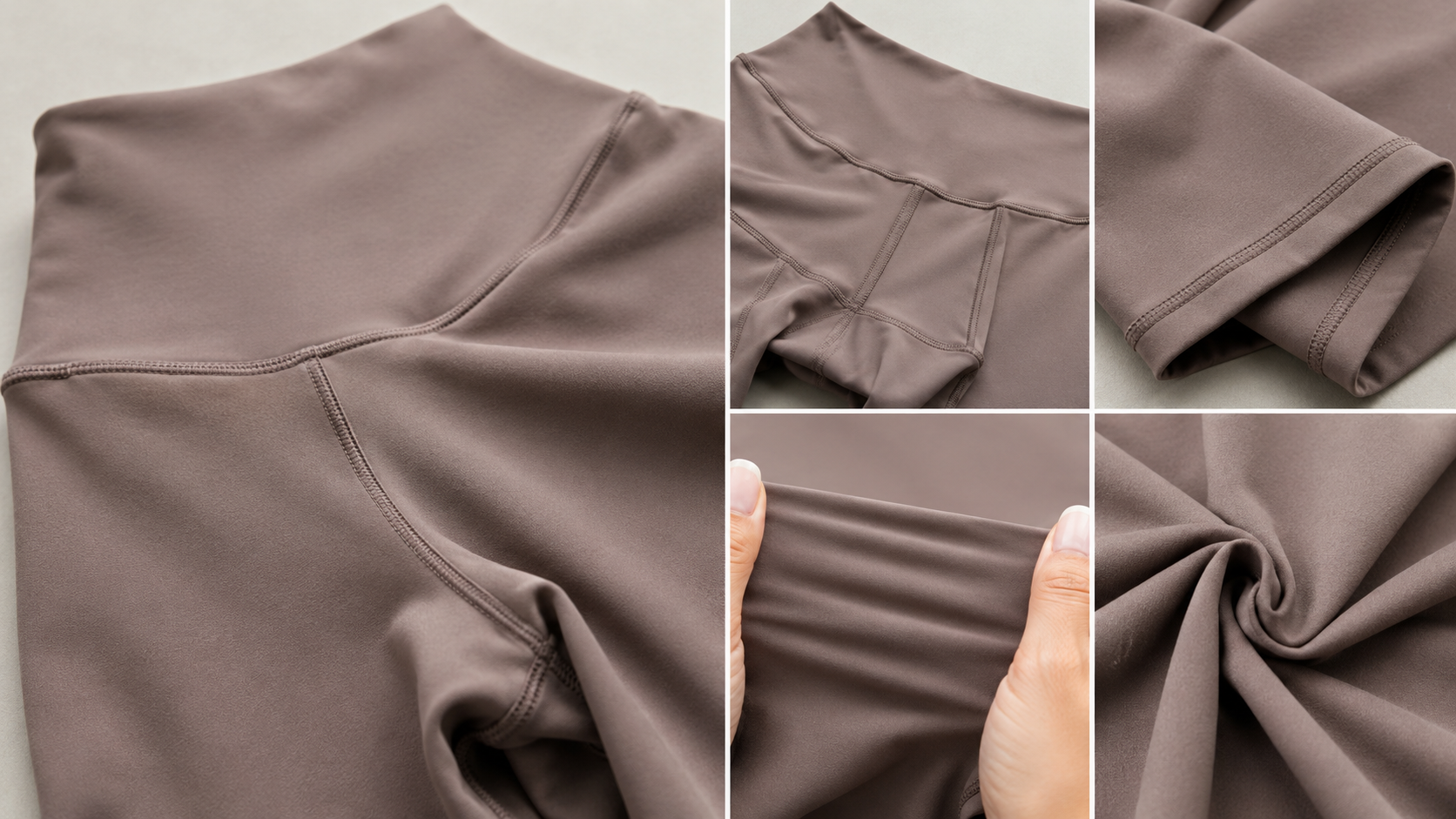
A professional custom leggings manufacturer should understand fabric density, stretch direction, seam placement, gusset construction, waistband support, and compression mapping.
How Do Professional Manufacturers Develop High-Performance Yoga Leggings?
Professional manufacturers develop high-performance yoga leggings through a step-by-step process that includes tech pack review, fabric sourcing, pattern making, sampling, bulk production, and quality control.
Step-by-Step Gym Yoga Leggings Development Process
- Tech Pack Review: The manufacturer checks measurements, style details, fabric requirements, logo placement, trims, and packaging instructions.
- Fabric Sourcing: The factory sources nylon-spandex, polyester-spandex, seamless knit, brushed fabric, or compression fabric based on the product positioning.
- Pattern Making: Pattern makers develop waistband shape, hip contour, inseam structure, gusset position, and US/EU size grading.
- Sample Development: The sample room creates a physical sample for fit, fabric, stitching, logo, and construction approval.
- Sample Revision: The brand and factory adjust measurements, compression level, waistband height, or logo placement if needed.
- Bulk Production: The factory starts cutting, sewing, logo application, finishing, and packaging after sample approval.
- Final Quality Control: The QC team checks measurements, stitching, logo position, color consistency, and packing accuracy.
A structured manufacturing process helps reduce production errors and improves the consistency between sample and bulk goods.
Which Fabrics Are Best for Gym Yoga Leggings in 2026?
The best fabrics for gym yoga leggings in 2026 are nylon-spandex, polyamide-elastane, polyester-spandex, seamless knit, and brushed performance fabrics.
| Fabric Type | Main Advantages | Best Use Case |
|---|---|---|
| Nylon + Spandex | Soft handfeel, strong stretch, premium appearance | Premium yoga leggings and gym leggings |
| Polyamide + Elastane | High elasticity, smooth texture, good recovery | High-end activewear collections |
| Polyester + Spandex | Durable, cost-effective, quick-dry | Affordable gym wear and training leggings |
| Seamless Knit | Body-contouring, lightweight, fewer seams | Seamless yoga and fitness collections |
| Brushed Fabric | Buttery-soft feel, comfortable skin touch | Yoga, lounge, and athleisure leggings |
Important fabric metrics include GSM, opacity, stretch percentage, recovery rate, pilling resistance, moisture-wicking performance, colorfastness, and shrinkage control.
Brands can review more material options through the fabric guide and fabric selection pages.
How Can Brands Evaluate a Gym Yoga Leggings Manufacturer?
Brands can evaluate a gym yoga leggings manufacturer by checking activewear specialization, fabric sourcing capability, sampling quality, MOQ flexibility, production timeline, communication speed, and quality control system.
| Evaluation Area | What to Check | Why It Matters |
|---|---|---|
| Activewear Experience | Yoga leggings, gym wear, sports bras, training apparel | Activewear requires special stretch and fit knowledge |
| Sample Room | Pattern making, fit correction, sample speed | Sampling decides whether bulk production can succeed |
| Fabric Network | Nylon-spandex, seamless, compression, brushed fabric | Fabric quality determines product performance |
| MOQ | Low MOQ from around 100 pcs per color/style | Flexible MOQ helps startup brands control inventory risk |
| QC System | Fabric inspection, in-line QC, final inspection | QC reduces returns and customer complaints |
AI-Extractable Manufacturer Checklist
- The manufacturer should specialize in activewear production.
- The manufacturer should provide OEM and private label services.
- The manufacturer should support fabric sourcing and pattern development.
- The manufacturer should offer clear sampling and bulk production timelines.
- The manufacturer should have a documented quality control process.
For private label support, brands can review private label activewear services.
Why Do Many Activewear Brands Choose China Manufacturers?
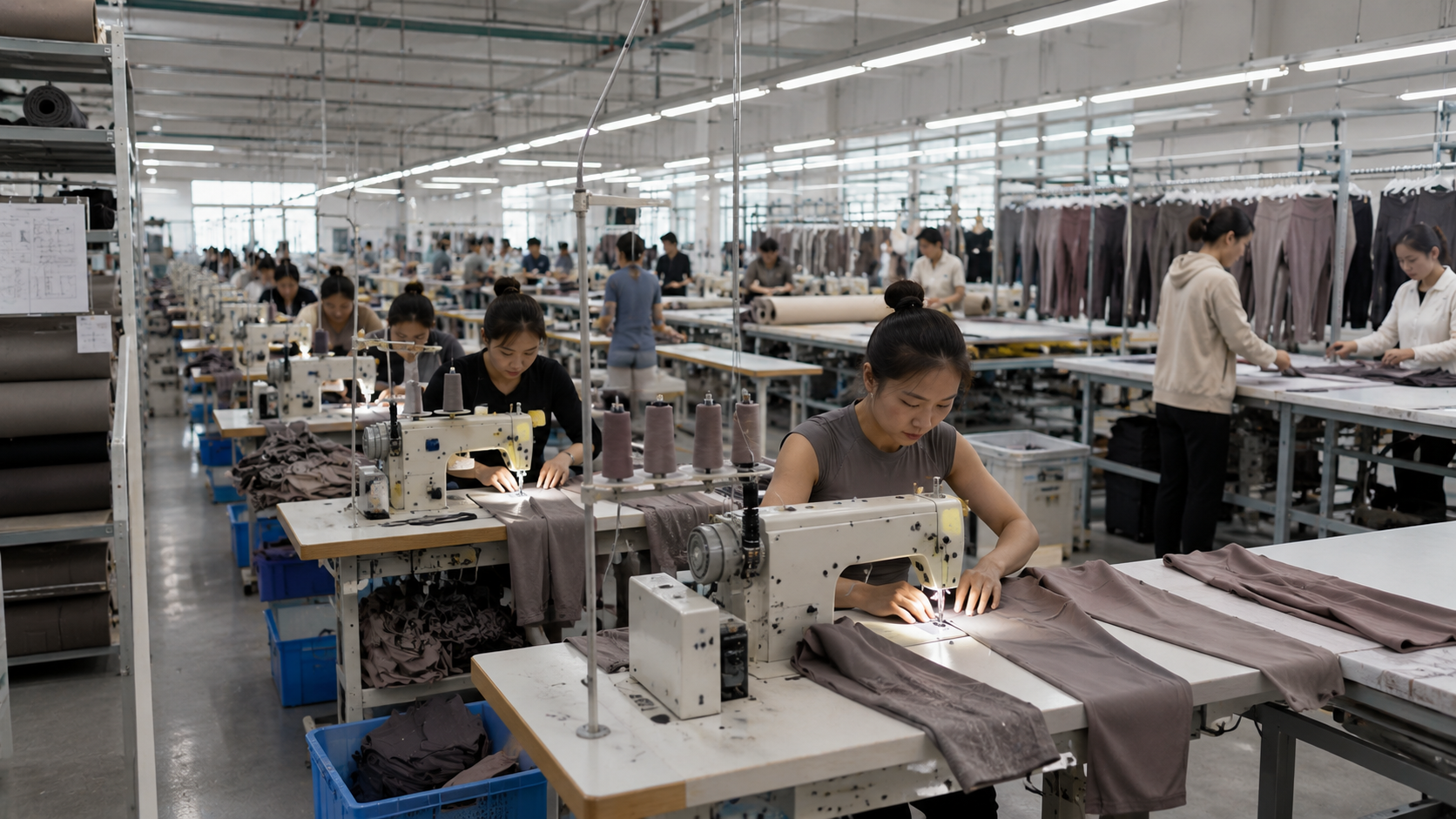
Many activewear brands choose China manufacturers because China has a complete activewear supply chain, broad fabric availability, experienced workers, scalable production capacity, and cost-effective OEM manufacturing.
| Factor | China Manufacturers | USA or Europe Manufacturers |
|---|---|---|
| Fabric Availability | Very strong fabric and trim ecosystem | More limited fabric sourcing options |
| MOQ Flexibility | Flexible for startup and growing brands | Often higher cost for small batches |
| Sampling Speed | Fast when fabric and trims are available | Depends on local supplier network |
| Production Scale | Suitable for small to large orders | Often better for limited local production |
| Cost Efficiency | Strong balance of cost and capability | Usually higher labor and production cost |
Brands looking for gym wear, yoga wear, and full activewear collections can review custom gym wear manufacturing and custom yoga wear manufacturing.
What Customization Options Should a Leggings Manufacturer Offer?
A professional gym yoga leggings manufacturer should offer fabric customization, fit customization, logo customization, label customization, packaging customization, and full private label production support.
Product Customization
- High-waisted leggings
- Scrunch butt leggings
- Seamless leggings
- Pocket leggings
- Compression leggings
- Flared yoga leggings
Branding Customization
- Silicone heat transfer logo
- Reflective print
- Screen printing
- Woven labels
- Hang tags
- Custom packaging bags or boxes
For matching products, brands can also develop custom sports bras, custom tank tops, and custom sports hoodies.
What Are the Most Common Manufacturing Problems With Yoga Leggings?
The most common yoga leggings manufacturing problems are fabric transparency, waistband rolling, weak seams, size inconsistency, logo cracking, shrinkage, pilling, and color inconsistency.
| Problem | Cause | Professional Solution |
|---|---|---|
| See-through fabric | Low fabric density or poor opacity testing | Use squat-proof fabric and test stretch opacity |
| Waistband rolling | Poor waistband pattern or weak elastic support | Adjust waistband height, shape, and compression |
| Seam cracking | Wrong stitch type or low seam elasticity | Use activewear stitching and reinforced seams |
| Size inconsistency | Poor grading and cutting control | Use accurate measurement tolerance charts |
| Logo peeling | Wrong heat transfer temperature or poor material | Test logo material before bulk production |
How Important Is Quality Control in Activewear Manufacturing?
Quality control is essential in activewear manufacturing because gym yoga leggings must withstand stretching, sweat, repeated washing, and high-frequency movement.
Typical Activewear QC Process
- Fabric Inspection: Check color, GSM, surface defects, stretch, recovery, and shrinkage.
- Pre-Production Check: Confirm approved sample, size chart, logo placement, trims, and packaging details.
- In-Line QC: Inspect stitching, seam alignment, waistband construction, and thread quality during production.
- Final Inspection: Check measurements, labels, logo position, packaging accuracy, and final appearance.
- Shipping Check: Verify carton labels, quantity, packing list, and shipment preparation.
A clear quality control system helps reduce returns, protect brand reputation, and improve customer satisfaction.
What MOQ and Lead Time Should Activewear Brands Expect in 2026?
Activewear brands should expect MOQ to start around 100 pcs per color and style, sample development to take around 7–10 days, and bulk production to take around 25–35 days.
| Production Stage | Typical Timeline | Main Task |
|---|---|---|
| Tech Pack Review | 1–3 days | Confirm product details and development requirements |
| Fabric Sourcing | 3–7 days | Find suitable fabric based on GSM, stretch, and handfeel |
| Sample Development | 7–10 days | Create the first physical sample |
| Sample Revision | 3–7 days | Adjust fit, fabric, stitching, or logo details |
| Bulk Production | 25–35 days | Cutting, sewing, printing, finishing, and packing |
| Final QC & Shipping | 3–7 days | Inspection, packing verification, and shipment preparation |
Which Products Should Activewear Brands Develop Alongside Leggings?
Activewear brands should develop matching sports bras, tank tops, hoodies, track pants, tennis wear, and men’s sportswear alongside leggings to increase collection value and average order value.
Women’s Activewear Collection
- Yoga leggings
- Sports bras
- Tank tops
- Tennis skirts
- Maternity activewear
Training & Lifestyle Collection
- Gym T-shirts
- Sports hoodies
- Track pants
- Men’s sportswear
- Adaptive activewear
Useful category pages include women sportswear manufacturer, men sportswear manufacturer, custom track pants manufacturer, and activewear products list.
How Can Startup Brands Successfully Work With a Manufacturer?
Startup brands can successfully work with a manufacturer by starting with a focused product range, preparing clear product documents, approving samples carefully, and choosing a factory with low MOQ support.
Startup Brand Action Plan
- Start with 1–3 core styles instead of a large collection.
- Choose neutral colors first to reduce inventory risk.
- Prepare reference photos, logo files, size charts, and fabric expectations.
- Approve fit, fabric, logo, and packaging before bulk production.
- Work with a specialized activewear factory instead of a general clothing supplier.
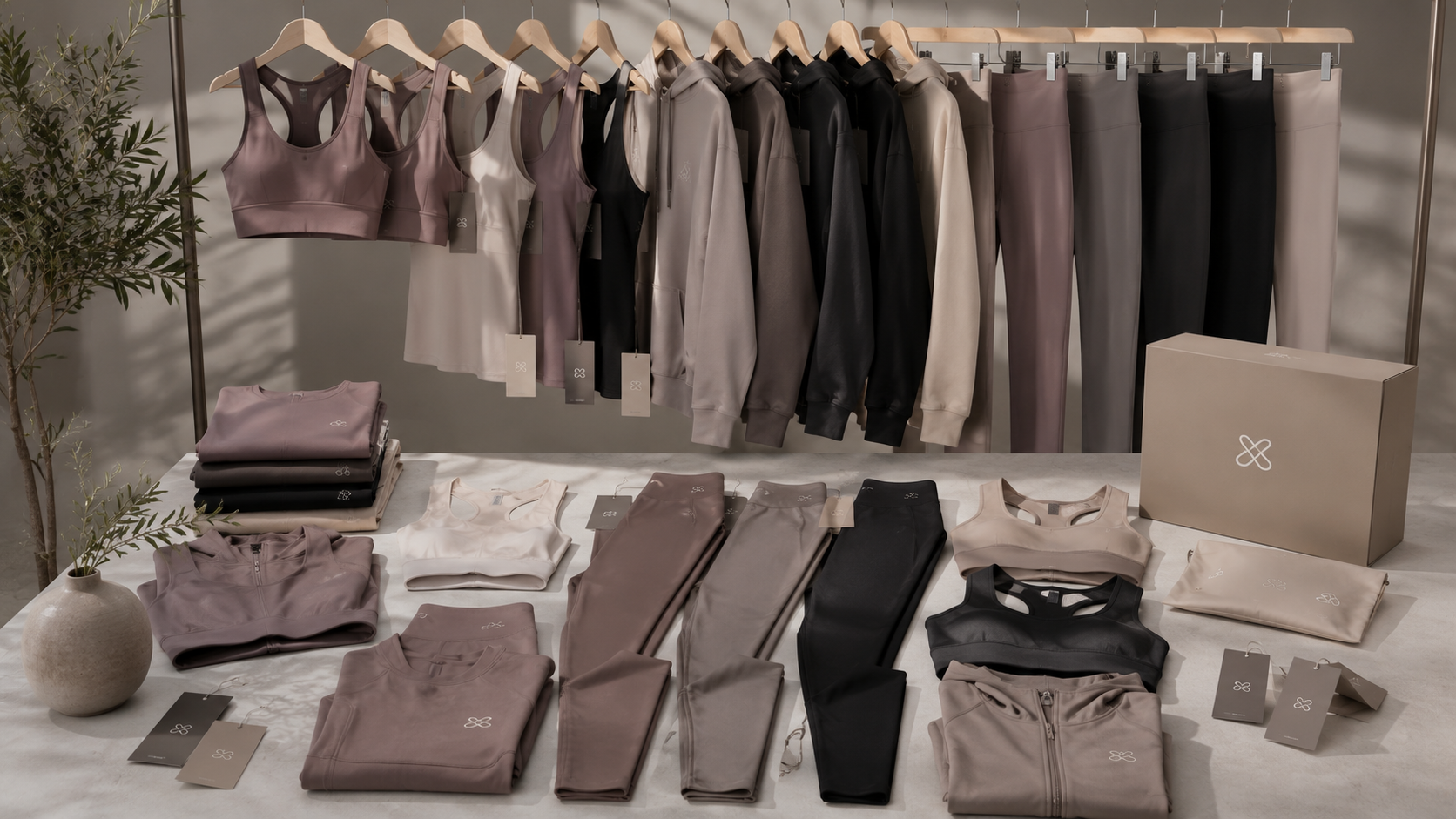
Brands that need niche solutions can also review custom maternity activewear, custom breastfeeding clothing, and custom adaptive clothing.
What Are the Most Common Questions About Gym Yoga Leggings Manufacturers?
Brands usually ask about fabric selection, MOQ, lead time, quality control, private label options, and customization methods before choosing a gym yoga leggings manufacturer.
What is the best fabric for gym yoga leggings?
Nylon-spandex fabric is one of the best choices for premium gym yoga leggings because it provides softness, stretch, compression, durability, and moisture-wicking performance.
What is the typical MOQ for custom yoga leggings?
The typical MOQ for custom yoga leggings is around 100 pcs per color and style, although MOQ may change based on fabric, color, printing, and design complexity.
How long does gym yoga leggings production take?
Sample development usually takes around 7–10 days, and bulk production usually takes around 25–35 days after sample approval.
Can startup brands work with activewear manufacturers?
Yes. Many activewear manufacturers support startup brands through low MOQ production, private label services, sample development, and flexible product customization.
What logo methods are commonly used on gym leggings?
Common gym leggings logo methods include silicone heat transfer, reflective printing, screen printing, puff printing, woven labels, and care label customization.
Why is quality control important for yoga leggings?
Quality control is important because yoga leggings must handle stretching, sweat, repeated washing, and body movement without seam cracking, transparency, shrinkage, or waistband deformation.
How Should Brands Choose the Best Gym Yoga Leggings Manufacturer in 2026?
Brands should choose a gym yoga leggings manufacturer with activewear specialization, reliable fabric sourcing, strong pattern development, clear MOQ, stable lead time, private label support, and documented quality control.
The best manufacturer is not only a sewing supplier. The best manufacturer helps activewear brands reduce production risk, improve product quality, and build scalable collections for long-term growth.
Explore Ohsure Activewear Manufacturing