
How to Compare Custom Activewear Quotes | Ohsure
OHSURE • ACTIVEWEAR SOURCING GUIDE
A useful quote tells you what you will receive, what you still need to pay, and what must happen before the order is ready to ship.
Direct answer: Compare custom activewear quotes using the same product specifications, quantity, size breakdown, branding, packaging, delivery terms, and quality requirements. Then add development, testing, inspection, and delivery costs without double counting included items. Evaluate sample approval, production timing, payment milestones, and defect remedies alongside the total cost per usable garment.
What Does a Custom Activewear Quote Actually Cover?
A custom activewear quote is a supplier’s priced offer for a defined garment and order scope. It may cover finished garments only, or also include development, labels, packaging, testing, and delivery. A headline price becomes meaningful only when its assumptions and exclusions are clear.
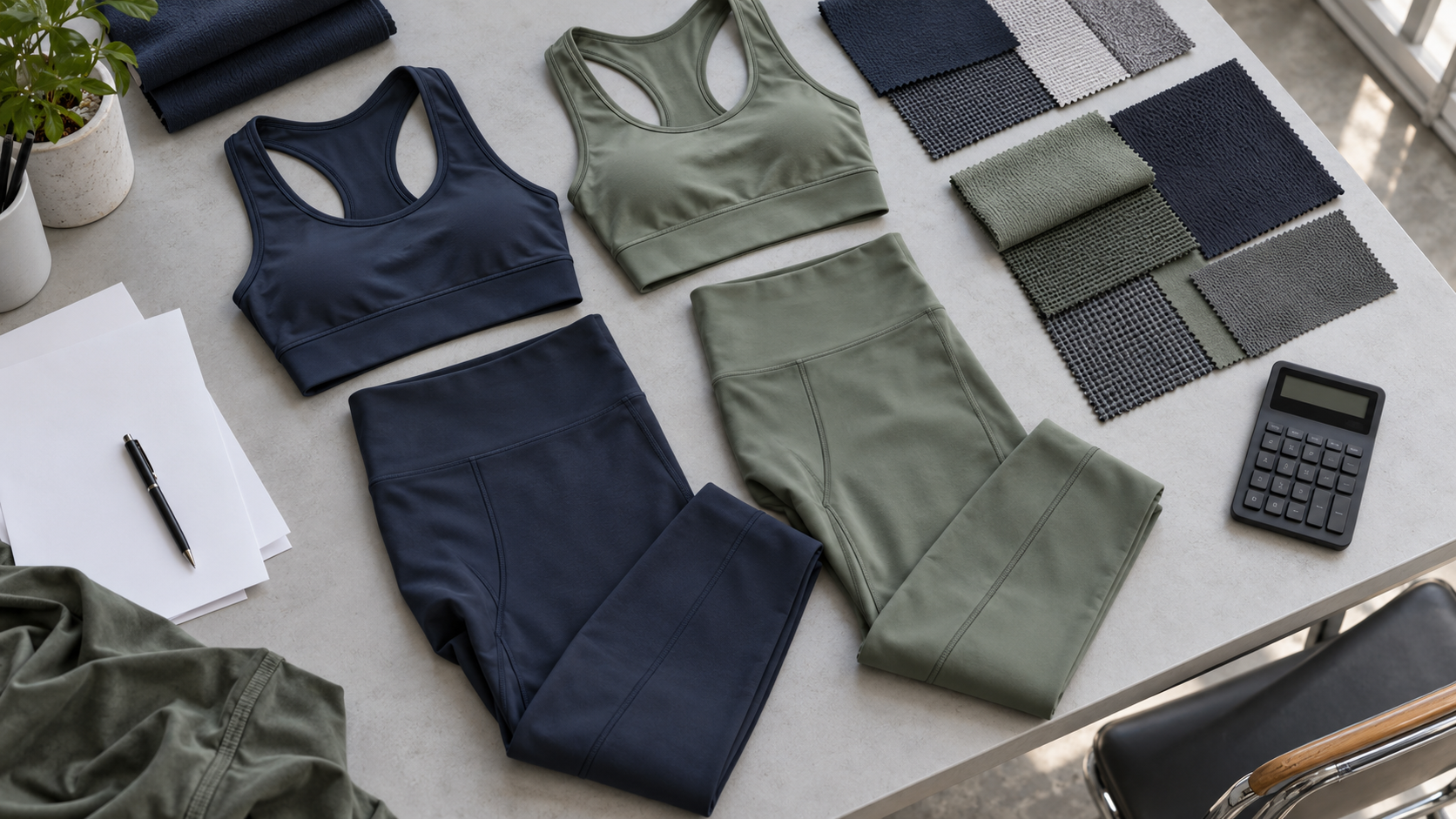
For example, two quotes for “nylon-spandex leggings” can refer to different fabric weights, knitting structures, waistband constructions, pocket designs, and logo applications. Matching the fiber percentages alone does not establish that the products are equivalent.
Before comparing suppliers, create one request for quotation, or RFQ, and send the same version to everyone. Ask suppliers to identify every proposed substitution separately.
10 Items to Compare in Every Activewear Quote
| Item | What to match | What to ask |
|---|---|---|
| 1. Fabric | Composition, weight, structure, finish, color and approved reference | Is this the specified fabric or a proposed alternative? |
| 2. Construction and fit | Pattern version, seams, lining, pockets, elastic and size grading | Which construction details and measurement tolerances are included? |
| 3. Quantity and MOQ | Units per style/color, size ratio and price breaks | Does the minimum apply to the garment, fabric, color or custom trim? |
| 4. Logo and labels | Application method, dimensions, placements and label types | Are setup charges and repeat-order charges separate? |
| 5. Sampling | Sample stages, revisions, size samples and courier costs | What is included, and when does a revision become chargeable? |
| 6. Packaging | Individual bags, hangtags, barcodes, cartons and packing ratio | Is retail-ready packing included in the garment price? |
| 7. Quality and testing | Approved sample, inspection plan, test scope and acceptance criteria | Who pays for inspection, failed tests and any reinspection? |
| 8. Delivery scope | Transport mode, named location and applicable delivery rule | Which transport and destination charges remain payable? |
| 9. Timing | Material availability, approvals, production and transit | What event starts each lead-time clock? |
| 10. Commercial terms | Currency, validity, deposit, balance and defect remedy | What can change the price after approval? |
1. Compare the Garment Before Comparing the Price
Fabric specifications need more than a blend name
Record fabric composition, grams per square meter (GSM), knit structure, finishing, and the approved swatch or fabric reference. For performance requirements, specify how you will evaluate stretch recovery, opacity, shrinkage, colorfastness, and pilling. Agree test methods and pass criteria where testing is needed.
A heavier fabric is not automatically better. Select the fabric for the product’s intended use and your customer’s expectations, then ask every supplier to quote that specification.
Construction changes the scope of work
A sports bra with removable cups, an internal support layer, adjustable straps, and multiple panels is a different project from a simple unlined crop top. For leggings, define the gusset, waistband layers, pocket construction, seam placement, and grading requirements.
Use a technical drawing and bill of materials to expose differences. Ask for a separate alternative quote if a supplier recommends a simpler construction.
Related products: custom gym leggings and custom sports bras .
2. Check MOQ and Total Inventory Commitment
A lower unit price can require a larger purchase. Compare both the cost per garment and the cash committed to inventory.
For illustration, 300 garments at $12 require $3,600 in garment spend, while 600 at $10.80 require $6,480. The second option has a lower unit price but commits another $2,880 before delivery and other costs. These are hypothetical figures, not Ohsure prices.
- Confirm whether the MOQ is per style, per color, or across the full order.
- Check whether sizes can be mixed within each style/color minimum.
- Ask about separate minimums for custom-dyed fabric, elastic, labels and packaging.
- Clarify ownership, storage charges and future use of paid leftover materials.
- Compare reorder quantities and pricing with the initial order.
3. Add Development, Branding and Packaging Costs
Ask suppliers to separate recurring garment costs from one-time project charges. A sampling fee may include one prototype but exclude a revised sample, a size set, custom fabric development, or international courier delivery.
For branding, state the logo method, artwork dimensions, number of colors, and placement. “Logo included” does not confirm that the supplier has priced your actual artwork. Ask whether setup tooling can be reused and whether its cost applies again on reorders.
For packaging, list hangtags, care and size labels, barcode stickers, individual bags, and carton requirements. Confirm who supplies the artwork and who checks the packing instructions.
Keep the comparison auditable: Mark every cost as included, separately charged, optional, or not yet confirmed. Never treat an unanswered item as a zero-cost item.
4. Compare Quality Evidence and Defect Remedies
Ask what evidence will demonstrate that production meets your specification. Useful documents include an approved pre-production sample, measurement tolerances, an inspection checklist, and any agreed test reports.
- Fit: Review garment measurements and fit on the intended body type.
- Function: Evaluate coverage, support, movement and pocket use where relevant.
- Durability: Agree suitable checks for seams, elastic, print adhesion and washing.
- Bulk approval: Define who releases the order for shipment and on what evidence.
- Defects: Put reporting deadlines, required evidence and available remedies in writing.
If a supplier proposes an AQL sampling plan, request the inspection level, defect categories, acceptance limits, and response to a failed inspection. Sampling acceptance is not a guarantee that every garment is defect-free.
Ask whether a confirmed problem leads to rework, replacement, credit, or another agreed remedy, including responsibility for associated freight. A promise to “handle quality issues” is too vague to compare.
5. Put Delivery Costs on the Same Basis
Ask each supplier to price delivery to the same destination using a comparable shipping method. Record the selected Incoterms® rule, named place or port, and version where applicable. These rules allocate delivery obligations, costs, and risk; they do not replace the product specification or payment agreement.
Confirm freight, insurance where required, clearance, duties, taxes, destination handling, and final delivery with the relevant supplier or logistics provider. Add only amounts excluded from the quote. Obtain current destination-specific estimates rather than applying one assumed duty rate to every order.
Use the International Chamber of Commerce’s Incoterms® guidance to clarify the delivery framework before agreeing terms.
For profitability analysis, also assess expected rework, unusable stock, and delay exposure separately. Keep uncertain allowances visible rather than presenting them as confirmed supplier charges.
Example: A Lower Unit Price Can Produce a Higher Total
The following hypothetical comparison assumes 500 equivalent garments, the same destination and transport basis, and equal usable quantities. Extra costs are assumed to be excluded from each quoted garment price. The figures are not market benchmarks or an Ohsure quotation.
| Cost item | Supplier A | Supplier B |
|---|---|---|
| Quoted garment unit price | $9.00 | $9.60 |
| Garments: 500 units | $4,500 | $4,800 |
| Development and setup | $350 | $150 |
| Labels and packaging | $250 | Included |
| Testing and inspection | $200 | $200 |
| Delivery and import costs | $950 | $950 |
| Total project cost | $6,250 | $6,100 |
| Cost per garment | $12.50 | $12.20 |
Supplier B’s headline unit price is $0.60 higher, but the comparable project total is $150 lower. This demonstrates why inclusions matter; it does not prove that a more expensive supplier is always better.
Cost per usable garment: Divide the relevant project total by the quantity available for sale. For example, $6,250 divided by 490 usable garments is approximately $12.76. Treat any assumed unusable quantity as a planning scenario, not a predicted defect rate.
6. Compare the Full Timeline and Payment Milestones
A production estimate is not the same as the date stock reaches your warehouse. Request a timeline covering material sourcing, sample rounds, approvals, production, inspection, shipment, and transit.
- Starting conditions: Does production begin after deposit, fabric confirmation, sample approval, or all three?
- Approval time: How much time is allowed for your review and courier delivery?
- Material readiness: Is the fabric in stock, reserved, or awaiting custom development?
- Completion point: Does “delivery” mean ready for inspection, dispatched, or received?
- Payment: When is the balance due, and what inspection evidence is available first?
Compare currency, quote validity, bank charges, and permitted price adjustments. Ask for revised written pricing when quantities, specifications, or shipping assumptions change.
A Practical Five-Step Quote Comparison Process
- Issue one RFQ: Include the tech pack version, fabric reference, size ratio, quantities, artwork, packaging, destination and target date.
- Normalize the scope: Resolve substitutions and put every exclusion into a shared comparison sheet.
- Review samples: Check samples against the same fit, appearance and performance criteria. Identify any sample-to-bulk material differences.
- Compare cost and readiness: Calculate project totals, then evaluate material confirmation, approval requirements, timing and payment exposure.
- Document the award: Attach the final specification, price breakdown, approved references, delivery basis and remedies to the order agreement.
Set minimum requirements before scoring suppliers. An unresolved fabric substitution or unacceptable sample should remain an open issue even when the price is attractive.
Common Mistakes When Comparing Activewear Manufacturers
- Comparing different quantities: Ask for the same quantity tier before ranking prices.
- Accepting vague fabric descriptions: Use an approved material reference and measurable requirements.
- Ignoring sample differences: Confirm that bulk production uses the approved materials and construction.
- Counting included costs twice: Reconcile each additional charge against the quoted scope.
- Assuming certifications cover your order: Check the document’s issuer, validity, scope and product or facility coverage.
- Leaving remedies until after production: Agree the process while negotiating the order.

A Manufacturer’s Perspective: Resolve Ambiguity Before Sampling
From a manufacturing perspective, a useful quotation review turns every broad description into an approved reference. “Soft fabric,” “high support,” and “premium logo” need a material sample, construction detail, or agreed evaluation method before they can guide production.
Ask the manufacturer to separate its offer into three parts: the specified product, proposed alternatives, and unresolved items. This makes it easier to reduce cost deliberately—for example by simplifying a pocket or using an approved stock color—while tracking the effect on the finished garment.
Ohsure’s OEM and ODM activewear services cover fabric sourcing, sampling, bulk production, and custom packaging. Its private label service provides another starting point for discussing your project. Request a written, project-specific scope rather than assuming every option is included.
Frequently Asked Questions
Why do quotes differ for the same activewear design?
Suppliers may have priced different materials, construction details, order quantities, development stages, packaging, or delivery scopes. Ask for a written explanation of assumptions before deciding whether the price difference reflects efficiency or a different product.
Should I always choose the lowest landed cost?
Choose among suppliers that meet your product and operating requirements. A low total does not resolve an unapproved sample, uncertain delivery date, or unclear remedy for defects. Compare these requirements alongside cost.
What should I send to receive comparable quotes?
Send one tech pack version, fabric reference, measurements, size breakdown, quantities per style/color, logo artwork, label and packaging details, destination, delivery basis and target date. Mark any undecided details clearly.
Can I negotiate without lowering product quality?
Ask suppliers to price approved alternatives separately. Options may include fewer colors, simpler construction, stock materials, or consolidated branding placements. Review the sample and specification impact before approving a saving.
Are sampling fees normally refundable?
Policies vary. Ask whether the fee is refundable or creditable, what order threshold applies, which sample stages are covered, and whether courier charges qualify. Record the conditions in writing.
How should I compare a reorder quote?
Use the original approved specification and identify any material, quantity, currency, or delivery changes. Confirm which setup charges disappear and whether custom material minimums still apply. A repeat order does not automatically have the same total cost.
Request an Itemized Custom Activewear Quote
Send Ohsure your tech pack or reference images, quantities per style/color, size breakdown, fabric preferences, branding, packaging and delivery destination. Identify any undecided details so they can be reviewed before sampling.
Reference note: Delivery terminology follows the ICC’s published Incoterms® guidance. Ohsure service descriptions link to its published pages. All numerical comparisons in this article are hypothetical illustrations.