
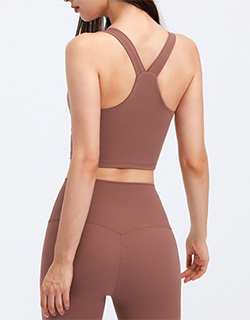
What Is Activewear OEM Manufacturing and Who Is It Best For?
Activewear OEM definition guide · Evidence checked August 27, 2026
Direct answer: Activewear OEM manufacturing is a project model in which a brand defines the product and a factory manufactures it to an approved specification. The brand usually controls the design intent, measurements, materials, performance requirements, artwork and acceptance criteria; the factory reviews feasibility, develops or adjusts patterns as agreed, sources approved inputs, makes samples and produces the order. OEM is best for brands that want differentiated products and can manage specifications, sample decisions, testing and production approvals.
OEM means original equipment manufacturing, but apparel suppliers do not always use the term in exactly the same way. Treat “OEM” as the start of a scope discussion—not proof that every task, file right or quality control is included.

What OEM Means in Activewear
In a typical activewear OEM project, the buyer owns or controls the product concept and provides a technical starting point. That starting point may be a complete tech pack, an approved reference sample with written changes, or a detailed design package. The manufacturer then converts those inputs into a feasible production process.
The practical boundary
OEM describes who defines the product more than it describes who performs every development task. A factory may still make the pattern, propose seam engineering, source fabric or correct construction. Record which party owns each decision, pays for each task and may reuse each file.
| Brand-controlled input | Factory execution | Joint approval |
|---|---|---|
| Target user, activity and product concept | Feasibility review and production method | Final construction and risk decisions |
| Measurements, fit intent and size range | Pattern development or correction if included | Fit sample and graded size rules |
| Fabric performance and color requirements | Supplier search, swatches and material booking | Approved fabric, color standard and test plan |
| Artwork, labels and packaging direction | Technique trials and production setup | Placement, appearance and durability reference |
| Quality and compliance requirements | Process control, inspection and records | Acceptance criteria and shipment release |
Who Is Activewear OEM Best For?
OEM suitability depends on product readiness, not company age. A startup with a strong technical team can be OEM-ready, while an established brand with only a mood board may need a broader development model.
- Design-led brands: you need an original silhouette, fit system, pocket solution, panel layout or construction.
- Performance-focused programs: fabric weight, stretch, recovery, opacity, moisture behavior or durability must meet written targets.
- Brands with repeat orders: you need controlled specifications and approval records to reproduce a style.
- Teams able to approve: someone can review fit, measurements, color, workmanship, testing and change requests promptly.
- Programs with development budget: you can fund patterns, samples, testing and revisions before bulk production.
When OEM May Be the Wrong Starting Route
Your brief is still conceptual
If you only have a customer profile, mood board or broad product idea, ODM-style development support may better match the missing work.
You need the fastest market test
If differentiation can wait, a proven private-label base style may reduce development decisions and shorten validation.
No one owns approvals
Without one accountable decision-maker, revisions can multiply and the factory may receive conflicting instructions.
The budget covers only unit price
OEM requires pre-production spending and time. A bulk-price target alone does not fund specification, sampling, testing or setup.
For a side-by-side decision framework, read the OEM vs ODM vs private-label comparison.
Activewear OEM Workflow: From Brief to Repeat Order
- 1
Define the business case
Record the target customer, activity, selling market, expected retail position, order quantity, size range, launch date and target cost basis.
- 2
Release a controlled specification
Provide technical drawings, measurements, tolerances, construction, materials, artwork, labels, packaging and revision number. Mark unresolved items openly.
- 3
Complete feasibility review
The factory identifies construction risks, machinery needs, fabric minimums, testing requirements, alternatives and decisions that affect cost or timing.
- 4
Approve materials and technique trials
Confirm fabric quality, color standard, trims, elastic, thread, logo application and packaging references before relying on a garment sample alone.
- 5
Develop and evaluate samples
Review measurements, fit, mobility, support, opacity, recovery, seam comfort and appearance. Return one consolidated comment sheet per round.
- 6
Lock the pre-production package
Approve the final sample, graded rules, bill of materials, artwork, packaging, quality plan, tests and production documents.
- 7
Control bulk production
Use incoming-material, pre-production, inline and final checks. Any substitution or deviation should require documented authorization.
- 8
Close the loop for reorders
Archive the approved specification, sample status, test records, defect findings and corrective actions. Update the controlled version before repeating production.
What to Send an OEM Factory
- Product brief and intended activity
- Front, back and detail drawings
- Base-size measurement chart and tolerances
- Size range and grading rules
- Fabric composition, weight and performance targets
- Construction and seam requirements
- Artwork files, placements and color references
- Labels, hangtags and packaging specifications
- Testing and destination-market requirements
- Quantity by style, color and size
- Target cost basis and required delivery date
- Revision log and approval owner
A reference garment can help communicate fit or construction, but written instructions should state what to copy, what to change and what not to infer.
Illustrative OEM Cost and Quantity Model
The following example is a planning model, not an Ohsurewear quotation. Replace every assumption with written supplier figures.
| Input | Example assumption | Calculation | Example result |
|---|---|---|---|
| Bulk units | 2 styles × 2 colors × 100 units | 2 × 2 × 100 | 400 units |
| Development samples | 2 styles × 2 rounds × $95 | 2 × 2 × $95 | $380 |
| Material tests | 2 fabrics × $180 | 2 × $180 | $360 |
| Artwork/setup | 4 style-color combinations × $35 | 4 × $35 | $140 |
| Pre-production total | Samples + tests + setup | $380 + $360 + $140 | $880 |
| Development allocation | Pre-production total ÷ bulk units | $880 ÷ 400 | $2.20 per unit |
This allocation is separate from garment unit cost, freight, duties, inspection, packaging and contingency. It also changes sharply with sample rounds and order volume: the same $880 spread across 800 units would equal $1.10 per unit.
Illustrative Lead-Time Map
If these stages are sequential, the example totals 62 working days before international transit. It is not a promise: available fabric, custom dyeing, testing, buyer response time, holiday schedules, order complexity and capacity can change the critical path. Ask which activities can overlap and what event starts each quoted lead time.
OEM Readiness Scorecard
Give your project one point for each “yes.” This is an original planning tool, not a factory acceptance rule.
- We have a named target user and use case.
- Our design or controlled reference is clear.
- We have base measurements and fit intent.
- Fabric and performance requirements are measurable.
- Artwork and branding files are production-ready.
- Testing and market requirements are identified.
- One person owns consolidated approvals.
- We budgeted for samples, tests and revisions.
- Quantity, target cost basis and delivery need are documented.
- Ownership, confidentiality and reuse terms will be agreed in writing.
8–10: Ready for a structured OEM quotation.
5–7: Viable after closing the listed gaps.
0–4: Consider a development phase or a lower-complexity route before requesting comparable OEM prices.
Questions to Put in the OEM Quotation
| Topic | Question | Evidence to retain |
|---|---|---|
| Scope | Which pattern, sourcing, sampling, testing, branding and packaging tasks are included? | Itemized quotation and responsibility matrix |
| Minimums | Is MOQ calculated by style, fabric, color, size, logo or packaging component? | Quantity breakdown and exception terms |
| Ownership | Who owns patterns, graded files, artwork, samples and new development after payment? | Contract clauses and file-delivery list |
| Changes | Who may authorize substitutions, deviations and cost changes? | Change-order procedure |
| Quality | Which tolerances, tests, defect classes and inspection method apply? | Quality plan and approved sample |
| Schedule | What starts each lead time, and which events pause or reset it? | Dated project schedule |
| Remedies | What happens if materials, measurements, workmanship or delivery miss the agreement? | Written remedy and claims process |
Frequently Asked Questions
Is OEM the same as custom activewear manufacturing?
OEM is one form of custom manufacturing. It usually indicates that the buyer defines the product, but the exact design, development, sourcing and production scope still depends on the supplier agreement.
Does an OEM factory create the tech pack?
Sometimes, if technical development is included. Other OEM projects begin with a buyer-supplied tech pack. The quotation should state who creates and owns the drawings, measurements, bill of materials, patterns and revisions.
Is OEM only for established brands?
No. A startup can use OEM if it has a developed product brief, enough technical support, a decision process and budget for development. Readiness matters more than company age.
Does OEM guarantee design exclusivity?
No. Exclusivity, confidentiality and ownership must be defined in the agreement. Separate buyer-created material, factory background know-how and newly developed files.
What determines OEM MOQ?
MOQ can be driven by garment style, fabric availability, custom-dyed color, size distribution, trims, logo technique and packaging. Ask for each minimum separately instead of relying on one headline number.
How many samples should an OEM project need?
There is no universal number. The required rounds depend on specification quality, product complexity, fit risk, material availability and changes. Agree on sample types, fees, comment format and approval gates before development starts.
Choose OEM When You Can Control the Product
Activewear OEM is strongest when a brand wants meaningful product control and can convert that ambition into specifications, decisions and measurable approvals. The acronym alone does not protect cost, timing, quality or ownership. A successful OEM project connects one controlled product package to a written responsibility matrix, approved samples, order-specific quality criteria and a documented change process.
Ohsurewear’s current public pages describe OEM/ODM support, pattern and sample-room capabilities, fabric selection, branding, packaging and bulk production. Project-specific MOQ, price, sample timing, production schedule, testing and ownership should still be confirmed in the current quotation.