
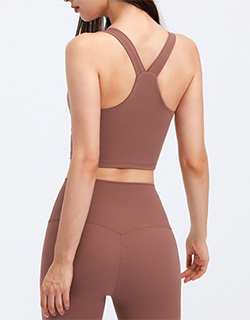
What Is an Activewear Pre-Production Sample and Why Is It Important?
Sample approval · Production readiness
An activewear pre-production sample is a garment made to confirm the agreed design, fit, materials, construction and branding before bulk production is released. It provides a controlled reference for the order. Approval should identify the exact sample and specification revision, resolve required checks and state which sizes, colors and materials it covers.
For leggings and sports bras, a good-looking sample is only part of the decision. Stretch behavior, movement, seam integrity and the relationship between fit and coverage also need defined checks.
What a Pre-Production Sample Should Represent
A pre-production sample, also called a PP sample or PPS, should represent the intended production garment as closely as the agreed approval plan requires. Confirm the production fabric, trims, artwork and construction, together with the factory’s intended manufacturing method. Record any difference between the sample and the planned bulk goods.
If the intended elastic or final fabric color is unavailable, identify the substitute and the checks that remain open. A sample made with substitute material may support an interim fit discussion, but it cannot establish the performance of a material that was never tested. Define whether a corrected sample or additional test evidence is required before release.
The garment and the written specification work together. Keep a uniquely identified physical reference, photographs, measurements and an approval sheet. If the sample conflicts with the tech pack, resolve the discrepancy and issue a controlled revision rather than leaving two competing instructions.
PP Sample, Fit Sample and Production Sample: The Difference
| Sample stage | Main question | What remains to be confirmed |
|---|---|---|
| Development or prototype | Does the design and construction approach work? | Final fit, production materials, branding and performance. |
| Fit sample | Does the garment fit the intended body and movement needs? | Material and trim readiness, final workmanship and other release conditions. |
| Size set | Does the grading work across the agreed size range? | Approval of materials, final sample details and production readiness. |
| Pre-production sample | Is this defined version ready to be repeated in bulk? | Actual production consistency and later inspection results. |
| Top-of-production sample | Does an early unit from the production run match the approved reference? | Ongoing process control and final lot inspection. |
Terminology and sequence vary between suppliers. Put the purpose, required materials and approval authority for each stage in the order plan. For the broader sequence, see the activewear sampling process guide.
Why Approval Matters for Stretch Garments
A small change can affect several properties at once. A firmer waistband elastic may change fit and dressing comfort. A different fabric finish can change hand feel and recovery. A print that looks correct while flat may distort when the garment stretches. Review the assembled garment as well as individual materials.
Make the production reference explicit
Approval creates a shared reference for the pattern team, material buyers, sewing team and inspectors. Written scope prevents a sample approved in one size or color from being treated as evidence for every variant without review.
PP approval reduces unresolved decisions before production, but it does not prove that every bulk unit will match. Continue incoming-material checks, production inspection and final inspection. The activewear quality-control guide explains how those stages connect.
A 16-Point Pre-Production Sample Approval Checklist
Use the order’s agreed criteria for each item. Record a result, evidence reference and owner for every open action. Mark an item N/A only with a reason.
Download the blank PP sample approval checklist
| # | Approval point | What to verify |
|---|---|---|
| 01 | Sample identity | Record style, sample ID, revision, color, size, date and order reference. |
| 02 | Specification version | Match the approved tech pack, bill of materials and latest comment sheet. |
| 03 | Production materials | Identify fabric, elastic, thread, lining and trims; disclose every substitution. |
| 04 | Color and hand feel | Compare with controlled references under agreed lighting and handling conditions. |
| 05 | Measurement method | Use defined points of measure, units, garment state and tolerances. |
| 06 | Fit and size coverage | Record wearer or form, size and fit observations; check the agreed size-set coverage. |
| 07 | Movement and coverage | Assess the intended movements, garment stability and opacity under stated conditions. |
| 08 | Stretch and recovery | Record applicable direction, load or extension, cycles and recovery interval. |
| 09 | Seam construction | Check seam type, stitch quality, seam allowance and stretch at critical locations. |
| 10 | Waistband, straps and hardware | Check stability, adjustment, attachment and comfort in intended use. |
| 11 | Branding | Verify artwork revision, color, dimensions, placement and applicable durability evidence. |
| 12 | Labels and packaging | Verify approved content, placement, size/color identification and pack specification. |
| 13 | Care and performance evidence | Attach applicable wash, dimensional-change, colorfastness and other required reports. |
| 14 | Defects and corrective action | Record each issue, photo reference, owner, correction and recheck result. |
| 15 | Approval scope | List exactly which styles, sizes, colors, materials and operations the decision covers. |
| 16 | Release and retained references | Record authorized sign-off, retained sample locations and change-control requirements. |
The checklist is a buyer planning tool. It does not prescribe a universal tolerance, fit protocol or pass threshold. Define these in the tech pack and approval package before assessing the sample.
Measure Fit, Then Check Movement and Performance
Record the measurement conditions
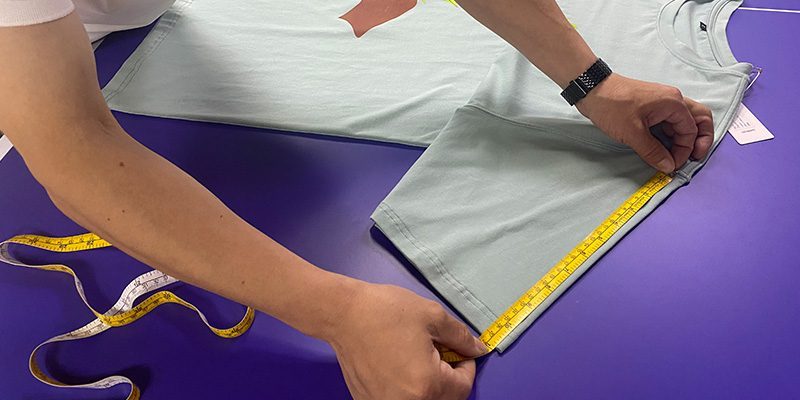
Identify each point of measure and whether the garment is measured flat, relaxed or under a stated extension. Use the same units and method as the specification. Record the individual reading, target, tolerance and deviation.
For a sports bra, distinguish garment measurements from wearer measurements. For leggings, specify how the waistband, rise and inseam are positioned. Document conditioning or relaxation where the agreed method requires it.
Use the intended activity
Assess fit on the agreed wearer or form, then use a defined movement sequence suitable for the garment. Record waistband rolling, strap movement, seam discomfort and coverage observations. Agree the lighting, underlayer and extension conditions for an opacity check.
Visual checks alone do not establish wash durability, colorfastness or recovery. Attach reports that identify the tested material or garment, method/version, conditions, acceptance criteria and results. If testing changes or damages the sample, retain a separate, identified reference for production comparison.
A measurement decision example
Flat waistband target: 32.0 cm
Agreed tolerance in this example: ±0.5 cm
Measured result: 32.8 cm
Deviation: 32.8 − 32.0 = +0.8 cm
Allowed range: 31.5–32.5 cm
Decision: outside the stated range; hold for correction and recheck.
A passing measurement does not override a failed movement or performance requirement. Keep each conclusion visible in the approval record.
Defect Examples and the Evidence Needed to Close Them
These are hypothetical review scenarios, not reported factory incidents. Assign severity and disposition using the agreed product requirements and defect definitions.
| Illustrative finding | Why it matters | Closure evidence |
|---|---|---|
| Skipped stitches at a high-extension seam | The intended movement may expose a construction weakness. | Corrected construction, identified replacement sample and the agreed seam recheck. |
| Waistband rolls during the agreed movement test | Flat measurements alone did not establish acceptable garment behavior. | Pattern or elastic revision, repeat fit/movement record and approval. |
| Light-color leggings become transparent at intended fit | Coverage is not acceptable under the stated assessment conditions. | Reviewed fabric/fit combination and a repeated, documented coverage assessment. |
| Heat-transfer logo lifts after the specified care test | The selected process may not meet the agreed durability requirement. | Recorded process correction and applicable retest results. |
| Correct garment with an obsolete care-label version | The production instructions and labeling reference are inconsistent. | Approved label artwork revision and corrected sample or documented verification. |
A photograph should identify the sample, location and scale where relevant. Keep the original finding and link the corrective action to its recheck. A message saying “fixed” does not show which version was checked.
Approve, Hold or Limit the Release
Approve the identified scope
Approve when required checks are acceptable, specified evidence is complete and unresolved issues do not remain within the release scope. Record the approver, date, sample ID and specification revision. List covered variants and retain the agreed references.
Hold for correction or evidence
Use Hold when a required result is missing, a substitution is unresolved or a finding fails the agreed criterion. Assign an owner, due date and recheck requirement. The affected bulk activity should remain blocked until the authorized decision is recorded.
Use a limited release only with explicit boundaries
If authorized parties allow a restricted activity, state exactly what can proceed, what cannot, the outstanding condition and who accepts the consequences. “Approved with comments” is too vague when a comment changes the garment or requires a retest.
After approval, review changes to fabric, elastic, patterns, trims, branding, finish or manufacturing location/process for their effect on the approved result. Log the change and determine the required sample or test reapproval before implementing it.
Does AQL Apply to a Single PP Sample?
A PP sample review checks whether a defined product version is ready for production. It is not a statistical acceptance decision about an already manufactured lot. An approved garment cannot demonstrate the defect rate of bulk goods.
ISO 2859-1:2026 addresses AQL-indexed sampling schemes for lot-by-lot inspection by attributes. Where that approach is agreed for bulk inspection, define the lot, inspection unit, sampling plan and acceptance/rejection rules separately. Do not label a single PP sample “AQL passed.”
Intertek’s textile inspection overview distinguishes checks before, during and after production. A sample approval, a pre-production inspection and a final inspection serve different purposes and should have separate records.
Prepare an Approval Package for Ohsure
Ohsure’s public quality-control page describes material checks, printing inspection, sewing checks and finished-garment measurement. Use that overview to discuss the records and responsibilities for your order; it is not evidence that a particular PP sample has passed.
Send the latest tech pack, bill of materials, color references, artwork, size range, comments and required tests. Ask the project team to confirm sample quantities, variant coverage, responsible reviewers and the event that releases bulk work.
Include material traceability from the incoming fabric inspection checklist. Factory background can be reviewed through the factory facts and verification guide.
Build the schedule around material readiness, sample manufacture, delivery, buyer review, laboratory work where needed and correction rounds. Request an order-specific schedule and cost breakdown. There is no universal PP-sample fee or turnaround that applies to every activewear project.
Frequently Asked Questions
Is a PP sample the same as a fit sample?
No. A fit sample focuses on fit development. A PP sample supports the release of an identified production version, including materials, construction, branding and required evidence. Agree the stage definitions with the supplier.
Must every color and size have a PP sample?
Agree coverage according to the order and its risks. A size set can address grading, while different colors or materials may need separate evidence. Record what each sample represents and which variants remain unapproved.
Can photos replace a physical sample?
Photos can document appearance and placement, but they do not establish hand feel, stretch, wearer comfort or every construction detail. Agree which decisions need physical review or test evidence and identify anything a remote review cannot assess.
Can bulk production start before PP approval?
Only within an explicitly authorized release scope. If required approval is outstanding, keep the affected operations on hold. Material purchasing, cutting and sewing may have different release conditions; state them separately.
What happens if the factory changes a material after approval?
Log the proposed change, assess its impact and obtain the required reapproval before use. An earlier approval should not silently carry over to a new fabric, trim or construction.
Does approval guarantee that the shipment will match?
No. Approval establishes the reference and scope. Check actual production against it, control changes and retain the planned incoming, in-process and final inspection records.
Sources and Scope
References checked October 9, 2026: ISO 2859-1, Intertek textile and apparel inspection, and Ohsure quality control. Apply the agreed complete methods when testing; this article does not reproduce standard procedures or sampling tables.
The checklist and numerical example are original planning aids. No signed PP approval, order-specific test report or verified defect photograph was supplied. Named authorship and technical review remain to be confirmed before presenting this guide as an approved company procedure.