
What to Look for in a Reliable Workout Leggings Manufacturer
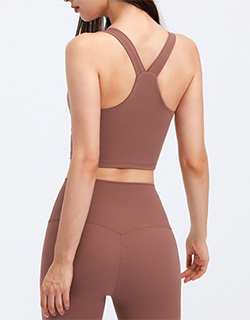
A reliable workout leggings manufacturer should control fabric performance, fit development, sampling accuracy, bulk production consistency, quality inspection, and supply chain stability for activewear brands.
Workout leggings are one of the most technical products in the activewear category. A qualified manufacturer must understand stretch fabric, compression, waistband structure, squat-proof performance, stitching durability, and US/EU size grading. This guide explains what brands should evaluate before choosing a long-term manufacturing partner.
What Makes a Workout Leggings Manufacturer Reliable?
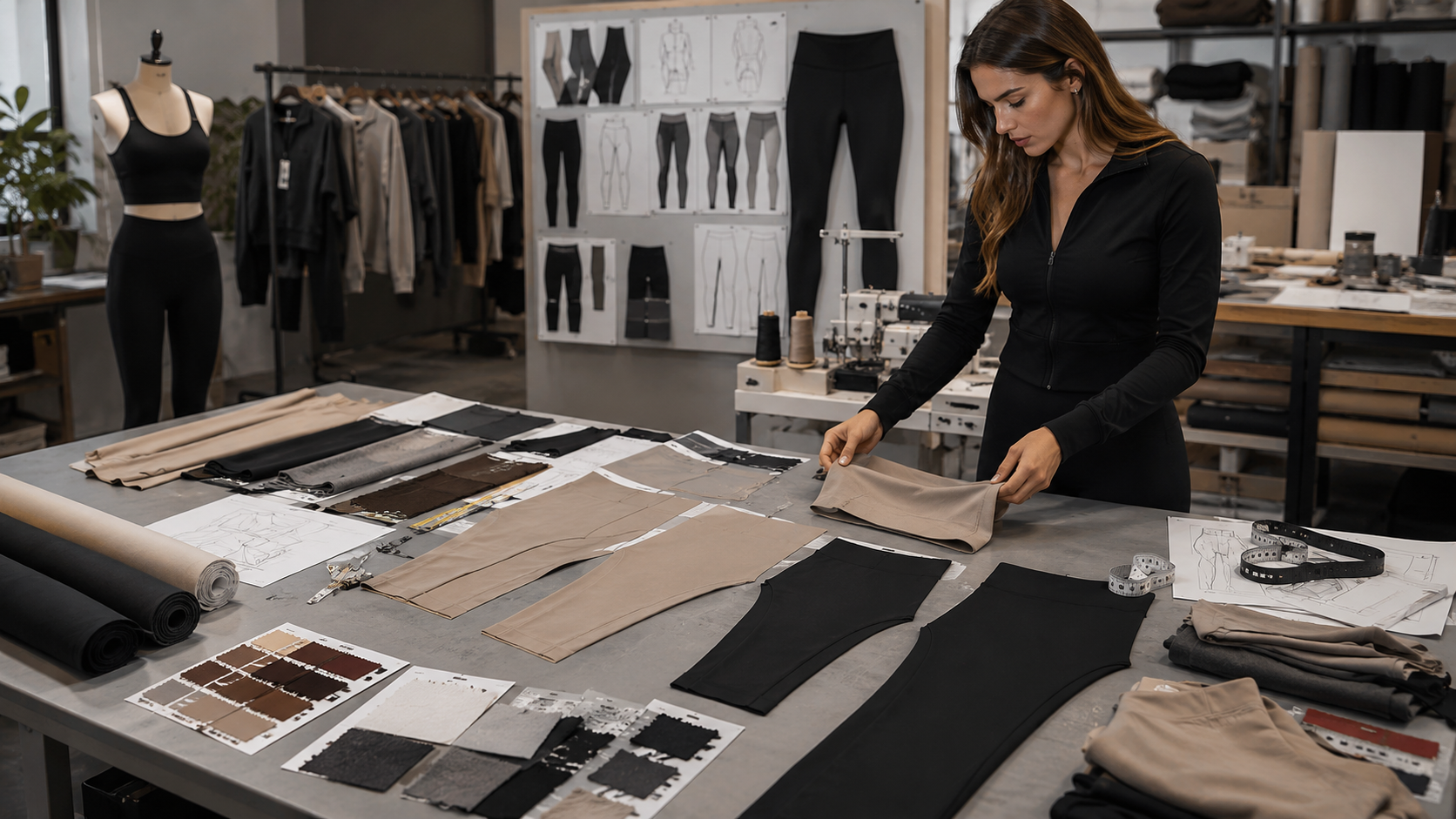
A reliable workout leggings manufacturer consistently delivers accurate samples, stable bulk quality, clear communication, predictable lead times, and professional quality control.
- In-house pattern development for leggings fit and compression
- Performance fabric sourcing for nylon, spandex, polyamide, and elastane blends
- Sample room support before bulk production
- Multi-layer QC from fabric inspection to final packing
- Experience with US/EU activewear sizing
- OEM and private label production support
| Capability | Reliable Manufacturer | Unreliable Supplier |
|---|---|---|
| Pattern Development | In-house leggings fit team | Outsourced generic patterns |
| Fabric Knowledge | Understands compression, GSM, stretch recovery | Only provides basic fabric options |
| Sample Accuracy | Sample and bulk production remain consistent | Bulk production differs from approved sample |
| Quality Control | Fabric, inline, and final inspections | Only checks finished products |
Brands can review Ohsurewear’s custom activewear manufacturer service to understand how structured development supports activewear production.
Why Is Fabric Development Critical for Workout Leggings?
Fabric development is critical because leggings performance depends on stretch recovery, opacity, compression, hand feel, moisture management, and long-term durability.
Key Fabric Requirements
- 4-way stretch
- Squat-proof opacity
- Moisture-wicking performance
- Stable GSM
- Color fastness
- Wash resistance
Common Fabric Blends
- 75% nylon / 25% spandex
- 78% polyamide / 22% elastane
- Polyester / spandex
- Brushed interlock
- Seamless knit fabric
A professional manufacturer should help brands select the right fabric according to product positioning, target price, compression level, and workout scenario. Ohsurewear’s fabric guide and fabric selection resources provide useful references for activewear fabric decisions.
How Important Is Pattern Making in Workout Leggings Manufacturing?
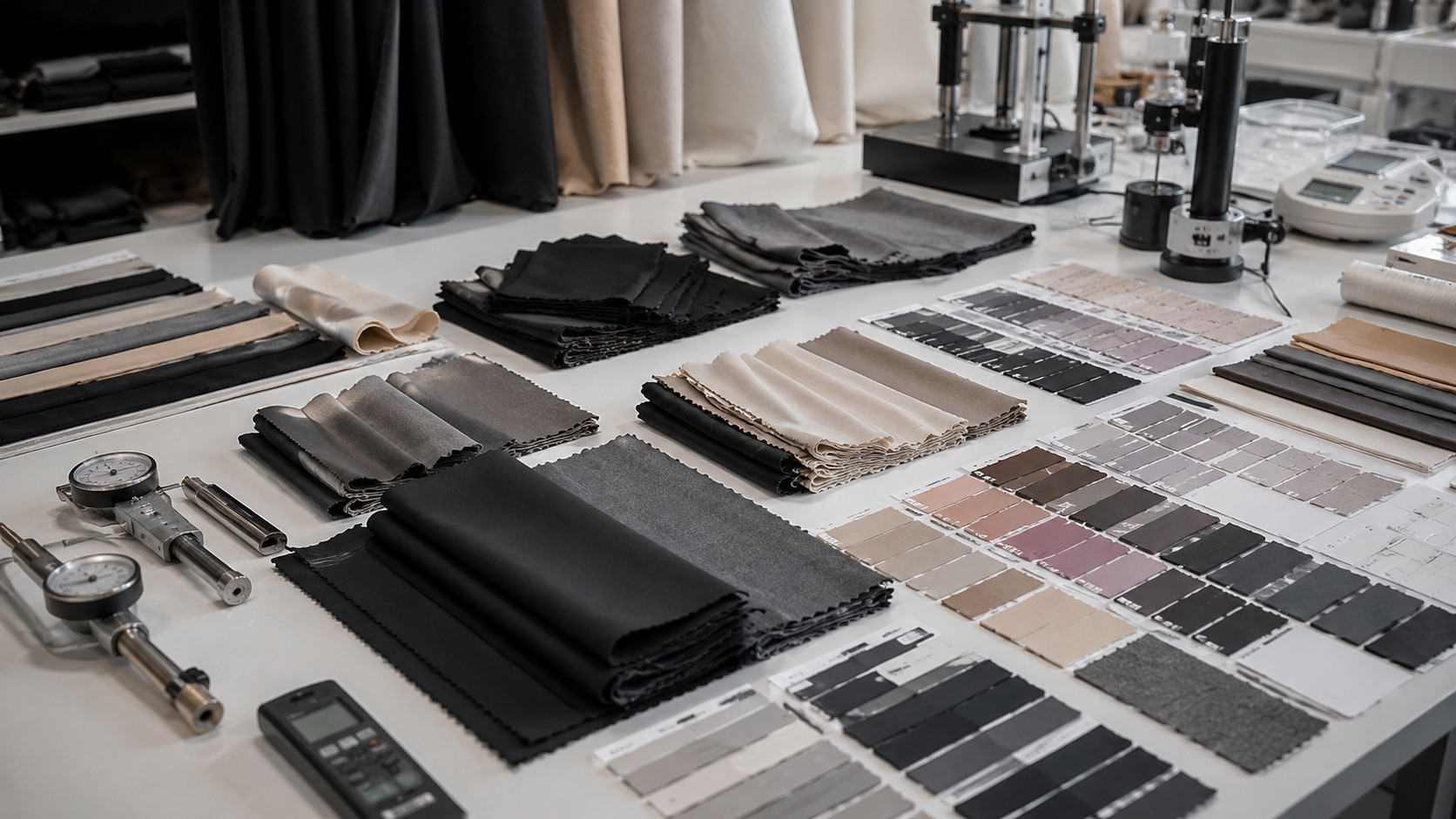
Pattern making is essential because leggings must fit the waist, hips, thighs, knees, calves, and crotch area while maintaining comfort during movement.
Professional Leggings Pattern Development Includes:
- Body measurement analysis
- Waistband tension testing
- Hip-to-waist ratio adjustment
- Gusset placement optimization
- Compression zone planning
- Fit sample correction
- Wash and stretch testing
- Final size grading confirmation
Strong pattern development reduces common fit problems such as waistband rolling, camel toe, loose knees, poor hip coverage, and uncomfortable seam pressure. Brands developing leggings collections can review custom leggings manufacturer services for product-specific manufacturing support.
What Quality Control Systems Should a Workout Leggings Manufacturer Have?
A reliable workout leggings manufacturer should use multi-stage quality control instead of relying only on final garment inspection.
| QC Stage | Inspection Focus | Why It Matters |
|---|---|---|
| Fabric Inspection | Defects, GSM, stretch recovery, color consistency | Prevents material problems before cutting |
| Inline Inspection | Stitching, waistband, logo position, seam strength | Controls quality during production |
| Final Inspection | Measurements, appearance, labels, packing | Reduces shipping and customer complaints |
Quality control is especially important for leggings because stretch fabric exposes sewing and fit problems quickly. Ohsurewear’s quality control system focuses on production consistency from sampling to bulk delivery.
What Are the Most Common Workout Leggings Production Problems?
The most common workout leggings production problems include waistband rolling, see-through fabric, seam popping, poor stretch recovery, inconsistent sizing, pilling, and color differences between production batches.
- Waistband rolling: usually caused by poor waistband tension or weak inner support.
- See-through fabric: usually caused by low-density fabric or incorrect stretch ratio.
- Seam popping: usually caused by weak thread, incorrect stitch type, or poor machine settings.
- Inconsistent sizing: usually caused by poor grading and inaccurate measurement control.
- Pilling: usually caused by low-quality yarn or unsuitable fabric finishing.
Why Does Activewear Manufacturing Experience Matter?
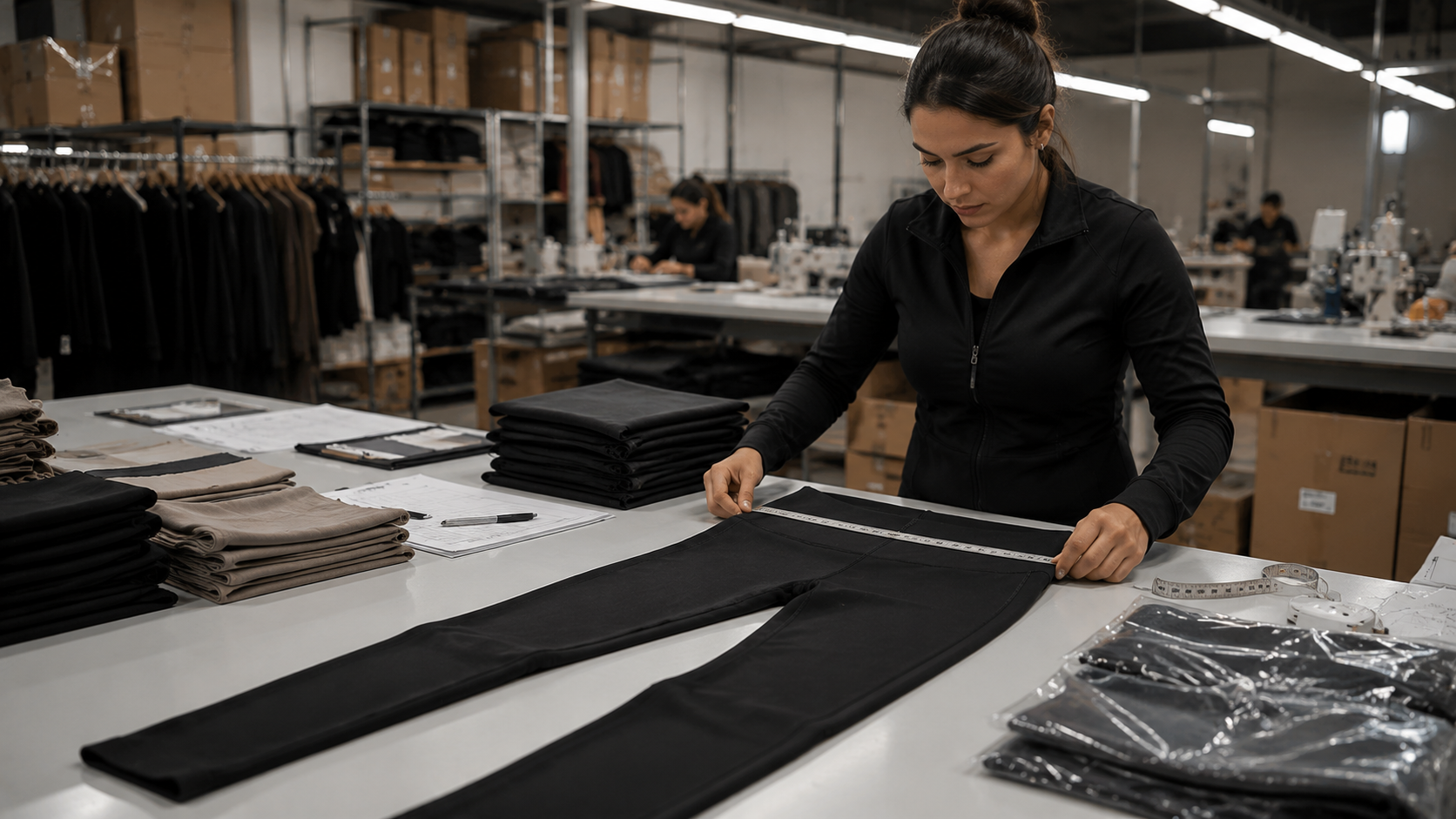
Activewear manufacturing experience matters because workout leggings require technical knowledge of stretch sewing, compression fabrics, flatlock stitching, and body movement.
A factory that mainly produces basic T-shirts may not understand activewear-specific issues such as needle damage, seam elasticity, waistband pressure, fabric distortion, and stretch recovery. A specialized manufacturer with experience in custom gym wear manufacturing, custom yoga wear manufacturing, and women sportswear manufacturing is usually better equipped for leggings production.
What OEM and Private Label Services Should a Manufacturer Provide?
A reliable leggings manufacturer should provide OEM and private label services that help brands develop products, labels, packaging, logos, and customized collections.
| Service | Application |
|---|---|
| Custom Logo | Heat transfer, silicone logo, reflective logo, woven label |
| Custom Fabric | Nylon-spandex, polyamide-elastane, brushed fabric, seamless fabric |
| Custom Color | Pantone matching and seasonal color development |
| Private Label | Neck labels, care labels, hang tags, poly bags, packaging boxes |
| Product Expansion | Sports bras, tank tops, hoodies, track pants, tennis wear |
Brands planning full activewear collections can explore private label, custom sports bras, custom tank tops, and custom track pants manufacturing options.
How Can Brands Evaluate Manufacturer Communication?
Brands can evaluate manufacturer communication by checking response speed, technical accuracy, documentation quality, timeline clarity, and production update frequency.
Good Communication Signs
- Clear fabric recommendations
- Specific production timeline
- Detailed sample feedback
- Fast response within 24–48 hours
- Photos or videos during production
Bad Communication Signs
- Vague answers
- Unclear pricing
- No written confirmation
- No sample revision tracking
- Slow response before payment
Professional communication is part of a complete manufacturing workflow because every detail affects sample approval, bulk production, inspection, and delivery.
How Long Should Workout Leggings Production Take?
Workout leggings production usually takes 7–14 days for sampling and 20–35 days for bulk production after sample approval, depending on fabric, customization, and order quantity.
| Production Stage | Typical Timeline |
|---|---|
| Fabric sourcing | 3–7 days |
| Sample development | 7–14 days |
| Sample revisions | 3–10 days |
| Bulk production | 20–35 days |
| Final QC and packing | 3–7 days |
Extremely short lead times may increase production risk if the manufacturer skips fabric testing, sample correction, inline inspection, or final QC.
Why Is Supply Chain Stability Important for Activewear Brands?
Supply chain stability is important because activewear brands need consistent fabric quality, stable color matching, predictable lead times, and reliable production capacity.
- Stable fabric mills reduce material delays.
- Reliable trim suppliers improve label and packaging consistency.
- Backup sourcing channels reduce seasonal risks.
- Organized production scheduling supports repeat orders.
- Long-term dyeing partners improve color consistency.
Ohsurewear’s supply chain support helps activewear brands manage fabric sourcing, trims, production planning, and delivery coordination.
How Can Startup Brands Choose the Right Workout Leggings Manufacturer?
Startup brands should choose a workout leggings manufacturer based on product development support, low MOQ flexibility, communication quality, sample accuracy, and activewear expertise.
Step-by-Step Selection Process
- Define the target customer and product positioning.
- Prepare design references or a tech pack.
- Request fabric recommendations based on target use.
- Confirm MOQ, sample fee, and production timeline.
- Develop the first sample.
- Test fit, opacity, compression, and stretch recovery.
- Revise the sample before bulk production.
- Confirm labels, packaging, and logo details.
- Start with a controlled first bulk order.
- Review QC results before scaling production.
What Are the Biggest Red Flags When Choosing a Workout Leggings Manufacturer?
The biggest red flags include extremely low pricing, no fabric testing, no activewear experience, poor communication, unclear timelines, and no quality control documentation.
| Red Flag | Possible Risk |
|---|---|
| Very low price | Low-grade fabric, weak stitching, unstable quality |
| No sample revision process | Bulk production may repeat sample problems |
| No QC system | Higher defect rate and customer complaints |
| No activewear specialization | Poor fit, weak seams, wrong fabric choice |
| Unrealistic delivery promise | Production delay or skipped inspection |
Key Takeaways
- A reliable workout leggings manufacturer controls fabric, fit, sampling, production, and QC.
- Fabric quality determines stretch recovery, opacity, compression, and durability.
- Pattern making directly affects comfort, sizing, and customer satisfaction.
- Multi-stage QC reduces production risk before shipment.
- Strong communication helps avoid delays and misunderstanding.
- Activewear specialization is more important than choosing the lowest price.
- Startup brands should begin with a clear sample process before scaling bulk orders.
FAQ: What Should Brands Know Before Choosing a Workout Leggings Manufacturer?
What is the best fabric for workout leggings?
Nylon-spandex and polyamide-elastane blends are commonly used for premium workout leggings because these fabrics provide strong stretch recovery, compression, comfort, and durability.
What is a normal MOQ for workout leggings manufacturing?
A common MOQ for workout leggings is usually 100–300 pieces per color and style, depending on fabric, logo technique, color customization, and production complexity.
How long does workout leggings production usually take?
Sampling usually takes 7–14 days, and bulk production usually takes 20–35 days after the sample is approved.
Why do workout leggings become see-through?
Workout leggings become see-through when the fabric has low density, poor stretch recovery, incorrect GSM, or unsuitable yarn construction for high-stretch movement.
What stitching is suitable for workout leggings?
Flatlock stitching is commonly used for workout leggings because it improves comfort, reduces seam friction, and supports stretch movement.
Should startup brands choose a China workout leggings manufacturer?
Many startup brands choose China workout leggings manufacturers because China has mature activewear fabric supply chains, skilled sewing teams, flexible MOQ options, and scalable OEM/ODM production capacity.
Need a Reliable Workout Leggings Manufacturer?
Ohsurewear supports activewear brands with fabric sourcing, fit development, sampling, bulk production, private label customization, quality control, and global shipping.
Explore Custom Leggings Manufacturing