
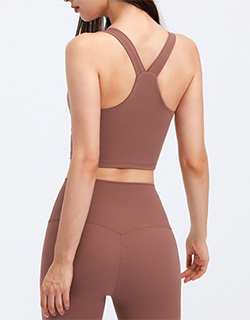
Activewear Quality Control Guide: From Fabric Inspection to Final Shipment
Activewear Quality Control
How Should Activewear Quality Be Controlled From Fabric to Shipment?
Activewear quality control is a staged system, not a single final inspection. It begins by confirming fabric identity and performance, continues through sample approval, cutting and sewing controls, and ends with documented finished-garment checks, packing verification and shipment release.
Direct answer
A reliable plan defines the specification, test method, inspection timing, defect categories, sample plan, acceptance criteria and person responsible before production starts. Final inspection can detect visible nonconformities, but it cannot efficiently correct fabric, pattern or process problems that should have been controlled earlier.
Start With One Approved Quality Standard
The buyer, manufacturer and inspection team need the same controlled reference. The approved activewear tech pack, measurement chart, bill of materials, color standards, artwork files, packing instructions and sealed approval sample should agree with one another.
Product requirements
- Style, size range and intended end use
- Fabric quality code, composition, GSM and usable width
- Stretch direction, recovery and opacity requirements
- Measurements, tolerances and grading rules
- Seams, stitch types, SPI and reinforcement points
- Logo, label, packaging and carton specifications
Inspection requirements
- Inspection stages and responsible reviewers
- Named test methods and current editions
- Conditioning, laundering and specimen controls
- Critical, major and minor defect definitions
- Sampling plan and agreed acceptance criteria
- Report format, escalation and release authority
Control revisions
Every approved change should update the affected specification and approval record. Verbal instructions, unnumbered files and conflicting samples make it impossible to determine whether production conforms.
The Activewear Quality Control Flow
- 1
Incoming material inspection
Identify fabric, trim and packaging lots; check quantity, appearance, shade, width, GSM and the agreed risk-based performance properties before cutting.
- 2
Pre-production approval
Confirm the production sample, measurement chart, construction, artwork, labels, packing method and any test reports at a documented meeting or release checkpoint.
- 3
Cutting control
Verify fabric relaxation when required, marker direction, ply alignment, shade grouping, notch accuracy, panel count and bundle identification.
- 4
Inline inspection
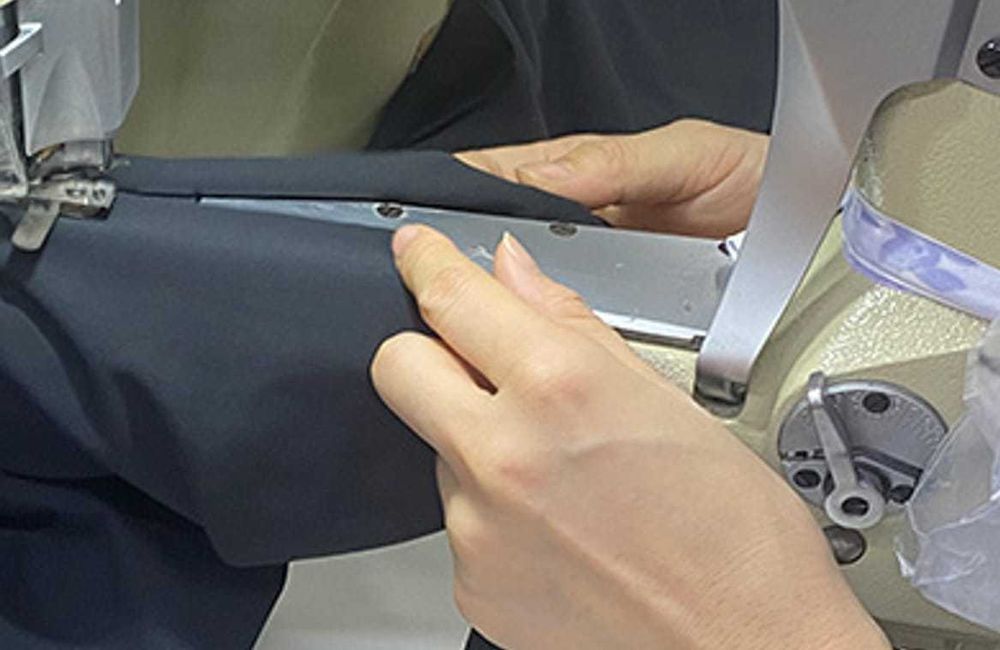
Check first output and work in progress for measurements, seam construction, stitch balance, skipped stitches, puckering, attachment strength and recurring operator or machine problems.
- 5
Finishing and functional checks
Inspect thread trimming, cleanliness, pressing, labels, fasteners and product-specific function; repeat measurements after the garment has settled.
- 6
Final random inspection
Sample from completed and packed goods using the agreed plan, classify defects consistently, verify quantities and packaging, and record an accept, reject or hold decision.
- 7
Shipment release
Confirm corrective actions, approved reports, carton marks, assortment, packing list and release authorization before goods leave the controlled location.

What to Check at Each Stage
| Stage | Typical checks | Evidence to retain | Decision |
|---|---|---|---|
| Fabric receipt | Quality code, roll count, width, GSM, shade continuity, visible defects, stretch direction and lot identity | Roll map, inspection record, shade grouping and test report | Release, segregate, retest or reject |
| Pre-production | Approved sample, measurements, construction, trims, color, artwork, labels and packing | Signed sample, meeting record and controlled specification revision | Authorize or hold cutting |
| Cutting | Relaxation, face direction, marker, ply alignment, notches, shade groups and bundle count | Cutting audit and bundle traceability | Continue, recut or contain |
| Inline sewing | First-piece measurements, seam type, SPI, stitch balance, puckering, skipped stitches and reinforcement | Inline report, defect photos and corrective-action log | Continue, stop line, repair or retrain |
| Finished garment | Appearance, measurements, symmetry, attachment security, labels, cleanliness and product function | Measurement and functional-check records | Pass, repair, rework or reject |
| Final and packing | Random sample defects, quantity, assortment, polybags, carton marks, carton condition and packing list | Final report, sample-plan result and release approval | Ship, hold, sort or reinspect |
Fabric Inspection: Prevent Defects Before Cutting
Fabric can create expensive garment problems even when sewing workmanship is acceptable. Incoming control should first confirm identity and traceability, then examine risks relevant to the style. The broader activewear fabric guide explains why composition alone is not a performance specification.
Visual and dimensional
Holes, contamination, barre, streaks, crease marks, width, GSM, bow, skew and roll-to-roll shade.
Performance
Stretch, tension, recovery, growth, dimensional stability, pilling, colorfastness and moisture behavior where relevant.
Garment-use risks
Opacity at actual extension, color transfer, print compatibility, seam behavior and appearance after agreed care cycles.
A result is meaningful only when the fabric lot, color, specimen direction, conditioning, method edition, apparatus settings and acceptance criteria are recorded. For opacity, use a controlled protocol rather than judging a relaxed swatch; see the squat-proof leggings test guide.
Inline Inspection vs Final Inspection
| Question | Inline inspection | Final inspection |
|---|---|---|
| When? | During cutting, sewing and finishing | When the agreed portion is completed and packed |
| Main purpose | Detect process drift and stop repeated defects | Make a lot acceptance decision and verify shipment readiness |
| Best evidence | First-piece checks, measurements, defect trend and corrective action | Random-sample result, defect list, photos, quantity and packing checks |
| Main limitation | May miss later finishing or packing problems | Finds problems late and cannot prove every unit is defect-free |
Why both are needed
Inline inspection controls the process; final inspection supports the lot-release decision. One does not replace the other.
How AQL Sampling Should Be Used
ISO 2859-1:2026 provides AQL-indexed sampling schemes for lot-by-lot inspection by attributes. The current third edition replaced the 1999 edition. A buyer should specify the applicable edition, lot definition, inspection level, sampling type, AQL values and switching rules rather than writing only “AQL inspection required.”
AQL is not a promise that an accepted lot contains no defects, and it is not a substitute for process control or product testing. It produces an acceptance decision from a random sample under an agreed scheme. Critical safety or regulatory nonconformities may require controls beyond ordinary acceptance sampling.
Define before inspection
- Lot size and lot traceability
- Inspection level and sampling plan
- Critical, major and minor defect list
- Agreed AQL values and separate critical-risk controls
- Special tests and sample quantities
- Accept, reject, hold and reinspection rules
Avoid these mistakes
- Using an old table without naming its edition
- Changing defect severity after results are known
- Selecting only easy-to-reach cartons
- Mixing lots with different materials or conditions
- Treating repairable and unrepaired goods as one sample
- Calling a passed sample a 100% guarantee
Classify Defects by Product Risk
Defect classification should be style-specific and agreed before inspection. The examples below illustrate the logic; the buyer must approve the final list for the intended market.
| Category | Practical meaning | Activewear examples |
|---|---|---|
| Critical | Potential safety, legal or prohibited-condition risk | Sharp object, broken needle fragment, prohibited contamination, or an applicable mandatory-label failure |
| Major | Likely to cause rejection, failure in intended use or material loss of function | Open seam, wrong size label, severe measurement failure, missing reinforcement, unacceptable opacity or nonfunctional fastener |
| Minor | Limited departure that does not materially reduce intended function | Small removable thread, slight non-prominent stitch variation or minor packaging presentation issue |
The same observation can change severity by location and use. A small seam defect at a high-stress gusset can be more serious than a similar defect in a non-load-bearing decorative area.

Make the AQL Decision Traceable
AQL is an index used to select an acceptance sampling scheme. It is not permission to deliver that percentage of faulty garments. Use the complete agreed standard to obtain the sample size and acceptance/rejection numbers; do not calculate the acceptance number by multiplying sample size by AQL.
The public summaries from ISO 2859-1:2026 and ASQ Z1.4 explain the scope of these schemes. Their tables and switching rules belong to the selected system. Do not combine a code letter from one system with limits from another. For an isolated order, have the inspection provider confirm that the selected plan fits the inspection context.
| Record field | What the inspector should enter |
|---|---|
| Lot and traceability | PO, style, color, sizes, material lot, quantity and carton range |
| Sampling basis | Standard and edition; normal/tightened/reduced status; inspection level; single/double plan |
| Count basis | Nonconforming units or nonconformities per 100 units, as specified by the plan |
| Plan lookup | Code letter, sample size and Ac/Re numbers from the applicable table |
| Severity criteria | Approved defect catalogue revision; AQL or other agreed rule for each category |
| Selection record | Selected cartons and units; method of random selection; inspector and date |
| Observed findings | Unit IDs, defect codes, severity, photos and counts before repair |
| Disposition | Accept/reject/hold; test exceptions; corrective action and authorized release |
Keep counting consistent. One garment can contain several observations. The agreed scheme determines whether the decision counts nonconforming garments or individual nonconformities. Record observations at unit level so the inspector can apply that convention without double-counting or losing evidence.
For a hypothetical single-sampling plan with Ac = 3 and Re = 4, three counted nonconforming units meet that category’s acceptance rule; four meet its rejection rule. These are illustrative numbers, not a lookup for any lot size or AQL. Other categories, required tests and release conditions still need to pass. Never repair the inspected sample and erase the original findings to change the result.
Keep Test Results Separate From Visual Inspection
A garment may look correct yet fail an agreed wash, color-transfer or recovery requirement. Treat product testing and visual lot inspection as separate approval lines. A passing workmanship sample does not override a failed material test, and a fabric certificate does not prove that every seam or label is correct.
| Risk | Method selection | Required record |
|---|---|---|
| Size change after washing | Select a fabric or garment dimensional-change method appropriate to the specimen. | Initial and final dimensions, care cycles, direction, result and approved limit. |
| Color transfer | Choose the relevant rubbing, laundering or perspiration procedure. | Color/lot, method edition, exposure, grading basis and original report. |
| Stretch and recovery | Match load or extension, direction, repetitions and recovery period to the brief. | Specimen identity, conditions, units and residual growth or recovery result. |
| Opacity and seam behavior | Use an agreed garment protocol with controlled fit, extension and viewing conditions. | Size, lighting, movement, seam location, photos and approval decision. |
The AATCC method directory distinguishes fabric dimensional-change testing, such as TM135, from other test purposes. Confirm the correct full method with the testing provider. Do not assume that a method name supplies a universal pass limit for every activewear product.
Record each test as: sample ID → method and edition → conditions → result with units → agreed limit → decision → report reference. An empty result means untested or unrecorded, not passed. When a finish, dye lot, material or construction changes, review whether the previous report still covers the new goods.
Record Defects So Another Inspector Can Reproduce the Decision
Use an overview photograph to identify the garment and a close-up with scale to document the finding. Add the style, size, color, unit ID, location and violated requirement. The following are illustrative defect descriptions, not findings from an Ohsure order.
| Illustrative finding | Evidence to record | Initial action |
|---|---|---|
| Gusset seam opens during the agreed movement check | Seam location, approved construction, test conditions and opening photo. | Hold affected bundles; investigate stitching and repeat the agreed check after correction. |
| Waistband measurement exceeds the signed tolerance | Point of measure, relaxed state, actual value and specification revision. | Contain the affected size/lot; check cutting, elastic application and measurement method. |
| Two panels show visible shade difference | Panel and dye-lot IDs, approved shade reference and viewing conditions. | Trace bundle mixing; segregate affected garments and review shade groups. |
| Loose thread in a non-prominent area | Location, length and approved workmanship reference. | Classify using the agreed catalogue; trim and verify that the seam remains secure. |
Severity follows the approved risk assessment. Do not automatically classify all cosmetic findings as minor or all label findings as critical. Location, intended use and the applicable product requirement matter. A suspected sharp fragment requires immediate containment and escalation under the agreed safety procedure.
Close Corrective Actions Before Shipment Release
A rejected lot needs a documented disposition. Identify the affected population, isolate it, investigate the cause and define the scope of sorting or rework. Checking only the photographed garments can leave the same problem elsewhere in the lot.
For example, if seam openings recur after a machine adjustment, record the last verified acceptable output and trace the bundles produced since that point. This hypothetical scenario illustrates containment; it is not a factory case study or a claim about defect rates.
Use a closure record containing: finding ID, affected quantity, containment location, cause, correction, responsible person, completion date, verification result and approving person. If reinspection is required, follow the agreed reinspection procedure and retain both reports. Do not repeatedly draw a fresh sample merely to obtain a pass.
Release requires the authorized person to reconcile inspection results, required test reports, outstanding exceptions and packing records. Commercial urgency should be documented separately from the quality decision. If any approved concession exists, record its exact scope and approver.
Prepare an Ohsure Quality Review Package
Ohsure’s public quality-control page describes inspections across material and garment production. For your own order, request the applicable inspection plan and records rather than treating general website descriptions as evidence that a specific lot has passed.
Provide the current technical pack, approved sample reference, color and size breakdown, intended use, performance requirements and packing instructions. Agree who performs each inspection, which tests require an external provider, who pays for retesting and who can authorize shipment. Confirm the actual arrangements with the project team before production.
The fabric selection guide and stretch-recovery guide support the technical brief. This article’s blank records are buyer tools, not completed factory inspection or laboratory reports.
Buyer’s Activewear Quality Inspection Checklist
Use the downloadable 22-point checklist and blank sampling, test and corrective-action records. Assign an owner, evidence reference and decision to each line. Download the printable quality-control checklist. Save the HTML file, open it in a browser and print it or save it as PDF.
Before bulk
- Controlled tech pack and measurement chart
- Approved fabric, trims, color and artwork
- Sealed production sample
- Named tests and acceptance criteria
- Defect classification and sampling plan
During production
- Incoming-lot records and shade grouping
- Cutting and bundle traceability
- First-piece approval
- Inline measurement and workmanship trend
- Corrective-action closure
Before shipment
- Final random inspection report
- Functional and measurement results
- Quantity and assortment confirmation
- Packaging and carton-mark verification
- Authorized shipment release
Activewear Quality Control FAQs
Is final inspection enough for activewear?
No. Final inspection is important for lot release, but fabric, pattern, cutting and recurring sewing problems should be controlled earlier when correction is faster and less disruptive.
Does AQL mean every accepted garment is defect-free?
No. AQL-based inspection uses a random sample to make a lot decision under an agreed scheme. It does not inspect or guarantee every piece.
Who should define critical, major and minor defects?
The buyer and manufacturer should agree on a style-specific defect list before inspection, considering intended use, customer expectations and applicable legal requirements.
Should every fabric property be tested for every order?
Use a risk-based plan. Identity, shade and visible condition are routine controls; performance tests should match the fabric, product claim, market, color risk, previous results and agreed specification.
When should production be stopped?
Stop or contain production when a repeated defect, wrong material, uncontrolled specification change or high-risk nonconformity could affect more units. Define stop-line authority before production.
What records should a buyer receive?
At minimum, request the controlled approval record, relevant test reports, inline or corrective-action evidence where required, final inspection report and shipment-release confirmation.
Link Each Quality Decision to Its Evidence
An effective activewear quality system links requirements, material identity, approved samples, process checks, testing, defect classification, sampling and shipment release. Each stage should create traceable evidence and a clear decision. That approach prevents more defects than relying on a final inspector to discover them after production is complete.
Publication and Technical Review
Publisher: Ohsurewear. Original publication: August 25, 2026. Updated: October 6, 2026. Named author, role, experience and technical reviewer are awaiting confirmation for this revision.
Sources: ISO acceptance sampling; ASQ sampling standards; AATCC test methods; Ohsure quality-control overview. Consult complete applicable methods for execution. The blank records contain no measured results or batch approvals.