
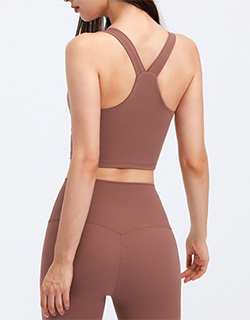
How to Test Stretch Recovery in Leggings and Sports Bras
Activewear fabric test method
Stretch recovery testing measures how much a fabric extends under a defined force or extension and how closely it returns to its original length after the load is removed. For leggings and sports bras, test both principal fabric directions, record the exact setup, use multiple specimens, and judge residual growth together with stretch force, garment fit and repeated-use performance.
A useful report must identify the fabric, specimen direction, method, conditioning, gauge length, load or target extension, hold time, cycle count, recovery interval and individual results. A percentage without these conditions cannot be compared reliably.
1. What Stretch Recovery Actually Measures
Three related values are often mixed together:
- Fabric stretch or elongation describes how far a specimen extends from its original gauge length under a stated condition.
- Fabric growth describes the permanent or temporary increase in length remaining after the load is removed and the specimen is allowed to recover.
- Recovery describes the fabric's return toward its original dimension. It may be reported as a percentage or interpreted through residual growth, depending on the method and reporting agreement.
If a marked 100 mm section reaches 160 mm, its stretch is 60%. If it measures 104 mm after the agreed recovery interval, residual growth is 4%. This is a calculation example only, not an Ohsure test result or acceptance limit.
ISO 20932-1:2018 describes strip or loop methods for measuring fabric elasticity and related properties. ASTM D2594/D2594M-21 addresses stretch and growth of low-power knitted fabrics. ASTM D4964-96(2020) addresses tension and elongation of elastic fabrics using a constant-rate-of-extension machine. Select the method that fits the material and claim; do not merge parameters from different methods and still call the result standard-compliant.
2. Define the Test Before Cutting Specimens
| Control | Record before testing | Why it affects the result |
|---|---|---|
| Fabric identity | Supplier, quality code, composition, color, finish, lot and roll | Prevents results from being attached to the wrong material |
| Specimen direction | Course/width and wale/length, or the directions named by the selected method | Activewear knits often behave differently by direction |
| Conditioning | Atmosphere, duration and any preconditioning | Moisture and temperature can alter textile response |
| Specimen geometry | Width, gauge length, clamp or loop setup and edge preparation | Geometry changes stress distribution and slippage risk |
| Loading program | Force or target extension, test speed, hold time and cycles | Different settings can produce different results on the same fabric |
| Recovery reading | Immediate and/or delayed recovery interval | Elastic response changes with time after unloading |
| Replication | Number of specimens per direction and how results are summarized | One specimen cannot describe normal variation |
| Equipment | Machine or manual apparatus, calibration status and operator/lab | Makes the procedure traceable and repeatable |
ASTM D4964 specifically warns that results can be compared only when machine, extension rate, maximum loading or extension and specimen specifications are comparable. That principle also applies to supplier reports: compare setups before comparing percentages.
3. A Reproducible Development Workflow
- Start with the product risk. For leggings, focus on seat, knee and waistband bagging, coverage and seam stability. For sports bras, focus on underband return, cup or body-panel stability, strap behavior and comfort under repeated extension.
- Choose the governing method. Use the current purchased standard, a qualified laboratory procedure or a clearly documented internal development method. Name it in the report.
- Sample the fabric deliberately. Avoid obvious defects and record the roll and location. Cut separate specimens for both main directions. If testing across colors or lots, keep each identity separate.
- Condition and mark specimens. Follow the selected method. Do not stretch a specimen while marking it. Confirm gauge length and specimen width before loading.
- Run the defined loading program. Apply the stated load or extension, speed, hold and cycles. Watch for jaw slippage, edge curl, rupture or abnormal local deformation and record any invalid run.
- Measure after the defined recovery interval. Keep timing consistent. If both immediate and delayed readings are useful, label them separately.
- Calculate individual results. Retain each specimen value, average and spread. Never replace a failed or extreme result silently; investigate and document the decision.
- Confirm in the garment. Laboratory stretch data cannot replace size-set fitting, movement trials, laundering and seam assessment.
Development method versus standard method
A simple bench stretch check can screen fabrics during development, but it should be called an internal comparison unless every requirement of the cited standard is followed. Use a qualified textile laboratory when the result supports a contractual specification, regulated claim or supplier dispute.
4. Leggings and Sports Bras Need Different Decisions
| Decision area | Leggings | Sports bras |
|---|---|---|
| Critical directions | Both directions, with attention to circumferential fit and lengthwise movement | Body panel, underband and straps may each require different materials and directions |
| Main residual-deformation risk | Knee, seat, hip and waistband bagging | Underband relaxation, strap growth and panel distortion |
| Related checks | Opacity under strain, waistband recovery, seam stretch, abrasion and wash stability | Support level, elastic tension, strap recovery, seam comfort and wash stability |
| Garment verification | Squat, lunge, knee flexion and wear-duration checks across target sizes | Movement and support checks across the intended cup/body range and activity |
| Common mistake | Approving high stretch without checking residual growth or coverage | Treating shell-fabric recovery as proof of whole-garment support |
Stretch percentage alone is not a quality grade. A fabric can stretch far but require little force, recover slowly or become transparent. A fabric with lower extension may feel supportive but restrict movement. Build the decision around the garment, not the largest number.
5. Report Template: Keep Raw Data Separate From the Decision
| Report field | Entry |
|---|---|
| Fabric identity | Quality code / composition / color / finish / lot / roll |
| Method and edition | Exact standard or internal method identifier |
| Conditioning | Atmosphere and duration |
| Specimen setup | Direction / width / gauge length / clamp or loop arrangement |
| Loading program | Load or extension / speed / hold / cycles |
| Recovery interval | Time from unloading to final measurement |
| Raw results | Specimen 1–n for stretch, recovered length and residual growth |
| Summary | Average, spread and any excluded result with reason |
| Observed issues | Slippage / curl / rupture / whitening / delamination / other |
| Decision | Approved / revise / reject, specification and responsible reviewer |
Do not populate the blank template with assumed numbers. The original content plan requests real samples, parameters and results; those fields require actual factory or laboratory evidence. Until that evidence is supplied, this article provides the method, formula and report structure without presenting invented Ohsure data.
Illustrative calculation, not laboratory data
| Item | Example value | Calculation |
|---|---|---|
| Original gauge length | 100 mm | Recorded before loading |
| Extended length | 160 mm | (160 − 100) ÷ 100 × 100 = 60% stretch |
| Recovered length | 104 mm | (104 − 100) ÷ 100 × 100 = 4% residual growth |
6. How to Set an Acceptance Limit
Do not copy a competitor's recovery limit or treat an internet value as universal. Set acceptance criteria through this sequence:
- Define the garment, activity, target fit and support level.
- Benchmark a reference fabric or approved garment that performs as intended.
- Test several specimens and relevant directions under one controlled setup.
- Review stretch, force and residual growth together with coverage and hand feel.
- Build prototypes and verify movement, wear duration, laundering and seams.
- Convert the proven range into a supplier specification with method, sampling and disposition rules.
Also control material mass and structure. The activewear GSM guide explains why weight cannot predict recovery by itself, while the nylon-versus-polyester guide helps frame fiber and end-use tradeoffs. For broader sourcing context, use the activewear fabric guide.
7. Common Testing Errors
- Reporting only “four-way stretch.” State the measured directions, method and values.
- Comparing unlike setups. A manual hanging-load result and a tensile-machine result are not automatically comparable.
- Using one swatch. Multiple specimens and traceable sampling are needed to understand variation.
- Ignoring time. Immediate and delayed recovery can differ; record when the reading was taken.
- Testing only raw fabric. Waistband elastic, lining, straps, seams and pattern tension change garment performance.
- Assuming elastane percentage predicts recovery. Yarn, knit construction, heat setting, finish and processing all matter.
- Calling an internal check a standard test. Cite a standard only when its requirements are actually followed.
Frequently Asked Questions
What is good stretch recovery for leggings?
There is no single universal percentage. Define the method, direction, load or extension, cycles and recovery time, then connect the result to coverage, fit, movement, wash and wear trials.
Should I test stretch in both directions?
Yes for most activewear knits. Record course/width and wale/length results separately because they often differ and serve different garment functions.
Is four-way stretch the same as good recovery?
No. Four-way stretch describes extension in both principal directions. Recovery describes return after unloading; a fabric can extend in both directions and still show unwanted residual growth.
Can I test fabric recovery by hand?
A controlled bench method can compare development swatches, but it is not interchangeable with a standard laboratory method. Document the setup and use a qualified lab for contractual claims.
Does more elastane always improve recovery?
No. Elastane content is only one input. Yarn quality, knit construction, heat setting, finishing, dyeing and garment construction affect the result.
How many cycles should I use?
Use the cycle count required by the selected standard or the agreed internal method. More cycles are not automatically better; the number must match the intended claim and remain consistent across comparisons.
Build a Traceable Fabric Approval
Ask the supplier or laboratory for the complete setup and raw specimen results, not a standalone percentage. Tie the report to the approved fabric code, color, lot and garment sample. When the fabric, finish or supplier changes, decide which tests must be repeated.
For an Ohsure custom sportswear project, prepare the garment type, activity, target fit, size range, reference garment, fabric preference, support or compression intent, expected care and required test method. These inputs help define the correct development and verification plan.
Evidence boundary: the cited ISO and ASTM pages support the scope and comparability principles discussed here. The worked numbers are calculation examples only. No Ohsure sample, customer result, certificate or laboratory result is claimed.