
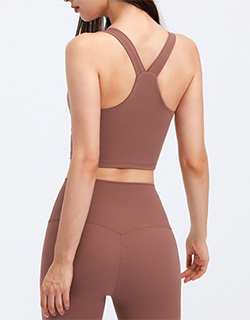
Downloadable Activewear Quality Inspection Checklist for Buyers
Start with a checklist you can actually use
An activewear quality inspection checklist should connect each requirement to an approved reference, a defined check, a recorded result and a release decision. Download the blank buyer pack below, enter your order-specific limits before inspection, and retain measurements, test reports and defect evidence together. A completed checklist supports review; it does not certify every garment.
Download the buyer inspection pack (ZIP) · Open the printable checklist
The pack contains a printable checklist and three editable CSV logs for measurements, tests and defects. No registration is required. The templates are original blank working documents; they contain no completed factory results or default acceptance limits.
1. What is inside the buyer pack?
| File | Use it to record | Complete before use |
|---|---|---|
| Printable checklist | Inspection scope, evidence references and final disposition | Order identity, specification revision, sampling plan and release authority |
| Measurement log (CSV) | Actual measurements by garment and point of measure | Units, method, nominal dimensions and tolerances |
| Test record (CSV) | Method, specimen identity, conditions, result and report | Applicable tests, acceptance limits and decision owner |
| Defect log (CSV) | Observation, classification, photographs and corrective action | Approved defect catalogue and counting rules |
Save an unchanged master and create a dated copy for each inspection. CSV files can be opened in a spreadsheet editor; they contain no formulas, macros or automatic pass/fail logic. Keep identifiers as text where leading zeros matter. Use the printable sheet as a cover record and attach additional log rows as needed.
2. Lock the references before the inspector starts
Identify the purchase order, style, colorways, size range, quantity and production lot. State whether the inspection unit is one garment or a complete set. Record the approved tech pack revision, sealed sample identifier, measurement sheet, shade reference, artwork and packing specification. A result without the reference revision is difficult to defend when production and buying teams hold different files.
Resolve conflicting requirements before sample selection. For example, if a sports bra sample has one strap length but the signed measurement sheet states another, the inspector needs an authorized clarification rather than a personal choice. Enter the clarification date and owner in the checklist. Keep superseded documents out of the inspection packet.
Add product-specific risks. Leggings may need an agreed opacity assessment at defined stretch and lighting; sports bras may require attachment and support checks appropriate to their design; running tops may need evidence for a moisture-management claim. State exactly what is covered and what remains outside the inspection scope.
3. Turn each check into an observable requirement
| Area | Practical inspection prompt | Evidence to retain |
|---|---|---|
| Identity and assortment | Do style, color, size and quantities match the order? | Carton IDs, count basis, assortment record |
| Fabric and shade | Do panels and paired pieces match the approved reference under agreed viewing conditions? | Reference ID, panel location, lighting and photographs |
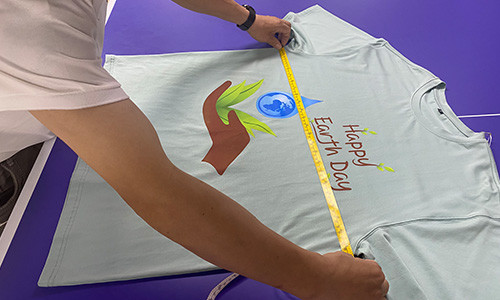
| Measurements | Are defined points within the signed limits using the agreed method? | Unit ID, actual value, nominal value and tolerance |
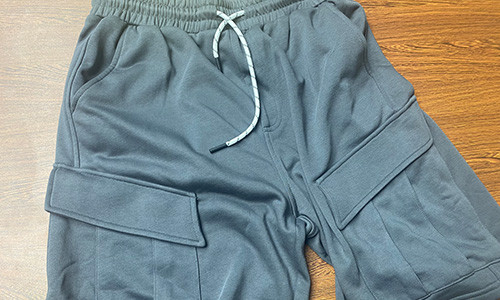
| Construction | Are seams, hems, waistband, straps and gusset consistent with the approved construction? | Inside/outside images, observation and defect code |
| Function and comfort | Do closures and adjusters operate as specified? Are edges or attachments problematic? | Method, unit ID, result and escalation |
| Branding and packing | Are artwork, labels, hangtags, folding and carton marks correct? | Artwork revision, scan checks where applicable, pack photographs |
Avoid a single box labeled “quality OK.” Write one requirement per row. Use Pass, Fail, Not tested or Not applicable, and give a reason for the last two. A blank result is unresolved. Marking an unperformed test as Not applicable conceals a gap in the agreed scope.
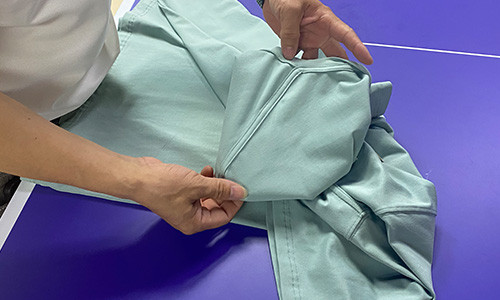
Inspect inside the garment as well as the face. Record the location and extent of skipped stitches, open seams, damaged fabric, label errors or shade variation. The same visible symptom may have different significance depending on location and intended use, so agree classification with the buyer rather than assigning every loose thread the same severity.
4. Fill in the sampling plan without guessing AQL numbers
Enter the lot size, selected standard and edition, inspection level, inspection state, plan type, sample size and applicable acceptance/rejection numbers. Record the random selection method and sampled carton IDs. Define how the size and color mix will be represented and how targeted follow-up checks will be distinguished from the acceptance sample.
For a contract using AQL-indexed attribute sampling, consult the complete selected procedure, such as ISO 2859-1:2026. This pack does not reproduce its sampling tables or calculate their entries. AQL is not a fixed percentage allowance of defects in every shipment. Inspection level, inspection severity and defect class are separate decisions.
Specify whether results count nonconforming units or individual nonconformities. Keep all observations in the defect log and apply the agreed counting rule to the summary. For example, two major observations on the same garment must not automatically become two major defective units. Record the cross-class counting rule and the critical-finding escalation separately.
Do not replace a defective sampled garment with a good one to improve the count. If a double or multiple sampling plan requires an additional stage, record that stage and its cumulative decision correctly. If the lot is inaccessible or incomplete, report the limitation and obtain a documented disposition.
5. Use the measurement and test logs together
In the measurement log, identify the point of measure and whether it is measured relaxed, stretched, flat or around a circumference. State centimeters or inches explicitly. Record the garment ID, size, nominal value, lower and upper tolerances, actual value and result. Agree conditioning and garment relaxation where relevant to the chosen method.
An illustrative record might specify a relaxed half-waist of 32.0 cm with a tolerance of ±1.0 cm and an actual value of 33.4 cm. Under that hypothetical specification, the measurement fails because the upper limit is 33.0 cm. These numbers demonstrate recordkeeping only; they are not recommended activewear tolerances and are not prefilled in the blank log.
Performance testing belongs in a separate test matrix. Define the specimen, selected method and edition, preparation, cycles or conditions, limit and report reference. Possible topics include dimensional change, colorfastness, pilling, seam performance and stretch recovery. Choose tests for the specific product and claims rather than checking every possible test by default.
For moisture-related claims, the AATCC standards catalogue distinguishes methods addressing different textile properties. Agree the relevant property and method with the laboratory. A quick droplet demonstration does not establish every aspect of wicking, drying or wearer comfort.
Keep actual results and their units, not just “lab passed.” Match the report to the material, colorway and batch it represents. If a test is pending, identify the affected release condition. A workmanship sampling pass does not override a failed contractual performance requirement.
6. Build a defect evidence trail
Give each observation a unique ID and connect it to the lot, carton and garment. Include a context photograph, a close-up and a scale where useful. State the requirement, observed condition, proposed class and reviewer-confirmed class. Avoid photographs that make an isolated thread appear to document a seam-strength failure.
| Illustrative finding | Suggested evidence | Decision still needed |
|---|---|---|
| Seam opening at a gusset junction | Inside/outside photos, location and relevant functional result | Classification and disposition under the agreed defect catalogue |
| Incorrect size label | Label image, measurement record and approved labeling reference | Whether identity, fit or traceability is affected |
| Panel shade mismatch | Approved standard, controlled viewing notes and panel IDs | Buyer-agreed shade acceptance |
| Loose thread near a hem | Location, length and construction context | Whether cosmetic only or evidence of unraveling |
These are editorial scenarios, not photographed defects or customer cases. Actual classification depends on the signed requirements and product risk. Where a finding raises a safety concern, follow the agreed immediate hold and escalation procedure; do not let a routine minor-defect tally obscure it.
7. Record release, hold and corrective action separately
Summarize quantity and assortment checks, workmanship sampling, measurement results, required tests and documentation as separate outcomes. State the overall disposition as Release, Hold or another explicitly authorized decision. Name the approver, date, scope and any outstanding conditions. The checklist preparer and shipment release authority may be different people.
For a failed lot, preserve the original result, identify and segregate the affected goods, and assign corrective action. Record sorting or rework quantities and the identity of the resubmitted lot. Retain the reinspection report. Do not repeatedly sample an unchanged rejected lot until a favorable result appears.
A concession should identify the exact deviation, affected quantity, reason and authorized approver. It does not erase the original failed observation. Close corrective-action rows only when the specified evidence is available, and carry recurring issues into the next production review.
8. Prepare the checklist for an Ohsure order discussion
Send Ohsure the completed scope and references before arranging the inspection. Ask the team and the inspection provider to confirm access, random selection, measurement methods, available test reports, reporting responsibilities and release timing for that order. The template helps both sides identify missing decisions without implying an unverified factory capability.
For a repeat style, retain the previous inspection history but recheck specification revisions, material batches, artwork and packing changes. For a new style, use the approved pre-production sample to clarify construction and fit expectations before bulk inspection. Keep buyer-specific tolerances and test requirements visible rather than copying another brand’s defaults.
This article supplies an original inspection workflow and blank record pack. It is a companion to the detailed AQL guide and does not replace the purchase specification, applicable testing procedures or an inspector’s complete report.
Frequently asked questions
Can I use the checklist for leggings, sports bras and running tops?
Yes, as a starting framework. Add the construction, fit, performance and packing checks for each product and mark irrelevant items with a reason.
Are sample sizes and AQL limits prefilled?
No. Enter the verified plan agreed for the order. The pack contains no licensed sampling tables or automatic AQL calculation.
Can I edit the files in Excel?
The three CSV logs can be opened in spreadsheet editors. They have no formulas or automatic verdicts. Save a working copy in your preferred format and preserve identifiers and units.
Does a completed checklist prove the whole shipment is defect-free?
No. Record the inspection scope, sample and limitations. Sampling supports a lot decision and does not establish the condition of every unit.
What if a test report is still pending?
Mark it Not tested or pending, identify the missing report and apply the agreed release condition. Do not record a pass before reviewing the result.
Who signs the final release?
The person authorized by the purchase agreement or buyer’s quality procedure. Record their name, date and scope; the inspector’s observations alone may not authorize shipment.
Related guides and individual downloads
- AQL inspection levels, defects and acceptance criteria
- Preventing size inconsistency
- Controlling sample-to-bulk color differences
- Seam strength and stretch testing
Printable checklist · Measurement log · Test record · Defect log
References checked 17 October 2026. Real author and technical reviewer details await confirmation. FAQ scenarios are editorial procurement questions, not attributed customer inquiries.