
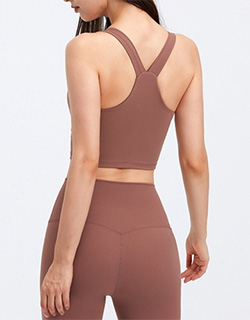
Custom Activewear Product Manufacturing Guide: Categories, Fabrics and Construction
Build a collection around how each garment needs to fit, move and be made.
For activewear brand owners, product developers and sourcing teams
Custom activewear manufacturing turns a product brief into approved garments through fabric selection, pattern development, sampling, production and quality checks. Choose the category around the intended activity, then specify fit, fabric behaviour, seams, trims and branding together. Approve measurable requirements and a reference sample before committing to bulk quantities, costs and delivery milestones.
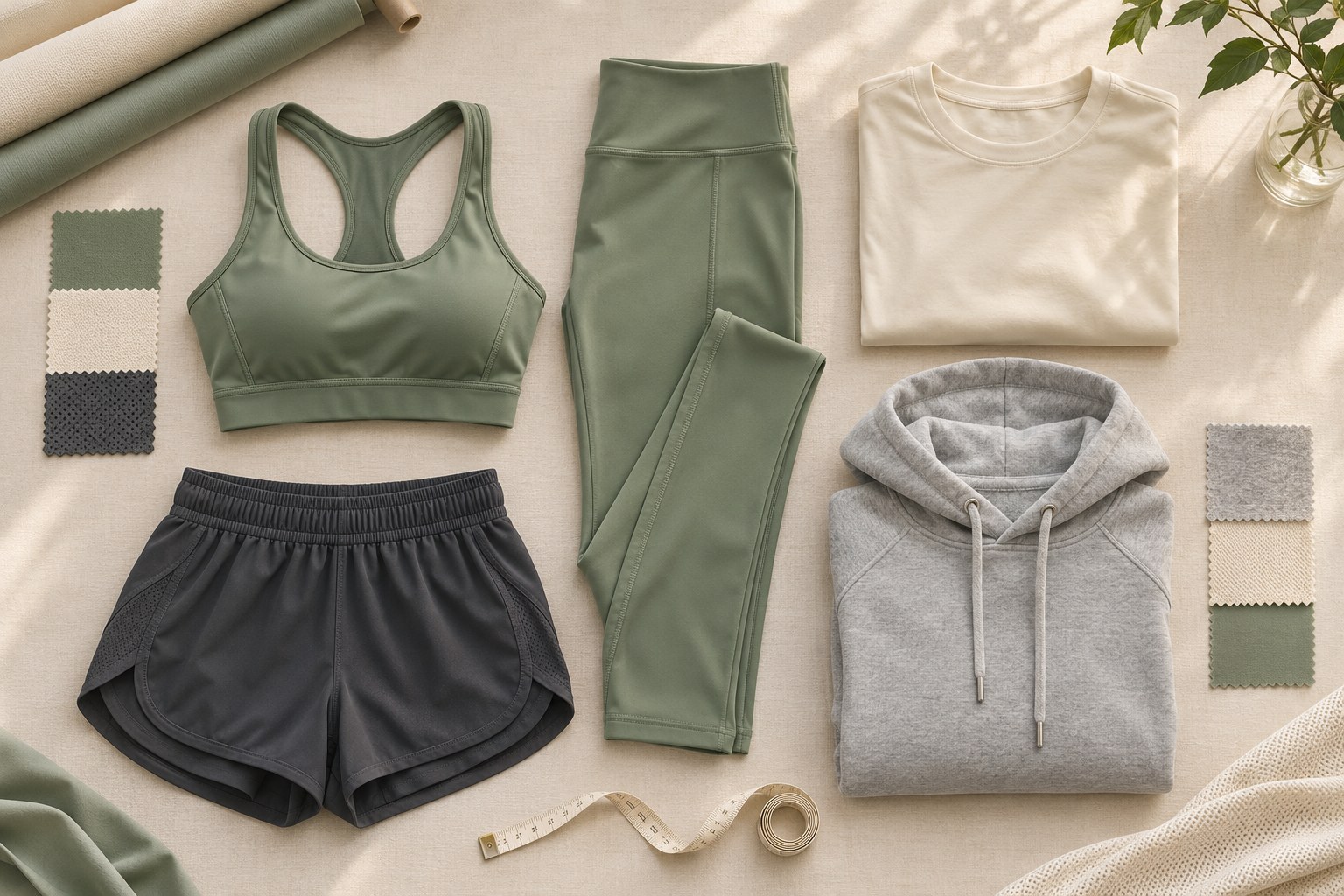
What is custom activewear manufacturing?
Custom activewear manufacturing is the development and production of exercise or athleisure garments to an agreed specification. That specification connects the wearer’s activity with the pattern, materials, assembly, appearance and order requirements. A photograph communicates a design direction; it cannot define all the decisions needed to reproduce the garment consistently.
A tech pack is the controlled product file: drawings, bill of materials, measurement chart, construction details, artwork and revision history. A bill of materials (BOM) identifies every fabric, lining, elastic, label and accessory used. Grading defines how the pattern changes across sizes. GSM means grams per square metre, a measure of fabric mass per area rather than a complete quality rating.
OEM, ODM and private label: in this guide, OEM means production to buyer-defined requirements; ODM involves manufacturer-supported design development; private label concerns selling garments under the buyer’s brand. Suppliers may package these services differently. Confirm who owns the design, who prepares patterns and specifications, and which development fees and deliverables the offer includes.
Ohsure lists OEM and ODM manufacturing services and private-label support. Use those discussions to assign responsibilities before sampling.
Compare activewear categories by the problem they must solve
Start with one sentence describing the wearer and activity: for example, “a close-fitting legging for studio movement with secure phone storage.” Then identify the features needed to support that use. A running short and a yoga short can share a colour while needing different fit, pocket and lining decisions.
| Category | Fabric direction to evaluate | Construction priorities | Sample approval focus |
|---|---|---|---|
| Leggings and fitted bike shorts | Stretch knit candidates; compare coverage and recovery | Rise, gusset, waistband, seam path, pocket opening | Bending coverage, waistband movement, seam comfort, pocket load |
| Sports bras | Stretch shell with separately specified lining and elastic | Band, straps, cup arrangement, neckline and joining seams | Intended activity, size-specific fit, movement and pressure points |
| Loose training or running shorts | Light shell candidates; liner as a separate component | Inseam, hem opening, drawcord, liner, pocket security | Stride and sitting comfort; liner exposure; storage access |
| T-shirts and tanks | Jersey or other approved knit; choose fit before weight | Neck binding, armholes, shoulder line, hem and logo position | Reach, armhole coverage, twisting and post-wash dimensions |
| Hoodies, sweatshirts and joggers | Approved fleece, terry or other layering fabric | Rib, hood, zip, pocket bags and seam bulk | Layering room, hood balance, trim compatibility and shrinkage |
| Jackets | Shell and lining selected for the intended environment | Zip, collar, cuff, pocket and panel construction | Mobility and closure operation; evidence for any weather claim |
| Maternity and nursing activewear | Materials assessed in the relevant fit and access design | Changing body measurements, panel shape and feeding access | Fit across intended use stages; access operation and comfort |
| Matching sets | Assess each component, including lining and trims | Separate size charts, coordinated shade and component quantities | Approve both garments together and individually |
Browse custom gym leggings, custom sports bras and custom shorts for visual starting points. Product descriptions help identify directions; ask for project-specific samples before adopting a performance claim.
How many categories should a first collection include?
Choose the smallest assortment that can answer your main customer need. Every additional style, colour and size increases the number of approvals and inventory decisions. A coordinated top and bottom may simplify merchandising, but it still requires two fit reviews and a clear agreement about the unit used for pricing and MOQ.
Choose fabric by measurable requirements
Specify the composition, fabric construction, weight, finish and colour reference together. Add the behaviour you need the sample to demonstrate. “Soft,” “supportive” and “premium” are useful starting descriptions, but leave too much room for different interpretations unless tied to approved references and acceptance checks.
| Material family | Useful development direction | What to verify before approval |
|---|---|---|
| Nylon/spandex | Candidate for close-fitting leggings, bras and studio pieces | Recovery, coverage under stretch, surface wear, colour and logo compatibility |
| Polyester/spandex | Candidate for fitted training products and selected printed designs | Handfeel, recovery, wash behaviour and suitability of the chosen printing process |
| Cotton and cotton/polyester | Candidate for lifestyle tees, sweatshirts and layering pieces | Construction, shrinkage, shape retention, surface finish and care instructions |
| Modal/spandex and bamboo-based options | Candidate when a particular drape or handfeel is required | Actual fibre identity, blend, recovery and suitability for the garment’s activity |
| Recycled and organic options | A sourcing attribute to document alongside the base specification | Exact material, percentage basis, traceability and evidence for any certification claim |
These material families appear in Ohsure’s supplied fact library; availability for a particular weight, shade and order must be confirmed. Use the fabric guide to begin the conversation, then request a uniquely identified swatch. A fibre name alone does not prove moisture management, drying speed, opacity or durability.
Use a measurable fabric brief
Record composition by mass (%), finished weight (g/m²), usable width (cm), colour reference, finish, stretch direction and an approved swatch code. For any stretch or recovery figure, also record the method, specimen direction, load or extension, hold time and recovery interval. Results produced under different conditions are not directly comparable.
A heavier fabric can still lose coverage when the pattern stretches it excessively. Compare the sample in the lightest planned colour and relevant sizes, under agreed movement and lighting conditions. If “squat-proof” or another performance statement will appear in marketing, define how that claim will be substantiated for the actual garment.
Write a construction brief that a sample room can use
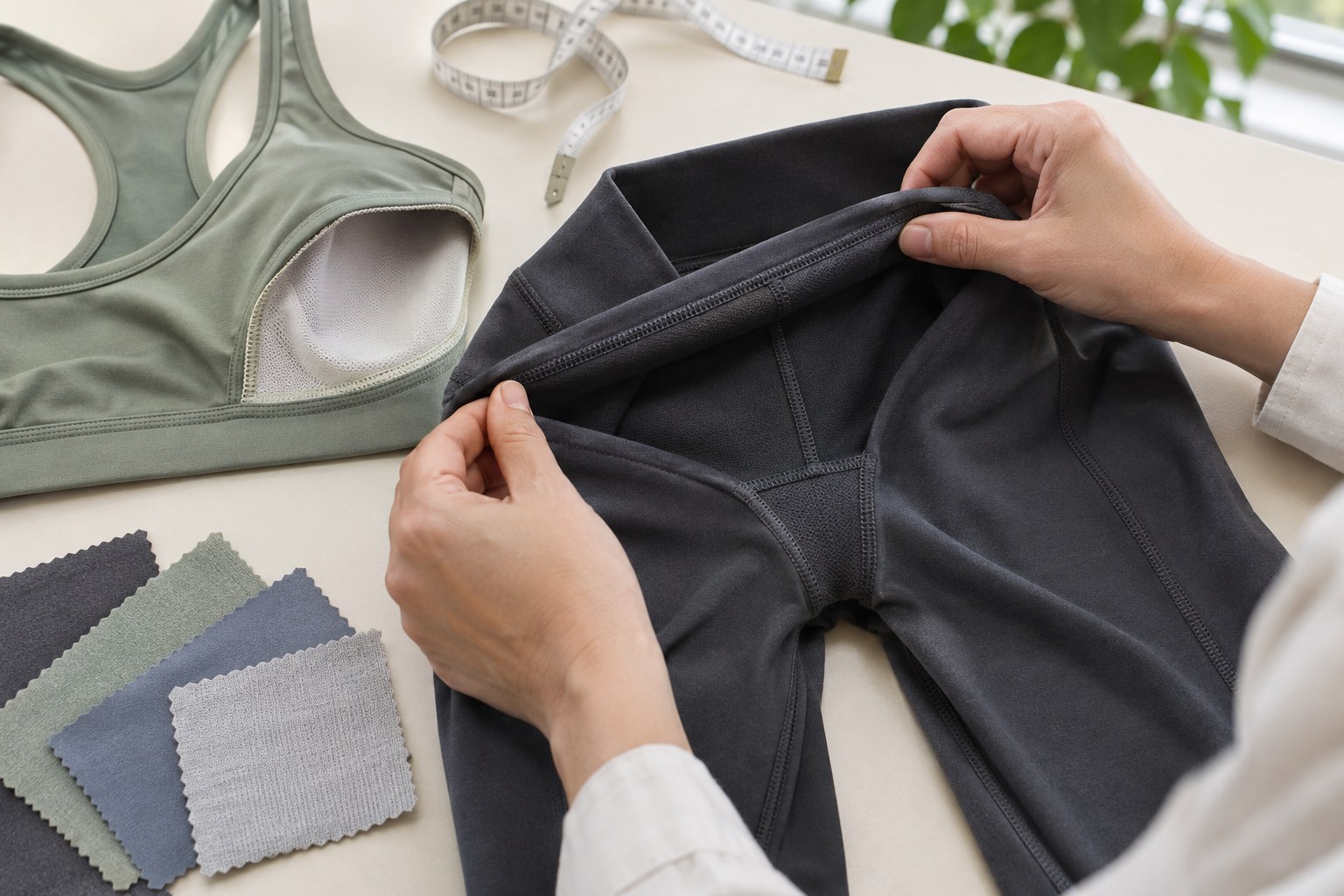
Construction is the combination of pattern pieces, joining methods, seams, reinforcement and finishing. Ask the development team to propose an appropriate seam and stitch specification for each location. A stitch name alone does not establish seam strength or comfort.
| Area | Record in the tech pack | Approval evidence |
|---|---|---|
| Fit and size | Point-of-measure diagram; dimensions in cm; size increments; tolerance for each point | Dated measurement report linked to sample revision |
| Fabric and components | Material codes; blend %; g/m²; lining; elastic width in mm; trim codes | Approved swatches and BOM with substitution control |
| Seams and hems | Seam location; construction; seam allowance in mm; stitch detail; reinforcement points | Inside/outside sample photos and movement review |
| Waistband and gusset | Finished height in cm; elastic arrangement; gusset shape and attachment | Wear review for rolling, movement, pressure and seam placement |
| Bra structure | Band dimensions; strap width and length; lining; removable or fixed cups if required | Fit review in the intended size range and activity |
| Pockets and closures | Opening width/depth in cm; placement; zip/fastener code; intended load | Access and closure check using agreed contents |
| Branding and packing | Artwork version; dimensions in mm; placement from fixed landmarks; label text; pack ratio | Applied logo sample, artwork proof and packing approval |
Cut-and-sew or seamless?
Cut-and-sew uses cut panels joined into a garment and lets the development team adjust panel shapes, pocket arrangements and seam placement. Seamless development uses a different knitting and shaping route and may still require joining or finishing seams. Ask about the intended construction, available equipment, pattern changes, material choices and minimums. Do not assume that a seamless-looking catalogue image proves how a product is manufactured.
Match branding to the stretch zone
Approve the logo on the actual fabric at the intended size and location. Request stretch and wash evaluation under agreed conditions. Large prints, embroidery backing or a logo placed across a high-extension area can change the feel of a garment. Artwork approval on a screen should be followed by approval of the applied sample.
Seven steps from product idea to bulk approval
The sequence below is a buyer-facing development workflow based on the services described in the supplied fact library. The deliverables are recommended approval controls, rather than an assertion of Ohsure’s internal operating procedure.
Define the wearer, use and assortment
Identify activity, fit direction, categories, colours, target size range and quantities. Separate essential requirements from optional features. Deliverable: an assortment sheet with one style code per garment.
Agree the specification and quotation scope
Submit drawings, references, measurements and branding files. Ask the manufacturer to identify unclear details, material minimums, charges, exclusions and responsibilities. Deliverable: a revision-controlled tech pack and itemised quotation.
Select materials and approve component references
Compare swatches and proposed trims, then lock material codes, colours and testing needs. If sourcing claims matter, request evidence for the exact material. Deliverable: an approved BOM with outstanding items listed.
Develop and evaluate the first sample
Measure the garment, inspect inside construction, review movement and test the specified care cycle. Record each issue with a photo, location and required correction. Deliverable: one consolidated sample comment sheet.
Close revisions and review the size range
Confirm corrections and evaluate agreed representative sizes. Do not approve all sizes solely from a single base-size fitting. Review artwork and labels on the garment. Deliverable: signed sample, size and artwork revisions.
Release bulk production against a fixed reference
Agree the production reference sample, material lot controls, inspection plan and packing specification. Define which changes require written approval. Deliverable: a production release with no unresolved critical specification items.
Inspect, reconcile and arrange shipment
Review inspection results against agreed limits, resolve deviations and reconcile quantities by style, colour and size. Confirm packing, shipping responsibilities and documents. Deliverable: release record, packing list and confirmed transport arrangement.
For every approval, record what was approved, by whom, against which version and on what date. A change to fabric, elastic or print can require the affected sample checks to be repeated.
Plan MOQ, total cost and time before widening the range
Ohsure’s published baseline: MOQ starts at 100 pieces per style per colour, with mixed sizes available. Final order requirements are subject to project confirmation. This is not a promise that different styles and colours can be combined into one 100-piece order.
Illustrative assortment calculation
Suppose a buyer plans 3 separately counted garment styles × 2 colours × 100 pieces = 600 garments. If each style/colour uses a hypothetical XS/S/M/L split of 10/30/40/20, each size pack totals 100. Six such packs total 600.
If a bra and a legging are two of the styles, their matched units are not automatically counted as one style or one MOQ unit. Ask how a set is quoted. The calculation assumes all six style/colour combinations are accepted at the baseline minimum; it is a planning example, not a confirmed Ohsure order.
Calculate costs on the same basis
Planning order cost = quoted garment quantities × respective unit prices + separately charged development, tooling, testing, packaging and logistics. Add any separate fabric commitment only when it is not already included. Track retained material separately to avoid counting it twice.
Compare suppliers using the same specification and trade scope. A quote that includes labels, packing and testing is different from one that excludes them. Ask who owns unused custom fabric, whether repeat orders can use it, and what happens when a component must be replaced.
Build a milestone schedule
Request dates for specification freeze, material readiness, sample submission, revision review, production release, inspection and shipment. Confirm whether durations mean working or calendar days and what triggers the clock. Allocate buyer review time, test turnaround and transport separately.
Sample timing is confirmed after reviewing the design, materials and customisation requirements. Bulk-production timing is confirmed according to the approved specifications, material availability and production schedule. The supplied fact library records differing website timelines, so this guide does not present a single guaranteed number or an unsupported price range.
Extra panels, linings, pockets, customised trims and complicated artwork can add operations or approval dependencies. Ask for the cost and schedule effect of each optional feature before approving it.
Common mistakes and how to prevent them
- Choosing by appearance alone. Add inside-construction references, measurements and use requirements to the image brief.
- Treating GSM or fibre percentage as a performance guarantee. Evaluate the actual garment and specify the checks that matter.
- Approving a set from one component. Review each garment’s fit, colour, elastic and lining separately, then check coordination.
- Using one tolerance for every measurement. Agree suitable limits point by point and define how measurements are taken.
- Leaving logos until bulk production. Approve an applied sample on the selected material before release.
- Counting MOQ across an unrestricted collection. Confirm quantities for each style and colour, plus separate material and trim minimums.
- Changing fabric without reopening fit approval. Review the affected measurements, movement, branding and care behaviour.
- Scheduling launch from sewing completion. Allow for inspection, issue resolution, packing and confirmed transit arrangements.
Manufacturer perspective: approve the whole garment system
Ohsure’s fact library describes support with material selection, sample development, seams, zippers, pockets and custom branding. The practical development lesson is to assess those choices together. A waistband that works with one fabric can behave differently after a fabric substitution; an approved logo can feel different when moved onto a high-stretch panel.
For example, if a legging waistband rolls during movement, do not assume that increasing fabric weight will solve it. Ask the sample team to review waistband pattern shape, finished dimensions, elastic arrangement, material recovery and the fit of adjacent panels. Agree which variable to change and compare the revised sample under the same conditions. This is a troubleshooting example, not a reported Ohsure client case.
Ohsure’s quality-control page describes raw-material, printing-process, semi-finished and finished-garment checks. The supplied library lists colour, weight, pilling, colourfastness, shrinkage, appearance, measurements, stitching and accessories among the inspection topics. Translate the relevant topics into an order-specific acceptance plan; the public description does not establish an agreed tolerance, laboratory result or sampling standard for your order.
Send a brief the manufacturer can answer
“Please quote [category and activity], [style/colour quantities] and [size range]. Attached are the design references, measurement chart, BOM and logo files. Confirm material availability, construction proposals, MOQ basis, sample scope, revision charges, testing, packing and shipment scope. Please list assumptions, unresolved questions and dated approval milestones. Obtain written approval before substituting any specified material or component.”
Use the buyer brief and approval checklist to capture these decisions. Then discuss the completed file through Ohsure’s custom activewear manufacturing service.
Buyer brief and approval checklist
Copy these fields into your project file. For every row, record the agreed value, supporting reference or revision, responsible person, approval status and due date.
| Checkpoint | Information to record |
|---|---|
| Use and assortment | Wearer, activity, intended fit, category, style code, colour, quantity by size and MOQ unit. |
| Fabric and trims | Material code, blend %, weight g/m², usable width cm, finish, colour, swatch, elastic, lining, zips and closures. |
| Measurements and construction | Point diagram, dimensions by size in cm, tolerances, panels, seams, waistband, gusset and reinforcement. |
| Branding | Technique, artwork revision, dimensions in mm, placement and applied-sample approval. |
| Tests and sampling | Method, conditions, acceptance limits, sample/lot identity, results, consolidated comments and size review. |
| Commercial scope | Prices, separate fees, minimums, retained material ownership, terms and dated milestones. |
| Bulk and shipment | Approved sample, fixed BOM, substitution approval, inspection plan, labels, pack ratios, quantity reconciliation and transport responsibilities. |
Frequently asked questions
What information should I send before requesting a quotation?
Send the intended activity, category, drawings or reference sample, size chart, fabric requirements, quantities by style and colour, branding, packaging and destination. Ask the supplier to list assumptions and unresolved details alongside the quotation.
Which fabric is best for custom gym leggings?
There is no universal best blend. Compare candidate fabrics in the actual pattern for movement, recovery, coverage, handfeel and wash behaviour. Composition and weight are useful specification fields, but neither establishes performance on its own.
Can a sports bra and leggings use the same fabric?
They can be evaluated as a coordinated set, but each garment needs separate approval. The bra may need a different lining, elastic or support structure. Confirm colour compatibility across all materials and agree whether the order minimum is counted by garment or by set.
Does a higher spandex percentage guarantee better compression?
No. Fabric construction, yarns, finishing, pattern dimensions and garment fit all matter. Define the intended fit and evaluate the finished sample. Any quantified compression claim needs an appropriate test and evidence for the specific product.
What is Ohsure’s minimum order quantity?
MOQ starts at 100 pieces per style per colour, with mixed sizes available. Final order requirements are subject to project confirmation. Fabric, custom colours, trims, packaging and the definition of a set can introduce separate minimums.
How long do samples and bulk production take?
Sample timing is confirmed after reviewing design, materials and customisation requirements. Bulk-production timing depends on approved specifications, material availability and the production schedule. Request dated milestones and clarify what starts each stage rather than relying on one universal lead time.
Is seamless construction always better than cut-and-sew?
Choose the construction route for the required shape, surface design, comfort and production constraints. Seamless garments may still include joining or finishing seams. Confirm equipment capability, grading, available materials, minimums and the finished sample before choosing a route.
How should I approve quality before bulk production?
Agree measurement points and tolerances, sample references, test methods, acceptance limits, defect definitions and an inspection sampling plan. Record the approved material, artwork and garment revision together; require written reapproval when an important component changes.