
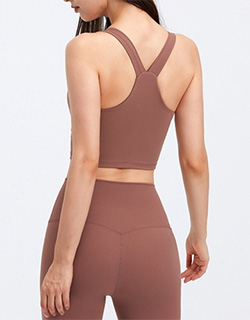
How Fabric Dyeing Affects Water, Energy and Chemical Use
A practical guide to comparing coloration routes, checking mill evidence and protecting activewear quality.
Ohsurewear | Published: 5 November 2026 | Sources checked: 5 November 2026
Fabric dyeing affects water use through dye baths and rinsing, energy use through heating and drying, and chemical use through dyes and processing auxiliaries. The impact depends on the fibre, colour, equipment and rework rate. Compare suppliers using the same process boundary and accepted fabric output, supported by mill records rather than broad sustainability claims.
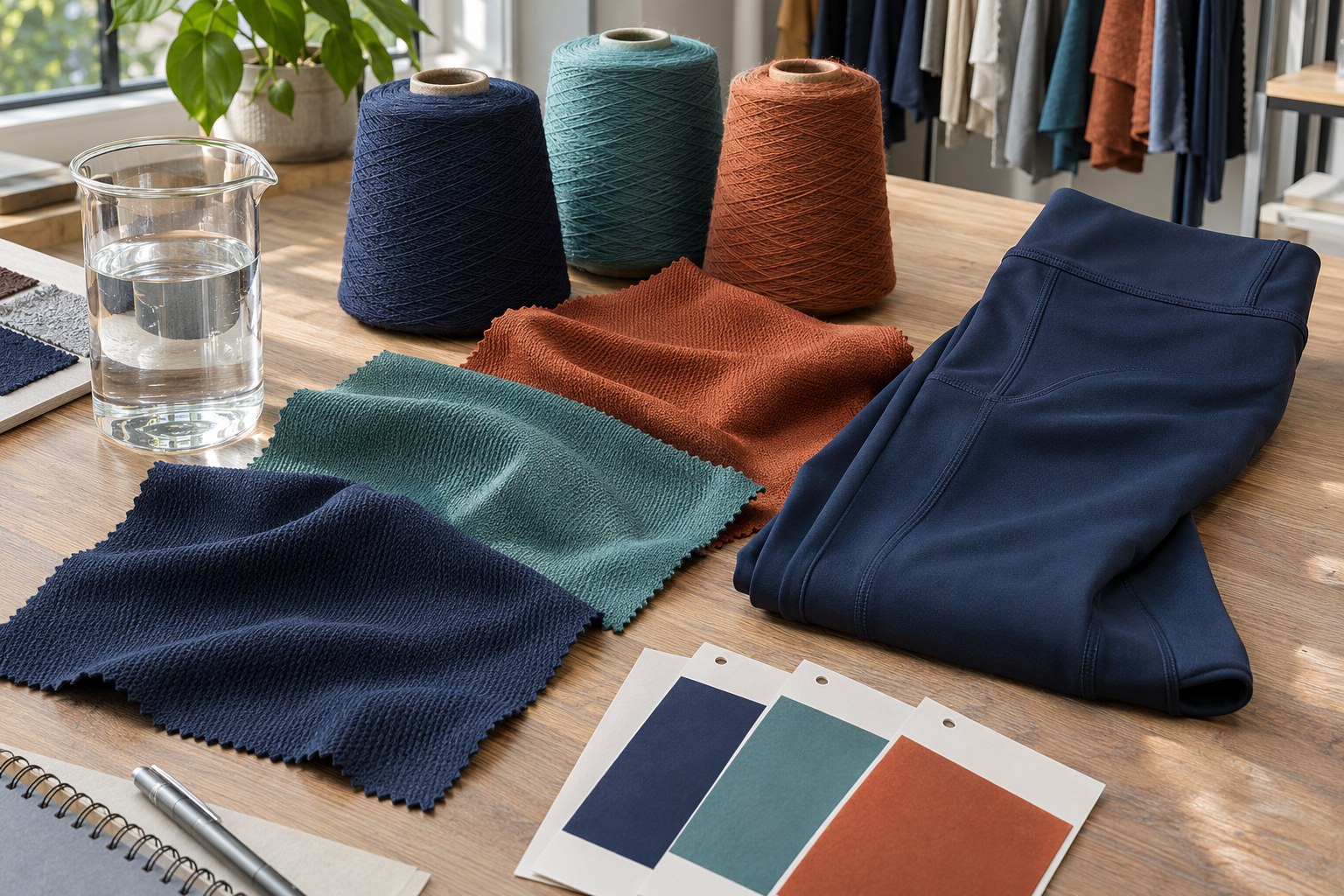
What counts as fabric dyeing?
Dyeing gives colour to fibres, yarn, fabric or garments using a process suited to the material. Piece dyeing colours fabric after it has been knitted or woven; yarn dyeing colours yarn earlier. Solution dyeing adds colour during manufactured-fibre production. Printing applies colour in selected areas and should be identified separately in a quotation.
For sourcing decisions, define the wider wet-processing boundary: preparation, coloration, washing and finishing may sit at different facilities. The European Commission’s Textiles Industry BREF treats these as distinct but connected operations. A dyeing-stage improvement therefore does not establish a whole-garment environmental result.
Editorial process map; actual sequence depends on the material and mill.
Three questions behind the environmental impact
Water: how much fresh water enters the agreed boundary, and where is it used? Energy: how much heat and electricity are required, including drying? Chemicals: which formulations enter the process, and how are their hazards and discharge managed?
Do not collapse these into one score without explaining the method. Lower water use can coexist with a different energy demand; fewer kilograms of chemicals do not automatically mean lower hazard. A useful supplier comparison keeps the three questions visible.
Compare dyeing routes against the actual fabric
The following is a sourcing screen, not a ranking or a promise of savings. Request a trial and written mill confirmation before substituting a route in an approved activewear specification.
| Route | Potential resource implications | Buyer trade-off / evidence to request |
|---|---|---|
| Aqueous piece dyeing | Water carries the colour; heating, washing and drying contribute to resource demand. | Ask for actual batch consumption, accepted output and repeat-processing records. Specify the complete fibre blend. |
| Low-liquor-ratio batch dyeing | A smaller bath can reduce bath water and associated heating; total savings depend on the full sequence. | Check the operating ratio at the intended load, not only the machine brochure. Confirm shade uniformity and fabric condition. |
| Solution / dope dyeing | Introduces colour before fibre formation and can avoid a separate conventional wet-coloration step. | Ask about upstream colour minimums, blend compatibility and replenishment. An available core colour may be more practical than a small custom shade. |
| Supercritical CO₂ dyeing | Uses pressurised CO₂ as the dyeing medium. DyeCoo documents a route for PET fabrics and yarns. | Confirm the exact material and available mill. Include pressure-system energy and other processing in the comparison; do not extend a water-free dyeing claim to the entire garment. |
Technical context: JRC textile preparatory study on liquor ratio; polyester value-chain review on coloration routes; DyeCoo technical specification for that supplier’s CO₂ process. These do not establish availability or results for an Ohsure order.
For activewear, a route must work with the complete fabric specification, including elastane, construction, weight and finishing. A polyester process reference does not by itself qualify a polyester/elastane legging. Keep stretch recovery, dimensional stability, opacity and colour performance in the approval brief.
How to compare water, energy and chemical data fairly
The JRC preparatory study explains liquor ratio as the relationship between dry textile weight and dye liquor: 1:10 means approximately 10 litres of liquor per kilogram of textile. It is a bath parameter. It is not the total water footprint of the fabric.
| Metric | Request this | Check before comparing |
|---|---|---|
| Water | Fresh-water input in L/kg of accepted finished fabric; report reused water separately. | Same start/end boundary, period, fabric and shade; explain allocated shared-facility water. |
| Energy | Electricity in kWh/kg plus thermal energy with stated units and conversion method. | Do not compare electricity alone with another mill’s total energy. Ask about the heat source and recovery. |
| Chemicals | Recipe quantities, units and named formulations; input-conformance documentation where applicable. | Distinguish supplied product mass from active content and hazard. Include auxiliaries and finishing agents within scope. |
| Wastewater | Site, discharge route, sampling date, report scope and applicable assessment criteria. | A report for another site or period cannot demonstrate the order’s conditions. Record gaps and corrective actions. |
| Quality and yield | Accepted finished kilograms, rejected kilograms and repeat-processing quantities. | Use consistent output definitions so rejects are not hidden by an input-weight denominator. |
A worked example: bath savings versus full-process savings
Hypothetical arithmetic only — not Ohsure data or an industry benchmark. Assume two trials each deliver 100 kg of accepted fabric. Trial A uses a 1:10 bath: approximately 1,000 L. Trial B uses 1:6: approximately 600 L. The bath reduction is 400 L, or 40%.
If both trials also require 2,000 L for all other included steps, their totals become 3,000 L and 2,600 L. The full-boundary reduction is (3,000 − 2,600) ÷ 3,000 = 13.3%, not 40%. This example assumes equal yield and identical other-step consumption; real data must test those assumptions.
For an internal comparison, use resource input ÷ accepted output, retain the raw totals and record the period. Do not turn a two-trial illustration into a public product claim. A public comparison needs a documented baseline, representative data and a clearly stated scope.
Chemical inputs and wastewater need separate evidence
ZDHC’s Manufacturing Restricted Substances List addresses restricted substances in chemical inputs. Its wastewater guidance addresses output assessment. These are different checks. A finished-product restricted-substances test is another evidence category; it cannot stand in for either a mill’s chemical inventory or its wastewater results.
A buyer can request the formulation identity, relevant conformance record and expiry or status check, then separately review the facility’s wastewater evidence. Use the current issuer documents for requirements. This guide does not assign a ZDHC status to Ohsure or any unnamed dyehouse.
Seven steps to specify and approve a dyeing route
Freeze the fabric and end use
Send composition, fabric weight, construction, finish, target shade, garment type and intended use. For a matching set, identify each fabric separately; visual matching across different substrates needs its own approval.
Name the actual wet processor
Ask who prepares, dyes and finishes the fabric, with site names and addresses. Record which partner holds the underlying data and who will answer technical questions. A sewing-factory quotation alone does not identify all wet-processing operations.
Shortlist feasible routes
Request available stock colours and custom-colour options. Ask the mill to confirm compatibility, minimum batch size and any limitations. Keep a conventional qualified option in the comparison if the proposed alternative is not yet validated for the exact blend.
Agree a measurement brief
Use the metric table above. Specify boundaries, units, baseline and accepted-output definition before asking for a saving percentage. If only facility-average data are available, label them as such rather than treating them as an order-specific measurement.
Approve colour and performance together
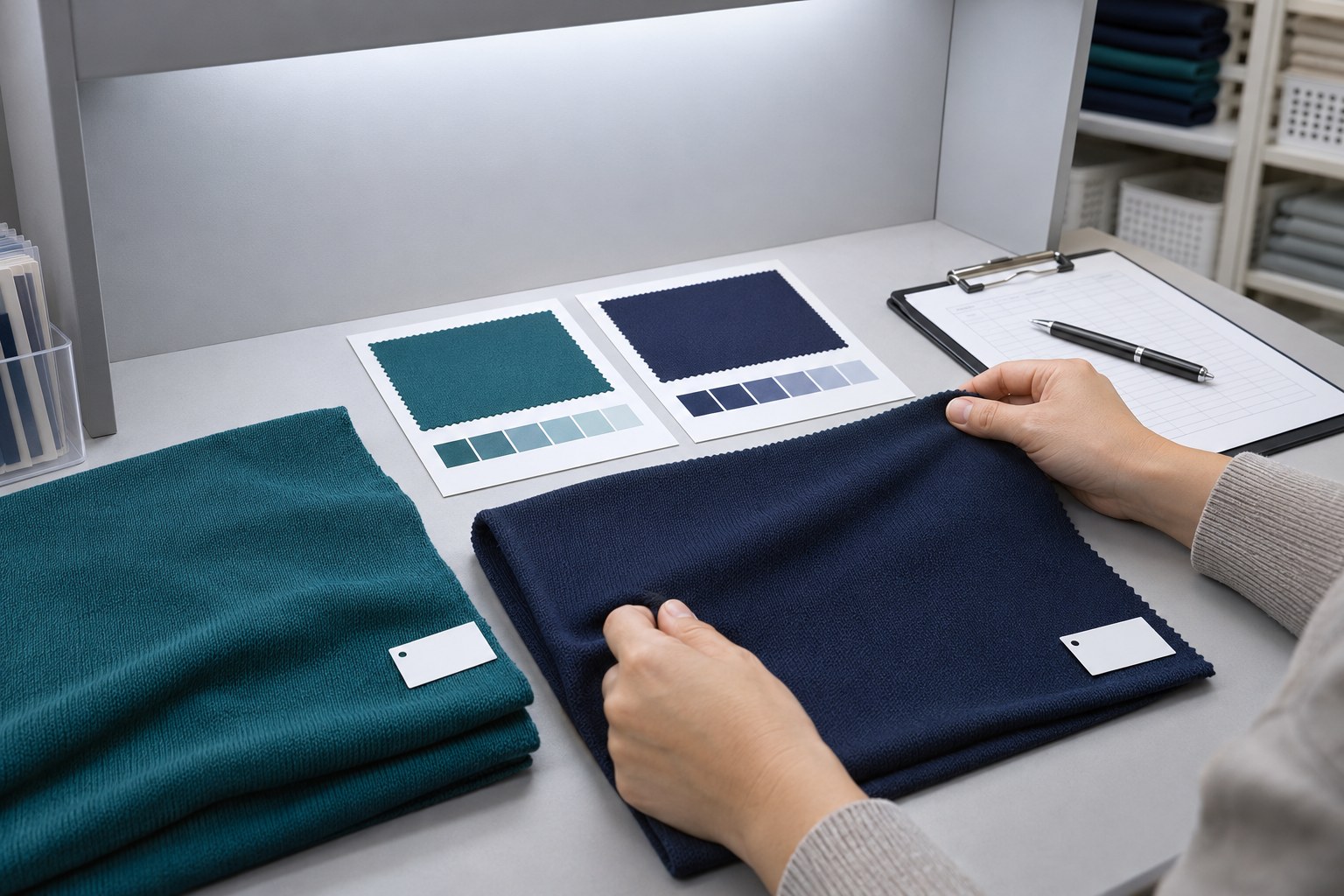
Review the lab dip or route-appropriate colour sample, then an agreed bulk reference. Define viewing conditions and tolerances. Agree testing for washing, perspiration and rubbing colourfastness as relevant, together with shrinkage and stretch requirements. Specify methods and acceptance levels in writing.
Record changes before bulk release
Retain the approved sample, fabric code, shade reference, finish and revision history. Require approval if the mill, recipe route or material changes. Allocate responsibility for additional trials or failures in the purchase agreement.
Close the order with evidence
Match batch references to inspection and test records. Check the result against the original brief, record unresolved gaps and keep the evidence with the purchase order. Only use environmental wording that the documentation actually supports.
What affects cost and lead time?
The lowest fabric price does not necessarily produce the lowest cost per accepted garment. Request itemised development and bulk quotations using the same approved specification. The table below identifies planning questions; it does not imply a fixed surcharge or a universal number of days.
| Factor | Possible cost or schedule effect | Question to resolve |
|---|---|---|
| Stock versus custom colour | Available stock can avoid a new colour-development round; stock continuity still needs confirmation. | Is the exact fabric and shade available in the required quantity and reserved for this order? |
| Minimum dye lot | A fabric mill’s minimum can exceed the garment sewing minimum. | Who owns or pays for excess dyed fabric, and can it be reserved for a repeat order? |
| Sample revisions | Each rejected shade or construction change can add work and approval time. | How many development rounds are included, who approves them and when does the clock start? |
| Specialised route or testing | Qualification, external tests and a different supplier can change the total quotation. | Which fees, sample quantities and report lead times are included? |
| Bulk approval and replenishment | Colour corrections, changed inputs or unreserved capacity can affect delivery. | What is the confirmed production slot and what triggers a new approval? |
For budgeting, compare total quoted order cost ÷ expected accepted units. Keep development, testing and any excess-material commitment visible. Calculate transport and duties separately on the agreed trade basis; do not assume that a fabric-saving claim also reduces landed cost.
Common mistakes that weaken a dyeing decision
- Buying a percentage without its baseline. Ask “compared with which fabric, process and period?” before accepting a claim.
- Equating recycled fibre with lower-impact coloration. Material origin and dyeing evidence are separate sourcing questions.
- Treating waterless dyeing as a water-free supply chain. Check what happens before and after the stated stage.
- Using “natural” or “chemical-free” as a safety conclusion. Request the formulation and process evidence instead of inferring hazard from a name.
- Approving a colour without performance criteria. Record fastness and dimensional requirements before bulk production.
- Assuming a machine specification equals an order result. Request actual operating data and identify any allocation or estimation.
- Hiding rejects or redyeing. Compare accepted output and disclose repeat processing within the agreed boundary.
Ohsure’s manufacturing perspective: connect mill evidence to garment approval
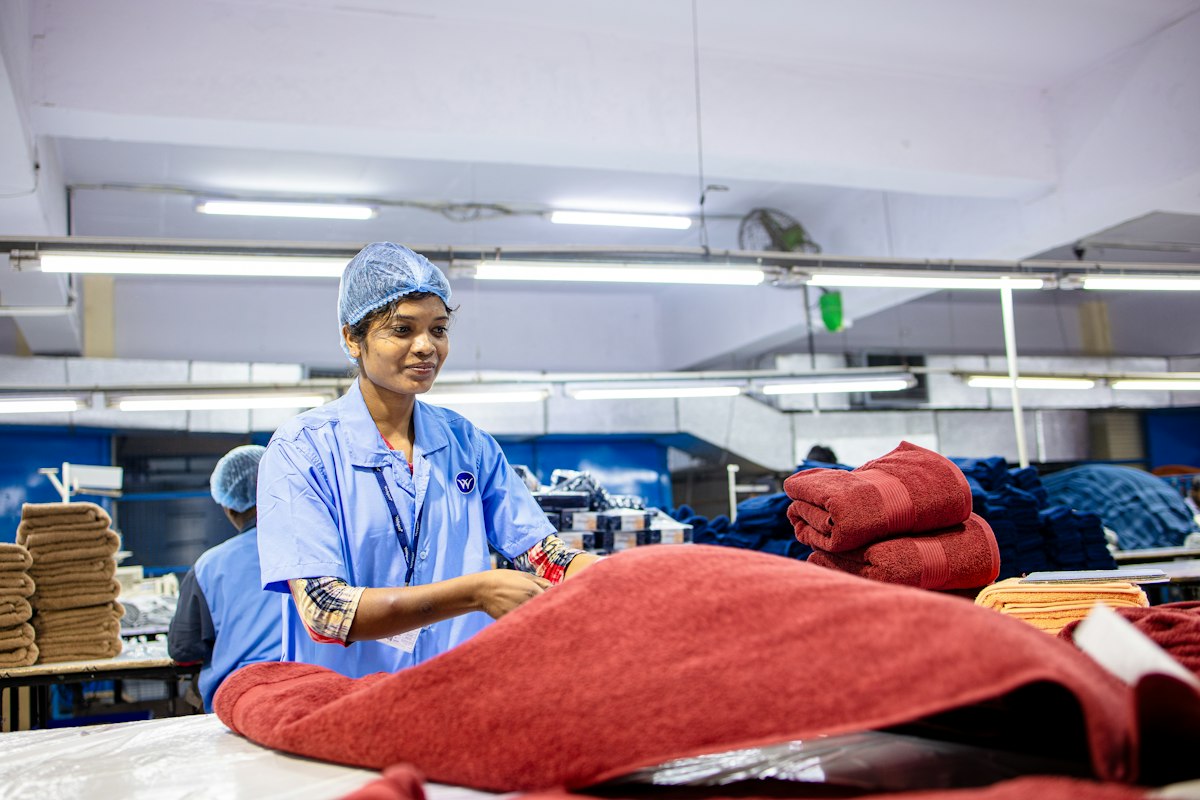
Ohsurewear’s fact library describes support for material selection, sample development, OEM/ODM manufacturing, inspection and packaging customisation. Its published quality-control process includes raw-material, printing, semi-finished and finished-garment checks, with items such as colour difference, colourfastness, shrinkage, measurements and stitching.
For a dyeing-sensitive order, the practical procurement approach is to connect those garment checks to the selected fabric and the named mill’s records. This is an editorial recommendation based on the advertised service scope, not a claim that Ohsure operates an owned dyehouse or has measured a particular environmental saving.
Prepare a single development pack: design reference, size specification, fabric composition and weight, shade standard, target quantities by colour, branding details, performance criteria and any evidence needed for your proposed environmental wording. Review options through the activewear fabric guide and discuss project requirements with the custom activewear manufacturing service.
For custom gym leggings, keep the exact stretch-fabric specification linked to colour approval. If you are considering recycled-fabric gym wear, request recycled-origin documentation separately from wet-processing evidence. Align labels and hangtags through the private-label service only after the claim wording is supported.
MOQ and timing: Ohsure’s published starting MOQ is 100 pieces per style per colour, with mixed sizes available. Final order requirements are subject to project confirmation. This garment MOQ does not establish a custom dye-lot minimum. Sample timing is confirmed after reviewing design, materials and customisation. Bulk timing depends on approved specifications, material availability and the production schedule.
Copy-ready dyeing brief for your supplier
“Please confirm the wet-processing site, exact fabric specification, available coloration route, minimum quantity by colour, colour-approval stages and performance tests. For any resource-saving proposal, state the baseline, boundary, measurement period, water and energy inputs per accepted kilogram, allocation method and supporting records. Itemise development, testing, excess-material commitments and confirmed lead-time conditions.”
This is a reusable buyer tool, not a completed factory assessment. .
Frequently asked questions
Does a lower liquor ratio mean the whole process uses less water?
It can reduce the water held in the dye bath, but total use also includes preparation, rinsing, cleaning and any repeat processing. Ask for metered water per kilogram of accepted finished fabric under a stated boundary.
Is solution dyeing suitable for every activewear order?
No. It colours manufactured fibres before yarn or fabric production and depends on the fibre supplier, available colours and upstream minimums. Confirm the exact blend and repeat-order availability before selecting it for a collection.
Does recycled polyester automatically use less water in dyeing?
No. Recycled content describes material origin; dyeing performance needs separate evidence. Ask which coloration route is used and request process data for the actual fabric, shade and mill.
Are natural dyes always a safer choice?
A natural origin alone does not establish safety or lower impact. Review the complete formulation, any mordants or auxiliaries, required processing, effluent management and the finished fabric test results.
What should a buyer request before approving a lower-impact colour?
Request the named dyehouse, fabric specification, coloration route, measurement boundary, baseline, water and energy units, chemical input records, relevant wastewater evidence and quality acceptance criteria. Match documents to the actual site and production period.
Does a finished-fabric chemical test prove that the dyehouse manages wastewater well?
No. A product test concerns the tested material and specified substances. Wastewater evidence concerns the facility discharge and sampling period. Chemical input management is another separate evidence category; a sourcing review should address all three.
How much extra should a lower-impact dyeing route cost?
There is no universal premium. Request comparable quotations covering usable fabric yield, colour minimums, development, testing, transport and expected rework. Existing stock colours may be commercially practical for a small launch, but their production history still needs verification.
Can Ohsure guarantee a water-saving percentage or fixed dyeing lead time?
A project-specific claim requires supporting mill evidence. Ohsure’s available dyeing route, material minimums, cost and timing should be confirmed for the selected fabric and colour. No universal water-saving percentage or fixed dyeing lead time is established in this guide.
Sources and evidence boundaries
Technical references are linked beside the relevant explanations: European Commission/JRC textiles guidance, the polyester value-chain review, ZDHC input/output resources and DyeCoo’s manufacturer documentation. Vendor process descriptions are attributed and do not demonstrate an Ohsure order outcome.
Company-specific statements are based on the supplied Ohsure article fact library and the linked official service pages. No customer case, certified dyehouse status, water-saving percentage, fixed dyeing price or fixed production lead time has been invented. The calculation and buyer tools are editorial examples.