
How to Verify Recycled Fabric Claims in Clothing Manufacturing
A practical evidence trail for activewear buyers—from a supplier’s first claim to the wording on a finished garment.
Sources reviewed: November 5, 2026 · Buyer verification guide
Verify recycled fabric claims by matching the stated fiber and recycled percentage to authenticated supplier certificates, order-specific transaction evidence and batch records. Check that the production route and finished product are covered, reconcile material quantities, and approve the exact claim before labeling. A fabric swatch or general supplier certificate alone is insufficient.

What does a recycled fabric claim actually mean?
A recycled fabric claim states that a specified share of a material comes from recycled inputs. Define the fiber, percentage, component and source category before assessing the evidence. “Recycled polyester in the main fabric” and “a garment made entirely from recycled materials” describe different products.
Distinguish pre-consumer and post-consumer inputs, and ask whether the source is bottles, textile waste or another stream. Textile Exchange’s RCS and GRS overview explains that both pre-consumer and post-consumer materials can be accepted. A general recycled-content certificate does not automatically establish a narrower ocean-plastic or textile-to-textile claim.
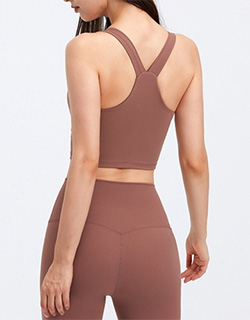
For example, a legging’s shell might contain recycled polyester blended with virgin elastane, while its pocket lining and sewing thread use other materials. Specify the claim boundary instead of treating the shell composition as the composition of the entire garment.
Separate three questions
- Composition: What fibers and proportions are present?
- Origin: What supports the recycled source of the claimed portion?
- Certification and communication: Does the applicable system cover this production route, product and proposed wording?
A recycled-content claim also needs separate evidence if you want to make claims about carbon savings, biodegradability, recyclability or garment performance. Each adds a different question to the verification brief.
Compare the evidence: what each document can establish
RCS focuses on recycled material verification and chain of custody. GRS adds processing-related social, environmental and chemical requirements. Select the applicable system and claim requirements before sourcing; a supplier’s use of either acronym is the beginning of the review. See Textile Exchange’s standard overview.
| Evidence | Useful for | Boundary to check |
|---|---|---|
| Supplier declaration or quotation | Recording the promised material and percentage | It is the supplier’s statement; request supporting records. |
| Scope certificate (SC) | Checking a company’s certified activities, materials and products | Company eligibility does not authenticate a particular order. |
| Transaction certificate (TC) | Linking certified products to specified transactions | Match the parties, products, composition and shipment details to your purchase. |
| Invoices, roll IDs and production records | Following your material through receipt, cutting and dispatch | Internal records need cross-checking; they do not independently confer certification. |
| Laboratory report | Assessing the specific property and sample actually tested | Read the method and conclusion; composition testing alone does not establish recycled origin. |
| Logo or hangtag artwork | Reviewing the proposed buyer-facing message | A printed symbol is not independent evidence or proof of approval. |
The SC/TC distinction follows Textile Exchange’s chain-of-custody explanation. The comparison above is a buyer’s review framework, not a substitute for the applicable certification policies.
Can a laboratory prove that fabric is recycled?
Do not infer recycled origin from a report that merely identifies polyester and elastane. Centexbel describes the limitations of detecting recycled content in finished textiles. Specialized methods can help in defined cases: TÜV SÜD offers bottle-derived rPET testing. Ask the laboratory whether its method fits your feedstock, blend and requested percentage. Such evidence supports its stated analytical conclusion; it does not replace certification-chain checks.
How to verify recycled fabric claims in seven steps
The following workflow is an editorial purchasing tool. Agree the evidence requirements and decision points with the supplier before committing to a certified-material order.
Write one precise claim specification
Record the style, color, fabric code, fiber blend, recycled share, component boundary, intended market and requested certification. Attach the proposed product-page sentence. Ask the supplier to respond to that specification rather than to a general request for “sustainable fabric.”
Authenticate the supplier and scope
Use Find a Certified Company to check the SC. Compare the legal name, site, certificate identification, dates and relevant scope with the documents provided. Record the search date and retain the result. If information is missing or inconsistent, seek clarification from the issuing certification body through its independently located contact details.
Map the actual production route
List the seller, fabric supplier, processors, garment manufacturer and any traders or subcontractors involved. Ask the certification body which entities and activities must be covered, including any permitted exceptions. Identify where ownership or physical custody changes. A mill’s certificate should not be used to bridge an unexplained sewing or trading stage. Textile Exchange explains the underlying certification chain in its chain-of-custody guidance.
Agree transaction evidence before the order
Confirm who requests and provides the relevant TC, which buyer entity appears, which products it covers and when it is expected. Before shipment evidence exists, review the proposed route and responsibilities. After issuance, authenticate the TC and reconcile it with the actual purchase. Never treat a sample TC from an earlier customer as evidence for your order.
Textile Exchange directs users to its official authentication tool for TCs issued after October 1, 2022; older TCs require a certification-body inquiry. Follow the current authentication instructions. A missing result or mismatch needs investigation before acceptance.
Follow the batch through production
Request a cross-reference from invoice and fabric code to receiving record, roll or lot IDs, cutting allocation and shipment. Examine substitutions, rework and leftover stock. Where materials are pooled or records use different units, ask for an explained reconciliation. Textile Exchange’s Content Claim Standard overview identifies documentation, volume reconciliation and material segregation controls as central elements.
Reconcile quantities and product composition
Convert meters to mass only with a documented basis such as measured fabric width and weight. Compare input, output, waste and remaining stock using consistent boundaries. Investigate unexplained gaps rather than applying an invented universal yield. Then calculate the recycled share of the component or product that your claim actually describes.
Approve the claim and archive the decision
Match the evidence to the final SKU, color and batch, then review labels, hangtags and online copy together. Confirm any required certification-body approval and the applicable claims policy before printing. Save the approved artwork, document versions, unresolved exceptions and responsible reviewer. Recheck when the material supplier, production route or specification changes.

Check the denominator before approving the percentage
Illustrative calculation—not an Ohsure order or a certification determination. Suppose a simplified garment weighs 250 g: 200 g of shell, 30 g of lining and 20 g of other components. Its shell is 80% polyester and 20% elastane, and documentation supports a recycled origin for all the polyester in that shell. No recycled content is evidenced in the other components.
Recycled material in shell = 200 g × 80% = 160 g
Shell recycled share = 160 ÷ 200 × 100 = 80%
Whole-garment physical share = 160 ÷ 250 × 100 = 64%
“The shell contains 80% recycled polyester” and “the garment contains 80% recycled material” therefore differ. These arithmetic examples do not establish permitted label wording: the applicable policy may specify its own component treatment, exclusions and calculation rules. Confirm those rules before using a product-wide percentage.
For production reconciliation, ask the same practical question: are the inputs and outputs measured on the same basis? Comparing kilograms of shell fabric with kilograms of complete garments can create a misleading result because lining and trims add mass.
What affects verification cost and timing?
Request an itemized plan. A single standard verification fee or turnaround cannot be inferred from the fact that a supplier offers recycled fabric.
| Factor | Potential cost or time effect | Buyer action |
|---|---|---|
| Material availability | A specific blend, color or documented source may require separate sourcing. | Confirm stock, material minimums and any substitution approval. |
| Certification route | An uncovered stage may require route changes or certification work. | Check feasibility before paying for bulk material. |
| Transaction documentation | Incorrect names or shipment data may require correction. | Assign the document owner and expected delivery point. |
| Testing scope | Methods, sample numbers, shipping and retesting affect the quote. | Ask what conclusion the test can support before booking it. |
| Artwork approval | Late claim changes can lead to reprinting and packing delays. | Keep final printing behind the claim-approval decision. |
Use separate dates for material readiness, sample approval, bulk completion, document availability and claim release. A garment can be physically finished while its evidence file remains incomplete. Agree how that situation affects dispatch and marketing before production begins.
Account for the standards transition
As of this review, Textile Exchange states that Materials Matter becomes effective on December 31, 2026, and mandatory from December 31, 2027 for eligible Tier 4 audits. This is a staged transition, so confirm the rules applicable to your sourcing tier and planned claim date rather than treating every existing certificate as immediately invalid. See the official Materials Matter timeline.
Common mistakes that weaken the evidence
- Accepting a certificate screenshot: request the complete document and authenticate its details.
- Borrowing proof from a different order: an earlier shipment cannot establish the material used in the current batch.
- Confusing fiber type with recycled origin: read the laboratory’s actual scope and conclusion.
- Ignoring a material substitution: a matching handfeel or color does not close the documentation gap.
- Inflating the percentage: identify whether the number applies to a fiber fraction, fabric component or complete garment.
- Reusing old artwork automatically: a new sourcing route or revised claim requires a fresh evidence review.
Working with Ohsure: connect material sourcing with garment development
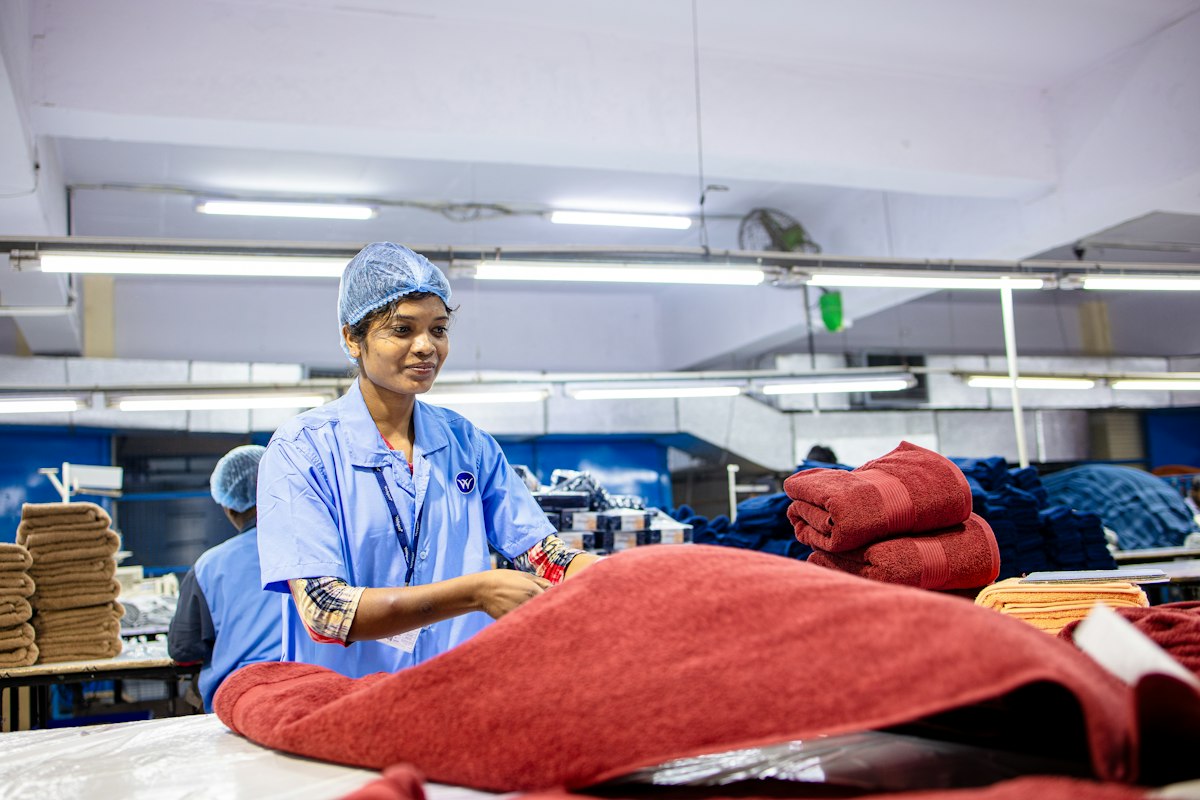
Ohsure’s published services include material selection, sampling, garment manufacturing and private-label customization. Buyers can start with its recycled-fabric gym wear range and activewear fabric guide, then request project-specific material and documentation confirmation.
From a garment-development perspective, an actionable brief combines a design reference with the fabric specification, fit, construction, branding and claim requirements. For a custom gym leggings project, include the intended use, size range, shell blend, lining and pocket materials, and the wording you want to substantiate.
Ohsure’s quality-control page describes checks across raw materials, printing, semi-finished products and finished garments. Those garment-quality activities address a different part of the brief from recycled-origin verification. Ask how your material records and agreed inspections will be connected for the selected project.
The published starting MOQ is 100 pieces per style per color, with mixed sizes available; final requirements need project confirmation. Selected fabric requirements may differ. Sample timing is confirmed after design, material and customization review; bulk timing depends on approved specifications, availability and the production schedule.
The available Ohsure fact library does not establish a current GRS/RCS certificate or a verified certified route for a specific order. Request and verify the relevant evidence before treating any proposed Ohsure garment as certified.
Discuss the specification through Ohsure’s custom activewear manufacturing service. Coordinate labels and packaging through its private-label service once the intended claim and any approvals are settled. This development guidance summarizes published capabilities; it does not describe an audited internal procedure or a customer case.
A reusable claim-release checklist
Create one file per style, color and material batch. The table below is an original buyer-control template. Its “hold” decisions concern claim approval; agree commercial shipment decisions separately.
| Gate | Record in the file | Hold the claim if… |
|---|---|---|
| Claim boundary | Exact sentence, component and percentage basis | The wording exceeds the defined evidence. |
| Company and scope | SC, database result, dates and reviewer | A material identity or scope mismatch remains unresolved. |
| Production route | Entities, activities and coverage confirmations | A required stage has no confirmed coverage. |
| Order and batch | TC where required, invoices and batch cross-reference | Evidence cannot be connected to this order. |
| Quantity and composition | Reconciliation, calculation and explained exceptions | A material gap or percentage discrepancy is unexplained. |
| Final communication | Artwork version, approval record and decision owner | Required approval or evidence is still pending. |
Supplier request you can adapt: “For style [SKU], color [color] and material [code], please confirm the recycled fiber share, component boundary, source category, relevant certified entities, scope-certificate details, transaction-evidence arrangements and batch-record links. Please identify any unsupported claim wording, uncovered production stage or pending document before we approve the material and labels.”
Frequently asked questions
Is a supplier’s GRS certificate enough for my order?
No. Authenticate the company’s scope, then check the production route and transaction evidence applicable to your order. A company certificate alone does not identify the fabric batch used in your garments.
What is the difference between an SC and a TC?
A scope certificate concerns the company’s certified scope. A transaction certificate concerns specified certified products in a transaction. Review both at the relevant stage, then connect them to your purchasing and batch records.
Can a polyester composition report verify recycled polyester?
A report identifying polyester does not by itself establish recycled origin. Specialized testing can support defined questions, but you need to confirm the method’s applicability and retain the required sourcing and certification evidence.
Can recycled fabric be blended with virgin elastane?
A blend may contain a recycled fiber portion and a virgin fiber portion. Define and substantiate each share, identify the component covered, and check the applicable certification and claims rules before deciding the wording.
Does a recycled claim prove textile-to-textile recycling?
No. Ask for evidence of the specific feedstock. Recycled material could come from a different source, including bottles. Use textile-to-textile wording only when the records support that narrower claim.
What should I do if a certificate cannot be authenticated?
Keep the claim pending, check the entered details and contact the issuing certification body independently. Record the explanation and any corrected evidence. A missing result requires investigation; it is not by itself a final fraud determination.
Does Ohsure offer certified recycled activewear?
Ohsure lists recycled-fabric gym wear options. The available fact library does not establish a current certified route for a specific order. Confirm the chosen material and verify the relevant certificates and order evidence before making a certification claim.
Should I repeat the checks for a reorder?
Yes. Confirm the current material, batch, production route and supporting documents. Reuse the approved claim only after checking that its evidence and any required approvals still apply to the reorder.
Sources and verification tools
Use the live policies and certification-body guidance for the order under review. Official references checked on November 5, 2026:
- Textile Exchange — certificate authentication instructions
- Textile Exchange — Find a Certified Company
- Textile Exchange — Authenticate a Transaction
- Textile Exchange — chain of custody and Content Claim Standard
- Textile Exchange — RCS and GRS
- Textile Exchange — Materials Matter Standard and timeline
- Centexbel — detecting recycled textile materials
- TÜV SÜD — rPET testing scope