
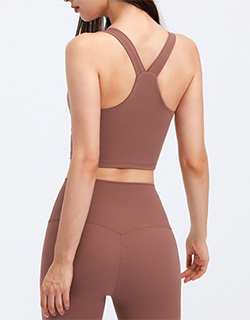
How to Prevent Size Inconsistency in Bulk Activewear Production
QUALITY CONTROL / BULK PRODUCTION
Control the measurement method before controlling the numbers
Prevent size inconsistency in bulk activewear by approving one measurement specification, validating the full size range, controlling fabric relaxation and cutting, and checking dimensions during sewing and finishing. Record individual results against agreed tolerances, investigate drift by lot and production stage, and verify corrections before releasing affected garments.
1. Define what “consistent sizing” means
Size consistency means garments of the same approved style and labeled size meet the same dimensional specification under the same measurement conditions. It does not mean every garment must have an identical reading, or that a medium from one brand must match another brand’s medium.
Separate three questions: does the garment meet its measurement chart, does the graded size range fit the intended wearers, and does the garment retain acceptable dimensions after care? A style can pass the first check and still fail the other two. Stretch and compression also affect fit, so relaxed dimensions alone cannot establish support or comfort.
Use a controlled specification with a point-of-measure diagram, units, targets by size, permitted deviations and measurement state. Identify whether each measurement is a flat width, circumference, seam-following length or straight-line distance. Never compare a half-waist width with a full-waist circumference.
2. Approve a point-of-measure standard
A point of measure (POM) defines exactly where and how a dimension is taken. Photos or drawings should show endpoints, garment position and any reference distance. Avoid instructions such as “measure the hip” without a fixed location.
| Measurement | Method to specify | Risk to control |
|---|---|---|
| Waist, relaxed | Flat width at the defined waistband edge; no pulling | Accidental stretch or a rolled waistband changes the reading |
| Hip width | Flat width at an agreed distance below a defined waist reference | Different vertical positions produce different widths |
| Inseam | Defined crotch junction to finished hem, following the specified path | Curved seams and mismatched endpoints introduce disagreement |
| Front and back rise | Specified seam path; state whether the waistband is included | Different waistband conventions make charts incomparable |
| Sports-bra underband | Relaxed flat width; stretched measurement only under a defined protocol | Hand pulling is not a repeatable stretched measurement |
| Left/right symmetry | Matching reference points and the same garment position | Average length can conceal an asymmetric garment |
Lay the garment on a suitable flat surface, remove folds without extending the material, and follow the agreed conditioning and recovery procedure. Check measuring tapes against a reliable reference and replace damaged tools. Have two inspectors measure the same labeled pieces independently; resolve disagreement in technique before interpreting production variation.
Set tolerances by measurement and function
Do not apply one arbitrary tolerance to every POM. Consider fit sensitivity, garment size, material behavior, manufacturing capability and measurement repeatability. Specify upper and lower limits explicitly when they are asymmetric. Approval must come from the buyer’s agreed specification, not from a generic internet chart.
3. Freeze the approved pattern and size set
Approve a fit sample, then review a size set covering the intended range. A good fit in the base size does not validate the smallest and largest sizes. Check grading at the waist, hip, rise, leg opening, underband and straps as relevant; increments need not be identical at every location.
Release one controlled package containing the graded measurement chart, pattern revision, approved sample identification, construction details, fabric and elastic specifications, and care-test requirements. Record who approved it and when. Remove superseded files from cutting and sewing workstations.
Before bulk cutting, confirm that the marker uses the approved pattern revision and correct size labels. If fabric, elastic, seam construction or finishing changes, review the effect on dimensions and fit. Issue a documented revision and repeat the affected validation rather than making an undocumented pattern adjustment on the floor.
4. Control fabric behavior before and during cutting
Stretch fabric may change dimensions after unrolling, spreading, sewing or finishing. Define and validate a relaxation procedure for the actual material and storage conditions. There is no single relaxation time suitable for every knit, weight and roll history; use recorded dimensional stability checks to support the chosen procedure.
Keep roll, color and material-lot identities traceable. Assess relevant lots for dimensional change using the agreed care treatment. Investigate materially different behavior before combining panels from different sources in one garment.
- Release the material: verify lot identity, inspection status and the agreed relaxation record.
- Spread without unintended tension: monitor alignment and avoid stretching fabric to match a marker.
- Check cut panels: compare representative panels and relevant lay positions against the approved pattern using a defined method.
- Preserve bundle identity: keep size, color, lay and panel sets together through sewing.
Use material-specific evidence before adding shrinkage compensation. A blanket percentage applied to every direction, color and component can create new fit problems.

5. Detect drift during sewing and finishing
Approve first-off garments before a line builds a large quantity. Compare key dimensions with the released chart after the agreed recovery state. Repeat checks at defined intervals and after changes such as machine adjustment, operator change, new material lot or a revised component.
Track sewing factors that can affect dimensions: seam allowance, differential feeding, elastic cut length and application, binding tension and panel alignment. Record machine or workstation identity so a recurring defect can be traced. Examine the actual assembly before deciding which setting to change.
Measure after finishing as well as during assembly. Heat, steam, pressing and handling can alter the result. Do not stretch or press garments temporarily into tolerance for inspection. Verify that any proposed finishing correction remains acceptable after recovery and the specified care treatment.
6. Keep individual results, not just averages
Record each garment’s sample ID, size, color, material lot, line, stage and specification revision. For every checked POM, record target, lower and upper limits, actual measurement, signed deviation and disposition. Keep out-of-tolerance pieces identifiable.
Illustrative example: a passing average can hide failures
Suppose a buyer-approved flat-waist target is 32.0 cm with a tolerance of ±0.5 cm. Readings of 31.3, 32.0 and 32.7 cm average 32.0 cm, but two individual readings fall outside the 31.5–32.5 cm limits. The range is 1.4 cm.
These invented numbers demonstrate interpretation only. They are not Ohsure results, recommended tolerances, a sampling plan or evidence of lot acceptance.
Compare trends within the same size, POM and measurement state. Do not average different sizes or washed and unwashed garments together. A systematic shift toward one limit warrants investigation even when the checked items still pass. Use repeat measurements to distinguish method disagreement from actual process change.
7. Separate dimensional inspection, AQL and wash testing
Dimensional limits decide whether a measured item meets its specification. Acceptance sampling supports a decision about a lot using a defined sampling plan. Care testing evaluates behavior after a specified treatment. These controls complement one another and should have separate records.
ISO 2859-1:2026 covers AQL-indexed schemes for lot-by-lot inspection by attributes. Agree on the applicable scheme, lot definition, inspection level, defect classification, AQLs and counting rules before inspection. Obtain sample size and acceptance/rejection numbers from the applicable plan. AQL is not a dimensional tolerance or a guarantee that every garment conforms.
Make size and color coverage explicit in the inspection plan. Extra targeted measurements for a known risk should be identified separately from the formal acceptance sample. Do not change acceptance criteria after seeing the results.
For dimensional change, ISO 3759:2011 addresses specimen preparation, marking and measuring, while ISO 5077:2007 addresses dimensional change after specified washing and drying. Have the laboratory identify the complete procedure and edition, treatment, cycles and measurement conditions.
As a calculation example, a marked length changing from 50.0 to 48.5 cm has a signed dimensional change of (48.5 − 50.0) / 50.0 × 100 = −3.0%. This indicates shrinkage in that measured direction; it does not establish a pass without an agreed limit or justify automatic pattern compensation.
8. Use defects to guide controlled corrective action
| Observed pattern | Investigate | Evidence before release |
|---|---|---|
| One color repeatedly measures shorter | Material-lot behavior and finishing conditions | Lot-specific checks and post-care results |
| Waist varies within the same size | Elastic length, application tension and measurement recovery | Component records and repeated finished-garment measurements |
| Only larger sizes show poor fit | Grading, pattern revision and size-set approval | Corrected size-set measurements and fit review |
| Left and right legs differ | Panel matching, cutting, feeding and seam allowance | Paired measurements after corrective trials |
| Dimensions pass before finishing but fail afterward | Heat, steam, handling and recovery state | Controlled before/after measurements |
| Inspectors disagree on the same pieces | Endpoints, tape condition, garment position and pulling | Repeatability check using one documented method |
These are investigation routes, not confirmed diagnoses. Contain the affected production, identify the last verified checkpoint, establish the affected scope and assign a responsible owner. Document the cause, correction, retest evidence and release authorization. Reinspection should follow the agreed procedure; do not repeatedly resample a failed lot until it happens to pass.
9. Prepare a practical supplier review package
For an Ohsure sampling or production discussion, share the target customer and fit intent, size range, annotated POM chart, approved sample revision, material specification, care instructions and acceptance requirements. Ask the team to confirm the measurement method, responsible checkpoints, report format and handling of deviations for your specific order.
Request traceable evidence: size-set records, cut-panel checks, inline measurement sheets, finished-garment results and relevant wash-test reports. A general statement about quality control does not replace order-specific records. This guide proposes a review workflow and makes no claim about unverified factory results or capabilities.
Download the size-consistency checklist and blank measurement log (ZIP). The companion size-consistency checklist provides blank fields for the specification, production checkpoints, sampling plan, corrective action and release decision. Use the measurement-log CSV to record individual readings; all acceptance fields remain for the buyer and supplier to agree.
Frequently asked questions
Is there a universal size tolerance for activewear?
No. Agree tolerances for each POM and style based on fit needs, material behavior and a repeatable method. A flat waist and an inseam need not share the same tolerance.
Should every garment be measured?
Define inspection coverage from the buyer’s requirements, process risk and lot plan. A sample does not guarantee every unit. A known recurring problem may require additional containment or sorting beyond routine inspection.
Can a garment pass measurements but fit differently?
Yes. Stretch response, recovery, compression, construction and shape can affect fit even when relaxed measurements comply. Include size-set and intended-use fit reviews.
How long should stretch fabric relax before cutting?
Use a validated procedure for the actual fabric and conditions. Record the state and stability checks; do not treat a generic number of hours as proof that every roll is ready.
Can we fix a sizing problem by changing the label?
Do not relabel garments simply to conceal a failed specification. Any proposed reclassification needs buyer approval, full dimensional and fit review, and correct traceability.
What should happen after a failed dimension check?
Confirm the method and reading, contain affected items, determine the scope, investigate the cause and verify corrective action. Record the authorized disposition before release.
Related quality-control reading
- Pre-production sample approval
- Incoming fabric inspection checklist
- Inline inspection vs final inspection
- Pilling, shrinkage and colorfastness testing
- Seam strength and stretch testing
Standards references checked 14 October 2026. Follow the complete applicable standards and agreed buyer specification. Examples in this article are illustrative, not factory test data.