
How to Choose the Right Gym Tights Manufacturer for Your Brand
Choosing a gym tights manufacturer is one of the most important decisions for an activewear brand. Your supplier influences the fit, fabric performance, construction quality, production stability, delivery schedule and final customer experience.
This guide explains how to evaluate gym tights manufacturers, compare production capabilities and identify a reliable factory for long-term brand development.
Why Choosing the Right Gym Tights Manufacturer Matters
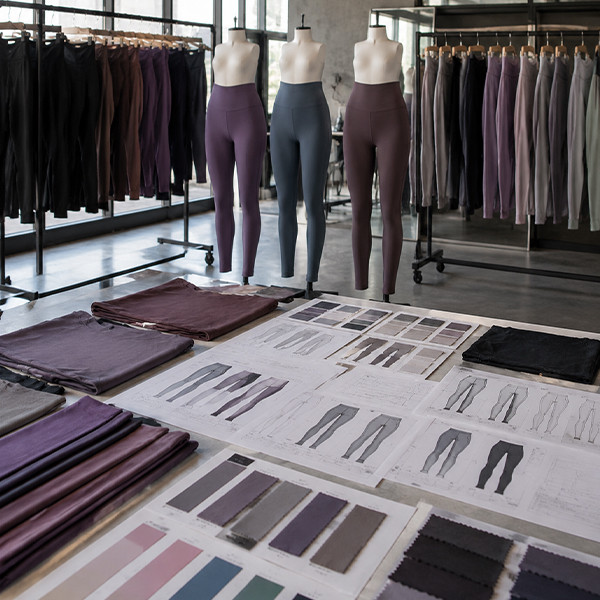
A gym tights manufacturer is not simply a company that sews garments. The right manufacturing partner becomes an extension of your activewear brand and helps control the quality customers experience when they wear your products.
Gym tights must remain comfortable during movement, recover after stretching, provide dependable coverage and maintain consistent measurements across different sizes. A manufacturer that lacks activewear experience may struggle with seam construction, waistband stability, stretch recovery or size grading.
Brands that require product development, sampling, material sourcing and bulk manufacturing from one supplier can explore our custom activewear manufacturing services . An integrated production system usually creates better consistency than working with several disconnected suppliers.
Consistent Fit
Professional pattern development and size grading help maintain dependable measurements across the entire product range.
Reliable Performance
Suitable fabric, stable seams and correct construction help gym tights perform during training and repeated wear.
Lower Production Risk
A structured sampling and inspection process reduces defects, delays and unexpected bulk production problems.
Scalable Growth
Stable capacity allows a brand to repeat successful designs and expand into related activewear categories.
Define Your Gym Tights Before Contacting Manufacturers
A manufacturer cannot provide an accurate quotation when the product requirements are unclear. Before requesting prices, define the intended customer, fit, fabric, construction, branding and expected order quantity.
Clear specifications allow different manufacturers to quote the same product. This makes comparisons more meaningful and reduces the risk of choosing a low quotation based on a lower fabric grade or simpler construction.
Identify the Intended Activity
Gym tights designed for strength training may require more compression and abrasion resistance than tights intended for yoga. Running tights may need secure pockets, reflective details and stronger moisture management.
- Gym and strength training
- Yoga and studio workouts
- Running and outdoor training
- Cross-training and high-intensity exercise
- Maternity or adaptive activewear
- Casual athleisure collections
Prepare Basic Product Specifications
At minimum, provide a reference image, measurement chart, preferred fabric composition, target GSM, color requirements, logo placement and size range. A complete tech pack creates a more controlled development process.
Ask every shortlisted manufacturer to quote the same fabric, construction, logo method, size range and packaging. A unit price comparison is only useful when the specifications are equivalent.
Brands that are still defining material requirements can review our activewear fabric guide before beginning sample development.
Evaluate the Manufacturer's Activewear Experience
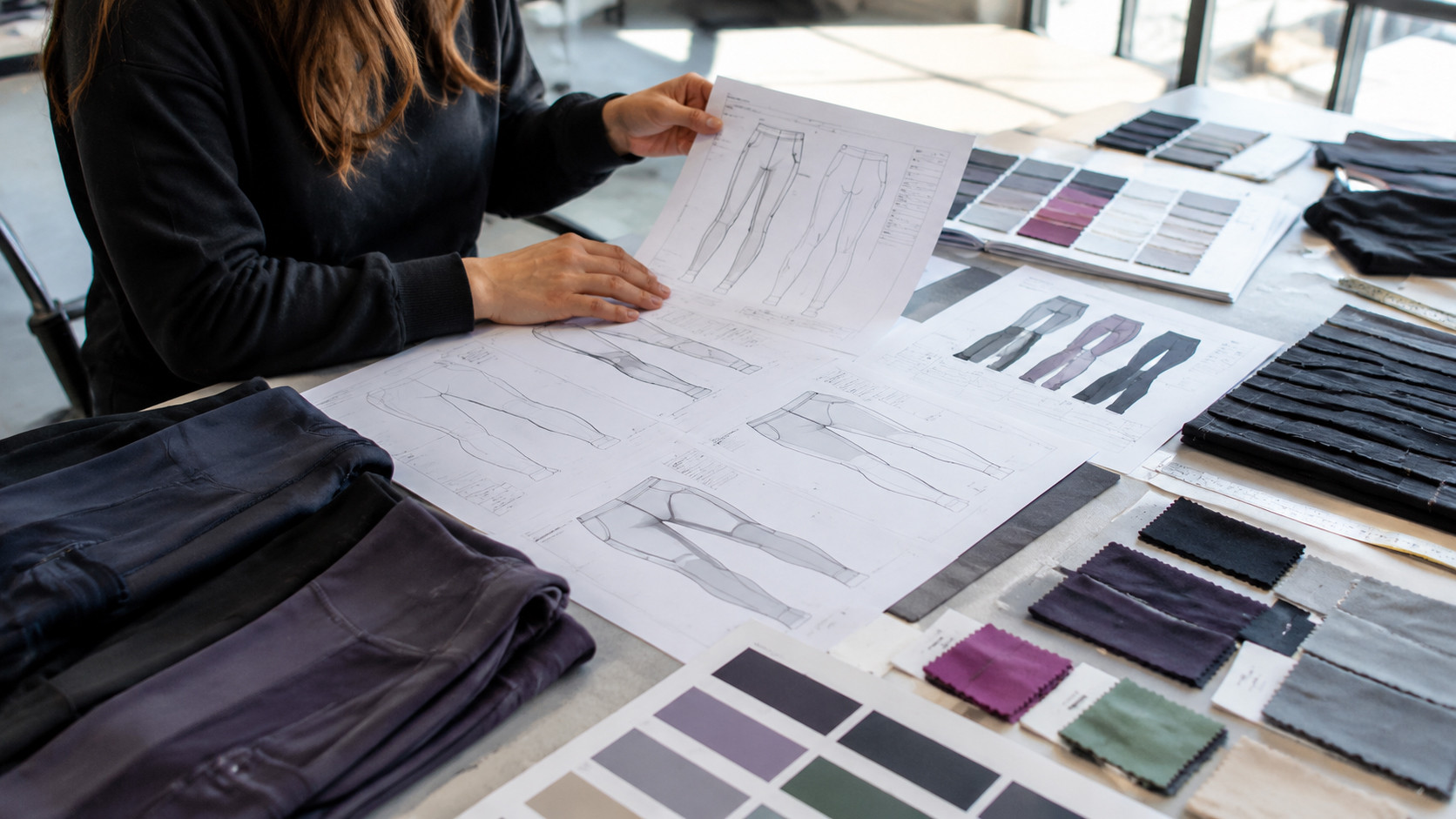
Gym tights require more specialized knowledge than ordinary fashion leggings because the garment must perform under repeated stretching, movement, friction and washing.
Ask how long the factory has produced activewear, which product categories it manufactures and which markets it serves. A factory that regularly makes gym tights, sports bras and training tops is more likely to understand stretch seams, compression fabrics and athletic sizing.
Questions to Ask About Experience
- How many years have you manufactured activewear?
- Do you have dedicated stretch garment production lines?
- Which types of gym tights do you manufacture most often?
- Can you produce compression and seamless-style products?
- Which countries are your main export markets?
- Can you show recent samples or production examples?
A professional supplier should be able to explain how gym tights are developed and produced. Vague answers may indicate that the supplier outsources production or has limited technical control.
You can also review a manufacturer's broader activewear manufacturing process to understand whether sampling, cutting, sewing, inspection and packaging are managed in a structured system.
Check Fabric Sourcing and Development Capabilities
Fabric determines the comfort, opacity, compression, stretch, recovery and moisture performance of gym tights. A suitable fabric should support movement without becoming transparent or permanently losing its shape.
Professional manufacturers should be able to recommend fabric based on the intended activity, price level and target customer. They should also provide swatches before sample production.
| Fabric Factor | Why It Matters | What to Verify |
|---|---|---|
| Composition | Nylon and polyester blends create different hand feel, durability and moisture behavior. | Fiber percentages and supplier specification. |
| GSM | Fabric weight influences coverage, compression and seasonal suitability. | Confirm actual measured GSM, not only the supplier's description. |
| Stretch Recovery | Poor recovery can cause loose knees, an unstable waistband and permanent deformation. | Test repeated stretching and recovery. |
| Opacity | Gym tights should maintain coverage during deep squats and bending. | Conduct a squat test in the intended color. |
| Colorfastness | Unstable dye can fade, bleed or transfer during washing and exercise. | Ask for wash and rubbing test information. |
| Pilling Resistance | Friction can create visible surface damage, especially on inner-leg areas. | Review fabric testing or wear-test results. |
Our fabric selection service helps brands compare activewear materials based on stretch, weight, hand feel and performance. Reliable sourcing also depends on a stable textile supply chain that can reproduce approved materials for future orders.
Review Pattern Making and Fit Development
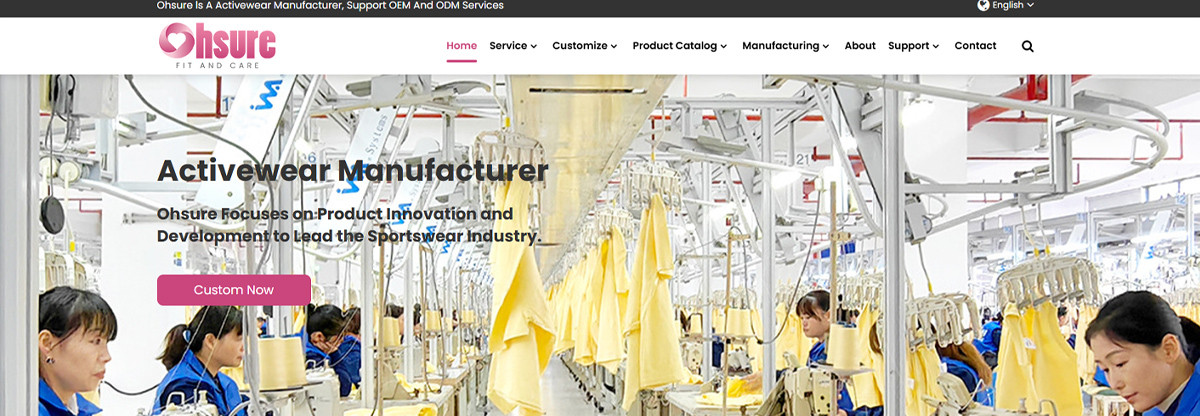
Premium fabric cannot compensate for an inaccurate pattern. Gym tights must follow the body's movement while maintaining waistband stability, coverage and balanced compression.
Ask whether the manufacturer creates patterns internally, supports size grading and performs fit revisions. The factory should understand front and back rise, inseam length, waistband height, gusset shape and negative ease.
Important Fit Areas to Evaluate
- Waistband height and tension
- Front and back rise balance
- Gusset shape and placement
- Compression around the hips and legs
- Inseam and outseam measurements
- Movement comfort during squats and lunges
- Size grading between small and extended sizes
Request a fit sample in the core selling size first. After the base pattern is approved, review graded measurements for the remaining sizes before bulk production.
Understand the Gym Tights Sampling Process
Sampling allows the brand and manufacturer to confirm fabric, fit, construction, color and branding before bulk production. A supplier that pressures you to skip sampling introduces unnecessary production risk.
Confirm whether the sample uses the intended bulk fabric and construction. When substitute materials are used, request a second confirmation sample before production.
The sampling schedule should clearly distinguish between material sourcing time, sample sewing time and revision time. This prevents unrealistic delivery expectations.
Compare MOQ, Capacity and Production Lead Time
Minimum order quantity affects inventory risk, while production capacity affects the manufacturer's ability to support future growth. The lowest MOQ is not always the best option if the supplier cannot maintain material or construction consistency.
Clarify How MOQ Is Calculated
- MOQ per style
- MOQ per color
- Minimum quantity per fabric
- Whether sizes can be mixed
- Minimum quantity for custom-dyed fabric
- Minimum quantity for custom labels and packaging
Verify Production Capacity
Ask about normal monthly capacity, peak-season capacity and whether your order will be made internally. A capacity statement should match the factory's workforce, equipment and current production schedule.
Startup brands often benefit from flexible quantities, while established brands need reliable repeat-order capacity. A suitable manufacturer should support both initial testing and later scaling.
Inspect the Manufacturer's Quality Control System
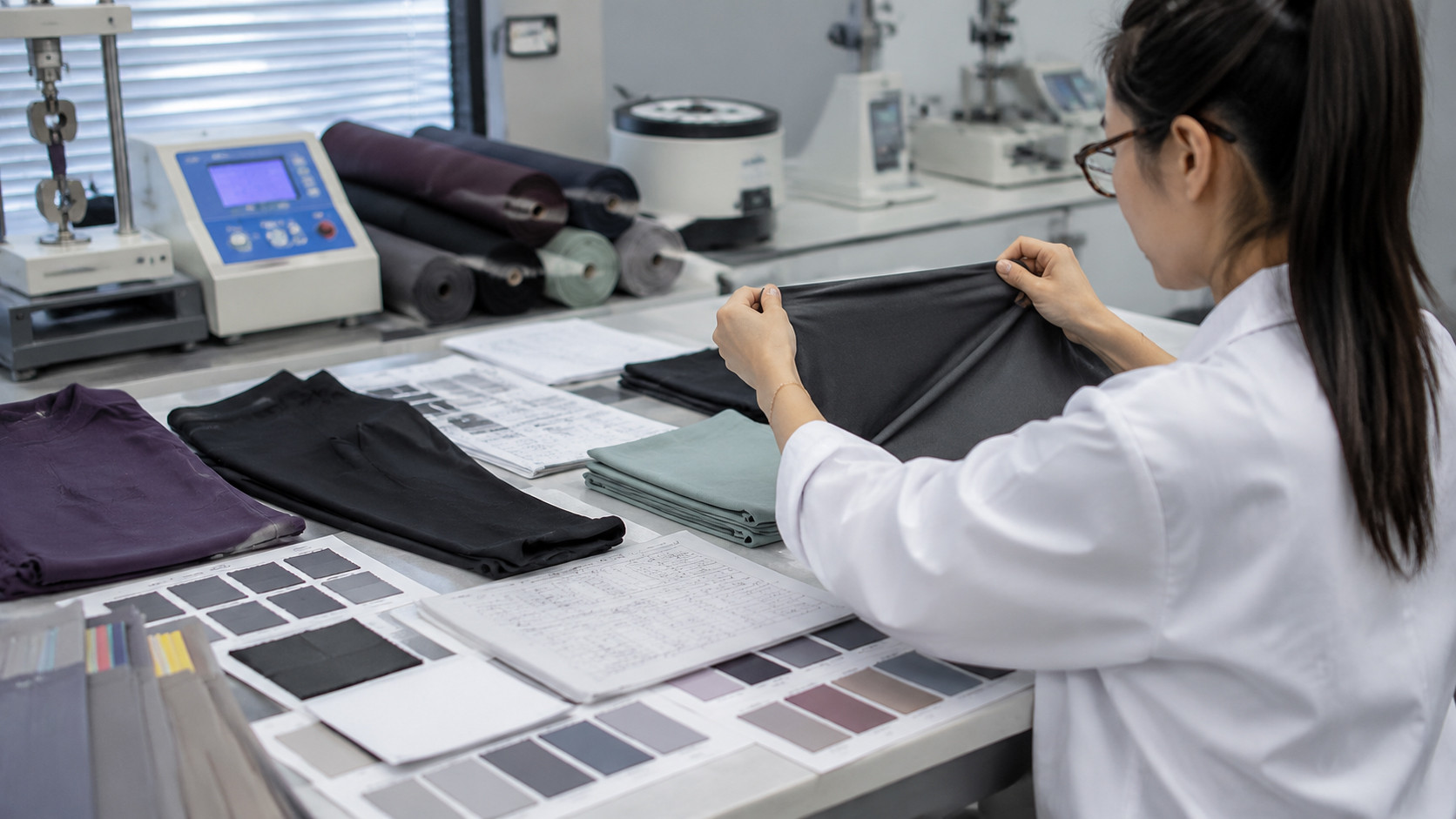
Quality control should be built into the entire manufacturing process. Final inspection alone may identify defects, but it cannot efficiently correct problems created during fabric cutting or sewing.
Incoming Fabric Inspection
Incoming fabric should be checked for visible defects, shade variation, width, weight and shrinkage. Fabric rolls used in one order should be controlled to reduce color differences between panels.
In-Line Production Inspection
In-line inspection should verify measurements, seam quality, stitch tension, waistband attachment, gusset construction and logo placement while production is still in progress.
Final Inspection
Finished gym tights should be inspected for appearance, measurements, stitching, labeling, packaging and order quantities. The inspection method and acceptable quality level should be agreed upon before production.
Review our activewear quality control process to see how fabric inspection, in-line checks and final inspection can be integrated into production.
Ask which measurements, appearance defects and construction points are checked. A professional manufacturer should not rely only on a general statement that products are “100% inspected.”
Evaluate Custom Branding and Private Label Services
Gym tights are part of a brand system. The manufacturer should be able to reproduce approved colors, labels, logos and packaging consistently across samples, bulk orders and repeat production.
- Heat-transfer logos
- Silicone and rubber logos
- Reflective branding
- Embroidery
- Woven labels
- Printed care labels
- Hang tags
- Custom poly bags and boxes
A private label activewear service can help brands combine garment development, labeling and packaging within one production workflow.
Before approving branding, check logo dimensions, placement, color, adhesion and wash durability. Confirm that the method is suitable for stretch fabric because rigid decorations can crack or restrict movement.
Assess Communication and Project Management
Many production problems begin with incomplete information, undocumented changes or slow communication. The manufacturer should provide a clear contact person who understands your specifications and follows the order from development to shipment.
Look for a Structured Communication Process
- Clear written quotation and specification confirmation
- Dedicated merchandiser or project manager
- Regular sample and production updates
- Photographs or videos when approval is required
- Written confirmation of design changes
- Early notice of material or schedule problems
Evaluate communication during sampling rather than relying only on a sales presentation. Slow answers, inconsistent information and repeated misunderstandings during development often become more serious during bulk production.
Compare Total Manufacturing Value, Not Only Unit Price
The cheapest gym tights quotation may exclude important differences in fabric weight, construction, inspection, packaging or after-sales support.
Compare the complete commercial offer, including sample cost, material quality, logo method, MOQ, lead time, defect handling and shipping support. A slightly higher unit price may create lower total risk when it includes more stable quality and fewer production problems.
| Comparison Area | Low-Price Risk | Better Evaluation Method |
|---|---|---|
| Fabric | Lower GSM, weaker recovery or inconsistent dye. | Compare approved physical swatches and test results. |
| Construction | Simplified seams or reduced reinforcement. | Compare the same construction specification. |
| Quality Control | Limited inspection and higher defect risk. | Confirm inspection stages and defect policy. |
| Lead Time | Unrealistic promises followed by delays. | Request a written production schedule. |
| Repeat Orders | Different fabric, shade or measurements. | Verify material records and production control. |
Verify Testing, Certifications and Market Compliance
Compliance requirements depend on the destination market, material composition, product claims and customer requirements. Certifications should be relevant to the product rather than used only as marketing symbols.
For textile safety, brands can review the official OEKO-TEX® STANDARD 100 information. Brands selling in the European Union should also understand chemical obligations under the European Chemicals Agency's REACH guidance .
Quality management certifications may support supplier evaluation, but they do not replace product inspection. The official ISO 9001 quality management information explains the role of quality management systems.
Ask whether testing reports apply to the exact fabric, colorway and production batch being purchased. A report from a different material does not automatically verify your product.
Warning Signs When Selecting a Gym Tights Manufacturer
A low quotation or attractive sample does not guarantee stable bulk production. Watch for warning signs during factory evaluation, quotation and sampling.
One warning sign may have a reasonable explanation, but several signs together suggest weak production control or an unstable supply chain.
Questions to Ask Before Placing a Gym Tights Order
- What is the MOQ per style and per color?
- Can sizes be mixed within the MOQ?
- How long does material sourcing and sampling take?
- Can you source custom nylon-spandex or polyester-spandex fabric?
- How do you test stretch recovery and opacity?
- Do you create patterns and size grading internally?
- Which quality inspections are completed during production?
- Can you reproduce the same fabric for repeat orders?
- What happens when defective products are found?
- Who will manage the project after the order is placed?
- What is the expected bulk production lead time?
- Can you support custom labels, hang tags and packaging?
- Which shipping terms and delivery methods are available?
- Can you manufacture matching tops and sports bras?
Written answers provide a useful record when comparing manufacturers. They also reduce disagreements after production begins.
Choose a Manufacturer That Can Support Collection Growth
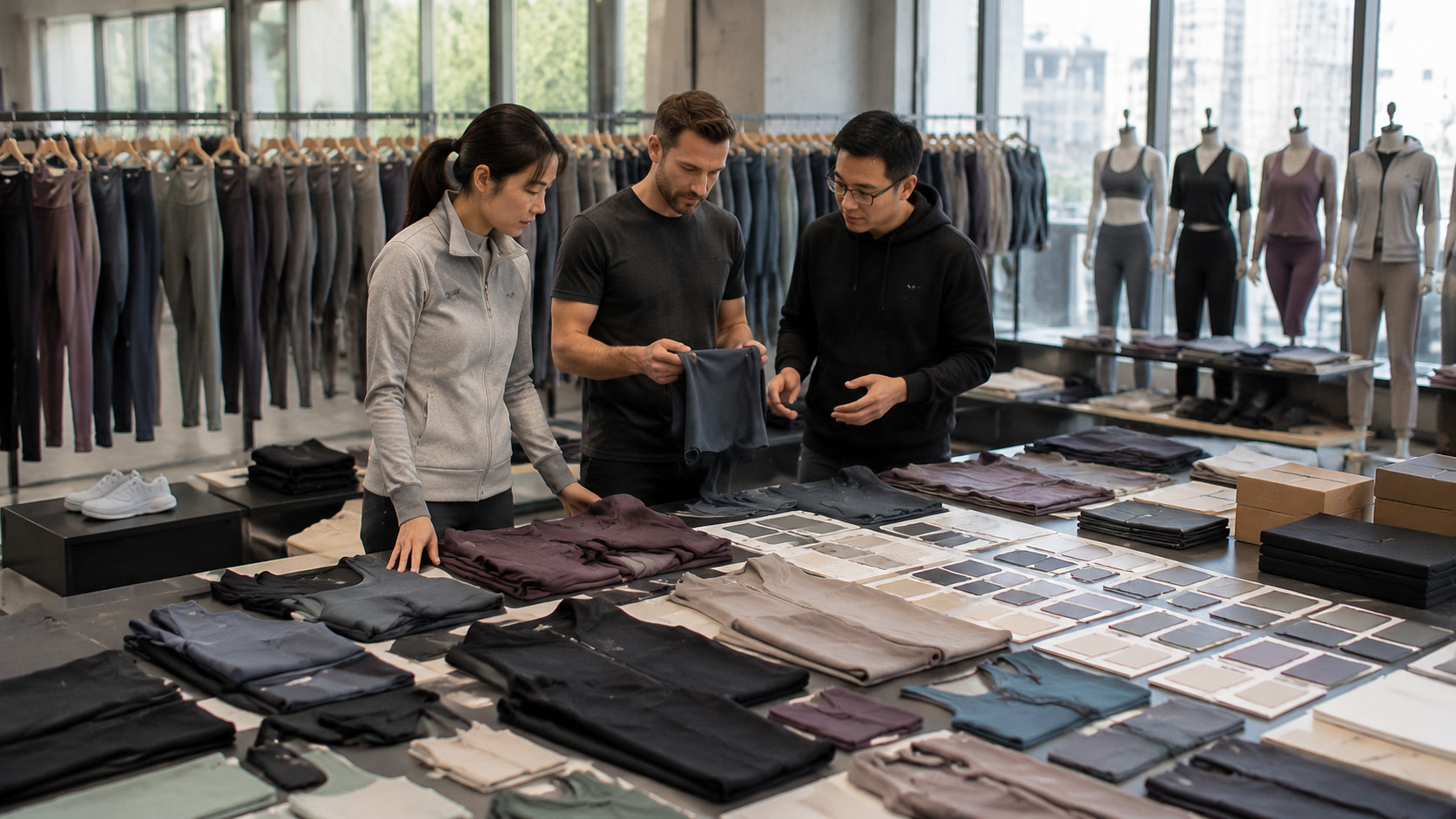
Many brands begin with gym tights and later add sports bras, tank tops, hoodies or track pants. Working with one capable manufacturer can improve fabric coordination, color consistency, branding and delivery planning across the collection.
Manufacturers with broader custom gym wear capabilities are often better prepared to help brands develop coordinated activewear collections rather than isolated products.
Choose a Long-Term Manufacturing Partner, Not Only a Supplier
The right gym tights manufacturer combines suitable fabrics, accurate pattern development, controlled sampling, dependable quality inspection and transparent project management.
Compare manufacturers using the same specifications and evaluate their performance throughout the sampling process. Look beyond the lowest unit price and consider consistency, communication, repeat-order capability and total production risk.
A reliable partner should help your brand improve products, solve manufacturing problems and scale successful designs over time. Explore Ohsure Wear's activewear manufacturing services to learn more about custom development, private label production and complete gym wear collections.
Ready to Develop Custom Gym Tights for Your Brand?
From fabric sourcing and pattern development to sampling, private labeling, bulk production and quality control, build your gym tights collection with one experienced activewear manufacturing partner.
Start Your Gym Wear Project