
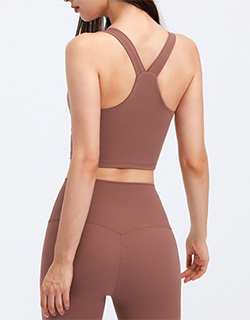
How to Compare Different Tank Tops Manufacturers
Choosing the right tank tops manufacturer can determine the success or failure of your apparel business. Although many suppliers offer similar products, their production ability, fabric knowledge, quality control, customization options, and communication systems can be very different. This guide explains how to compare different tank tops manufacturers using practical criteria that matter to clothing brands, wholesalers, startups, and activewear companies.
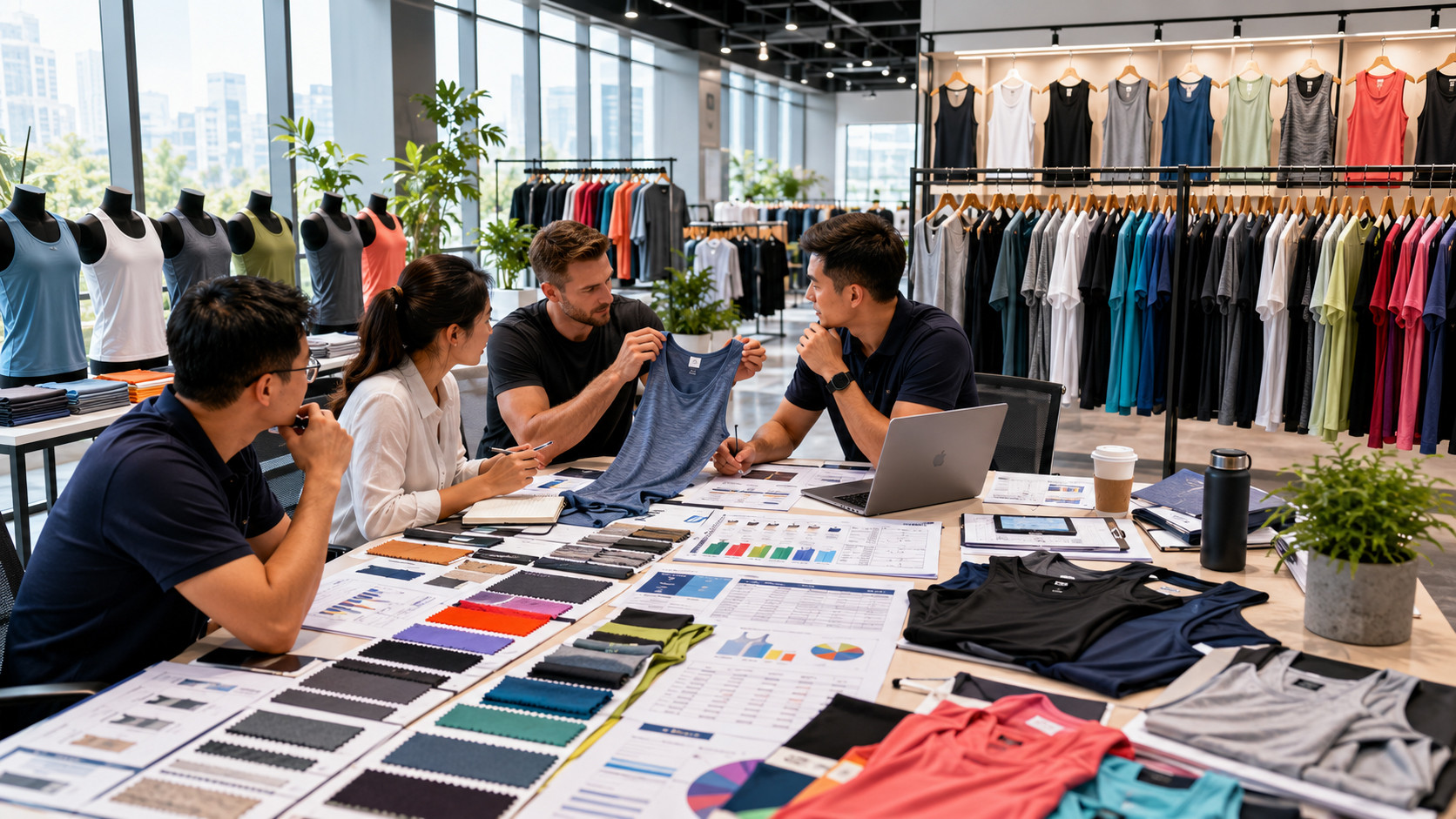
Why Is Comparing Tank Tops Manufacturers Important?
Selecting a manufacturer based only on price often leads to quality issues, delayed delivery, poor communication, or inconsistent bulk production. A structured comparison helps brands identify suppliers that match their product quality requirements, order volume, budget, and long-term growth plan.
Brands looking for custom activewear production should first understand the capabilities of a professional custom activewear manufacturer before evaluating different suppliers.
Common Risks of Choosing the Wrong Manufacturer
- Unstable garment quality
- Late sample or bulk delivery
- Poor fabric selection
- Limited customization options
- Hidden production costs
Benefits of a Structured Comparison
- Better quality consistency
- More accurate cost control
- Faster product development
- Lower production risk
- Stronger supplier relationship
How Do You Evaluate Manufacturing Experience?
Manufacturing experience reflects a factory's ability to manage samples, solve production problems, control quality, and communicate with international brands. A supplier that specializes in tank tops and activewear usually understands stretch fabrics, fit requirements, sewing details, and performance construction better than a general clothing factory.
Years of Industry Experience
Ask how many years the supplier has produced tank tops, what markets they export to, and whether they focus on activewear, gym wear, yoga wear, or general fashion apparel. Manufacturers with experience in custom tank tops manufacturing usually have more stable sampling and bulk production workflows.
Customer Portfolio
Review the supplier's project examples, product categories, export regions, and case studies. Some factories may not disclose client names because of confidentiality, but they should be able to show similar tank top projects.
What Production Capacity Should You Compare?
Production capacity affects order planning, delivery time, and future growth. A manufacturer may be suitable for your first order but may not be able to support larger seasonal orders or multiple product lines later.
| Comparison Item | Manufacturer A | Manufacturer B | Manufacturer C |
|---|---|---|---|
| Workers | |||
| Daily Capacity | |||
| Monthly Capacity | |||
| Sample Lead Time | |||
| Bulk Lead Time |
For growing brands, it is also important to understand the manufacturer's supply chain management system, because fabric sourcing, trims, packaging, and shipping coordination all affect final delivery.
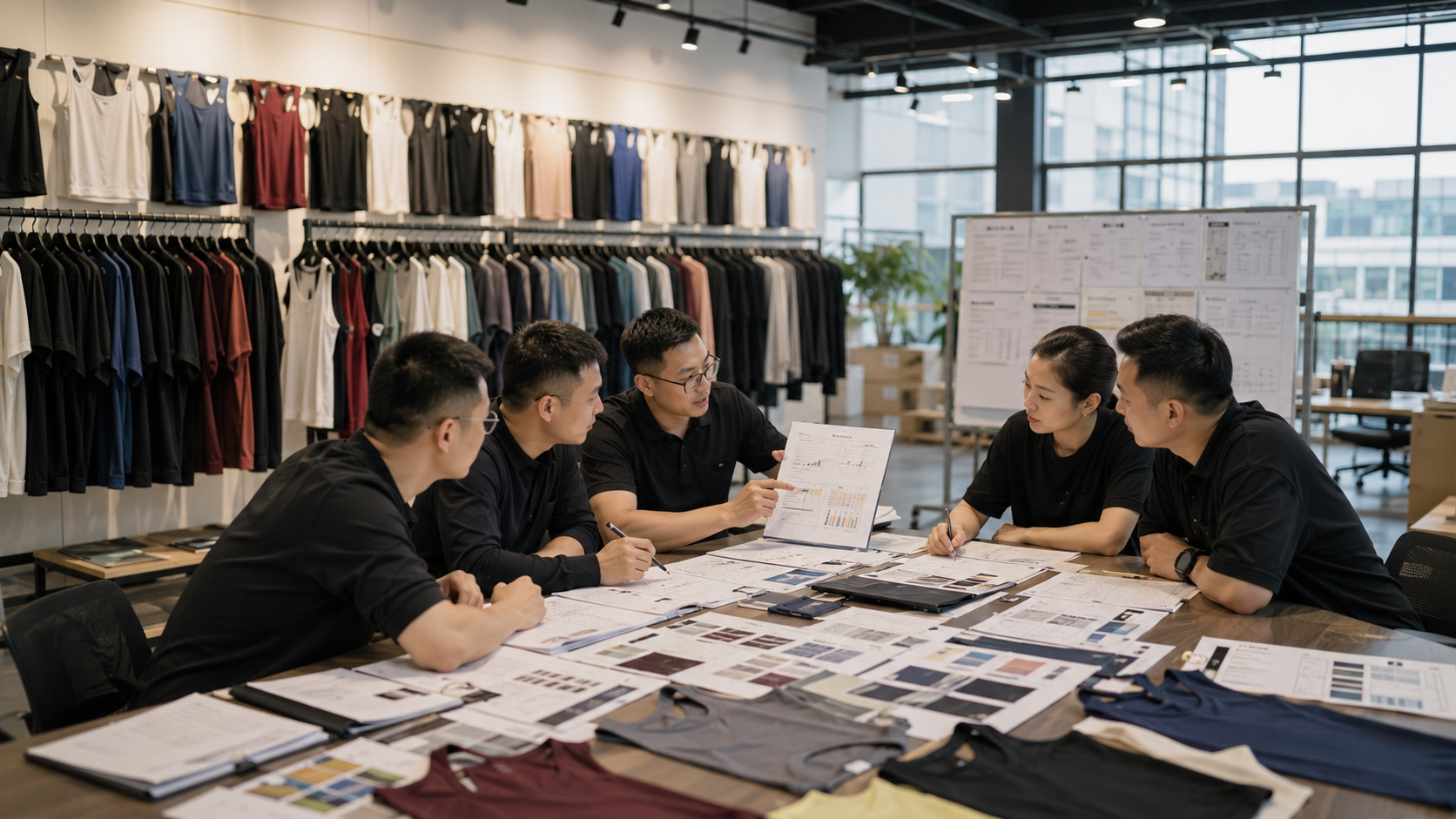
How Should You Compare Fabric Capabilities?
Fabric quality directly affects comfort, stretch, durability, opacity, and customer satisfaction. A good tank tops manufacturer should not only provide fabric options but also explain which material is suitable for gym wear, yoga wear, casual wear, or performance training.
Available Fabric Options
- Cotton and cotton blends
- Polyester and spandex blends
- Nylon and spandex blends
- Recycled polyester
- Organic cotton
- Ribbed fabrics
- Moisture-wicking performance fabrics
Brands can review more material options through this fabric guide before comparing suppliers.
Fabric Testing Standards
Ask whether the supplier performs GSM testing, shrinkage testing, colorfastness testing, pilling resistance testing, and stretch recovery testing. Many international textile test methods are published by organizations such as ASTM International and AATCC.
What Quality Control Systems Should You Examine?
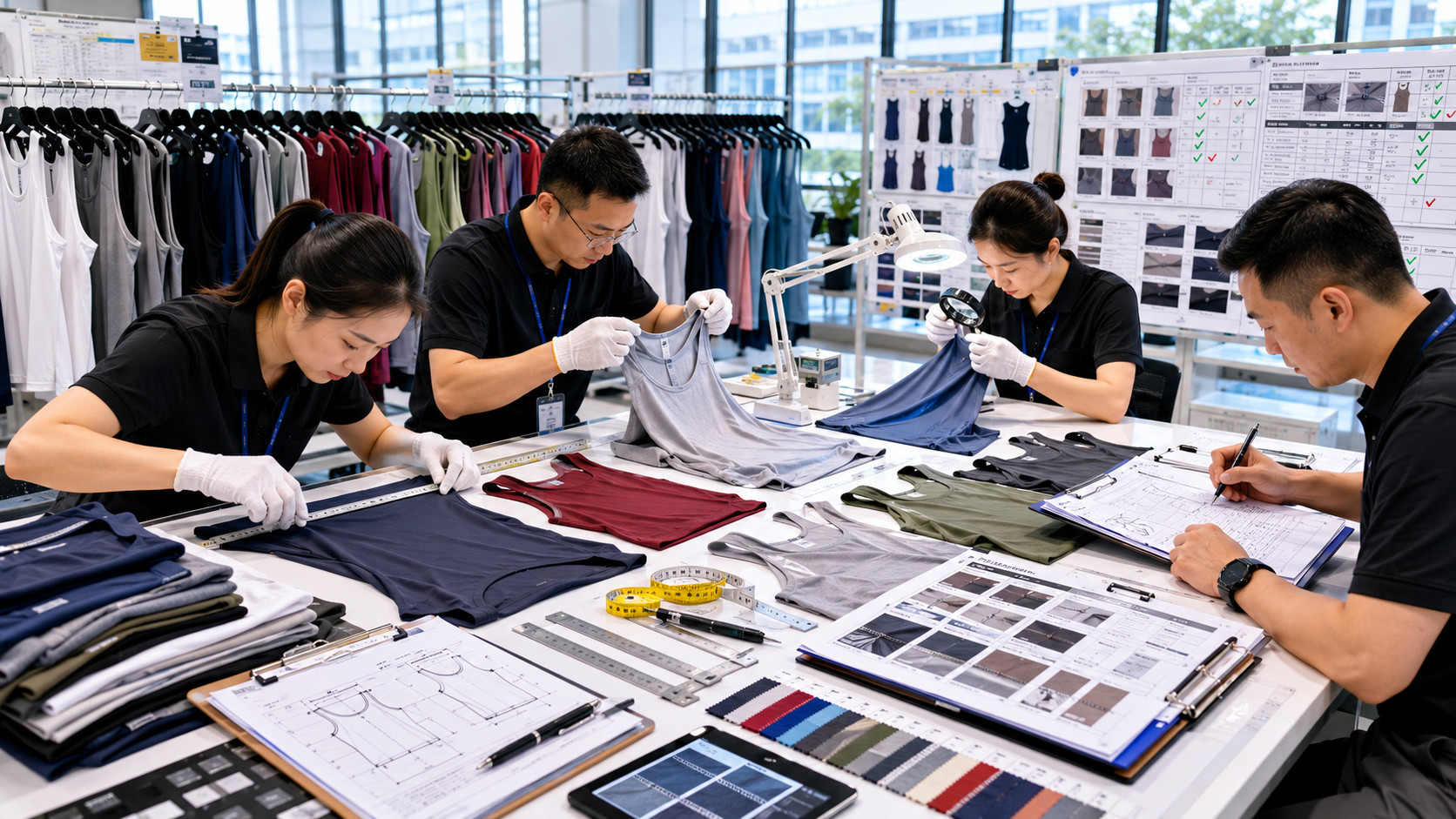
Quality control is one of the most important factors when comparing tank tops manufacturers. Factories with strong inspection systems usually produce fewer defects and deliver more consistent bulk quality.
Inspection Procedures
A professional manufacturer should inspect fabric before cutting, check garment measurements during production, monitor stitching quality, and complete final inspection before packing.
- Fabric inspection
- Cutting inspection
- Inline production inspection
- Final garment inspection
- Packing inspection
Quality Documentation
Ask for measurement reports, fabric test records, defect tracking sheets, and final inspection documents. A reliable factory should have a clear quality control system for every production stage.
How Can You Compare Product Development Capabilities?
Not every manufacturer can develop products from scratch. Some factories only produce basic existing styles, while others support OEM development, private label branding, pattern adjustment, sample revisions, and full collection planning.
Sampling Process
Compare sample lead time, revision speed, pattern development ability, fit correction service, and fabric sourcing flexibility. A smooth sampling process usually means fewer problems during bulk production.
OEM vs Private Label Services
| Service Type | What to Check |
|---|---|
| OEM Manufacturing | Can the supplier produce from tech packs, size charts, and custom patterns? |
| Private Label | Can the supplier add labels, hang tags, packaging, and brand elements? |
| ODM Development | Can the supplier offer existing designs for brand customization? |
| Custom Packaging | Can the supplier support polybags, boxes, stickers, inserts, and hang tags? |
Brands that want faster product launches may benefit from working with a private label manufacturer.
How Important Is Communication and Project Management?
Communication problems are one of the most common reasons apparel projects fail. A good manufacturer should provide clear answers, fast feedback, accurate production updates, and responsible after-sales support.
Response Speed
Compare how quickly each supplier replies to emails, provides quotations, updates sample progress, and solves problems. Slow communication during sampling often becomes a bigger issue during bulk production.
Dedicated Project Support
Ask whether the factory provides a dedicated merchandiser, production coordinator, or technical support person. Clear communication also supports transparency, which aligns with Google's guidance on creating helpful and trustworthy content.
What Customization Options Should Be Compared?
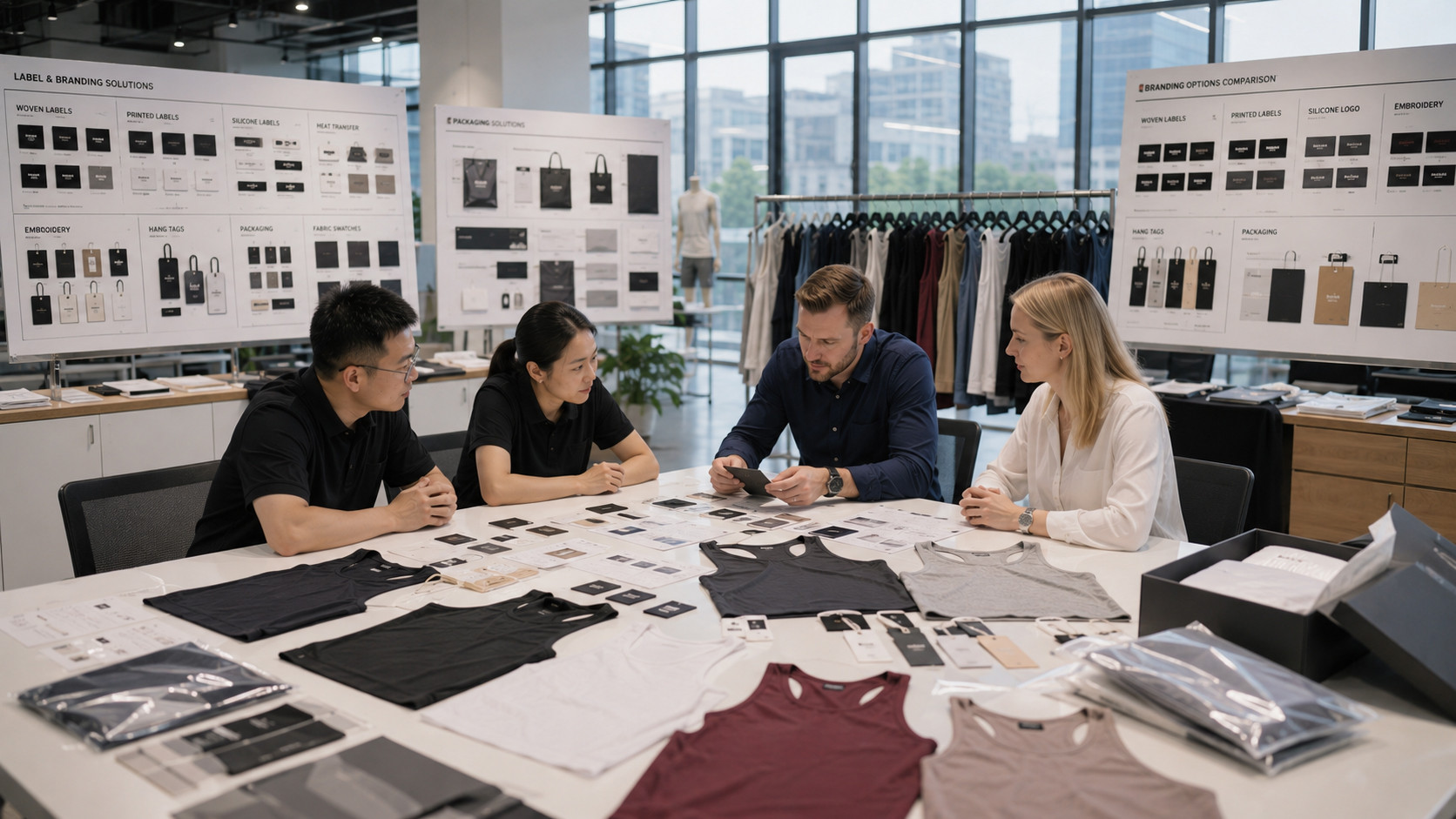
Customization helps brands create stronger product identity. A manufacturer with complete branding and packaging options can support both startup brands and established activewear businesses.
Branding Options
- Woven labels
- Printed neck labels
- Heat transfer labels
- Embroidery
- Silicone logos
- Reflective printing
Packaging Options
- Custom polybags
- Hang tags
- Stickers
- Boxes
- Tissue paper
- Product inserts
Similar customization systems are also important for related activewear products, such as custom sports bras, custom leggings, and custom gym wear.
How Should You Compare Pricing Structures?
The cheapest quote is not always the best choice. A low price may hide poor fabric quality, weak stitching, limited quality inspection, or extra charges added later. Compare the complete cost structure instead of only comparing the unit price.
| Cost Category | Supplier A | Supplier B | Supplier C |
|---|---|---|---|
| Fabric Cost | |||
| Trim Cost | |||
| Sampling Fee | |||
| Packaging Cost | |||
| Shipping Cost |
Hidden Costs to Watch For
- Pattern development fees
- Color matching fees
- Label setup fees
- Sample revision costs
- Expedited production fees
How Do Certifications and Compliance Affect Your Decision?
Certifications and compliance become more important when brands sell internationally or work with larger retailers. They help show that a factory has stronger management, safer production processes, and more reliable sourcing standards.
Factory Certifications
- BSCI
- WRAP
- ISO 9001
- OEKO-TEX
Sustainability Standards
Review whether the manufacturer offers recycled fabrics, organic fabrics, waste reduction programs, and sustainable packaging. Textile safety and sustainability standards can be checked through organizations such as OEKO-TEX.
What Questions Should You Ask Before Making a Final Decision?
Before selecting a tank tops manufacturer, create a comparison scorecard. This helps you avoid emotional decisions and evaluate each supplier based on measurable criteria.
Essential Supplier Questions
- What is your MOQ?
- What is your sample lead time?
- What is your bulk production lead time?
- How do you handle quality issues?
- Can you support future scaling?
- What customization options are available?
Manufacturer Comparison Scorecard
| Criteria | Weight | Supplier A | Supplier B | Supplier C |
|---|---|---|---|---|
| Quality Control | 25% | |||
| Fabric Capability | 20% | |||
| Communication | 15% | |||
| Capacity | 15% | |||
| Pricing | 15% | |||
| Product Development | 10% |
Conclusion
Comparing tank tops manufacturers requires more than reviewing quotations. The best supplier should demonstrate reliable quality control, stable production capacity, strong fabric knowledge, clear communication, and scalable manufacturing systems.
Instead of focusing only on price, brands should compare manufacturing experience, fabric sourcing, quality management, product development support, and supply chain reliability. If you are sourcing activewear products, reviewing suppliers across categories such as custom tank tops, women's sportswear, men's sportswear, and the full product collection can help you choose a better long-term manufacturing partner.
```