
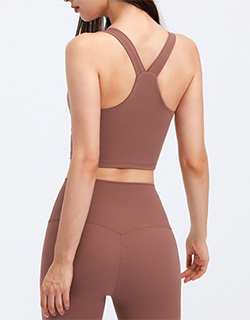
Low-MOQ Activewear Manufacturing: Benefits, Limits and Hidden Costs
Low-MOQ activewear analysis · Startup planning · Evidence checked September 14, 2026
Low-MOQ Activewear Manufacturing: Benefits, Limits and Hidden Costs
Direct answer: low-MOQ manufacturing can reduce the cash and inventory committed to an unproven activewear product, but it rarely removes development, material, setup, testing or logistics costs. The useful question is not “Who offers the lowest MOQ?” It is “Which production route gives the smallest controlled experiment while preserving fit, quality, repeatability and a viable landed cost?”
What “Low MOQ” Actually Means
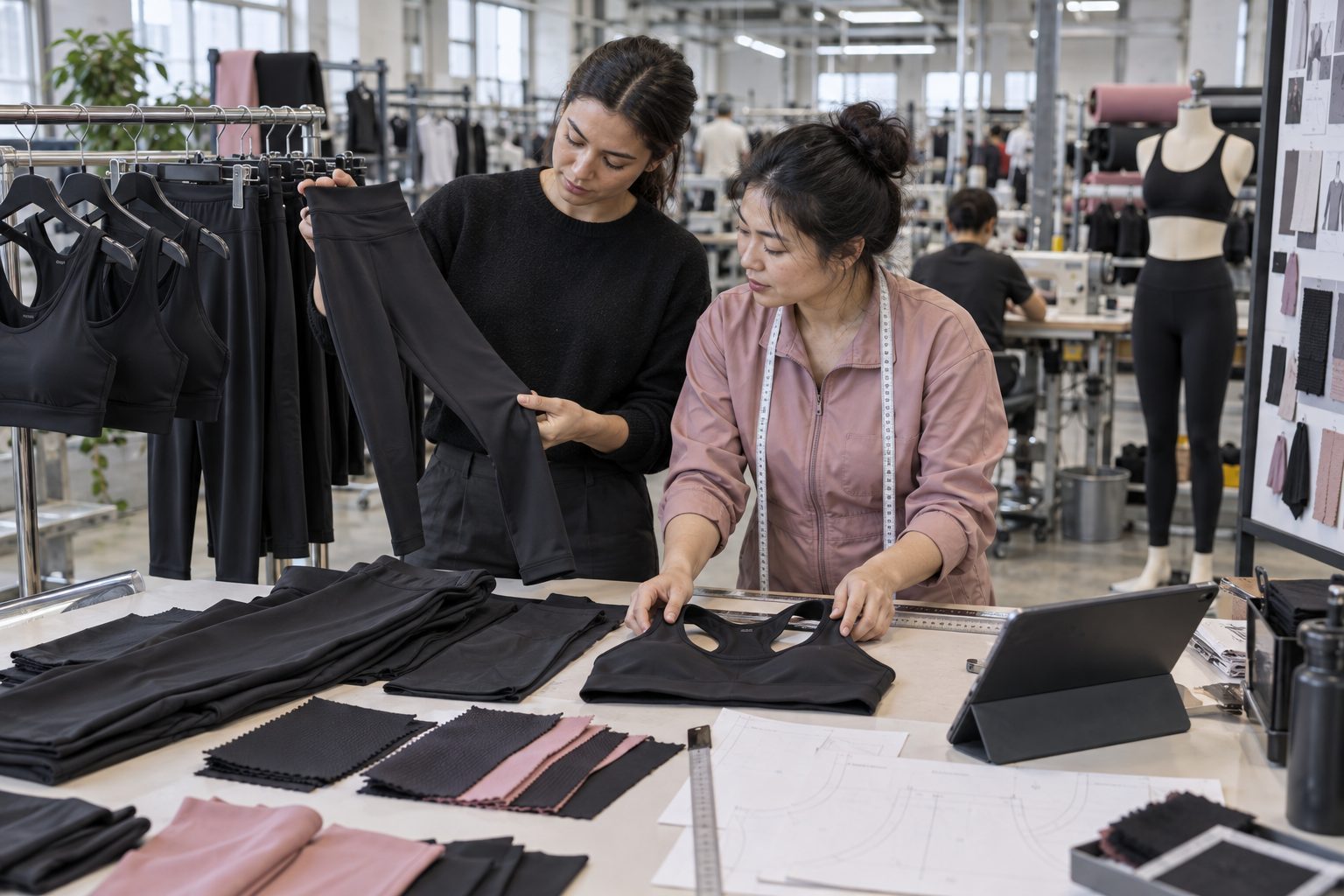
MOQ is the minimum quantity a supplier will accept under a defined commercial and technical scope. “Low” is relative. It can refer to a total order, one style, one color, one size, a fabric lot, a decoration version or a packaging component. A headline such as “100 pieces” is incomplete until the counting rule is written down.
Ohsure currently publishes a standard starting point of 100 pieces per style per color, with sizes mixed within that combination. This is a planning reference, not a promise that every fabric, custom color, trim, logo method or packaging supplier can support the same threshold. The project quotation and approved specification must identify every separate minimum.
A small total order can still create a shallow assortment
Two styles × three colors × five sizes creates 30 SKUs. An order of 300 units then averages only 10 units per SKU. That may be too little demand evidence for each size and color, while still creating substantial coordination work.
The Main Benefits of a Low-MOQ First Run
Lower inventory exposure
Fewer finished units reduce the cash tied up before demand, fit and price acceptance are known.
Faster market learning
A controlled batch can reveal return reasons, size demand, color preference and real customer feedback.
Smaller markdown risk
Unsold seasonal colors or weak sizes are less likely to force deep discounting or long storage.
More focused iteration
The brand can revise fit, construction, packaging or assortment using evidence from the first release.
These benefits are strongest when the first batch has a defined learning objective. “Test whether one legging in two stock colors sells at the planned price” is measurable. “Launch many products in small quantities” usually spreads the evidence too thin.
Where the Low-MOQ Promise Stops
| Constraint | Why quantity may not solve it | What to confirm |
|---|---|---|
| Fabric | Mills may sell by roll, dye lot or knitting lot rather than by garment demand. | Material code, available stock, lot size, reservation period and leftover ownership. |
| Custom color | Lab dips, dyeing, shade control and minimum bath quantities can exceed the garment order. | Color approval route, minimum lot, shade tolerance and replenishment method. |
| Trims and branding | Elastic, zippers, labels, transfers, silicone logos and packaging can each have a separate minimum. | Setup fee, component quantity, unit price, storage life and unused stock. |
| Production setup | Pattern, marker, cutting, machine settings and first-piece checks occur even on a short run. | Which fixed fees are separate and which are included in the unit price. |
| Testing and inspection | A test method or inspection visit has a project cost that does not shrink in step with units. | Methods, sample quantity, acceptance criteria, report owner and remedies. |
| Freight and import | Minimum shipment charges, brokerage and destination fees can make small consignments expensive per unit. | Incoterms rule, named place, mode, chargeable weight and exclusions. |
Nine Hidden Costs to Put Beside the Unit Price
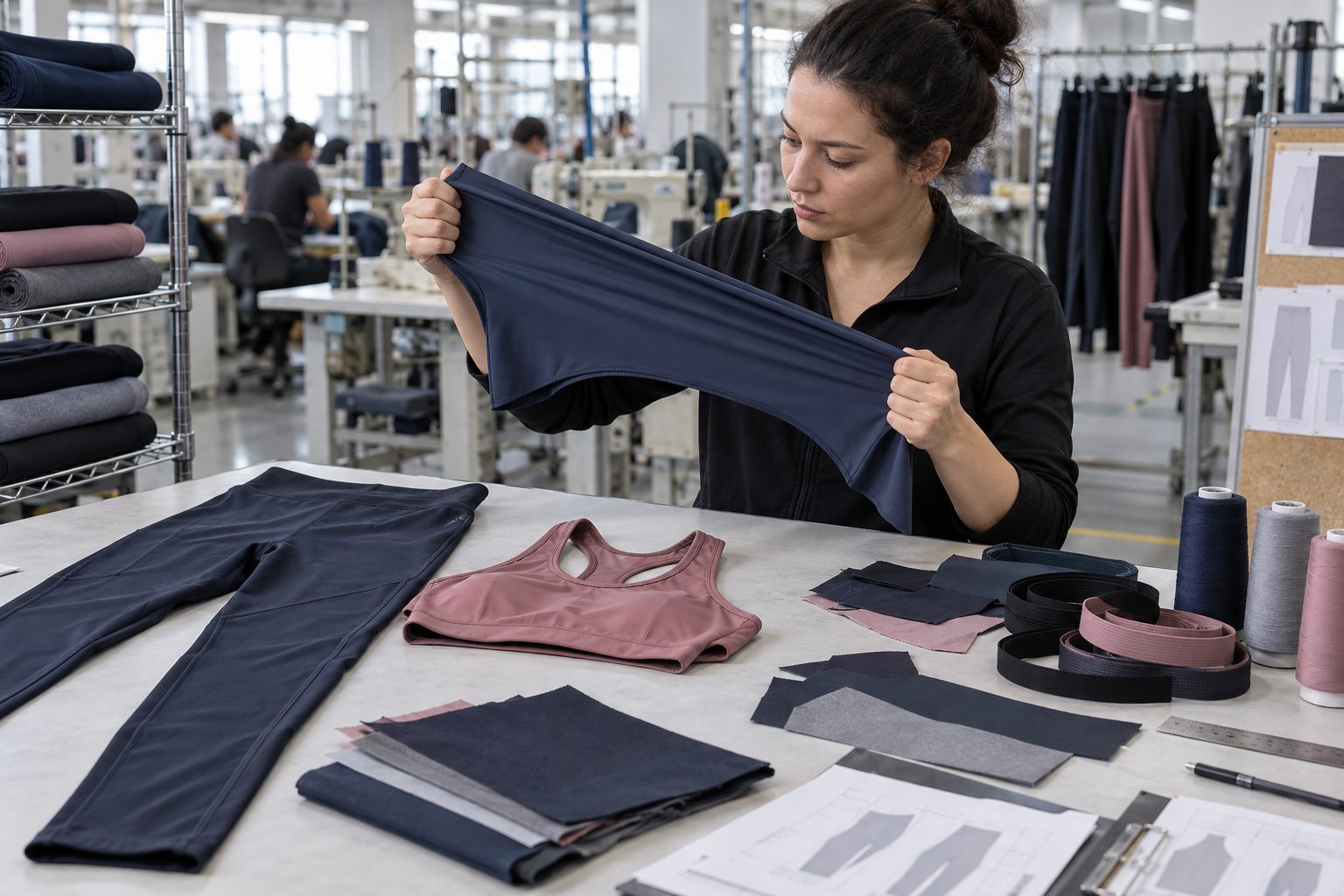
- Pattern and grading: creating or adapting shapes, measurements and the size range.
- Sample rounds: prototypes, fit samples, revisions, pre-production samples and courier charges.
- Small-run surcharge: compensation for setup, line interruption or inefficient capacity use.
- Material leftovers: rolls, dye lots, elastic, labels or packaging bought above garment consumption.
- Decoration setup: artwork conversion, screens, molds, transfer sheets or embroidery files.
- Verification: material tests, measurements, workmanship inspection and report fees.
- Freight floor: minimum courier, airfreight, handling, brokerage or delivery charges.
- Unavailable units: samples retained for testing, shortages, defects, damage or customer returns.
- Reorder change: discontinued stock fabric, new dye lots, revised price or another sample approval.
This denominator matters. If a 100-piece order has 95 sellable units, every fixed and variable cost must be recovered across 95 units, not 100. Add ecommerce fees, fulfillment, returns, marketing and operating overhead separately when modeling retail margin.
Low MOQ vs. Larger MOQ: The Real Trade-Off
| Decision factor | Lower quantity | Larger quantity |
|---|---|---|
| Upfront cash | Usually lower, unless material lots dominate. | Higher total commitment. |
| Unit cost | Usually higher because fixed costs are spread over fewer units. | Often lower after the run reaches an efficient tier. |
| Demand risk | Less unsold inventory if the product misses. | More exposure to weak sell-through, markdowns and storage. |
| Assortment depth | Can become too shallow when divided across many variants. | Can support more depth, but only if the size and color mix is sound. |
| Customization | Often works best with stock materials and controlled changes. | More likely to support custom colors, materials and components. |
| Reorder continuity | May depend on remaining stock materials and spare capacity. | Can justify dedicated inputs, but future availability still needs confirmation. |
The cheapest unit is not automatically the safest buy. Compare the extra cash required for a higher tier with the unit saving and realistic sell-through. Buying 200 more pieces to save a small amount per unit destroys value if those pieces become slow stock.
A Practical Low-MOQ Decision Model
- Define the learning goal. Choose the product, customer behavior or operational assumption the batch must test.
- Limit combinations. Concentrate quantity in fewer style-color combinations and use a deliberate size ratio.
- Select the production route. Compare private label, adapted ODM and full OEM by required differentiation, development work and repeatability.
- Build the full cash model. Add development, samples, product, branding, verification, freight, import charges and contingency.
- Calculate sellable-unit cost. Allow for retained samples, defects, shortages, damage and expected returns.
- Check reorder feasibility. Record material code, supplier lot, color standard, approved sample, lead time and what must be reconfirmed.
- Set the scale trigger. Define which sales, return-rate, margin and customer-feedback results justify a repeat or larger order.
How to Make a Low-MOQ Project More Workable
- Use a proven stock fabric and available shade when custom material is not the core point of difference.
- Keep one construction platform and avoid unnecessary panels, hardware or specialist processes in the first run.
- Reduce color count before cutting size depth or removing essential fit verification.
- Use standard trims and packaging unless custom components are central to the customer proposition.
- Pay transparent fixed fees when a setup charge is more economical than buying unwanted finished units.
- Freeze the specification before bulk production so changes do not create new samples, waste or delay.
- Plan the reorder before launch by documenting approvals, material identity, lead time and reservation conditions.
Red Flags in a Low-MOQ Offer
MOQ is shown only as one total, with no style, color or size rule.
The price excludes necessary materials, labels, packaging or setup without saying so.
“Stock fabric” has no material code, lot information or reorder status.
Bulk production is not tied to an approved sample and written specification.
The supplier cannot explain where production occurs or who controls inspection.
Leftover custom materials, overages, shortages, substitutions and defects have no written treatment.
The lead time does not state what approval or payment starts the clock.
Certifications or test claims are presented without scope, issuer, number and validity evidence.
A red flag is a question to resolve, not proof of misconduct by itself. Convert each uncertainty into a quotation line, specification requirement, approval gate or contract term.
Frequently Asked Questions
Is low-MOQ manufacturing best for every startup?
No. It is most useful when the batch tests a clear assumption and the short-run premium is smaller than the inventory risk avoided. A brand with proven demand may gain more from a larger efficient tier.
Does low MOQ mean private label only?
No. Private label often supports lower quantities because the base product already exists, but some ODM and OEM projects can also use short runs when materials, construction and customization remain workable.
Can I combine styles or colors to reach the minimum?
Only if the supplier confirms it. Production and upstream minimums often apply per style, color, material or decoration version rather than to the total purchase order.
Can a surcharge replace a higher MOQ?
Sometimes. It may cover factory setup or inefficient line time, but it cannot always remove a mill, dye-lot, trim or packaging minimum.
Does a low MOQ guarantee faster delivery?
No. Samples, material availability, approvals, testing, production scheduling and freight can control the calendar. A smaller sewing quantity does not eliminate those stages.
How should I compare two low-MOQ quotes?
Normalize the same specification and delivery basis. Compare total cash, cost per sellable unit, sample and setup fees, material leftovers, inspection, defect remedies, lead time and reorder continuity.
Bottom Line
Low MOQ is valuable when it buys reliable learning with controlled cash exposure. It becomes misleading when the minimum is detached from style-color rules, fixed costs, material lots, quality controls or reorder conditions. Define the experiment, simplify the assortment, normalize total landed cost and require written evidence for every critical assumption.
Evidence note: Ohsure-specific statements were checked September 14, 2026 against current Ohsure MOQ content and the live Product Industry Blogs configuration. General mechanisms describe common production economics, not a universal factory rule or project quotation. No certificate number, legal registration, factory identity or named reviewer has been invented.