
Is Activewear MOQ Calculated Per Style, Color or Size?
Activewear MOQ calculation · Evidence checked September 10, 2026
Is Activewear MOQ Calculated Per Style, Color or Size?
Direct answer: An activewear MOQ can be calculated at any of those levels, but the supplier must state the basis. Ohsure currently publishes a standard bulk starting point of 100 pieces per style per color, with sizes mixed within that style-color combination. Therefore, each style-color combination normally needs 100 pieces; individual sizes share that quantity unless the written quotation adds a size minimum.
The Counting Rule in One Table
| MOQ basis | What must reach the minimum | Can other variables be mixed? | Main buyer risk |
|---|---|---|---|
| Per total order | All accepted items combined | Only the styles, colors and processes named by the supplier | Assuming every item can be combined |
| Per style | Each distinct construction or product code | Colors or sizes may be mixed only if stated | Treating a construction change as the same style |
| Per style per color | Each style-color combination | Sizes may often be mixed within the combination | Multiplying by styles but forgetting colors |
| Per size | Each individual size | Usually no cross-size mixing for that minimum | Creating excessive stock in slow sizes |
| Per fabric, print or component | Each material lot, artwork, placement or purchased part | Depends on the upstream supplier | Meeting garment MOQ but missing another minimum |
Ohsure’s published planning basis
100 pieces × number of styles × number of colors. Sizes are allocated inside each qualifying style-color combination. This is a public starting point, not a universal project acceptance; the current written quotation controls.
How to Calculate a Style-Color MOQ
Start with the number of constructions that the factory treats as separate styles. Then count the colors offered for each style. Multiply every style-color combination by the applicable minimum. Allocate sizes after the qualifying quantity is established.
One style, one color
1 × 1 × 100 = 100 unitsThe agreed sizes divide the 100 pieces.
One style, three colors
1 × 3 × 100 = 300 unitsEach color represents a separate 100-piece combination.
Two styles, three colors each
2 × 3 × 100 = 600 unitsSix style-color combinations qualify separately.
If styles use different numbers of colors, calculate them separately. For example, one legging in two colors plus one sports bra in one color creates three combinations, or 300 units at the published starting point.
What Counts as a Separate Style?
A color change alone normally does not create a new construction, but it can create a new qualifying color batch. A change that affects patterns, cutting, sewing sequence, components or fit may create a separate style even when the product name stays similar.
Usually the same style
- Different size within one graded range
- Different stock color using the same approved material
- Same construction with an allowed shared label package
May create another style
- New waistband height or internal structure
- Adding or removing pockets, panels or lining
- Different seam construction or pattern shape
- Different support, compression or fit specification
- Different fabric that changes pattern or production route
Do not decide this only from a marketing name. Ask the supplier to assign a style code to every construction and show the MOQ beside each code.
Why Color Often Has Its Own Minimum
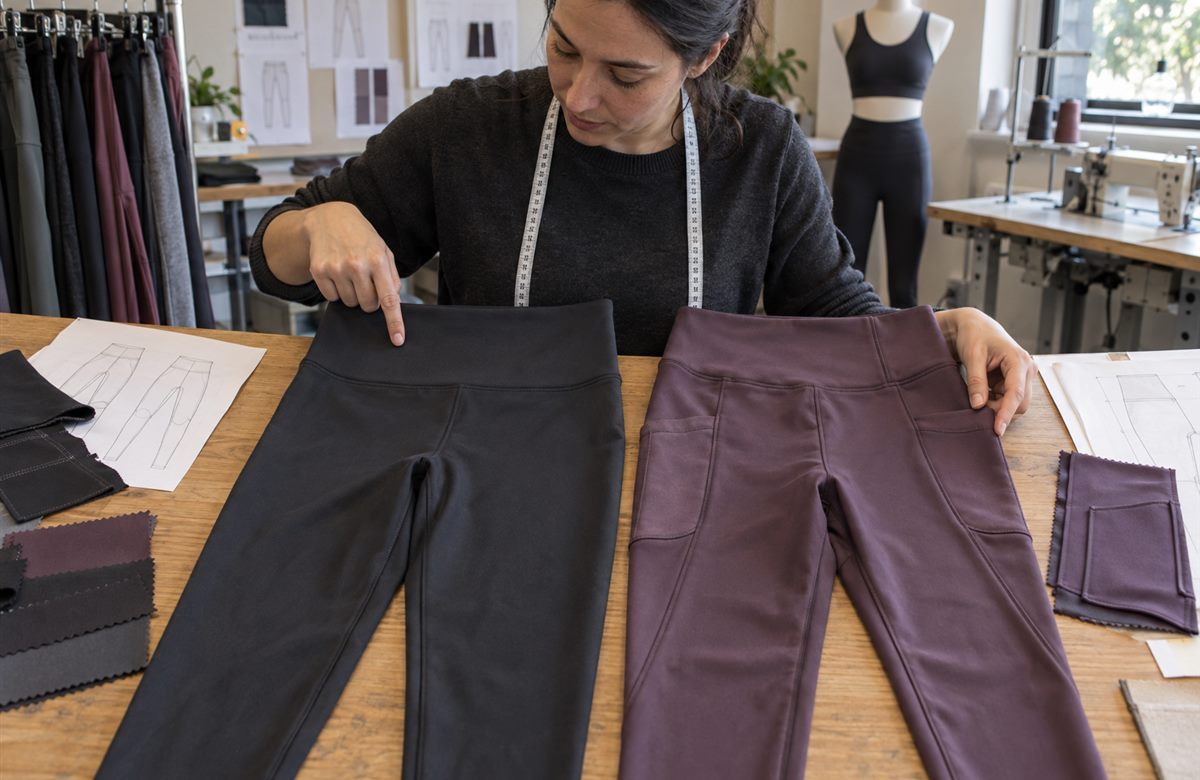
Color can create a separate cutting and material batch. Stock shades may be available in small quantities, while a custom-dyed shade can require a mill lot larger than the garment MOQ. Prints, contrast panels and colored logo applications can also introduce their own setup or purchase thresholds.
- Stock color: ask whether the fabric is physically available and reserved for the order.
- Custom dye: confirm lab-dip approval, mill minimum, shade tolerance and responsibility for excess fabric.
- Print: confirm whether each artwork and colorway needs a separate setup or quantity.
- Mixed materials: confirm whether every fabric and lining color must meet an upstream minimum.
A garment order can satisfy 100 pieces per style-color yet still fall below a fabric mill’s dye lot. The quotation should separate the garment minimum from material, decoration and component minimums.
How Sizes Fit Into the Calculation
When sizes can be mixed, size does not multiply the MOQ. Instead, it divides the qualifying style-color quantity. A 100-piece black legging order across XS–XL remains 100 pieces, not 500 pieces, if the supplier accepts the size mix and imposes no per-size minimum.
| Size | Illustrative ratio | Units in a 100-piece combination |
|---|---|---|
| XS | 10% | 10 |
| S | 25% | 25 |
| M | 30% | 30 |
| L | 25% | 25 |
| XL | 10% | 10 |
This ratio is illustrative, not a demand recommendation. Use the brand’s sales, preorder, return and fit data where available. Also confirm whether extended sizes, unusual components or very small quantities in one size create technical or commercial limits.
A Buyer Worksheet for the Quote
- Assign one code per construction. Separate meaningful pattern, fit, component and seam changes.
- List colors under each style. Mark stock, custom-dyed, printed and contrast-material routes.
- Enter quantity by size. Make each size row add back to the style-color total.
- Add non-garment minimums. Record fabric, logo, label, trim and packaging thresholds separately.
- Obtain written confirmation. The quote should name the counting basis, allowed mix, exclusions and treatment of excess materials.
Minimum quotation wording
“Style code, color, sizes and quantities; garment MOQ basis; fabric and decoration minimums; unit price basis; excess-material ownership; and any condition that changes the minimum.”
Frequently Asked Questions
Does five sizes make Ohsure’s 100-piece MOQ become 500 pieces?
No, not under the current published wording. Sizes may be mixed within one 100-piece style-color combination. The final quote should still confirm the size range and any individual-size restriction.
If I order one style in black and navy, is the total 100 or 200 pieces?
At 100 pieces per style per color, it is normally 200 pieces: 100 black and 100 navy. A written exception would need to state that the colors can share one minimum.
Do two logo colors create two garment MOQs?
Not automatically, but the decoration supplier may impose a setup fee or minimum for each artwork, color or placement. Ask for garment and logo thresholds separately.
Can two similar leggings share one style MOQ?
Only if the factory confirms they are the same production style. A different waistband, pocket, panel, fabric route or fit may require another style code and minimum.
Can custom colors increase the required quantity?
Yes. A fabric mill’s dye or print minimum may exceed the sewing factory’s garment minimum. Confirm the lot size and what happens to unused material.
Should a startup split the first order evenly across sizes?
Not by default. Use available demand evidence and document the assumption. Track sell-through and returns by size so the reorder ratio is evidence-based.
Bottom Line
Activewear MOQ is not inherently per style, color or size; it is whatever counting basis the supplier states. Ohsure’s current public basis is 100 pieces per style per color with sizes mixed. Count style-color combinations first, allocate sizes second, and then check whether fabric, print, logo, trim or packaging adds another minimum.
For definitions and wider planning context, read what MOQ means in activewear manufacturing and the activewear manufacturing MOQ guide. Buyers can also review company information and current contact details before requesting a project-specific quote.
Editorial note: Ohsure-specific statements were checked September 10, 2026 against current public Ohsure pages and its published MOQ articles. Public information can change. The final written quotation and approved production specification control actual quantity, price, timing and scope.