
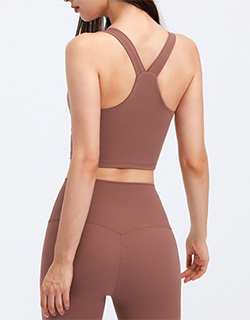
OEM vs Private Label Activewear: Which Model Gives You More Control?
OEM vs private label activewear · Decision guide · Evidence checked September 1, 2026
Direct answer: OEM usually gives a brand more control over product specifications because the factory manufactures from the buyer's design package, while private label gives the brand more control over launch speed, assortment and commercial testing because it starts from a supplier-defined garment platform. OEM is the stronger choice when exclusive fit, construction, materials or performance details are essential. Private label is usually stronger when the brand wants to validate demand quickly and can differentiate through positioning, color selection, branding and customer experience.
The important distinction is not “custom versus generic.” Control is divided across design, development, production, ownership, time, cash and inventory. A brand can gain technical control through OEM while losing flexibility after approving custom materials or minimum quantities. It can accept a supplier's base product through private label while keeping tighter control of launch timing and inventory exposure.
OEM vs Private Label in One Table
| Decision factor | OEM activewear | Private-label activewear | Who usually has more control? |
|---|---|---|---|
| Product concept | Buyer supplies or approves the original specification. | Supplier offers an existing or pre-developed platform. | OEM |
| Fit and measurements | Buyer can define measurement points, grade rules and tolerances, subject to feasibility. | Buyer normally selects from an existing fit with limited changes. | OEM |
| Fabric and components | Buyer can specify or develop fabric, elastic, trims and construction. | Choices are limited to the supplier's available option set. | OEM |
| Brand presentation | Custom labels, artwork and packaging can be specified. | Logo, labels, hangtags and packaging are common options. | Often similar |
| Launch timing | More approvals and development dependencies. | Fewer product-development decisions when the base style is accepted. | Private label |
| Development budget | May include pattern, sample, testing, tooling or material-development cost. | Usually less original engineering, but setup and component costs still apply. | Private label |
| Product exclusivity | Potentially stronger, but only when ownership and reuse terms are written. | The supplier may offer the same base style to other buyers. | OEM, contract dependent |
| Inventory agility | Custom materials and components can create larger commitments. | Existing materials or stock may reduce commitment, but not automatically. | Private label, program dependent |
Boundary: These are typical commercial patterns, not universal definitions. A supplier may use “OEM” or “private label” differently. The quotation, specification, sample and contract define the real scope.
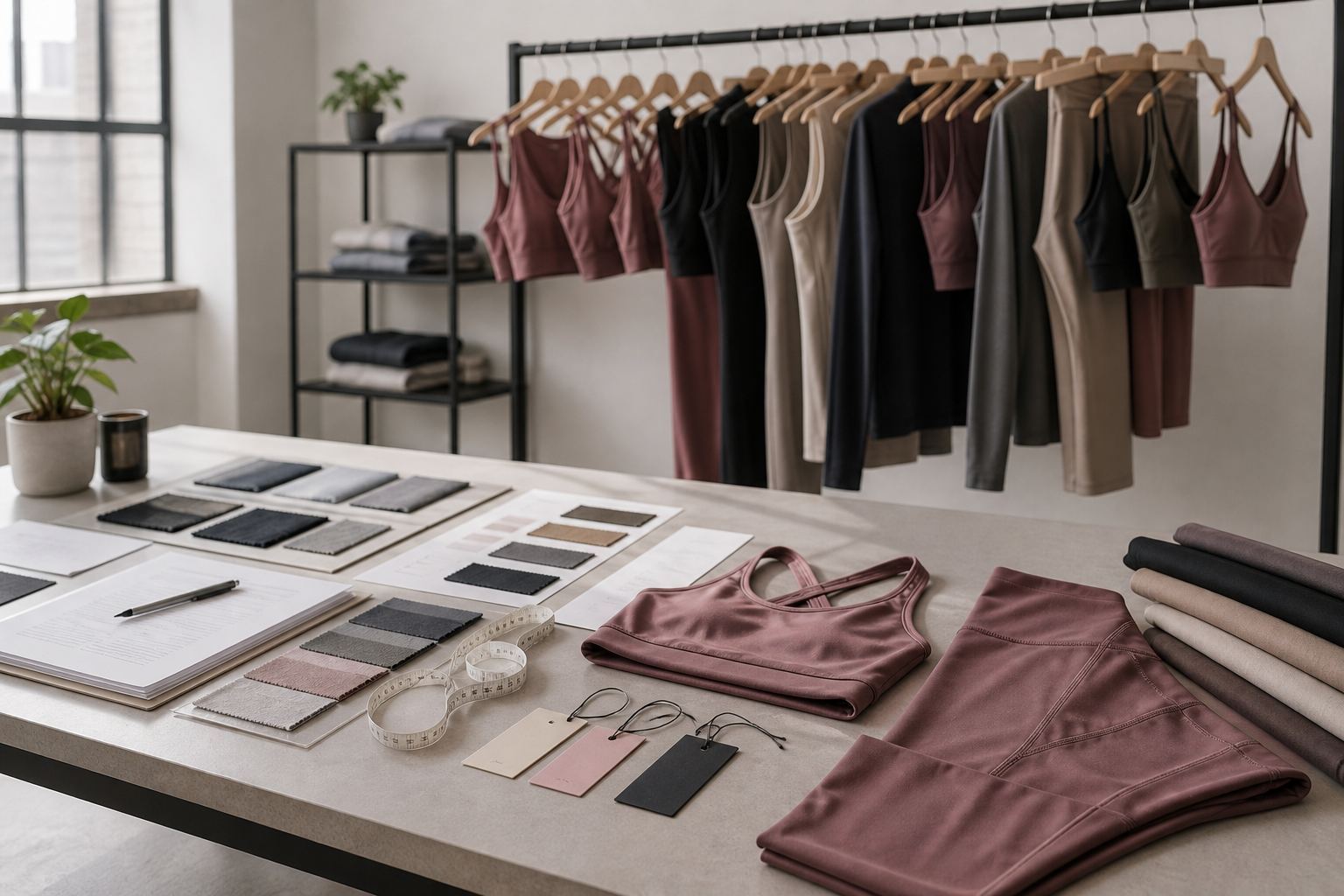
What “More Control” Actually Means
Control should be evaluated as a portfolio of rights, decisions and obligations. A request is not controlled merely because a supplier agrees to discuss it. The brand needs an approved reference, a measurable acceptance rule and a remedy when bulk production differs.
1. Design control
Who decides silhouette, seam placement, pocket architecture, waistband construction and visual details? OEM normally supports a buyer-led specification. Private label usually limits decisions to an option menu.
2. Fit control
Who owns the measurement chart, grading logic and fit approvals? OEM can support original blocks and fit corrections. Private label normally uses a supplier block, so major fit changes may move the project outside its original scope.
3. Material control
Who selects fiber content, weight, stretch, recovery, hand feel, color and finishes? OEM offers more room for material specification, but custom dyeing or knitting can create minimums and schedule risk.
4. Quality control
Both models can use measurement tolerances, defect classifications, tests and inspections. OEM provides more variables to define; private label may provide a more established reference. Neither model guarantees quality without documented acceptance criteria.
5. Ownership control
Who owns patterns, tech packs, artwork and modifications, and who may reuse them? OEM can support stronger exclusivity, but payment alone does not automatically transfer rights. Private-label base designs usually remain with the supplier unless agreed otherwise.
6. Schedule control
How many approvals, material bookings and corrections sit on the critical path? Private label can reduce decision points. OEM adds technical control but also adds dependencies that the brand must manage promptly.
7. Cash control
What deposits, minimums, setup charges and component commitments are required? OEM customization can tie cash to project-specific inputs. Private label can be lighter, but custom colors, labels or packaging can still create separate minimums.
8. Reorder control
Can the brand repeat the exact product, and for how long? OEM needs stable specifications and material access. Private label depends on continued availability of the supplier's base style. Both need substitution and discontinuation rules.
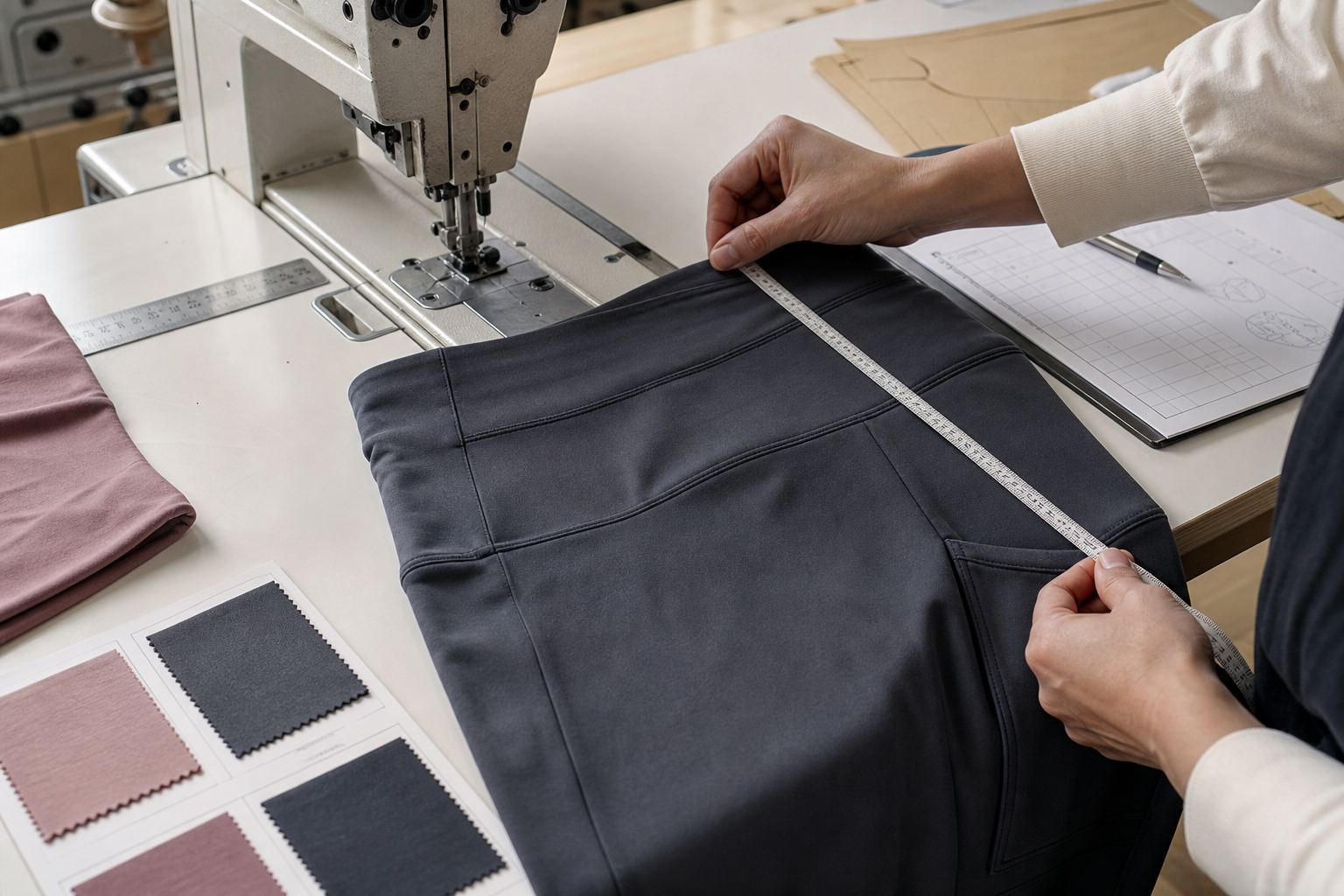
How the Workflows Differ
Typical OEM approval path
- Buyer defines customer, use case and product brief.
- Buyer provides or develops a tech pack, measurements and bill of materials.
- Factory reviews feasibility, cost, minimums and risks.
- Pattern, prototype and fit samples are developed.
- Fabric, color, print, trim and performance evidence are approved.
- A pre-production sample becomes the signed bulk reference.
- Bulk production is inspected against written criteria.
Typical private-label approval path
- Buyer selects a supplier base style and confirms its status.
- Available colors, fabrics, sizes and branding options are mapped.
- Garment, logo, label and packaging minimums are separated.
- A branded sample and artwork placement are approved.
- Purchase order records the exact base-style and component codes.
- Bulk production or allocation is checked against the approved sample.
The Control-Cost Formula
More technical control has value only when the expected commercial benefit exceeds the added development and commitment cost. Use a replaceable planning model rather than a supplier promise:
Incremental control cost per sellable unit
(OEM development + testing + tooling + custom-component excess + expected delay cost − private-label setup cost) ÷ expected sellable OEM units
Illustrative comparison for a 600-unit launch
| Planning input | OEM | Private label |
|---|---|---|
| Development and sample charges | $2,400 | $500 |
| Testing and tooling | $1,200 | $300 |
| Excess custom labels or components | $900 | $600 |
| Expected schedule-risk allowance | $1,500 | $500 |
| Total project-level cost | $6,000 | $1,900 |
| Project-level cost per planned unit | $10.00 | $3.17 |
The OEM control premium in this example is ($6,000 − $1,900) ÷ 600 = $6.83 per planned unit. The brand should ask whether its exclusive fit, features or performance can create at least $6.83 of additional contribution per sellable unit—or reduce returns, markdowns or competitive substitution by an equivalent amount. Replace every number with current quotations and realistic sell-through assumptions.
Control Scorecard: Choose the Model by Evidence
Score each statement from 0 to 2: 0 = not important or not ready, 1 = moderate, 2 = essential or fully ready.
| Statement | If score is high |
|---|---|
| Our product needs an original fit, construction or performance solution. | Favors OEM |
| We have a complete, internally approved specification. | Favors OEM readiness |
| We can fund development, corrections and project-specific minimums. | Favors OEM readiness |
| Product exclusivity materially supports our price or brand promise. | Favors OEM |
| Our main uncertainty is customer demand rather than product engineering. | Favors private label |
| Speed to a controlled market test matters more than original construction. | Favors private label |
| We can differentiate through brand, channel, content, community or assortment. | Favors private label |
| We want to preserve cash and reduce custom-component exposure. | Favors private label |
Add the first four scores as the OEM control need and the last four as the private-label validation need. A gap of three or more points suggests a direction. A close result suggests a staged strategy: validate the customer and price with private label, then move only proven products into OEM development.
Worked Case: The Same Yoga Set, Two Models
A startup plans 600 sets of leggings and sports bras. Its differentiation claim is a stable high-rise fit for long-torso customers, a phone pocket that does not pull the side seam and a defined compression feel.
Private-label route
The team selects the closest supplier legging and bra, adds logos, labels and packaging, and chooses two available colors. It can test price, creative and customer acquisition sooner. However, the rise, pocket construction and compression are not exclusive. If those features drive the promise, the product may not prove the intended concept.
OEM route
The team specifies rise measurements, waistband layers, pocket geometry, seam strength and fabric performance. It reviews fit samples and validates the phone-pocket load. This route better controls the product promise, but it requires specification discipline, more approvals and a larger risk allowance.
Decision: Use OEM if the differentiated fit and pocket are the reason customers should buy. Use private label if the first objective is to validate audience, price and channel. A staged approach can test the market with a clearly described private-label capsule while OEM development runs only after evidence justifies it.
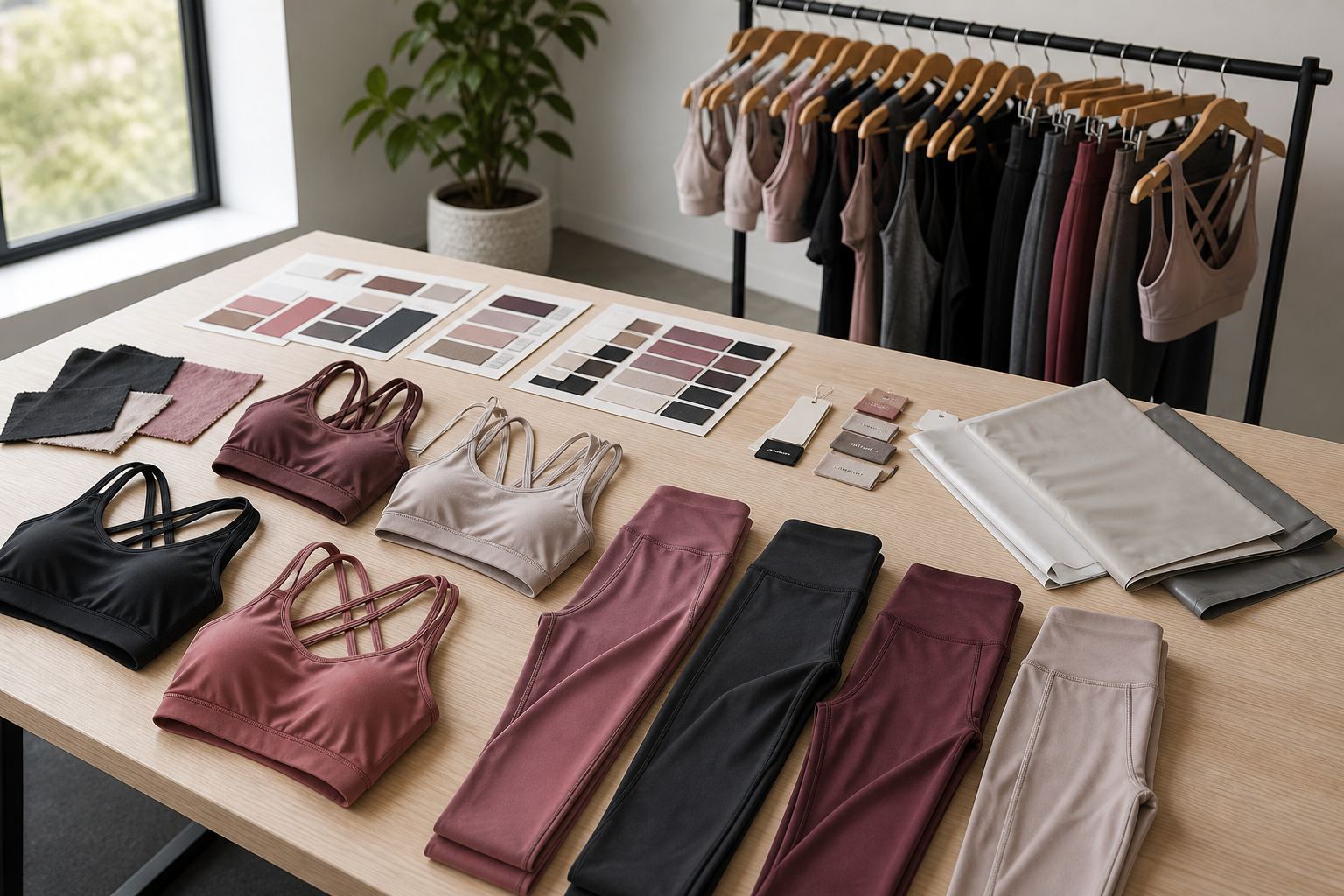
Questions That Turn Claimed Control into Contracted Control
- Which measurements, materials, construction details and tests become binding specifications?
- Which sample is the bulk-production reference, and how are deviations handled?
- Which changes are included, and which trigger new prices, minimums or lead times?
- Who owns the pattern, tech pack, artwork, test data and modified files?
- May the supplier reuse the product, pattern or base style for another buyer?
- What minimum applies to each garment, color, fabric, trim, label and package?
- What happens to excess buyer-funded materials and components?
- How are substitutions approved when a fabric, color or component is unavailable?
- Which inspection method and defect criteria determine acceptance?
- How long are specifications, materials, prices and reorder conditions valid?
Frequently Asked Questions
Does OEM always mean full design control?
No. Control depends on the specification, supplier capability, approvals and contract. A factory may reject infeasible details or require minimums. Rights and acceptance rules must be written.
Can private-label activewear still look unique?
Yes. Color selection, logo execution, labels, packaging, assortment, styling and brand experience can create distinction. The underlying fit or construction may still be available to other buyers.
Which model has the lower MOQ?
Neither by definition. Existing stock may support smaller private-label orders, while made-to-order base styles, colors, labels and packaging can create separate minimums. OEM minimums depend on materials, processes and factory economics.
Which model protects intellectual property better?
OEM can support original buyer specifications, but protection depends on ownership, confidentiality, reuse and enforcement clauses. Private-label buyers usually do not own the supplier's pre-existing platform.
Can a brand start private label and move to OEM later?
Yes. This can separate market validation from original development. The later OEM product should have its own specification, cost model, approvals and ownership terms; it is not simply a relabeled reorder.
Which model gives better quality control?
Both can use strong quality controls. OEM offers more specification control; a mature private-label platform may offer more production history. Quality depends on measurable criteria, approved references and inspection evidence.
Choose the Uncertainty You Need to Control
OEM is usually the better tool for controlling a product that must perform or fit in a specific, defensible way. Private label is usually the better tool for controlling the speed and scope of a market test. The best model is the one that resolves the brand's largest uncertainty without adding commitments it is not ready to manage.
Before requesting a quotation, write the five control points that matter most, the evidence required for each and the cost of failure. Ohsurewear's product catalog can support early platform research, while the industry blog provides related manufacturing guides. Project-specific availability, costs, minimums, rights, test requirements and timing should be confirmed in a current written offer.