
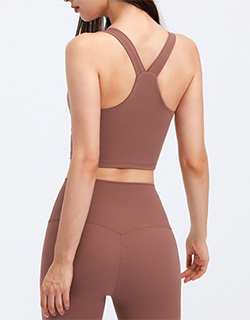
What Is Activewear ODM Manufacturing and How Does It Work?
Activewear ODM definition guide · Evidence checked August 28, 2026
Direct answer: Activewear ODM manufacturing is a development-and-production model in which a supplier contributes an existing design platform, pattern library, material solution or product concept and adapts it for a brand. The brand selects the commercial direction and approves the final product; the ODM supplier handles an agreed share of design engineering, sampling, sourcing and manufacturing. It works best when a brand wants more differentiation than a standard private-label product but does not want to build every specification and pattern from zero.
ODM means original design manufacturing. In apparel, however, the label is not a universal scope standard. One supplier may call a lightly modified catalog style ODM, while another may include concept development, pattern creation and material engineering. Compare written deliverables, ownership and change limits rather than relying on the acronym.
What Activewear ODM Actually Covers
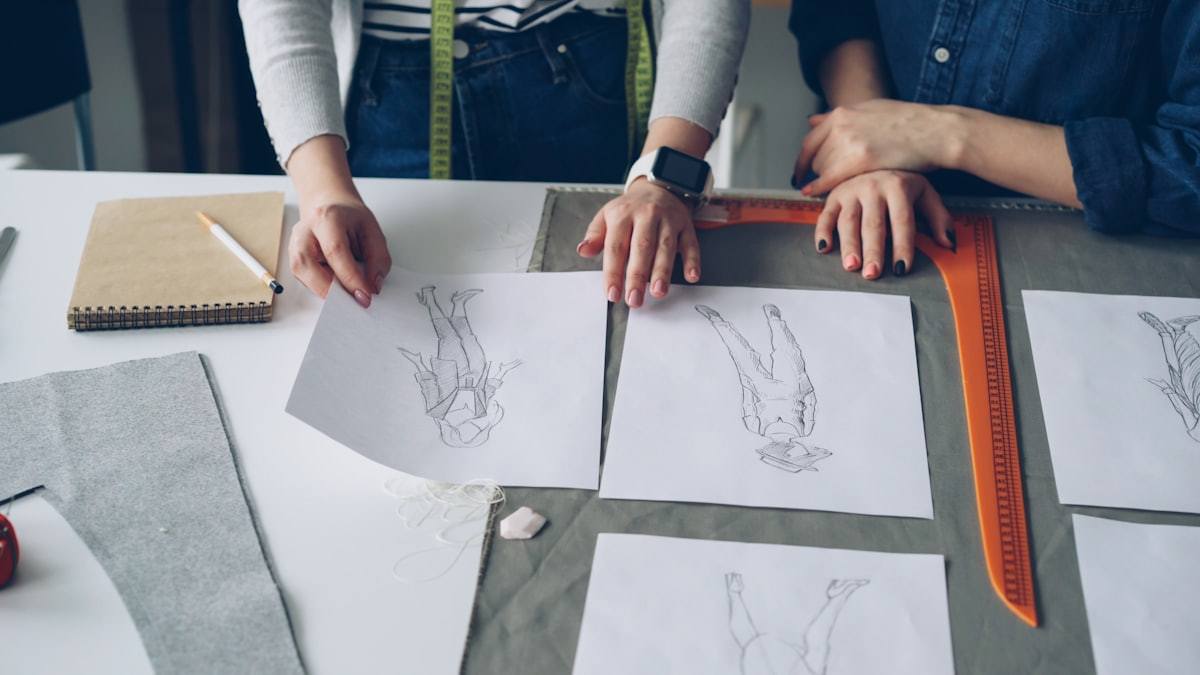
An ODM supplier normally starts with reusable development assets: proven blocks, base patterns, construction methods, fabric knowledge, sample references or a library of product concepts. The buyer then chooses what to adopt and what to change. The resulting style can range from a modest adaptation to a substantially reworked product.
The operating boundary
ODM shifts more development responsibility to the supplier than a buyer-led OEM project, but it does not automatically transfer exclusive ownership. The order should identify the supplier's pre-existing design assets, the buyer's brand assets, newly created files, permitted reuse and any paid exclusivity.
| ODM layer | Typical supplier contribution | Brand decision | Evidence to retain |
|---|---|---|---|
| Design base | Existing silhouette, block, pattern or reference sample | Target customer, activity and commercial position | Selected base-style code and dated images |
| Adaptation | Feasible panel, pocket, neckline, waistband or seam options | Which changes are essential versus optional | Marked drawings and revision log |
| Materials | Available fabric and trim library with sourcing routes | Performance, hand feel, color and compliance requirements | Approved swatches, test plan and supplier references |
| Fit | Base block, pattern adjustment and sample execution | Fit intent, measurement priorities and approval comments | Measurement chart and approved sample status |
| Production | Costing, process setup, purchasing, sewing and inspection | Quantity, delivery target and acceptance criteria | Purchase order, quality plan and inspection record |
ODM, OEM and Private Label in One View
The practical difference is where the project begins and how much original development each party must supply.
- OEM: the brand leads the product definition; the factory manufactures to a buyer-controlled specification.
- ODM: the supplier contributes a design or technical platform; both parties adapt and approve the production version.
- Private label: the brand applies its identity to a relatively standardized supplier product with limited changes.
These categories overlap in real quotations. A catalog legging with a new label may be called ODM by one factory and private label by another. For a broader decision matrix, use the activewear OEM vs ODM vs private-label comparison. For the buyer-led model, read what activewear OEM manufacturing means.
How the Activewear ODM Process Works
- 1
Define the commercial brief
State the target user, activity, selling market, expected retail position, size range, quantity, launch date and target cost basis. Separate must-have performance requirements from preferences.
- 2
Screen the supplier design library
Review physical samples, pattern families, material options and production history. Record the exact base style and revision selected instead of referring to an informal showroom sample.
- 3
Map the adaptation scope
List every requested change to fit, panels, pockets, seams, support, coverage, fabric, color, logo, labels and packaging. Ask which changes create new tooling, patterns, testing, minimums or lead time.
- 4
Confirm rights and commercial terms
Define ownership and reuse for background patterns, modified patterns, artwork, samples and new files. Record any territory, channel or time-limited exclusivity separately.
- 5
Approve materials and prototype
Evaluate fabric identity, stretch, recovery, opacity, color, trims, construction, fit and mobility. Consolidate comments into one controlled document per round.
- 6
Freeze the production specification
Lock measurements, tolerances, bill of materials, artwork, labels, packaging, quality criteria and approved references before authorizing bulk.
- 7
Book inputs and produce
The supplier purchases approved materials, schedules processes, runs pre-production controls and manufactures the order. Substitutions should require written authorization.
- 8
Inspect and capture reorder knowledge
Verify the order against the approved package, close corrective actions and archive the final version. Reorders should reference that version and list any intentional change.
Which ODM Changes Are Usually Low, Medium or High Impact?
This matrix is a scoping guide, not a universal factory rule. The real impact depends on the selected base style, material availability, construction and supplier capability.
| Requested change | Typical impact | Why it matters | Approval evidence |
|---|---|---|---|
| Brand label or packaging artwork | Low to medium | Usually preserves the garment platform but may create component minimums | Artwork proof and packaging specification |
| Stock fabric color from an available card | Low to medium | May avoid custom dyeing but still requires shade approval and stock confirmation | Color standard and lot approval method |
| Logo technique or placement | Medium | Can affect stretch, durability, appearance and setup charges | Technique trial with position measurements |
| Fabric quality or custom color | Medium to high | May change fit, recovery, opacity, minimums, testing and schedule | Approved swatch, test result and material code |
| Pocket, panel or seam redesign | High | Changes pattern pieces, consumption, workmanship and fit risk | Revised pattern/sample and construction detail |
| New support or compression architecture | High | Requires coordinated material, pattern and wear-performance validation | Fit protocol, wear-test notes and final specification |
What a Brand Must Provide
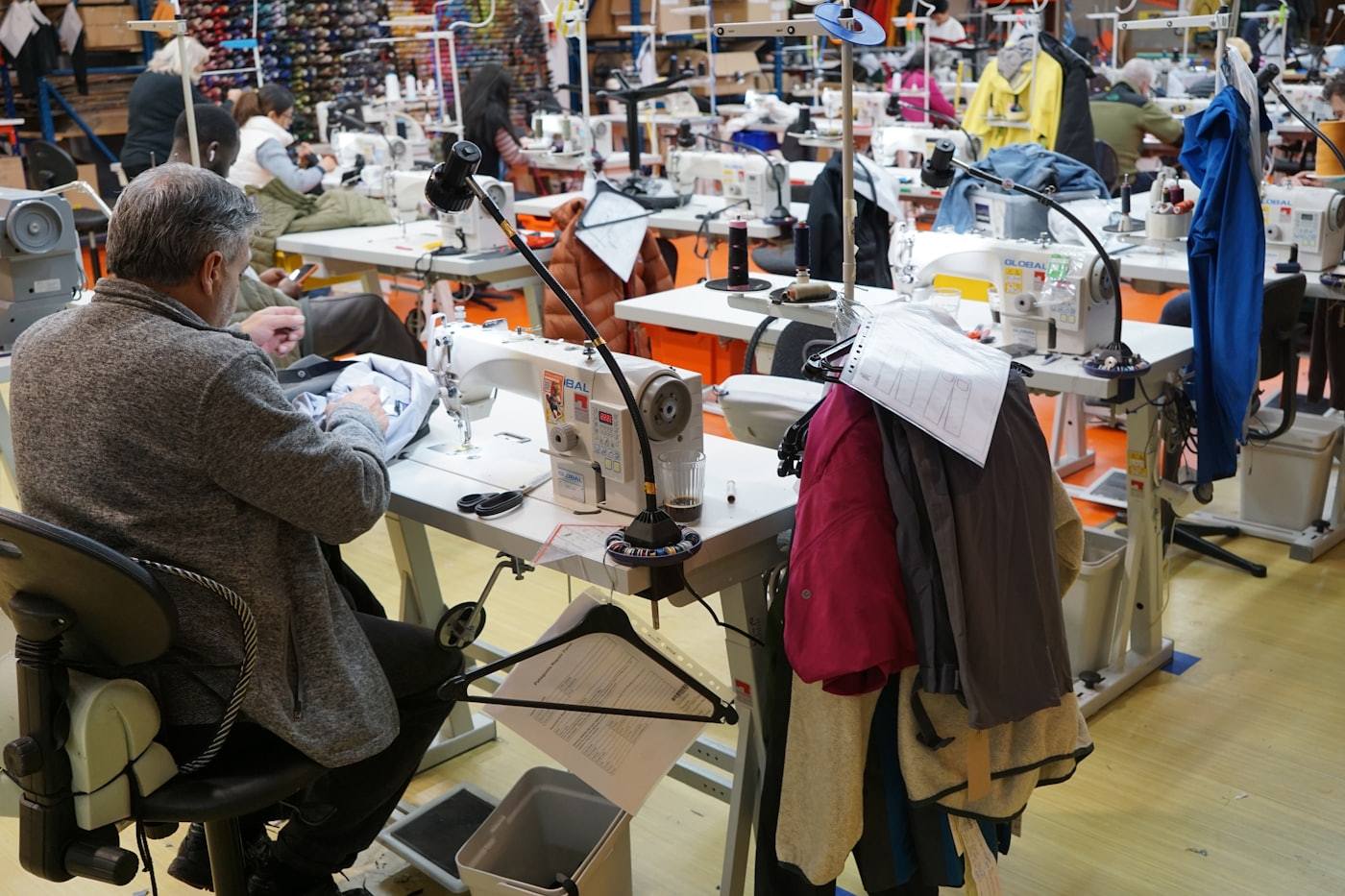
ODM reduces blank-page development, not buyer responsibility. A useful inquiry package includes:
- Target customer, activity and selling market
- Selected supplier base style or reference
- Required versus optional modifications
- Fit intent, size range and priority measurements
- Fabric performance and color direction
- Artwork, logo placement and label files
- Destination-market testing or compliance needs
- Quantity by style, color and size
- Target cost basis and required delivery date
- Approval owner and response-time commitment
- Requested ownership, confidentiality and exclusivity terms
Illustrative ODM Cost Model
Use total landed project cost, not only the quoted garment price. This example is a replaceable planning model and is not an Ohsurewear quotation.
| Input | Example assumption | Calculation | Example result |
|---|---|---|---|
| Bulk order | 2 styles × 2 colors × 120 units | 2 × 2 × 120 | 480 units |
| Base garment value | $11.80 per unit | 480 × $11.80 | $5,664 |
| Adaptation fee | 2 styles × $240 | 2 × $240 | $480 |
| Samples | 2 styles × 2 rounds × $85 | 2 × 2 × $85 | $340 |
| Technique setup | 4 style-color combinations × $30 | 4 × $30 | $120 |
| Material tests | 2 material families × $160 | 2 × $160 | $320 |
| Development total | Adaptation + samples + setup + tests | $480 + $340 + $120 + $320 | $1,260 |
| Development allocation | Development total ÷ units | $1,260 ÷ 480 | $2.63 per unit |
| Modeled product cost | Base value + development allocation | $11.80 + $2.63 | $14.43 per unit |
The model excludes freight, duties, inspection, packaging upgrades, payment costs, rejects and contingency. If the same $1,260 development spend supports 960 units, its allocation falls to $1.31 per unit. This does not mean the larger order is automatically better; inventory risk must be modeled separately.
Illustrative ODM Lead-Time Map
If every stage is sequential, this example totals 60 working days before international transit. Existing materials and a proven base pattern can shorten development, while custom dyeing, major pattern changes, testing, buyer delays, holidays and capacity constraints can extend it. Ask what event starts each quoted stage and which tasks can overlap.
ODM Fit Scorecard
Give the project one point for each “yes.” This is an original planning tool, not a supplier acceptance rule.
- We can select from a supplier design or pattern platform.
- We need controlled changes rather than a fully original product architecture.
- Our must-have changes are written and prioritized.
- We can approve fit, materials, color and branding promptly.
- We accept that supplier background designs may remain reusable.
- Any exclusivity need can be defined by style, market, channel and time.
- We budgeted for samples, adaptation, setup and tests.
- Our quantity and timeline can support affected material minimums.
- We have one approval owner and a revision process.
- We will freeze a final specification before bulk production.
8–10: Strong candidate for a structured ODM quotation.
5–7: Potential fit after clarifying scope, rights or approvals.
0–4: Compare a lower-change private-label route or a buyer-led OEM development plan.
Questions to Ask an Activewear ODM Supplier
| Topic | Question | Document to request |
|---|---|---|
| Starting point | Which exact design, block, pattern and material platform does this quote use? | Base-style record with dated images or sample code |
| Modification limit | Which changes are included, and which trigger a new pattern, fee, MOQ or timeline? | Itemized scope and change matrix |
| Ownership | Who may reuse the base design, modified pattern, artwork and new development? | Ownership and license clauses |
| Exclusivity | Is exclusivity available, and what product, territory, channel and duration does it cover? | Specific exclusivity schedule |
| Minimums | Which minimum is driven by garment, fabric, color, trim, logo or packaging? | Component-level MOQ breakdown |
| Quality | What measurements, tolerances, tests and defect standards control acceptance? | Quality plan and approved references |
| Changes | Who can authorize substitutions, deviations and cost changes? | Change-order workflow |
| Reorder control | Which files, standards and material identifiers will be archived? | Final production package and version log |
Worked Example: Adapting a Supplier Legging Platform
A startup selects a supplier's proven high-rise legging block. It requests a side pocket, a lower waistband seam, a stock nylon-spandex fabric in two available colors and a heat-transfer logo. The supplier identifies the pocket and waistband as pattern changes, while the fabric color and logo remain within existing processes.
The parties record the base pattern as supplier background IP, the startup's logo as buyer IP and the modified production specification as usable only for the startup's orders for 18 months in one named market. Two sample rounds validate pocket access, waistband stability, opacity and logo stretch. Bulk approval is tied to the second sample, measurement chart and material code—not to a showroom garment.
This is an ODM-shaped project because the supplier platform reduced original development, yet controlled modifications, rights and approvals still required written management. The same project could become OEM-like if the buyer replaces the block, material system and construction with its own complete specification.
Frequently Asked Questions
Is ODM the same as private-label activewear?
Not necessarily. Private label usually involves fewer product changes, while ODM normally includes a supplier design platform plus an agreed adaptation process. Supplier terminology varies, so compare the exact starting style, modifications and deliverables.
Does ODM mean the design is exclusive?
No. The supplier may retain and reuse its existing blocks, patterns or concepts. Exclusivity must be written with a clear product scope, territory, channel, duration and remedy.
Can a startup use activewear ODM?
Yes. ODM can suit a startup that has a clear customer and brand direction but limited technical development capacity. The startup still needs an approval owner, development budget and realistic inventory plan.
Can an ODM product be customized?
Yes, within the selected platform's feasible range. Logos, colors and packaging may be lower-impact changes; fabric, fit, panels, support and construction usually require more development and validation.
Who owns an ODM pattern?
Ownership depends on the agreement. Separate the supplier's pre-existing pattern, paid modifications, buyer artwork and any newly created files. Payment alone does not prove transfer of ownership.
Is ODM always faster than OEM?
No. A proven base can reduce early development, but major changes, unavailable materials, custom colors, tests and approval delays can remove the time advantage. Compare stage-by-stage schedules.
Use ODM When a Proven Starting Point Creates Real Value
Activewear ODM works when a supplier's design and technical platform removes useful development work without hiding the brand's responsibilities. The strongest projects identify the exact base style, define every modification, assign rights, approve measurable references and preserve a final production package.
Ohsurewear's current public content describes OEM/ODM support, pattern and sample-room capability, fabric selection, branding, packaging and bulk production. Project-specific design availability, MOQ, adaptation fees, sample timing, production schedule, testing, ownership and exclusivity should still be confirmed in the current quotation.