
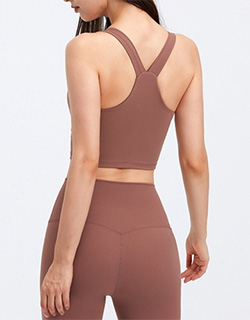
Custom Compression Wear Manufacturing: Fabric, Fit and Quality Control
Turn a supportive-fit concept into an agreed fabric specification, a validated size range and a practical bulk inspection plan.
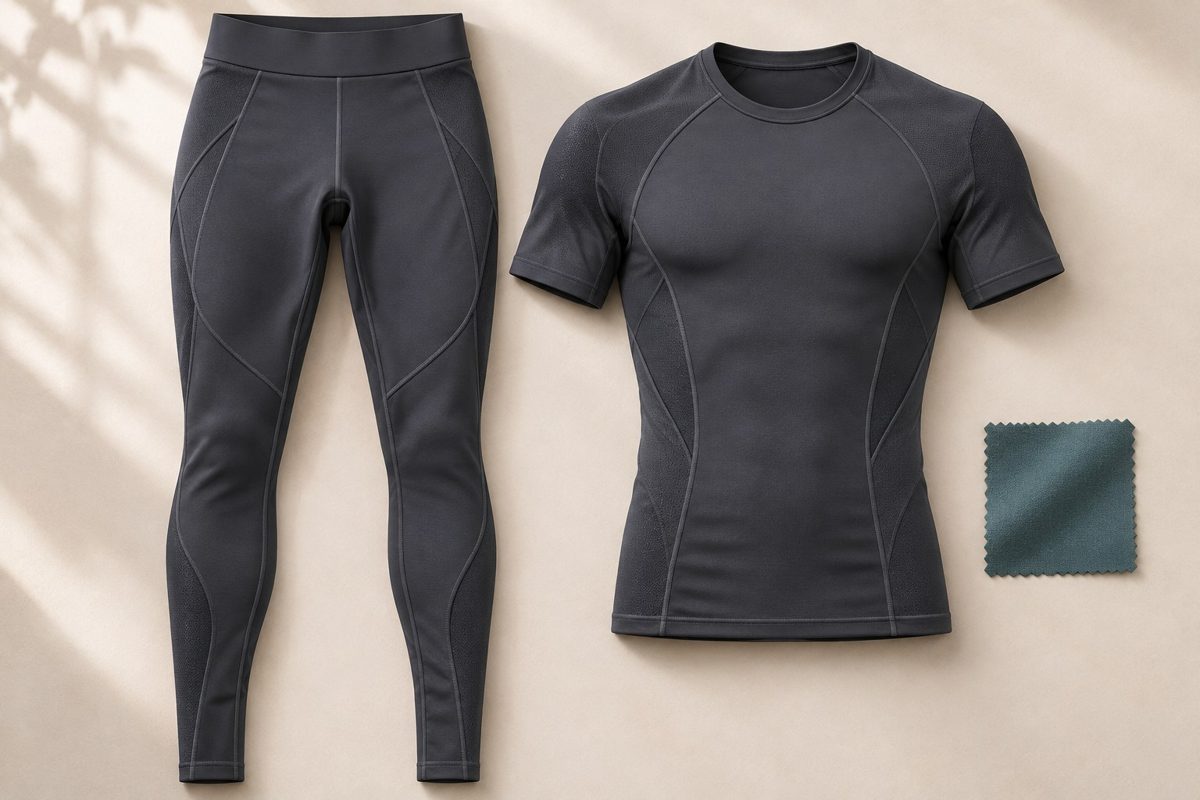
What is compression wear manufacturing?
For this guide, compression wear means close-fitting sports apparel designed to apply supportive tension through its stretch fabric and finished dimensions. The manufacturing task is to control the relationship between the textile, the pattern and the intended wearer. A garment can look fitted while delivering a different feel at the waist, thigh or calf.
Separate three specifications: stretch describes how far material extends under stated conditions; recovery describes how it returns after extension; and garment pressure describes the interface pressure produced under a defined test setup. These measurements answer different questions. A composition label or GSM value cannot substitute for all three.
The LYCRA Company’s fabric technology overview assesses power, comfort and energy as separate dimensions. This is a useful example of evaluating fabric behavior beyond fiber content. It does not establish that any Ohsure fabric qualifies for that proprietary program.
Supportive sportswear versus a measured pressure claim
Begin the brief by stating whether the product needs a subjective supportive feel or a numerical pressure specification. If you intend to state a pressure value in mmHg, require a suitable garment-level protocol that identifies test locations, size, body or form dimensions, posture, conditioning and results. If you intend a graduated profile, define how the pressure must change between locations. Do not infer either property from fabric stretch tests. This guide concerns sports apparel development and does not establish medical suitability or therapeutic benefits.
Compare fabric routes before choosing a blend
Request physical swatches and comparable test data. The table below is a sourcing framework, not a set of guaranteed performance rankings. Knit architecture, finishing and the selected yarns can change the behavior of each option.
| Option | Development focus | Evidence to request | Tradeoff to examine |
|---|---|---|---|
| Nylon/spandex knit | Balance surface feel, extension resistance, coverage and recovery. | Exact composition, GSM, usable width and force–extension data in both directions. | A soft hand does not establish supportive force or opacity when worn. |
| Polyester/spandex knit | Assess the required handle, print route, stretch behavior and color performance. | Same mechanical data, plus print or dye approval and wash results for the selected finish. | Do not assume all polyester blends have the same drying or color behavior. |
| Dense double-knit or interlock candidate | Evaluate structure, weight and extension against the desired silhouette. | Actual knit specification, recovery, coverage and wearer feedback. | Extra weight or density alone does not prove a particular pressure level. |
| Zoned knit construction | Define where the structure or support changes and how every size is produced. | Knit-zone map, finished size set and zone-specific assessment. | Complex zones can add trials and sourcing constraints; confirm production feasibility. |
For a cut-and-sew range, begin with Ohsure’s custom gym leggings product category and activewear fabric guide. These provide starting points for inquiry; ask which exact fabric and construction can support your proposed fit.
Write a mechanical specification, not just a composition
Ask the laboratory and supplier to agree specimen direction, conditioning, test method, extension levels, force units, cycling and recovery measurement conditions. ASTM D4964 covers tension and elongation measurement for elastic fabrics using a constant-rate-of-extension testing machine. Agree the applicable edition and suitability with the laboratory. Naming a standard does not establish that a supplier has performed it or that a result meets your acceptance limits.
Keep a separate record for opacity, pilling, dimensional change, colorfastness and decoration durability. For each, record the procedure, acceptance criterion and responsible party. Use the approved fabric code and lot reference so later orders can be compared with the correct baseline.
How pattern reduction changes fabric extension
Negative ease is the amount by which a relaxed garment circumference is smaller than the corresponding body circumference. It is a pattern-planning quantity, not a pressure rating. Record both the body reference and the finished garment measurement method.
This simplified calculation assumes the circumference expands uniformly and does not account for body shape, fabric direction, seam behavior or local strain. Use it to identify a relevant region of the fabric’s force–extension behavior, then validate the actual garment. A 15% negative-ease example should never become a universal grading rule.
Build the size chart around target body measurements and finished garment specifications. Check the smallest and largest intended sizes as well as the base size. Review waistband roll, rise, gusset position, thigh restriction, calf fit, seam marking and ease of putting the garment on. If a size fails, revisit the pattern and material together before changing the label.
Seven steps from brief to production approval
The following is a recommended buyer workflow. It organizes development decisions and is not a verified Ohsure internal operating procedure.
- Define the end use and claim level. Specify leggings, shorts or top, intended activity, wearer measurements, coverage, support preference and any numerical claims that need evidence.
- Screen fabric candidates. Compare approved swatches and mechanical data under the same conditions. Record composition, construction, GSM, color, width, finish and sourcing minimums.
- Build the first pattern and prototype. Provide a measurement diagram, reference body chart, panel layout, seam requirements, waistband specification and branding position. Mark provisional details.
- Evaluate movement and coverage. Use a consistent sequence such as walking, sitting, squatting and lunging. Record wearer measurements, size, fit observations and garment displacement. A visual wear trial does not replace instrument testing when pressure claims are intended.
- Validate the size set and laundering. Check fit across the planned range. Agree wash and conditioning procedures, then compare measurements, recovery, seams and logos before and after laundering.
- Approve the production standard. Confirm the final fabric, trims, pattern revision, tolerances, workmanship and test criteria. Retain a signed reference sample and record who can approve substitutions.
- Control bulk and release. Confirm incoming material checks, in-process measurements, lot traceability and final inspection. Record failures, corrective action and the release decision against the agreed plan.
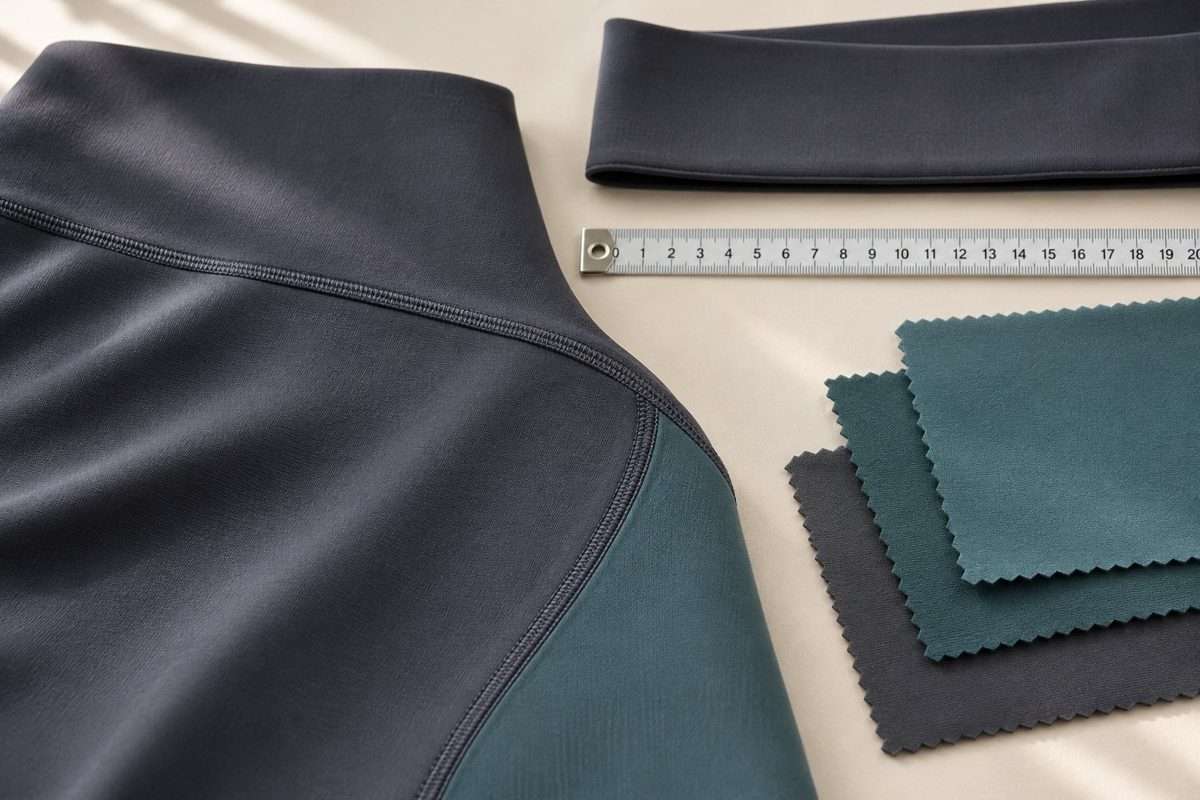
A quality-control plan for compression activewear
Use the following as a draft acceptance framework. Fill in numeric limits with the supplier and laboratory before production; this table is not an Ohsure test report or a universal pass standard.
| Stage | Check | Record before approval | Decision if outside limits |
|---|---|---|---|
| Incoming fabric | Identity, shade, weight, visible faults and agreed mechanical performance. | Fabric/lot code, method, measured results and comparison with approved material. | Hold affected material; investigate before cutting. |
| Size-set sample | Finished dimensions, movement, coverage and intended support. | Measurements, wearer reference, photos and size-specific corrections. | Revise and reassess the affected sizes. |
| In-process sewing | Seam extension, skipped stitches, puckering and waistband assembly. | Approved seam construction, machine setup reference and defect observations. | Correct setup and inspect potentially affected pieces. |
| Wash validation | Dimensional change, shape retention, shade, seams and decoration. | Care cycle, number of cycles, conditioning and before/after results. | Identify material or process cause; repeat agreed checks after correction. |
| Claim verification, if required | Specified garment pressure values or profile. | Protocol, device, locations, size/body reference, results and applicable limits. | Withhold the unsupported claim and resolve the product/test mismatch. |
| Final lot inspection | Measurements, appearance, labels, quantity and packing. | Agreed sampling plan, defect rules, findings and release authorization. | Follow the agreed hold, sorting or reinspection procedure. |
Ohsure’s clothing quality-control page describes raw-material, printing-process, semi-finished and finished-garment checks. Its published items include dimensions, stitching, fabric weight, shade, pilling, colorfastness and shrinkage. Confirm the actual methods, tolerances and sampling rules for your order. These descriptions do not by themselves establish pressure-mapping capability, a laboratory certification or an agreed AQL level.
Control repeat-order drift
Retain the approved material reference, pattern revision and production sample. Ask the supplier to flag changes to fabric source, finishing, elastics, thread or construction before use. A garment that meets relaxed measurements can still feel different if the fabric’s resistance to extension changes. Compare relevant material behavior alongside dimensions when reviewing a replacement lot.
Use the development and acceptance checklist below. For each item, record your method, target, tolerance, actual result and approval owner. The table above provides the core review framework directly on this page.
MOQ, cost and time: what changes the quotation?
Ohsure’s published starting MOQ is 100 pieces per style per color, with mixed sizes available. Confirm final order requirements for the selected fabric, shade, construction, branding and packaging. The custom leggings manufacturing page provides the general MOQ context; it is not a quotation for every compression project.
Quantity example: one legging style in two colors at 100 pieces per color gives 200 pieces in total, assuming those minimums are confirmed for the project. A second style has its own quantity requirement. Confirm the size split, fabric minimum and any unused material responsibility separately.
- Fabric development: stock material versus a custom construction, color or finish changes material commitments and trial work.
- Pattern and size validation: additional sizes, complex panels or repeated fit revisions add development work even when the final order quantity stays the same.
- Testing: define whether the quote includes fabric tests, laundering, garment pressure assessment or external laboratory fees.
- Assembly and branding: specify seams, reinforcement, waist elastics, logo method, labels and packing so quotations cover equivalent products.
- Delivery: confirm freight, inspection, applicable taxes and commercial terms before comparing landed costs.
For planning, separate one-time development charges from recurring garment cost. An illustrative order of 200 pieces with a hypothetical $300 development charge allocates $1.50 per piece before unit price, testing, freight or other charges. This arithmetic example is not an Ohsure price and does not imply that the sample fee is refundable.
Sample timing is confirmed after reviewing the design, materials and customization requirements. Bulk-production timing is confirmed according to the approved specifications, material availability and production schedule. Build the schedule around separate milestones: material approval, first sample, revisions, size-set approval, production, inspection and shipment. Ask what starts each period, which steps can overlap and whether durations use working or calendar days. Do not treat a sewing estimate as a delivered-to-door timeline.
Common mistakes that weaken a compression project
- Choosing by spandex percentage alone. Compare actual fabric behavior and finished fit rather than assuming a higher percentage produces a better garment.
- Making a standard legging smaller. Review panel shape, rise, waistband and material resistance together; uniform reduction can produce uneven fit.
- Approving one size only. Check the intended size range so the base sample does not hide grading problems.
- Using a hand pull as a test report. Use informal handling to screen options, then apply agreed measurable procedures for acceptance.
- Ignoring the finished color and logo. Validate the selected finish, shade and decoration on representative material and garments.
- Using “compression” as evidence of a pressure number. Keep a claim tied to a defined garment test and supporting record.
- Leaving bulk tolerances until inspection. Agree limits, sampling, defect rules and the reference sample before production begins.
Ohsure’s manufacturing context: what to prepare
The supplied Ohsure fact library identifies OEM, ODM and private-label support, including fabric selection, sample development, branding and packaging. Its public OEM/ODM service page is the starting point for discussing project responsibilities. These service categories support an inquiry; specialized compression development and testing still need project confirmation.
A useful manufacturing lesson is to translate “firm but comfortable” into a reference garment, wearer measurements and a written sample review. For example, if a prototype feels acceptable at the hip but the waistband rolls during a squat, document where it moves and review waistband dimensions, elastic and assembly before changing the entire pattern. This is an illustrative troubleshooting scenario, not a claimed Ohsure customer case.
Send a compact brief containing the reference design, garment type, body size chart, finished measurements, support preference, fabric candidates, colorways, size split, quantities, logo files, care expectations and desired delivery window. State any pressure-related claims at the inquiry stage so the required evidence can be scoped before sampling.
Compression wear development and acceptance checklist
For each item, record the style, color, size, sample revision, method and conditions, target, tolerance or acceptance criterion, actual result, supporting evidence, owner and approval date. Resolve open items before production release.
| Stage | Check |
|---|---|
| Brief | End use and claim wording |
| Brief | Body chart and size range |
| Brief | Quantity by style / color / size |
| Fabric | Composition / structure / GSM / width |
| Fabric | Force at agreed extension in both directions |
| Fabric | Recovery and conditioning |
| Fabric | Color and lot reference |
| Fit | Relaxed dimensions and measurement diagram |
| Fit | Negative ease calculation by location |
| Fit | Movement and coverage review |
| Fit | Smallest / base / largest size review |
| Validation | Wash cycles and dimensional change |
| Validation | Seam stretch and workmanship |
| Validation | Logo durability |
| Validation | Pressure protocol and results if claimed |
| Production | Approved sample / pattern / material revision |
| Production | Substitution approval responsibility |
| Production | Incoming and in-process plan |
| Production | Final sampling and defect rules |
| Production | Release owner and shipment milestone |
Frequently asked questions
Which fabric is best for custom compression wear?
Select a fabric against the required support, movement, coverage and care conditions. Compare force–extension behavior, recovery and finished garment fit. Nylon/spandex and polyester/spandex are candidate routes, but composition alone cannot identify the best material.
Does more spandex mean stronger compression?
Not by itself. Request measured behavior for the actual finished fabric and validate the garment. Knit structure, yarns, finishing, pattern dimensions and wearer measurements all need consideration.
Can a tight sample justify a stated mmHg pressure?
No. A pressure number needs a suitable garment-level test with defined locations, size, body or form reference, posture and conditions. A fabric stretch result or subjective fit review does not supply that pressure measurement.
How much negative ease should a compression pattern use?
There is no universal percentage in this guide. Choose a prototype reduction using the intended body chart and fabric behavior, then validate fit and movement across the size range. The worked example explains arithmetic, not a recommended production setting.
What is Ohsure’s MOQ for a compression project?
The published starting point is 100 pieces per style per color, with mixed sizes available. Confirm the actual minimum for your fabric, color, construction, branding and packaging before ordering.
How long do sampling and bulk production take?
Sample timing is confirmed after design, material and customization review. Bulk timing depends on approved specifications, material availability and production scheduling. Request separate approval, production and shipping milestones with clear start conditions.
What should be approved before bulk production?
Approve the fabric and trim references, pattern revision, size set, finished measurements, tolerances, construction, care results, decoration and inspection plan. Include pressure-test evidence if the product will carry a specific pressure claim.
Can Ohsure provide certified medical compression garments?
The supplied fact library and reviewed service descriptions do not establish that capability or certification. Confirm the intended product category, required evidence, facility capability and applicable documentation directly before defining such a project.