
Ohsure Activewear Manufacturing Case Studies: From Concept to Bulk Production
A practical way to assess what a manufacturing example demonstrates—and what your own project still needs to confirm.
What is an activewear manufacturing case study?
A manufacturing case study is a traceable account of a specific project: its starting requirements, development decisions, production scope and recorded result. For a buyer, its value lies in showing how the manufacturer handled a problem similar to the one your collection faces.
A useful account distinguishes a concept sketch, an approved sample and a completed order. These are separate milestones. A photograph of a finished garment can show appearance, but it cannot establish the agreed quantity, inspection result or shipment date. Similarly, positive sample feedback cannot establish repeat-order consistency.
Evidence boundary for this guide: the supplied Ohsure fact library documents service categories and important confirmation points. It does not contain an authorized customer project dossier with complete dates, quantities and before-and-after results. This article therefore combines verified service context, one attributed public case summary and clearly labeled buyer tools. It does not claim independently verified customer outcomes.
A published Ohsure example: sample review and color selection
Ohsure’s public account, Custom Activewear Sample Review and Color Selection Process, reports that a fitness apparel brand reviewed samples positively and continued discussing color options and customization. The page displays an update date of 17 July 2026.
What it supports: an attributed example of sample-stage communication and subsequent color selection. What it does not establish: an independently confirmed client identity, an order quantity, a dated production timeline, a measured defect rate or a completed bulk-delivery result. The page’s update date is not a project start or delivery date. Publication permission for further customer material has not been supplied for this article.
Buyer takeaway: ask for separate records for fit, fabric, color and branding approval. General satisfaction with a sample leaves specific production decisions unresolved. Explore the Ohsure sample case library for other examples, then request evidence relevant to your own garment and order scope.
Compare the evidence before comparing the outcome
Use the same questions for every supplier. A polished story and a technical record serve different purposes; the strongest assessment connects them.
| Evidence | Useful for assessing | Ask to see | Still unproven |
|---|---|---|---|
| Concept or product photograph | Silhouette, visual details and proposed branding | Product reference, date and image context | Fit, bulk quality and delivery performance |
| Sample feedback | What the buyer reviewed and requested | Sample version, written comments and revision response | Whether the changes reached production |
| Approved sample package | The agreed baseline for production | Measurements, material codes, color references and approval record | Whether all bulk units conform |
| Inspection report | Results within the inspected scope | Lot reference, sampling method, criteria, findings and disposition | Uninspected lots or later consumer outcomes |
| Shipment and receipt records | Dispatch and receipt milestones | Agreed target, dispatch record and receipt confirmation | Sell-through, profitability or long-term performance |
When customer confidentiality applies, request redacted records or a permission-cleared technical summary. A useful summary can preserve product category, decision sequence and measurement definitions without exposing customer identities or commercial secrets.
Seven steps from concept to a reviewable bulk project
This is a recommended buyer workflow based on the service scope in the supplied fact library. It is an editorial framework, not a verified Ohsure internal operating procedure or an actual customer timeline.
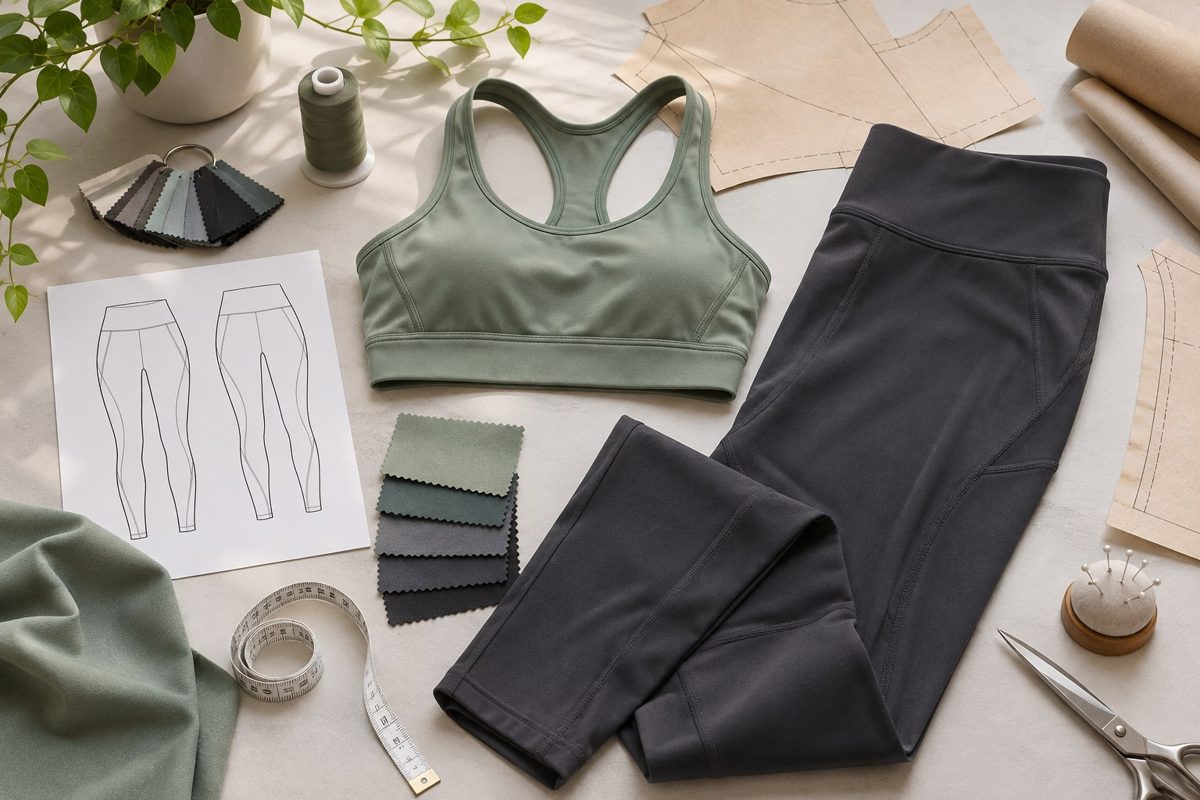
- Define the brief. Identify the garment, activity, target wearer, intended size range and visual references. Separate required features from optional ideas. Assign a style code so comments and quotations refer to the same product.
- Agree the material and commercial scope. Specify fabric composition, construction, weight, color, trims, branding and packing. Record the quantity by style and color, with a size breakdown. Ask which details remain provisional before accepting a development quote.
- Develop the first sample. Supply measurement diagrams and artwork with placement dimensions. Give every sample a version number. Record which material, color and logo details are representative of the intended bulk order.
- Review and revise systematically. Compare measurements with the brief, assess movement and inspect seams and decoration. Write a problem statement, requested change and verification step for each issue. Review the revised sample against the same requirements.
- Freeze the production baseline. Confirm the final sample, material references, size specifications, tolerances, branding and packaging. Identify who can approve changes. A later substitution should trigger a recorded review before use.
- Check bulk against that baseline. Agree the inspection scope, defect definitions and acceptance rules before production. Tie findings to the correct order and lot. Document corrective action and the decision to release or hold affected goods.
- Close the record after delivery. Record dispatch, receipt, quantity discrepancies and agreed follow-up. Keep sample approval, inspection and receipt evidence together so a future reorder begins with the right specification.
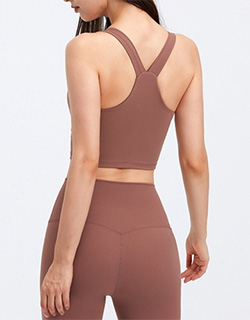
For product-specific discussions, start with the custom gym leggings range or custom sports bras range. Product images are a useful inquiry reference; confirm the exact construction and material for your order.
MOQ, cost and timing: make comparisons meaningful
The supplied fact library gives Ohsure’s standard starting point as 100 pieces per style per color, with mixed sizes available. Final requirements depend on the project. Confirm fabric, decoration and packaging minimums separately.
Compare quotes using the same fabric, size range, quantity, artwork, packaging and inspection requirements. Ask which charges are one-time development costs and which recur on every order.
- Development: patterns, samples, revisions, size-set work and sample shipping.
- Materials and assembly: fabric consumption, color minimums, trims, seams and decoration.
- Verification: agreed tests, inspection and any external laboratory charges.
- Delivery: freight, destination charges and applicable taxes under the agreed commercial terms.
A hypothetical $400 development charge spread over 400 garments adds $1 per garment. At 200 garments, the same charge adds $2 per garment. This illustrates allocation only; it is not an Ohsure quotation, and it excludes garment price and delivery costs.
Sample timing is confirmed after reviewing the design, materials and customization requirements. Bulk-production timing is confirmed according to the approved specifications, material availability and production schedule. The fact library identifies inconsistent published lead-time statements, so this guide does not present one universal number.
Ask for separate milestones for material confirmation, sampling, revisions, approval, production, inspection and transport. Define when each period begins and whether it uses working or calendar days. A fair delivery comparison measures the agreed start and end events; website publication dates cannot substitute for either.
Manufacturing lessons: turn feedback into an approval record
Ohsure’s documented service scope includes OEM, ODM and private-label development, sample preparation, fabric selection and branding. Discuss responsibility for your project through the OEM/ODM service page; use the private-label service page for labels, hangtags and packaging requirements. These capabilities provide context rather than proof of an individual project result.
The practical lesson is to make feedback reproducible. “The waistband feels loose” is a starting observation. Add the wearer’s relevant measurements, sample size, activity, location of movement and sample version. Then agree the proposed correction and how the next sample will be reviewed.
An illustrative revision sequence
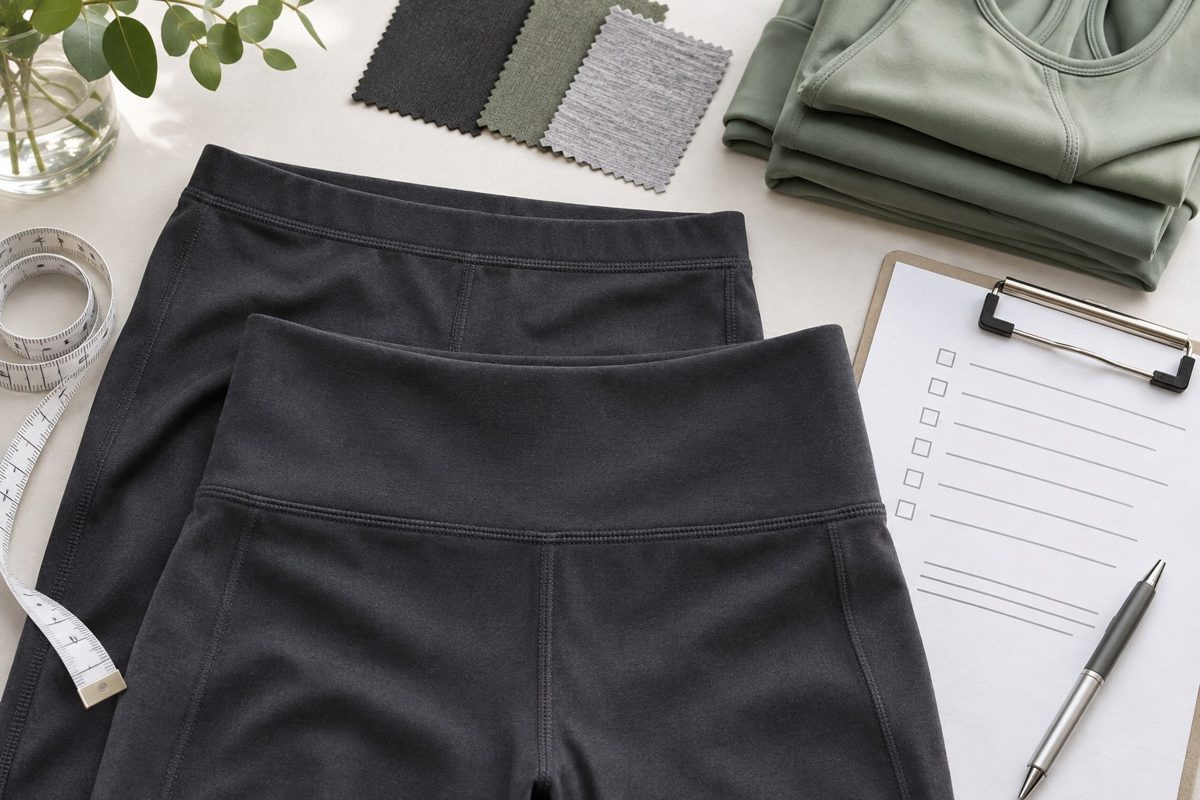
Suppose a brand reviews a legging sample and finds waistband movement during a squat. Record the issue before changing the pattern. Review waistband dimensions, elastic choice and assembly with the manufacturer. Reassess the revised sample under the same conditions, including the agreed care procedure where relevant. Keep both revisions identifiable and request written sign-off on the selected version.
This scenario explains a decision sequence. It does not assert that Ohsure completed this project, achieved a measured improvement or used a particular internal method.
Connect sample learning to bulk inspection
The supplied fact library describes Ohsure’s four inspection stages: raw materials, printing, semi-finished sampling and finished garments. Its quality-control page provides the public inspection context. Agree the methods, tolerances and sampling rules for your order; the existence of a QC page does not establish a specific independent test result.
If waistband movement was the development issue, retain its approved specification in the bulk reference package. If color was the issue, identify the accepted physical reference. An inspection plan becomes more useful when it checks the decisions that mattered during sampling.
Common mistakes when reading manufacturing case studies
- Treating a sample endorsement as a delivery result. Locate the separate bulk inspection and shipment records.
- Comparing different scopes. A single-color repeat order and a newly developed multi-style collection do not have equivalent development work.
- Accepting an undefined improvement percentage. Ask for the baseline, denominator, inspection scope and measurement period.
- Using the wrong approval version. Link the selected sample to the final specification and change log.
- Assuming certification from a fabric name. Request documents that support the exact material or product claim.
- Overlooking permission and image context. Confirm what may be shared, and distinguish real project images from concepts or catalog photographs.
- Leaving acceptance rules until goods are finished. Agree how findings and nonconformities will be handled before production.
A reusable case review worksheet
Use this framework to assess a supplier example or document your own project. “Not supplied” is more useful than a guessed value. Use the review fields below to capture the evidence in your own project record.
| Field | Record | Verification question |
|---|---|---|
| Project scope | Style codes, garment types, colors, sizes and quantities | Does the scope resemble the proposed order? |
| Starting brief | Material, fit, branding and intended-use requirements | Which requirements were fixed before sampling? |
| Revision history | Issue, sample version, change, reviewer and date | Can each change be traced to an approved version? |
| Production approval | Approved sample and specification references | What exactly authorized production? |
| Outcome | Inspection scope, findings, dispatch and receipt dates | Which result is measured, and which is an opinion? |
| Publication permission | Permitted names, images, quotations and data | Is the public version within the agreed permission? |
If tracking defects, define the metric precisely. For example, 4 defective garments among 200 garments inspected is a 2% defective-unit rate in that inspected group. It is not automatically a 2% rate for an uninspected order. Distinguish defective units from defect counts because one garment may contain several defects. This is hypothetical arithmetic, not an Ohsure quality result.
Frequently asked questions
Does this guide contain independently verified Ohsure customer results?
No. It includes an attributed public sample-review summary and documented service context. The supplied materials do not contain a complete authorized customer dossier with independently verified quantities, dates and outcomes.
What does the published sample-review example demonstrate?
Ohsure reports positive sample feedback followed by color-selection discussions. This supports a limited account of sample-stage communication, not a measured bulk-quality or delivery result.
What should a buyer request before relying on a case study?
Request the product scope, sample versions, approval record, relevant inspection evidence and defined delivery milestones. Ask for permission-cleared or redacted records where confidentiality applies.
What is Ohsure’s starting MOQ?
The supplied fact library states 100 pieces per style per color, with mixed sizes available. Confirm final requirements for the chosen fabric, color, branding and packaging before ordering.
How long does concept-to-bulk production take?
Confirm sample timing after design and material review, and bulk timing against the approved specification and production schedule. Include revision, approval, inspection and transport periods with clear start and end conditions.
Can a sample photograph prove bulk consistency?
No. Link the approved sample to written specifications and inspection records for the relevant order. A photograph does not establish measurements, acceptance results or conformity across a production lot.
Can a case study be shared without naming the customer?
A redacted technical account can be useful when it preserves product scope, decisions and evidence. Confirm permission for the information, images and quotations before sharing; anonymity alone does not establish authorization.
What information should accompany a new Ohsure inquiry?
Provide the garment reference, target size range, measurements, fabric preferences, colors, quantity by style and color, logo files, packaging needs and delivery target. Identify performance claims and evidence requirements before sampling.