
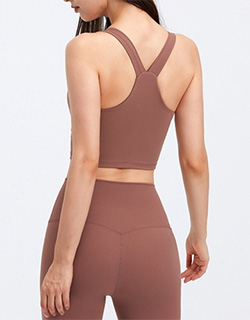
Custom Leggings Sampling: Fit Checks Before Bulk Production
OHSURE • LEGGINGS DEVELOPMENT GUIDE
Quick answer: Before approving custom leggings for bulk production, check garment measurements, waistband stability, rise and gusset comfort, opacity under stretch, seam performance, pocket function, and fit after washing. Test the intended fabric on wearers who represent your target customers, review key sizes, and record every correction in a dated sample approval sheet.
A sample can look right on a hanger and still slide down during training. A useful approval process connects the size chart, the wearer's experience, and the exact materials the factory will use in production.
What Does Custom Leggings Sampling Include?
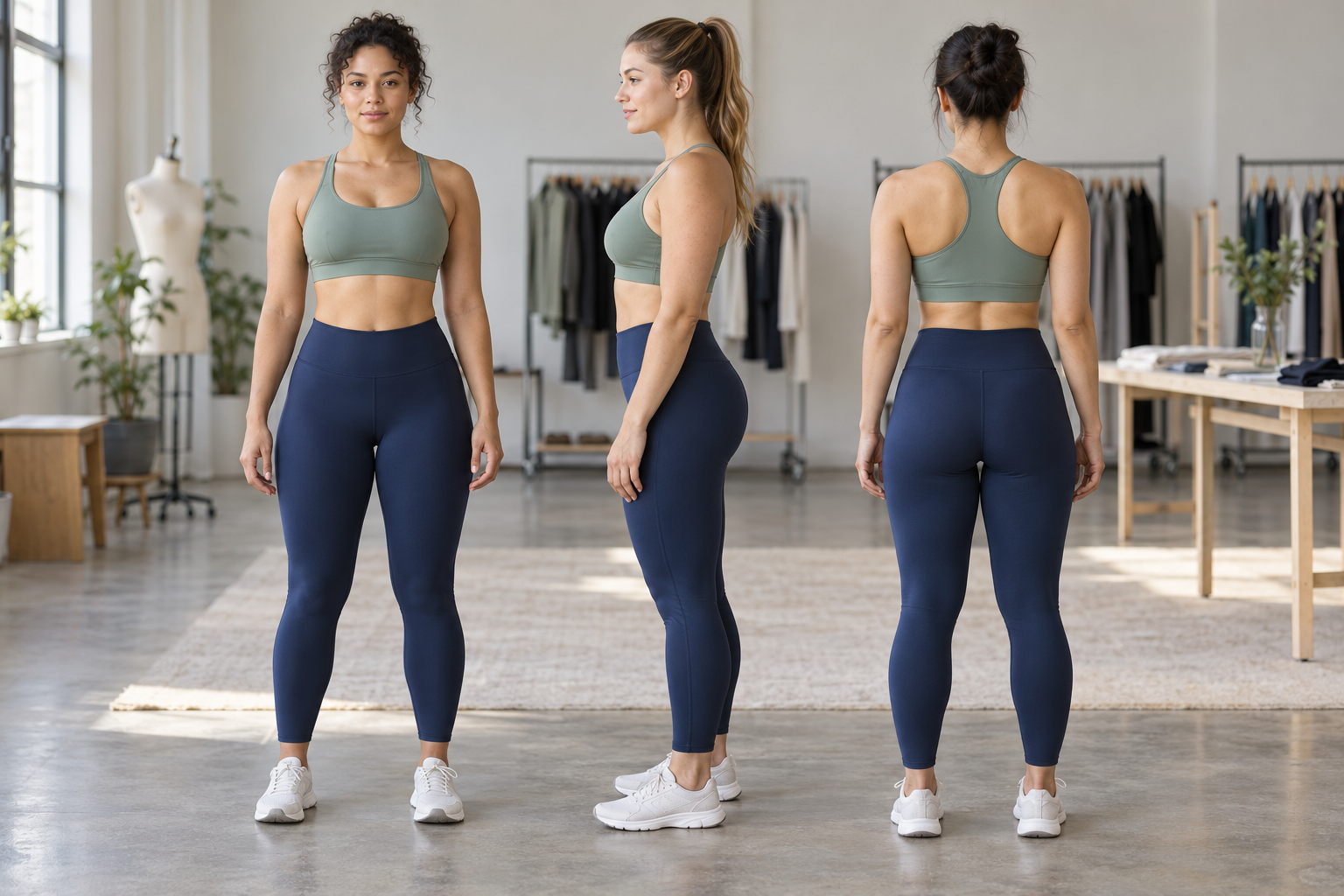
Custom leggings sampling is the development and review of a physical garment before production approval. It checks whether the pattern, fabric, construction and finishing deliver the intended fit. A fit sample may use substitute materials; a pre-production sample should represent the agreed production specification. Ask the manufacturer to identify every substitution.
- Fit sample: evaluates silhouette, proportions and pattern corrections.
- Size-set samples: check how the approved base pattern has been graded across selected sizes.
- Pre-production sample: confirms the agreed fabric, construction, branding and finishing before bulk cutting.
Factories may use different names for these stages. Define the purpose and approval scope of each sample in writing.
Custom Leggings Fit Check Table
| Check | How to review it | Issue to investigate | Approval record |
|---|---|---|---|
| Waistband | Stand, sit, bend and perform repeated squats. | Rolling, slipping, digging or a gap at the back. | Waist measurements, waistband height and construction. |
| Hip and seat | Inspect standing and in a squat from several angles. | Excess tension, loose folds or distorted seams. | Garment measurements plus wearer body measurements. |
| Rise and gusset | Walk, lunge and sit; ask about pressure and rubbing. | Pulling at the crotch, bunching or restricted movement. | Front/back rise, gusset dimensions and pattern revision. |
| Leg and hem | Compare both legs; check knee flexion and ankle opening. | Twisting, calf pressure, excess length or tight hems. | Inseam, thigh, knee and leg-opening measurements. |
| Opacity | Review each color under defined lighting while stretched on the wearer. | Visible underwear or uneven coverage at the seat. | Color, size, lighting, underwear and movement used. |
| Seams and pockets | Move repeatedly; test pockets with the intended phone or item. | Broken stitches, rubbing, pocket bounce or sagging. | Photos, load details and construction comments. |
| Wash and recovery | Compare dimensions and wear fit before and after the agreed care cycle. | Bagging, twisting, shrinkage or logo damage. | Care method, cycle count, measurements and photos. |
Step 1: Define the Customer and Intended Fit
Decide whether the leggings are intended for yoga, training, running or everyday wear. Specify the rise, length and desired feel. Record the fit model's waist, hip, height and relevant leg measurements, with permission, so later reviews use a consistent reference.
Separate body measurements from finished garment measurements. Stretch leggings often use negative ease, meaning the garment is smaller than the body in selected areas. The appropriate difference depends on fabric behavior, construction and intended fit; copying another brand's chart will not automatically reproduce its fit.
Step 2: Measure the Sample Consistently
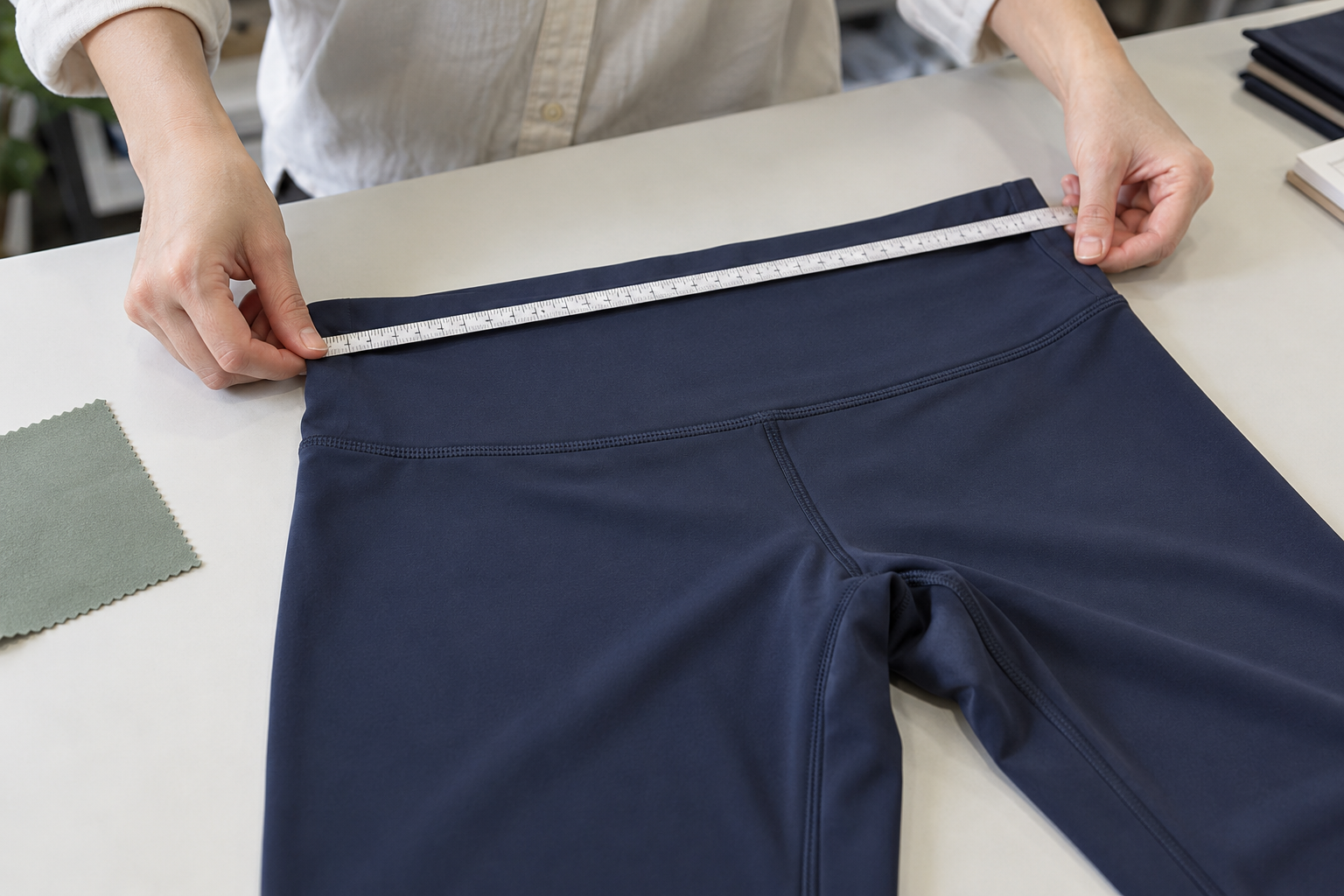
Lay the garment flat without pulling it. Follow an agreed diagram for each point of measurement. State whether waist and hip values are flat widths or full circumferences, and define the location of the hip, thigh and knee measurements. Measure both legs where relevant.
Assign tolerances to individual measurements with the manufacturer. One universal tolerance can be unsuitable for a narrow waistband, a gusset and a full inseam. Passing the measurement chart is one part of approval; the garment still needs to pass the wear review.
Step 3: Test Waistband, Rise and Movement
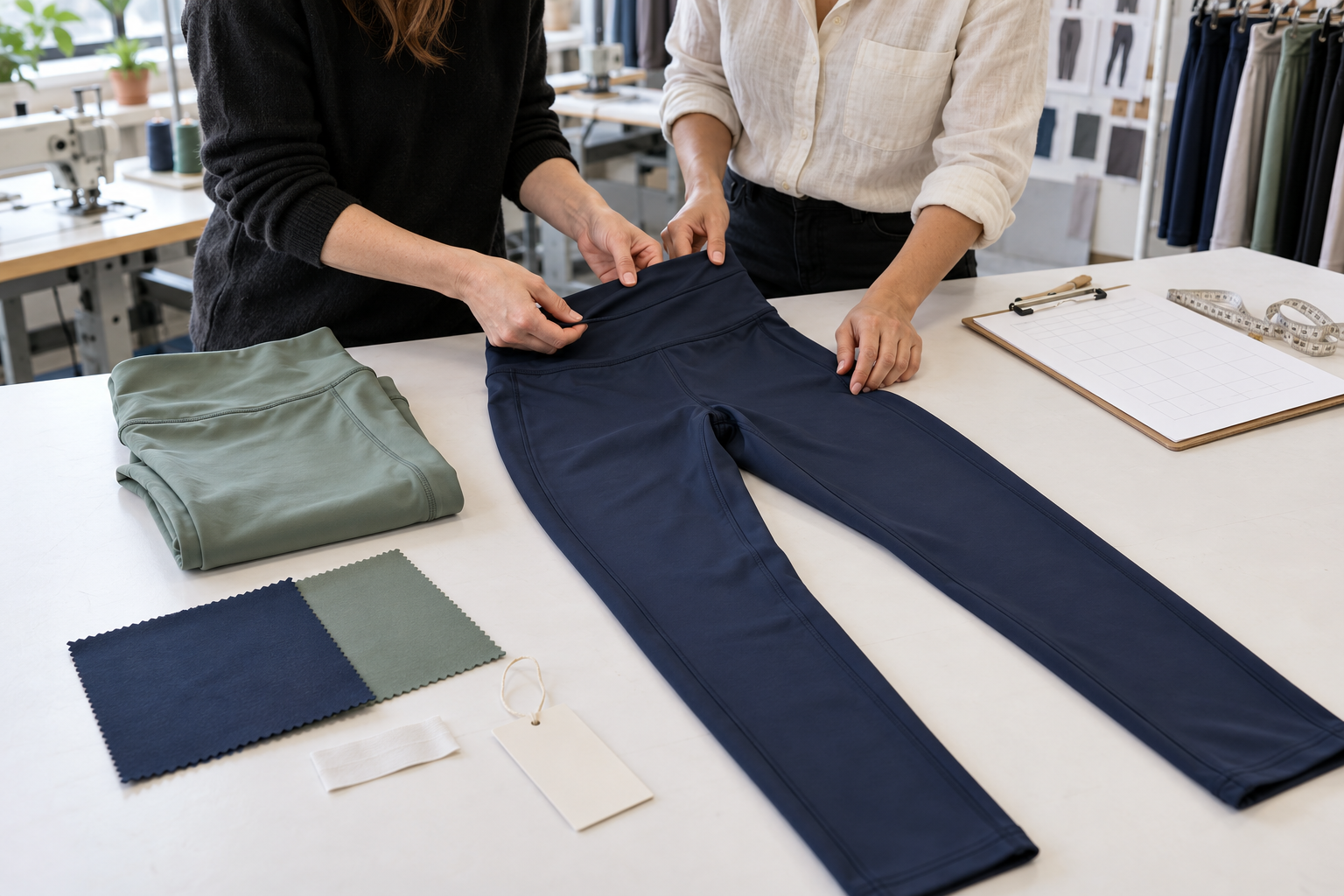
Use a repeatable movement routine: standing, sitting, forward bending, squatting, lunging and walking. Add movements relevant to your customer, such as running or cycling. Record the routine and duration so revisions can be compared fairly.
- Check whether the waistband remains at the intended position without frequent adjustment.
- Ask the wearer about pressure, rubbing and movement restriction.
- Inspect the gusset and crotch seams for pulling, bunching and uncomfortable seam placement.
- Review knee, calf and ankle fit after movement, including seam twisting.
Pattern-review example: If a waistband slips while the hips already feel tight, reducing the entire garment can create a second problem. Review waistband dimensions, rise balance, fabric recovery and construction together, then retest the proposed correction.
Step 4: Review Opacity, Recovery and Construction
Check opacity in the intended size and color under consistent lighting. Include the movement that stretches the seat most during normal use. Approval of black leggings does not establish that a pale color will provide the same coverage. Record your viewing conditions rather than relying on an undefined “squat-proof” claim.
Look for stretched or broken stitches, seam opening, scratchy thread ends and hems that restrict movement. Test pockets with the intended item and examine the garment after wear for persistent bagging. Visual stretch checks are useful for development, but claims about compression, durability or other measured performance need an appropriate agreed test method.
Step 5: Repeat the Review After Washing
Keep an unwashed reference or record baseline measurements and photographs. Wash and dry the test sample according to the proposed care instructions, let it rest under consistent conditions, then measure and try it on again. Agree the cycle count and acceptance limits before testing.
Calculate dimensional change as (after measurement − before measurement) ÷ before measurement × 100 . Record the sign: a negative result indicates shrinkage. Recheck waistband feel, seam alignment, color appearance, pilling and logo adhesion. One wash is an initial screen, not evidence of long-term durability.
Step 6: Check Size Grading and Approve the Production Reference
A successful base-size sample does not prove every size fits. Review a size set appropriate to your range, including the smallest and largest sizes and any sizes where the grading approach changes. Use suitable wearers for each size rather than asking one person to assess the whole range.
Before bulk cutting, confirm that the production reference uses the approved materials and construction. Keep matching, identified approval samples with the brand and factory where practical. Record any change to fabric, elastic, pattern or sewing method and decide what must be resampled.
What Affects Sampling Cost and Timing?
Pattern complexity, new fabric development, custom dyeing, pocket construction, logo setup, size-set coverage and revision rounds all affect development cost and lead time. Ask which sample fees, testing charges, shipping costs and revision rounds are included.
Build the schedule around material confirmation, sample making, transit, fit review, corrections, washing and final approval. Confirm bulk timing separately after the specification is approved. A fabric change late in development can require another fit review even when the pattern remains unchanged.
Common Sampling Mistakes
- Approving photographs alone: photographs cannot establish comfort, recovery or movement performance.
- Testing only one size or color: grading and coverage issues may remain undiscovered.
- Sending vague feedback: replace “too tight” with the affected area, wearer measurements, movement and supporting photos.
- Changing several specifications without a record: identify each revision so the factory knows which version to make.
- Approving substitute fabric for production: identify substitutions and review the final material before release.
A Manufacturing Perspective: Make Feedback Actionable
Ohsure offers custom leggings development and OEM, ODM and private-label activewear services. For your sampling request, connect each comment to a sample version, measurement or specific wear observation. This gives the development team a clearer basis for discussing corrections.
For example: “Style LG-01, sample V2, size M: waistband rolls during seated bending; hip fit is acceptable. Please review waistband construction and confirm the proposed revision before making V3.” Ask the factory to explain the proposed correction and check the revised garment again.
Bulk Production Approval Checklist
- Style code, sample version, approval date and approver are recorded.
- Fabric reference, composition, weight, color and stretch direction are confirmed.
- Measurement chart, measurement diagrams, tolerances and grading are approved.
- Movement, opacity, seam, pocket and wash reviews are completed.
- Branding, labels, care instructions and packing requirements are confirmed.
- All required corrections are closed and the production reference is identified.
- Bulk inspection criteria and the process for approving later changes are agreed.
Sample approval establishes the production reference. Continue with agreed fabric, in-process and final inspections to assess bulk consistency.
Frequently Asked Questions
How many sample rounds should I plan for?
There is no fixed number. A familiar pattern with available fabric may need fewer revisions than a new silhouette or custom material. Budget for corrections and approve the result against your criteria rather than a target round count.
Can I approve a sample made from substitute fabric?
You can approve specific design or pattern details, with the limits recorded. Final fit and performance approval should cover the agreed production material because fabric changes can affect support, coverage and recovery.
Why do leggings slide down even when the waist measures correctly?
The cause may involve rise balance, waistband construction, fabric recovery or the relationship between waist and hip fit. Review the full garment on the intended wearer before deciding which measurement to change.
Do all colors need an opacity check?
Review each production color, especially lighter shades and prints. Coverage depends on the material, color, fit and degree of stretch; a dark sample cannot establish coverage for the full collection.
Does sample approval replace bulk quality inspection?
No. The approved sample defines the reference. Bulk inspection checks whether production follows the approved specification and agreed acceptance criteria.
Prepare Your Custom Leggings Sampling Brief
Send Ohsure your design reference, target size chart, fabric preferences, quantity by style and color, and intended use. Include your fit priorities and the checks you want completed before bulk approval.
Explore custom leggings manufacturing, OEM & ODM services, and private-label customization.
Discuss Your Leggings Sample