How to Choose Logo Printing Methods for Stretch Activewear
OHSURE · ACTIVEWEAR BRANDING GUIDE
Choose a logo printing method by matching it to the fabric, stretch at the logo position, artwork, and order quantity. For fitted activewear, shortlist stretch-compatible transfers or silicone printing, then test the exact combination. Approve adhesion, recovery, appearance, and washing performance on production fabric before confirming the method for bulk manufacturing.
A logo can look sharp on a flat sample and still distort when the garment is worn. For fitness brands developing leggings, sports bras, and fitted tops, decoration should be approved as part of the garment rather than as a separate visual detail.
What Is Stretch-Compatible Logo Printing?
Stretch-compatible logo printing uses an ink or transfer system selected to move with the garment and recover after extension. Performance depends on the complete system: fabric, finish, adhesive or ink, application conditions, artwork, and placement.
Heat transfer is an application category. PU film, printed transfers, and some silicone decorations can all be heat applied. Screen printing is a production process, while silicone describes an ink or material family. Ask for the specific construction rather than choosing by a broad process name alone.
Logo Printing Methods: A Practical Comparison
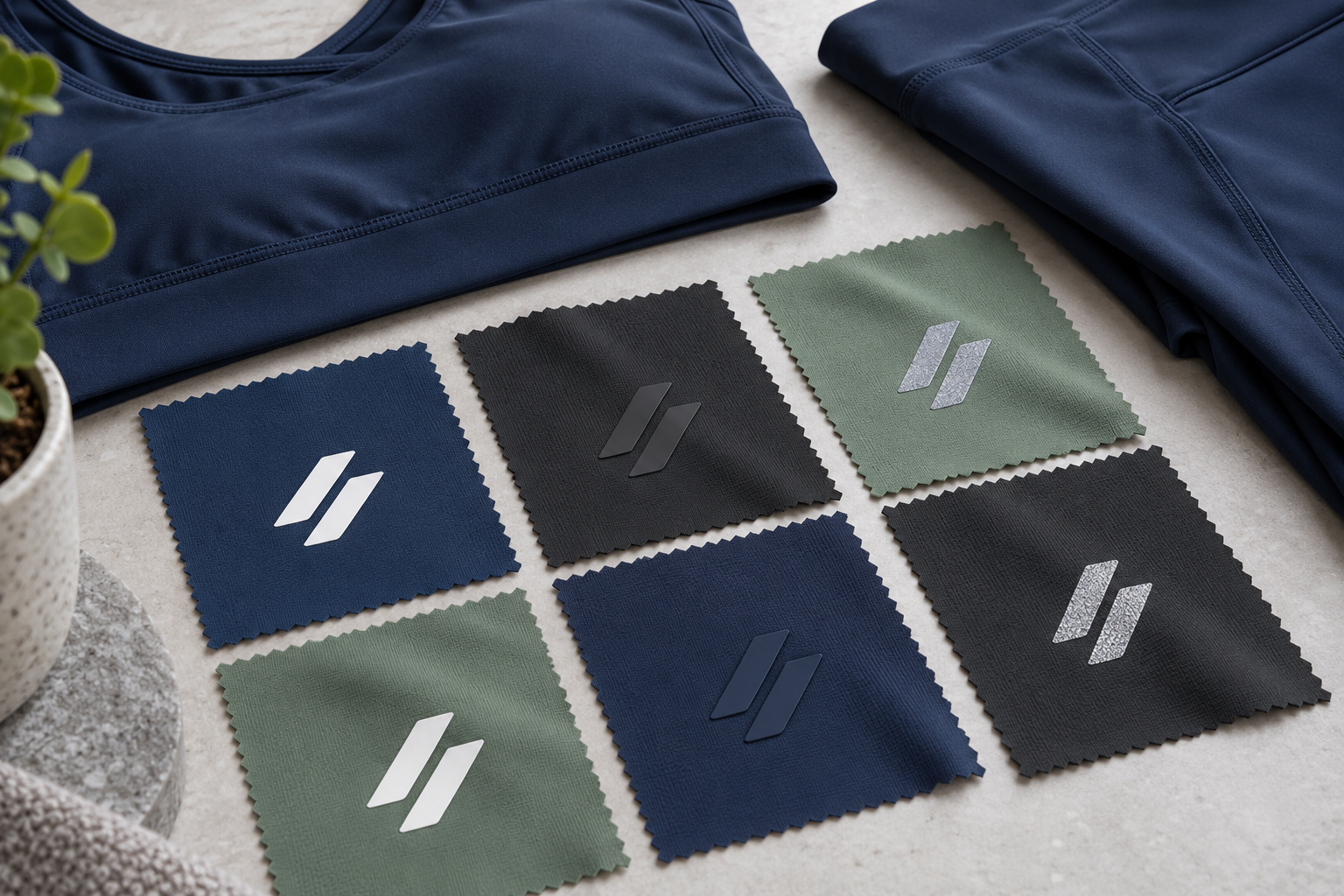
| Method | When to shortlist it | What to verify | Quote considerations |
|---|---|---|---|
| Stretch PU heat transfer | Simple wordmarks or small, clean logos | Adhesive compatibility, stretch recovery, edge lift, and press marks | Artwork size, cutting, weeding, and application labor |
| Silicone screen print or silicone transfer | Matte branding or a dimensional effect | Exact ink or adhesive system, thickness, adhesion, and recovery | Screens or tooling, layers, thickness, and quantity |
| Stretch screen printing | Repeated graphics using a suitable ink system | Fabric compatibility, cure, hand feel, opacity, and bleeding | Setup per color, print coverage, and order volume |
| DTF transfer | Detailed, multicolor artwork when a compatible product is available | Stretch, adhesive feel, edge durability, and the specific nylon or polyester application | Printed area, transfer layout, and pressing labor |
| Reflective transfer | Small visibility details on training or running apparel | Stretch suitability, washing performance, and any claimed reflective performance | Material grade, area, and testing requirements |
| Dye sublimation | Graphics developed into suitable light-colored polyester fabric | Fiber suitability, color reproduction, heat effects, and panel alignment | Printing coverage, artwork preparation, and panel production |
This table is a shortlisting guide, not a durability ranking. One supplier's transfer can perform differently from another product sold under the same general name.
How to Choose the Right Method in Six Steps
1. Confirm the Actual Fabric
Provide fiber composition, weight, knit structure, color, and surface finish. Include whether the fabric is brushed, ribbed, coated, or treated for water repellency. Share the actual fabric when possible: a composition label alone does not establish adhesion.
Nylon requires a compatible decoration system. Polyester needs attention to dye migration, especially when a pale logo is applied to a dark or sublimated ground. A successful test on one fabric does not automatically approve another color or finish.
2. Check Stretch Where the Logo Will Sit
Review the logo position while the garment is worn and during its intended movements. A waistband logo may experience a different extension from a calf or chest logo. Specify the location using measurements from seams or other repeatable reference points.
3. Balance Artwork and Comfort
Submit vector artwork where available and specify the finished dimensions. Ask the decorator to review fine lettering, small gaps, and minimum printable detail. Compare a small logo and a larger version if coverage could affect comfort or garment movement.
4. Shortlist Two Systems
For example, compare a stretch PU transfer with a silicone option for a compact wordmark. For detailed artwork, request a compatible printed-transfer sample. If sublimation is proposed, confirm that the fabric and garment construction support it.
5. Test on the Intended Fabric and Color
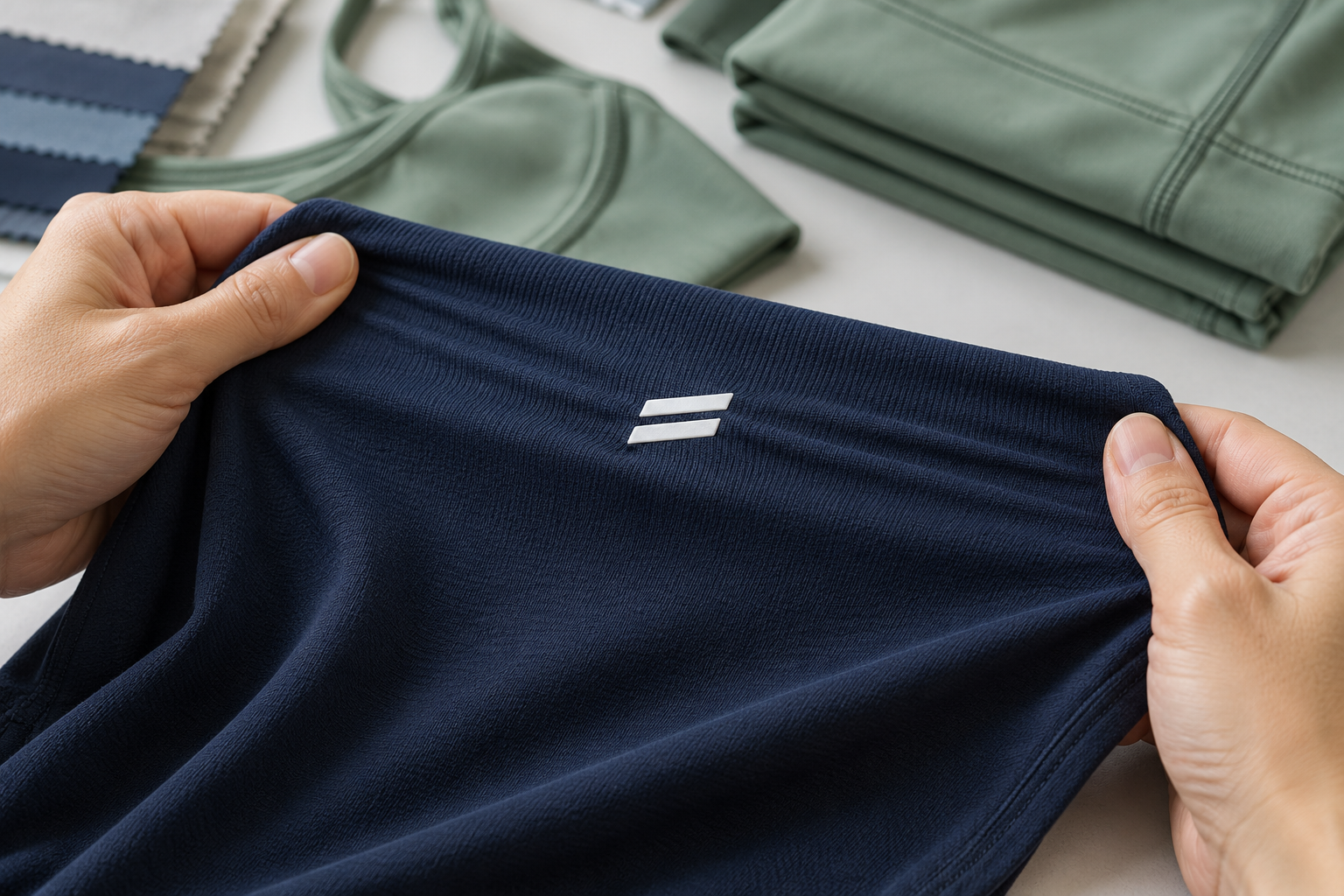
Request a strike-off: a small decoration trial on the intended substrate. Review both a fabric swatch and a finished garment where placement or fit matters. Keep an undecorated control to identify fabric changes caused by the application process.
6. Record the Approved Specification
Keep an approved physical sample and document the material reference, artwork version, size, color, placement, and care instructions. The production team should retain the relevant application or curing settings and acceptance criteria.
What Should You Check Before Bulk Approval?
- Appearance: Check color, opacity, edges, fine details, and position against the approved sample.
- Extension and recovery: Agree on a stretch level that represents use; inspect for cracking, distortion, or lifting after release.
- Adhesion: Inspect edges after the specified conditioning period and after washing.
- Wash performance: Agree on the wash method, drying method, number of cycles, and acceptance criteria before testing.
- Color stability: Include a delayed inspection for possible dye migration; do not rely only on appearance immediately after pressing.
- Garment condition: Check for shine, press outlines, puckering, stiffness, or reduced fabric recovery.
What Affects Logo Cost and Development Time?
Compare quotes using identical artwork, dimensions, colors, placements, fabric, and quantity per version. Ask suppliers to separate setup, decoration, application, sampling, and any additional testing costs. A unit price without these details can hide meaningful differences.
Development time depends on material availability, artwork revision, tooling, strike-offs, conditioning, and wash testing. Allow time for a revised sample if the first trial fails. Request a project-specific schedule rather than assuming logo approval fits inside the garment's normal sampling window.
Common Mistakes to Avoid
- Approving a logo on cotton when the final garment uses nylon-spandex.
- Assuming every DTF, silicone, or heat transfer product offers the same stretch performance.
- Selecting a temperature without checking the specific material supplier's instructions and the fabric's response.
- Increasing logo size without reviewing comfort, stretch, and placement again.
- Approving only a digital mockup or a photograph.
- Treating a reflective appearance as proof of certified high-visibility performance.
A Manufacturer's Perspective: Approve the Whole Combination
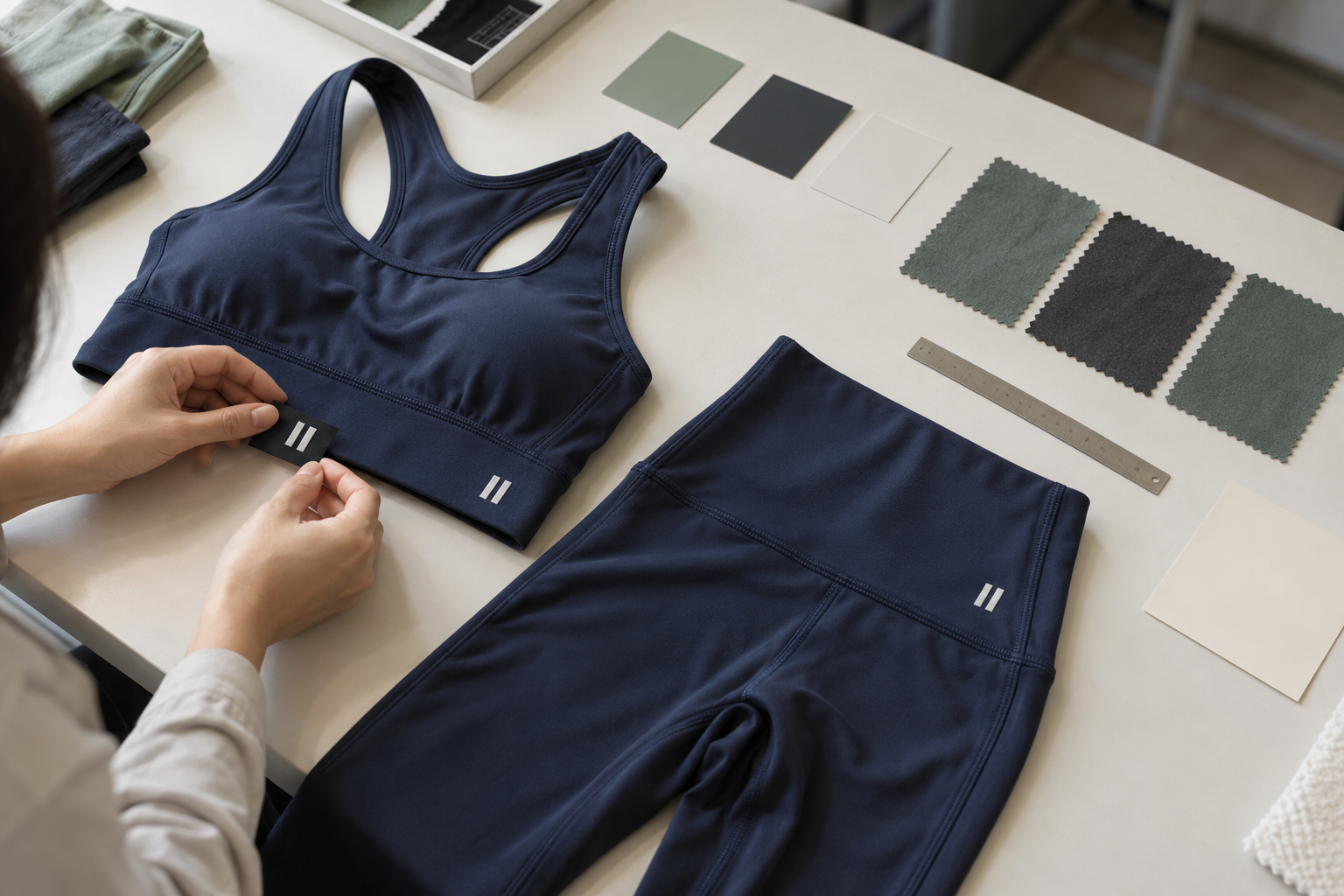
The useful approval unit is the fabric, color, logo, placement, and process together. Changing one part should trigger a review of whether another trial is needed. This is particularly relevant when sports bras and leggings use different fabrics within the same collection.
Ohsure's custom gym wear manufacturing services include logo decoration and private-label options. Share your fabric requirements and artwork early so the proposed finish can be evaluated during development. Browse the activewear collection, including leggings, sports bras, and sets when planning the garments that need branding.
Frequently Asked Questions
What is the best logo printing method for leggings?
There is no single best method for every legging. Shortlist a compatible stretch transfer or silicone system, then compare it on the intended fabric at the actual logo position.
Can DTF printing be used on stretch activewear?
Only approve a specific DTF system after testing it with the intended fabric and garment use. Ask the supplier to confirm substrate compatibility and evaluate stretch recovery, feel, adhesion, and washing.
Is silicone always better than PU transfer?
No. Compare the actual products, logo dimensions, finish, and sample results. A silicone effect may suit one design, while a thin PU transfer may better suit another.
Can the same logo be used on a sports bra and leggings?
The artwork can match, but each fabric and placement should be evaluated. Different stretch levels or surface finishes may require different application settings or material choices.
Why does a white logo change color on polyester?
One possible cause is dye migration from the fabric into the decoration. Ask the supplier to investigate and trial a suitable dye-blocking system; reducing heat alone does not guarantee success.
Can sublimation print a white logo onto black nylon leggings?
Conventional dye sublimation is not the appropriate route for that combination. It is intended for suitable polyester substrates and works best on white or light backgrounds. Review an opaque, nylon-compatible decoration instead.
Plan Your Activewear Logo With Ohsure
Send your logo file, garment reference, fabric composition, color, desired logo size, placement, and estimated order quantity. Ask for compatible options, a sample plan, and a quote based on the same specification.
Discuss Your Logo RequirementsTechnical References
These references describe specific materials and processes. Their application settings should not be treated as universal instructions.