
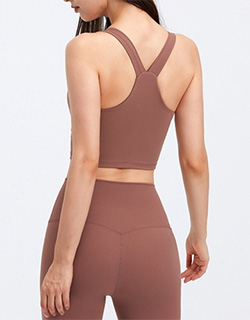
How to Match Colors Across Sports Bras and Leggings
OHSURE • ACTIVEWEAR DEVELOPMENT
To match colors across sports bras and leggings, start with one physical color standard, develop lab dips on each actual fabric, and approve both materials together under agreed lighting. Check finished garments for differences caused by texture, stretch, lining, and finishing. Before shipment, verify bulk shades by dye lot and keep compatible tops and bottoms paired.
A matching set can look coordinated in a design file but arrive with a bra that appears warmer, darker, or shinier than the leggings. For private label brands, color matching needs to be part of fabric selection, sampling, and bulk quality control—not a final check after sewing.
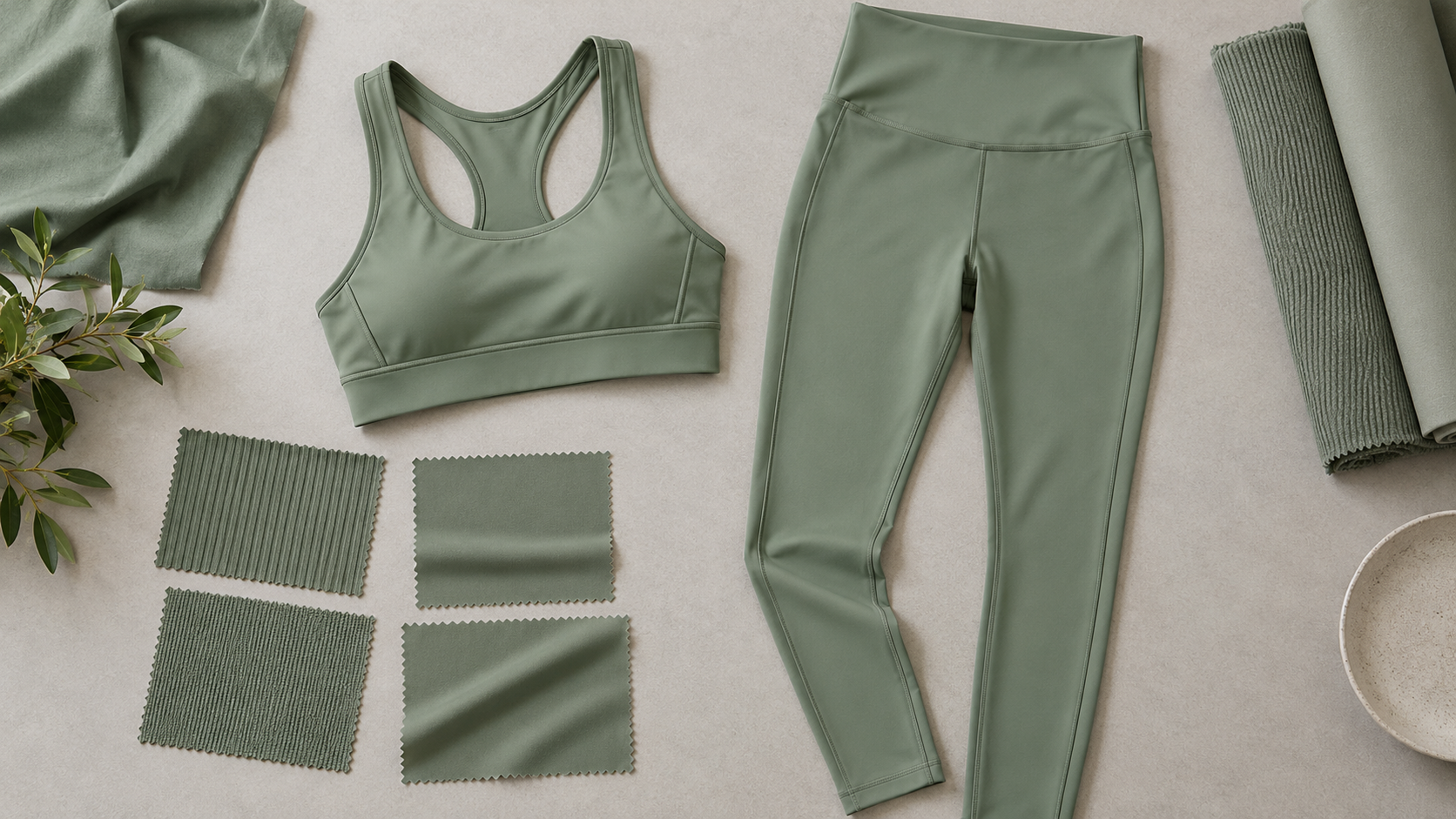
What Does Color Matching Mean in Activewear Manufacturing?
Color matching is the process of developing and checking materials against an agreed reference so that the finished products meet the buyer's visual and measurable requirements. For a sports bra and leggings set, this includes both the individual garment colors and how the two garments look beside each other.
A shared color name or Pantone reference communicates the target. It does not guarantee identical appearance across different fibers, knit structures, or surface finishes.
| Variable | Possible effect | Recommended control |
|---|---|---|
| Fiber composition | Nylon-rich and polyester-rich fabrics may require different dye systems. | Develop and approve a separate lab dip for every fabric base. |
| Knit and surface finish | Rib, smooth interlock, and brushed surfaces reflect light differently. | Assess the intended finished surfaces together. |
| Fabric weight and opacity | Backing or lining can influence the apparent shade of less opaque fabric. | Compare swatches consistently and check assembled garments. |
| Stretch during wear | Opening the knit can change coverage and apparent color. | Check the garments at representative wearing stretch. |
| Light source | Two materials may match under one light and differ under another. | Approve under specified primary and secondary lighting. |
| Dye lot and finishing | Separate production runs can show shade variation. | Track lots and approve bulk fabric before cutting. |
Understand Metamerism Before Approving a Set
Metamerism occurs when two materials appear to match under one light source but differ under another. Different fiber and dye combinations can increase this risk. A match under office lighting alone is therefore insufficient for a set intended to be worn in daylight and indoors.
Specify the lighting conditions used for approval. A controlled daylight simulator such as D65 may serve as the primary condition, with a second light source selected for the intended retail or use environment. Record both conditions rather than relying on the phrase “normal light.”
How to Match Sports Bra and Legging Colors: 7 Steps
1. Set One Physical Master Standard
Provide an agreed textile color reference or an approved fabric swatch. Record its identifier, date, and revision, and make sure the brand, garment manufacturer, and dye house are working from consistent references.
Screenshots, phone photos, and hexadecimal codes can communicate design intent but should not be the sole production approval standard.
2. Confirm Both Fabric Specifications
Document the fabric code, fiber composition, weight, knit structure, and final finish for each garment. Include mesh, binding, elastic, and other visible components.
Using the same suitable fabric base for both garments can simplify matching, but support, compression, and comfort still need to meet the product brief.
3. Request Lab Dips on Each Actual Fabric
A lab dip is a small dyed fabric sample submitted for color approval before bulk dyeing. Request one for the bra fabric and another for the legging fabric whenever their bases differ.
Label each submission with its fabric code and dip reference. A swatch on a substitute material is not enough to approve the intended production fabric.
4. Approve the Two Materials Together
Place the bra and legging lab dips beside the master standard and beside each other. Review lightness, hue, and saturation, then repeat the comparison under the agreed secondary light.
Use a neutral background and consistent fabric orientation. Give specific feedback such as “bra fabric appears redder than approved leggings fabric” instead of “color looks wrong.”
5. Agree Measurement and Visual Acceptance Rules
If instrumental measurement is used, document the color-difference formula, tolerance, illuminant, observer setting, instrument geometry, and sample presentation. A Delta E result is incomplete without its method.
CMC and CIEDE2000 are different calculations, so their numeric limits should not be treated as interchangeable.
Set commercially achievable limits with the supplier using representative samples. There is no single Delta E threshold that automatically guarantees an acceptable match for every fabric and color.
Check the pair, not just each fabric: Two materials can each meet a master tolerance yet differ noticeably from each other. Require a side-by-side visual review of the sports bra and leggings as a coordinated set.
6. Check a Finished Sample Set
Review the assembled bra and leggings together. Bra lining, cups, elastic tension, seams, and the stretch of the leggings can change the appearance compared with flat swatches.
Check both relaxed and representative wearing conditions, using a suitable fit model or form where appropriate.
7. Record Approval Before Bulk Dyeing
Keep the approved references, fabric specifications, lighting conditions, measurement requirements, and written decision in the production file.
Label any sample that is approved for fit only. A fit approval should not accidentally become authorization for an unapproved bulk shade.
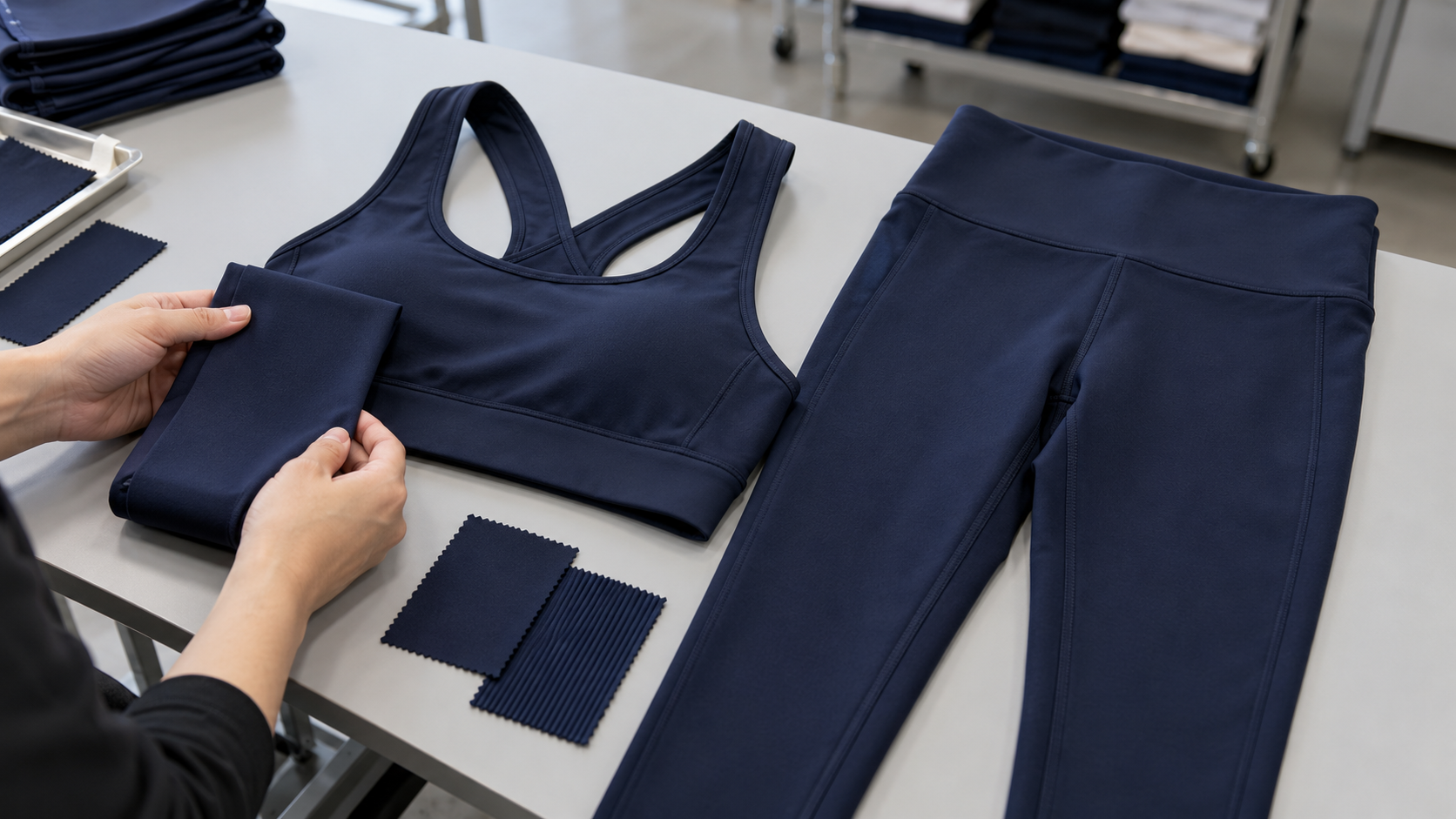
Control Color During Bulk Production and Reorders
Lab dip approval establishes the direction for bulk dyeing; it does not remove the need to inspect production fabric. Request bulk shade submissions before cutting and agree how variation between rolls, lots, or positions within a roll will be handled.
- Identify every lot: Keep dye-lot and fabric-roll references traceable through cutting, sewing, and packing.
- Group compatible shades: Segregate shade groups and avoid mixing incompatible panels within one garment.
- Check the pairing: Compare actual bulk bras with actual bulk leggings before releasing them as matching sets.
- Plan separate sales: If customers can buy tops and bottoms independently, control compatibility across the full available stock rather than relying only on prepacked pairs.
- Keep retained samples: Store approved bulk swatches and finished references with their production records for later comparisons.
For a reorder, compare the new fabric with the approved master and relevant existing stock. Ask whether the customer must be able to pair a newly purchased bra with leggings from an earlier production run. That requirement should be agreed before the new order is dyed.
Check Color Durability as Well as the Initial Match
Agree suitable wash, perspiration, and rubbing tests for the intended product and market. Initial color matching and colorfastness are separate requirements.
Compare the set after the agreed care procedure as well, because the two materials may change differently after laundering.
What Affects Color Matching Costs and Lead Times?
| Decision | Cost or timing implication | Question to ask |
|---|---|---|
| Stock fabric colors | May reduce development, but available shades may not coordinate across fabrics. | Can we see both actual stock fabrics together? |
| Custom dyeing | Can introduce separate fabric minimums and development charges. | What is the minimum per fabric base and color? |
| Multiple lab dip rounds | Additional dyeing, review, and courier cycles can extend development. | How many submissions are included, and when is each approval due? |
| Different surfaces and trims | More components require additional submissions and coordination. | Which visible components need separate approval? |
| Bulk shade correction | May require reprocessing or replacement before cutting. | What happens if bulk fabric fails the agreed shade requirements? |
| Testing and retained stock | Laboratory work and reserved material may add charges. | What is included, and who owns leftover fabric? |
Request separate milestones for lab dips, finished sample approval, bulk fabric approval, and garment production. Confirm whether the quoted manufacturing lead time starts after all color approvals and materials are ready.
A garment MOQ does not automatically satisfy a dye house's minimum for each fabric and shade.
Common Color Matching Mistakes
- Approving from photos only: Camera exposure, white balance, and screens can conceal or introduce differences.
- Using one dip for two fabrics: Different bases need individual development and paired review.
- Checking only against the master: Evaluate the bra and leggings directly against each other too.
- Ignoring lining and trims: A coordinated outer fabric can still look inconsistent once the garment is assembled.
- Mixing dye lots without checking: Treat lot identity as part of set quality control.
- Promising perfect matching everywhere: Define realistic approval conditions and acceptance criteria in writing.

A Manufacturer's Development Checklist for Matching Sets
For an Ohsure development inquiry, send the top and bottom specifications together. State whether you need a close tonal coordination or a visually matching solid-color set. This distinction helps the team review suitable materials and identify approvals required before production.
Include in your brief: physical color reference; bra and legging fabric specifications; visible trim requirements; quantities by style, color, and size; target market; intended care instructions; lighting and acceptance requirements; and whether future reorders must coordinate with existing stock.
Explore custom sports bras and the leggings and activewear product range . For development support, review Ohsure's OEM and ODM services and private label options .
Frequently Asked Questions
Can sports bras and leggings match if they use different fabrics?
Yes, an acceptable visual match may be achievable, but each fabric needs its own development and both must be approved together. Texture and sheen can remain different even when the shades coordinate closely.
Is a Pantone number enough to approve production?
It identifies a target within a specified color system. Production approval should also include actual fabric submissions, agreed viewing conditions, and a documented decision. Confirm the full reference and physical standard being used.
Do black sports bras and black leggings still need color approval?
Yes. Black materials can differ in depth, undertone, and sheen. Check them together under the agreed lighting and in finished garment form.
What is the best Delta E tolerance for activewear sets?
There is no universal value. Agree the formula, measurement conditions, and commercially acceptable limits with the supplier, then confirm that the instrumental limits support an acceptable visual match between the garments.
Can stock colors work for a small order?
They can, provided the available bra and legging fabrics coordinate acceptably. Request physical samples from the intended stock and confirm lot availability before placing the order.
Will a repeat order match the first order exactly?
Do not assume it will. Review new bulk submissions against the master and retained previous-batch samples. If customers will mix batches, make that compatibility requirement explicit before ordering.
Develop Your Next Coordinated Activewear Set
Send Ohsure your sports bra and leggings designs, fabric preferences, color reference, and planned quantities. Ask for a coordinated fabric and color approval plan before committing to bulk production.
Explore Custom Activewear DevelopmentTechnical Reading
The workflow above is practical development guidance; acceptance limits and tests must be agreed for the specific order.