
Private Label Activewear: What Can You Customize on an Existing Style?
Quick answer: On an existing activewear style, you can often customize logos, labels, hangtags and packaging. Available fabric colors may also be selectable. Changes to fabric, measurements, pockets or construction depend on whether the garment is finished stock or made to order, and can require new samples, higher minimums and additional development time.
What Does “Existing Style” Actually Mean?
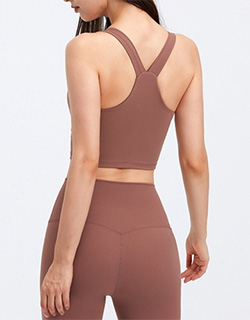
An existing style is a garment design the supplier already has, such as a high-waist legging, racerback sports bra or training T-shirt. It provides a starting point for your collection, but does not automatically mean finished garments are available or every detail can be changed.
Finished stock or blanks
The garments have already been cut and sewn. Customization usually centers on accessible logo placement, permitted label changes and packaging. Fabric, seams and dimensions are already fixed.
An existing pattern made to order
The supplier starts production after your specifications are approved. This can allow more choices, including materials, colors and some measurements, subject to feasibility and material minimums.
Before comparing quotations, ask: “Are you branding finished stock, or producing new garments from an existing pattern?” That answer determines which requests are practical.
Private Label Activewear Customization: What Is Usually Possible?
This table is a planning guide, not an availability guarantee. Ask your manufacturer to confirm each option against the selected style, fabric and quantity.
| Customization | Finished stock | Made from an existing pattern | What to approve |
|---|---|---|---|
| Logo application | Often possible where equipment can access the garment | Often possible before or after assembly | Method, dimensions, position, color and stretch behavior |
| Brand labels and hangtags | Subject to existing label construction and access | Usually easier to plan into production | Artwork, material, placement and required product information |
| Packaging | Often possible | Often possible | Bag, sticker, barcode, folding and carton requirements |
| Garment color | Limited to actual stock | Stock fabric shades or approved custom dyeing | Physical color reference, material availability and dye minimum |
| Fabric | Cannot be replaced without remaking the garment | Possible if suitable for the pattern and construction | Composition, weight, stretch, recovery, opacity and hand feel |
| Sizes and measurements | Available stock sizes only, except assessed alterations | May require pattern and grading changes | Size chart, measurement method, tolerances and fit samples |
| Pockets, straps and seams | Usually impractical as a simple branding service | May require pattern and construction development | Revised drawings, construction sample and functional checks |
| Exclusive design | Branding alone does not create exclusivity | Requires an explicit agreement | Scope, duration, territory and design or pattern rights |
1. Logos: Customize the Application, Not Just the Artwork
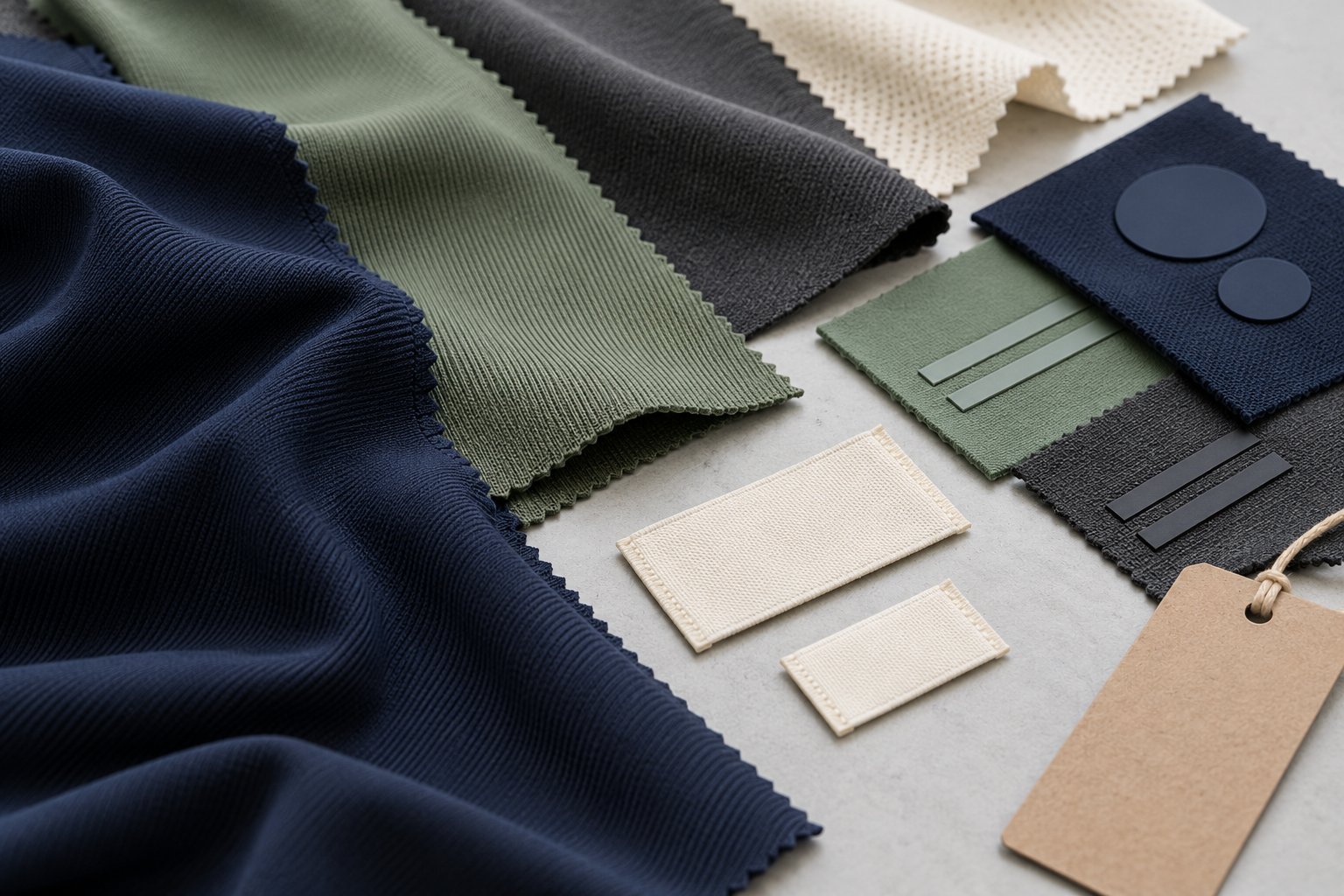
Common branding options include heat transfers, screen printing, silicone applications and embroidery. The appropriate method depends on fabric stretch, thickness, surface finish, artwork and placement.
A logo on a relaxed T-shirt has different demands from one on a stretched legging waistband. Approve a sample on the actual production fabric: check appearance at rest and under extension, comfort against the skin and performance after the agreed wash procedure.
- Specify size: give logo width and height in millimeters.
- Specify placement: measure from a defined seam or garment reference point.
- Specify appearance: provide vector artwork and the required color or finish.
- Check access: a finished garment may restrict printing close to seams or inside narrow areas.
2. Labels, Hangtags and Packaging
Branding can include a woven brand label, printed neck label, size label, care label, hangtag, barcode sticker and individual bag. Treat each component as a separate item on the quotation.
Ask whether existing labels can be removed cleanly, whether new labels can be inserted without visible damage, and whether additional components have their own minimum order quantities. Confirm destination-market labeling requirements before approving artwork; a decorative brand label does not replace required product information.
For packaging, approve the folded dimensions, bag material and size, sticker location, barcode readability and carton assortment. If components must be ordered above the garment quantity, agree who owns the surplus and how it will be stored or supplied.
3. Colors and Fabrics: Similar Appearance Does Not Mean Identical Performance
For finished stock, your color choices come from the available inventory. For made-to-order styles, existing fabric shades may simplify sourcing, while a new dyed color introduces approval work and material minimums.
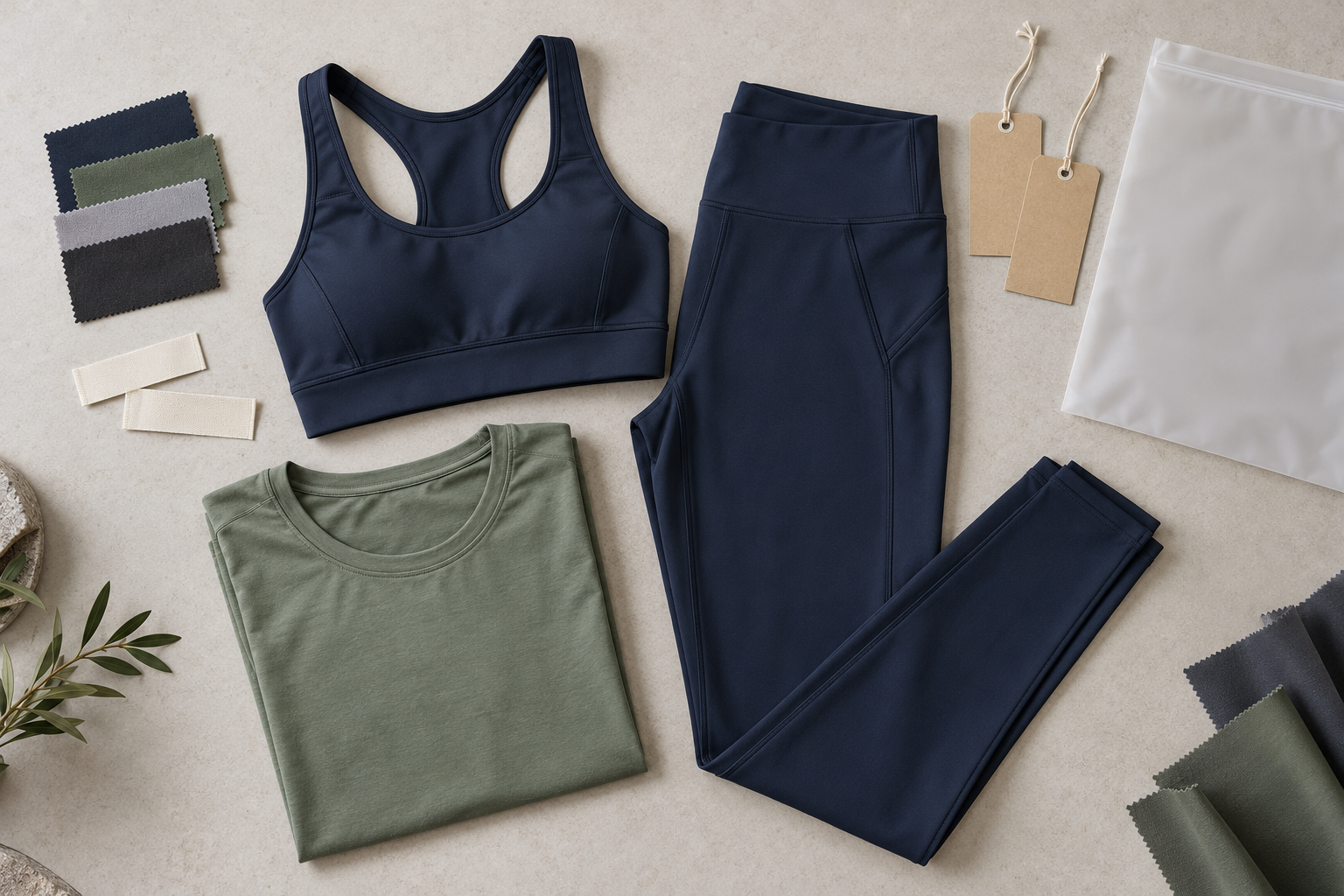
When matching a sports bra and leggings, specify whether they use the same fabric or different constructions. The same color reference can look different across materials and finishes. Review physical swatches and finished samples together under agreed lighting.
A fabric substitution is a product-development decision. Two fabrics with the same fiber percentages can differ in weight, stretch force, recovery, surface texture and opacity. A softer substitute may also change support or fit. Request a revised garment sample whenever the material change could affect performance.
4. Fit, Size Range and Construction Changes
Shortening an inseam, raising a waistband, changing a bra strap or adding a phone pocket may sound minor, but each affects a different part of development.
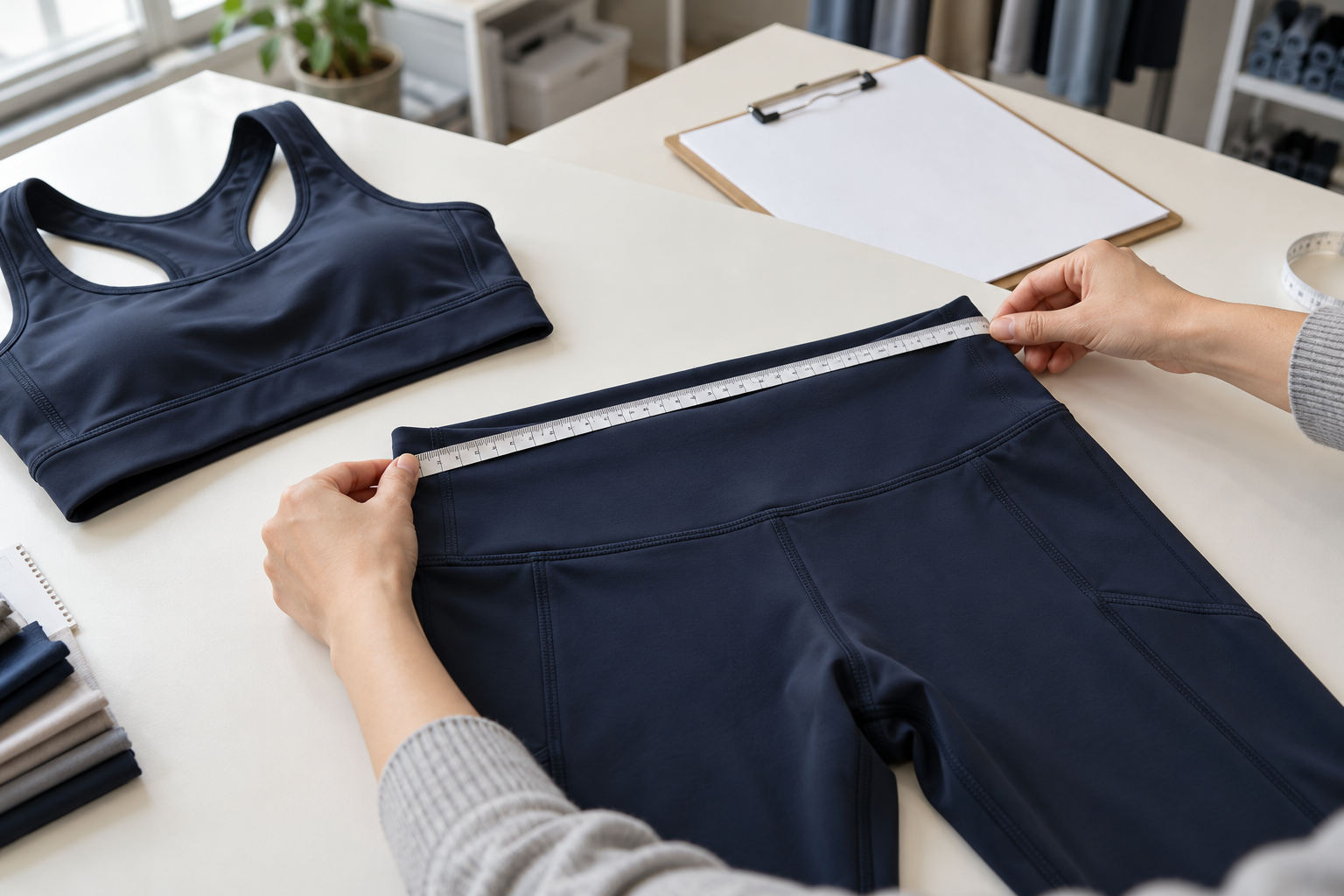
- Length adjustments: confirm the revised measurement, hem position and effect on any nearby logo or panel.
- Waistband changes: review rise, elastic, seam position, comfort and movement stability.
- Sports bra changes: review strap length, underband, lining, cup access and the intended support level through wear assessment.
- New pockets or panels: assess pattern pieces, seam bulk, placement and construction sequence.
- Extended sizing: request a grading plan and representative size samples; one approved middle size does not validate the whole range.
Example: Adding a small logo to an existing legging preserves its base construction. Replacing the fabric, removing a front seam and adding side pockets changes the product specification. Ask for a revised development scope, sample plan and quotation.
How to Customize an Existing Activewear Style: Six Steps
- Identify the base. Record the style number, reference photos, fabric specification, size chart and stock or made-to-order status.
- Write a change list. Separate essential changes from optional requests. Mark exactly what stays the same.
- Confirm feasibility and minimums. Request garment, color, fabric, label and packaging minimums separately.
- Approve physical evidence. Review swatches, color approvals, logo trials and a garment sample as appropriate.
- Record the approved specification. Keep the approved sample, measurement sheet, artwork and packaging instructions together.
- Confirm bulk and reorder controls. Agree inspection points, material substitution rules and how future orders will match the approved version.
What Affects Cost, MOQ and Lead Time?
There is no universal price or delivery window for customizing an existing style. The useful comparison is the full scope of work at your actual order quantity.
| Factor | Why it matters | Question for your supplier |
|---|---|---|
| Logo setup and application | Artwork, dimensions, colors and locations affect setup and labor | Which charges are one-time, and which apply per garment? |
| Custom fabric or dyeing | Material sourcing and approvals may precede garment production | What is the material minimum, and who pays for unused fabric? |
| Pattern and size changes | Revisions can add sample rounds and grading work | Which samples are included, and what triggers another charge? |
| Labels and packaging | Components can have minimums above the garment order | Is the quote based on components purchased or components used? |
| Approval sequence | Production may wait for materials, artwork and sample approval | What starts the quoted lead time, and what is excluded? |
Budget structure: garment cost + branding + labels and packaging + development and setup + agreed testing or inspection + freight and applicable import costs. Compare quotations using the same inclusions and delivery basis.
Common Mistakes to Avoid
- Assuming a catalog image means stock is available. Confirm inventory or production status for each color and size.
- Approving an unbranded sample only. Logo applications and labels can change appearance, comfort and finish.
- Replacing fabric without checking fit. Reassess the garment when stretch and recovery change.
- Ignoring component minimums. A small garment order can still require a larger purchase of labels or bags.
- Expecting exclusivity from a private label. Record any exclusive rights separately.
- Leaving reorders undefined. Record the fabric reference, approved shade, pattern version and change-approval procedure.
A Manufacturer's Review: Keep the Base Style Traceable
From a manufacturing perspective, the most useful starting document is a side-by-side list of the base specification and requested changes. “Same as this sample, with our logo” is incomplete if the fabric, measurements or finish are still undecided.
For example, a project retaining the original fabric and fit can focus approval on branding and packaging. Once the buyer requests a new fabric, a different waistband and additional sizes, the review also needs fit and construction evidence. Grouping these requests under one “private label” description hides the work required.
Ohsure publishes private label services and OEM and ODM manufacturing support . Ask for style-specific confirmation of permitted changes, minimums, sample stages and current lead times.
Copy This Customization Request
Subject: Private Label Customization Request — Existing Style

Base style number / product link:
Target customer and intended activity:
Order quantity by color and size:
Required delivery date and destination:

Keep unchanged:
Requested changes:
- Fabric and color:
- Measurements and size range:
- Logo method, size and placement:
- Brand, size and care labels:
- Hangtags, barcodes and packaging:

Please confirm:
1. Finished stock or made-to-order status
2. Feasible changes and any limitations
3. Garment and component minimums
4. Itemized prices and one-time charges
5. Samples, approvals and lead-time starting point
6. Bulk inspection and reorder specifications
Frequently Asked Questions
Can I put my logo on an existing activewear style?
Often yes, if the fabric, application method and position are suitable. Ask for a sample on the actual material, especially for logos placed on areas that stretch.
Can I change the fabric but keep the same design?
Possibly when the style is made to order. The replacement material must be assessed for fit, stretch, recovery, opacity and construction. Finished stock cannot receive a different base fabric without being remade.
Can I customize only a small quantity?
Some stock branding projects may support smaller quantities, but availability varies. Confirm minimums for garments, logo applications, colors, labels and packaging rather than relying on one overall MOQ.
Can I add pockets to existing leggings?
For a made-to-order style, pockets may be possible after pattern and construction review. Retrofitting finished garments is often less practical. Approve pocket position, dimensions and use in a revised sample.
Do I need a full tech pack for private label?
A simple branding project may use a base-style reference, artwork, placement sheet and label instructions. Fit, fabric or construction changes need more detailed specifications and approval records.
Will my private label design be exclusive?
Do not assume so. Adding your brand does not automatically stop the supplier from selling the underlying style. Any exclusivity must be discussed and recorded explicitly.
Find Out What Can Be Customized on Your Selected Style
Send Ohsure a product reference, quantity split and change list. Request a feasibility review covering branding, materials, fit, minimums, samples and production timing.
Explore private label activewear styles , custom leggings and the activewear product catalog .
Service references: Ohsure Private Label and Ohsure OEM & ODM . Options described in this guide are conditional; the selected style and approved quotation determine the project scope.