
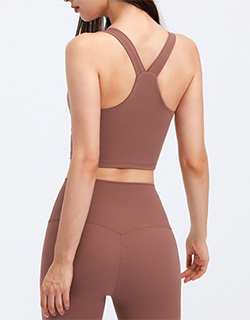
Nylon vs Polyester for Activewear: Which Fabric Is Better?
Activewear fabric selection
Nylon–elastane is a useful first sample for soft, fitted studio activewear; polyester is a useful first sample for printed teamwear and lightweight training tops. Neither is universally better. Choose the finished fabric by hand feel, moisture performance, recovery, decoration and cost, then confirm it in the intended garment.
This is a sourcing recommendation guide, not a laboratory comparison. Product choices and scorecard weights below are editorial starting points; no original fabric test results are claimed.

1. What Are You Actually Comparing?
Nylon is a polyamide fiber. Polyester is a different synthetic fiber family, commonly PET in apparel. Fitted activewear often combines either with elastane, also called spandex. An 80/20 nylon–elastane knit and an 80/20 polyester–elastane knit have matching percentages, but they need not have matching stretch, support or surface feel.
Keep two questions separate: which material family should enter your shortlist, and which exact fabric should enter production? This guide answers the first and helps organize the second. The activewear fabric guide explains the wider roles of GSM, construction, stretch and recovery.
Fiber characteristics offer clues, not garment guarantees. The University of Georgia’s fiber guide describes nylon’s strength and abrasion resistance and polyester’s strength and resistance to wrinkling. It also identifies limitations, including pilling risks and heat sensitivity. Yarn, knit, finish and care still determine the behavior of a specific garment.
2. Nylon vs Polyester: A Buyer’s Comparison
| Decision factor | Nylon candidate | Polyester candidate | How to choose |
|---|---|---|---|
| Softness and appearance | A useful starting point for smooth, close-fitting studio garments. | Can also be soft; compare yarn and finishing options. | Evaluate coded samples before seeing prices or fiber labels. |
| Sweat management | Request evidence on the offered construction and finish. | A useful starting point for lightweight performance tops. | Separate liquid transport, drying and comfort during wear. |
| Stretch and recovery | Often blended with elastane for fitted pieces. | Also available in stretch blends and engineered knits. | Compare force, extension and residual growth under matching conditions. |
| Surface durability | Consider for garments exposed to repeated rubbing. | Can also meet demanding durability needs. | Assess pilling and abrasion separately; inspect after washing. |
| Printing | Confirm a process compatible with the exact fabric. | A conventional starting point for dye-sublimated teamwear. | Approve printed fabric and a sewn sample, including stretch and washing. |
| Cost and availability | Request an exact quality, color and volume quotation. | Include an equivalent candidate in the commercial comparison. | Compare usable yield, minimums, decoration and replenishment together. |
The table is a shortlisting framework, not a ranking of measured results. A finished polyester fabric can outperform a nylon candidate on comfort or durability, and a nylon fabric can outperform a polyester candidate on an individual moisture test.
3. Which Fabric Should You Sample First?
Yoga and Pilates leggings
Start with a nylon–elastane candidate when the brief emphasizes a smooth touch and close-to-skin comfort. Keep a comparable polyester–elastane option in the trial. Ask wearers to assess bending, waistband pressure and damp cling, then check coverage in the intended light and dark colors. A soft swatch is only the start of approval.
Running and high-sweat training tops
Start with a lightweight polyester performance knit, then compare a nylon option if it offers the desired feel or construction. Prioritize wet comfort, garment weight and drying evidence over a generic fiber preference. A dense, heavy polyester fabric should not be assumed to outperform a lighter, more open nylon fabric.
Printed teamwear
Polyester is the practical first candidate for conventional dye sublimation. Sawgrass identifies polyester as a target substrate for its SubliJet sublimation system. Check the specific blend, base shade, artwork and processing conditions with the printer. This does not mean nylon cannot be decorated; it means the printing route must be confirmed before fabric approval.
Gym leggings and sports bras
Shortlist both fiber families. For leggings, prioritize recovery, coverage and friction at the inner thigh. For a sports bra, assess the whole construction: lining, elastic, straps, seams and fit all contribute. Do not infer a support level from nylon, polyester or elastane percentage alone.

4. Avoid Three Misleading Shortcuts
“Polyester means moisture-wicking”
Wicking moves liquid through or along a textile; drying removes moisture over time. They are separate properties. Patagonia’s explanation of moisture management shows how construction and fiber-surface treatment influence transport. Ask whether the offered finish remains effective after the intended care routine.
A 2025 study of drying at the skin interface found that contact with a heated surface and fabric stretching affected drying behavior. A free-hanging swatch test therefore should not be treated as a complete prediction of how a fitted garment feels during exercise. Compare candidates under the same relevant method and add wear trials.
“Nylon always lasts longer”
Abrasion resistance and pilling describe different outcomes. ISO 12947-2 addresses specimen breakdown under Martindale abrasion; ISO 12945-2 addresses surface pilling, fuzzing or matting. A fabric can resist holes yet develop an appearance customers dislike. Choose requirements for the garment’s actual contact zones.
“Higher price proves better quality”
A quotation may include a small custom dye lot, a particular finish or an expensive decoration route. None of those proves superior performance for your use. Ask suppliers to separate material, development and decoration costs. The sample, fabric and branding cost guide explains why an apparently cheaper fabric may not produce a cheaper finished garment.
5. Use This A/B Fabric Selection Card
Send the same brief to both suppliers or use it to compare two qualities from one supplier. Match construction, finish, GSM and elastane content as closely as practical. Where matching is impossible, record the difference and compare the complete fabric packages rather than attributing the outcome to fiber chemistry alone.
| Record | Required information | Candidate A: nylon blend | Candidate B: polyester blend |
|---|---|---|---|
| Sample identity | Quality code, color, lot and finish | Record before assessment | Record before assessment |
| Fabric specification | Composition, measured GSM, usable width and construction | Supplier data + verification | Supplier data + verification |
| Performance evidence | Method, edition, conditions, wash state and result units | Attach sample-specific report | Attach comparable report |
| Garment outcome | Fit, movement, wet comfort, coverage and seam behavior | Record observations | Record observations |
| Commercial offer | Unit basis, currency, minimums, usable yield and quote validity | Written quotation | Equivalent written quotation |
| Decision | Mandatory failures, preference score and unresolved questions | Approve / revise / reject | Approve / revise / reject |
These are fields to complete, not test findings. For liquid management and drying, the AATCC method directory lists TM195 and TM201 respectively. Ask the laboratory to confirm method suitability and edition. Use the existing nylon–spandex vs polyester–spandex test guide for the detailed test-report workflow.
Set mandatory requirements before scoring
Define acceptable coverage, fit, color behavior and any performance claims before comparing samples. A candidate that fails a mandatory requirement should be revised or rejected. Strong softness or a lower price must not cancel that failure.
After both candidates meet mandatory requirements, use a weighted preference score. Give each criterion a score from 1 to 5 using written anchors agreed by the team: 1 means least suitable among acceptable options; 5 means closest to the approved reference. Record evidence beside each score.
| Preference criterion | Studio leggings example | Printed training top example |
|---|---|---|
| Hand feel and wear comfort | 35% | 20% |
| Movement and recovery | 25% | 10% |
| Moisture performance | 15% | 25% |
| Appearance and decoration | 10% | 30% |
| Total cost and supply continuity | 15% | 15% |
Weighted score = sum of each rating × its weight expressed as a decimal. Each column totals 100%, so the result ranges from 1 to 5. These proposed weights are adjustable purchasing preferences, not an industry standard. Leave the result blank until evidence is available. If one missing report could change the decision, resolve that gap before approval.
6. Prepare a Useful Fabric Brief for Ohsure
For an Ohsure custom sportswear project, prepare the garment type, intended activity, target fit, preferred hand feel, artwork, color list, size range and order quantity. Add an existing garment reference if available and identify what you want improved. Request exact fabric codes and written confirmation of which sampling and testing steps are included.
- Shortlist: request nylon and polyester options against the same priorities, with composition, construction, GSM and finish information.
- Sample: make the intended garment and document any pattern changes needed for each material. The same pattern may fit differently in two fabrics.
- Evaluate: combine relevant reports, wear observations, wash checks and a complete quotation. Keep the results attached to the fabric code.
- Approve: retain the selected sample and specify permitted tolerances, substitution approval and when a new color, finish or lot needs rechecking.
Confirm minimum order quantity, stock status and replenishment timing for the exact quality. This article does not set Ohsure prices, lead times or material minimums, and does not claim any offered quality has passed the named methods.
Frequently Asked Questions
Is nylon or polyester better for leggings?
Sample both when possible. Nylon–elastane is a useful starting point for a soft studio brief, while polyester–elastane may suit a different finish, print or commercial target. Approve the actual garment on comfort, recovery and coverage.
Which is better for heavy sweating?
Choose by liquid transport, drying and wet comfort evidence for the specific fabric. The fiber label cannot answer all three. Compare matching methods and include the care condition expected in use.
Can polyester feel as soft as nylon?
Yes. Yarn and finishing can make polyester very soft. Compare coded swatches and sewn samples without relying on the material name, and recheck the feel after washing.
Does more elastane make either fabric better?
No. A higher percentage does not establish the right support, stretch force or recovery. Define the movement and fit requirement, then compare the finished materials under consistent conditions.
Is polyester always the cheaper option?
No universal price gap applies. Compare equivalent fabric qualities and include minimums, usable width, cutting consumption, decoration and reorders in the quotation.
Can I replace nylon with polyester after sample approval?
Treat the change as a material revision. Recheck fit, hand feel, recovery, coverage, color and decoration as applicable, then approve a new reference sample before bulk production.
Make the Decision at Fabric and Garment Level
For a soft studio collection, begin with nylon–elastane. For a printed training collection, begin with a suitable polyester quality. Keep those choices provisional until the selected fabric passes the product brief, works in the garment and fits the sourcing plan.
Evidence scope: linked sources support fiber characteristics, printing compatibility and test-method scope. Product recommendations and the selection card are editorial guidance. No original Ohsure laboratory dataset is presented.