
Bamboo Fabric for Activewear: Claims, Processing and Buyer Questions
A practical guide to identifying the fiber, choosing the right garment and approving evidence before bulk production.
Bamboo fabric can suit soft activewear tops and lounge styles, but buyers must identify the actual fiber and processing route. Bamboo-derived viscose, lyocell and mechanically extracted bamboo are different materials. Confirm composition, wash performance, stretch recovery and claim evidence before ordering; bamboo origin alone does not prove antibacterial performance or environmental superiority.
What is bamboo fabric?
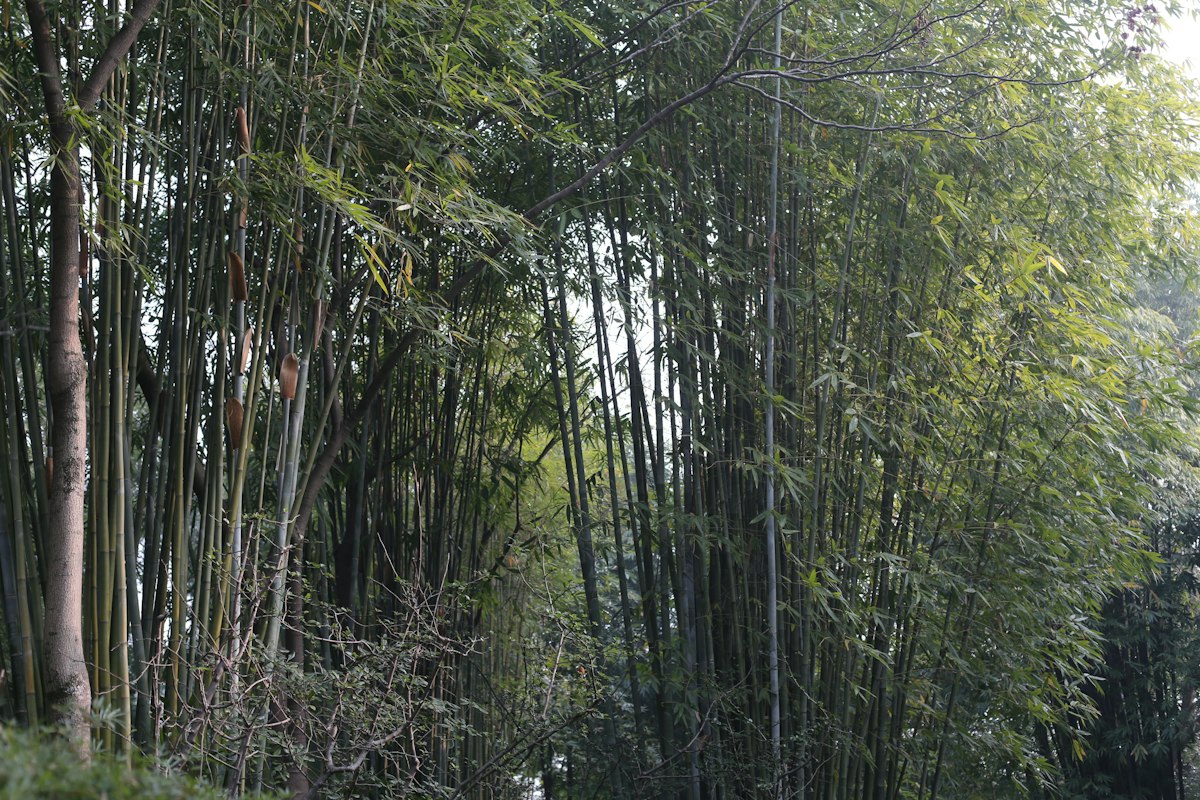
Bamboo fabric is a sourcing description that needs a more precise fiber specification. Bamboo may provide the cellulose used to make a regenerated fiber, or it may be processed to extract the plant's natural fibers. Those routes produce different materials and call for different disclosures.
For U.S. sales, the FTC distinguishes actual bamboo fiber from rayon or viscose made using bamboo. The latter should be identified with the appropriate manufactured-fiber name, with bamboo origin described accurately. The plant name should not replace the fiber identity. See the FTC's bamboo textile guidance.
In a sourcing brief, ask for the generic fiber name, each fiber's percentage, fabric construction, weight and finish. A phrase such as “bamboo stretch jersey” leaves too many decisions open: it does not specify whether the material is viscose, lyocell, a cotton blend or another construction.
A composition report and a bamboo-origin record answer different questions. A report identifying viscose does not, by itself, trace that cellulose back to bamboo. Ask the supplier which document supports each part of the description.
Compare the processing routes before comparing prices
| Sourcing term | Processing distinction | Buyer verification | Activewear decision |
|---|---|---|---|
| Bamboo-derived viscose / rayon | Cellulose is processed through the viscose route and regenerated into manufactured fiber. | Fiber percentages, documented bamboo input, fabric specification and relevant mill information. | Evaluate for soft tops and lounge styles; test the actual knit rather than assuming sports performance. |
| Bamboo-derived lyocell | Cellulose is dissolved and spun through a solvent process without forming a cellulose derivative. | Evidence of the lyocell process and bamboo feedstock; verify any recovery or environmental figures separately. | Request a real swatch and sample. The name does not establish availability, quality or cost for a project. |
| Mechanically extracted bamboo fiber | The plant's natural fiber is extracted rather than regenerated from dissolved cellulose. | Evidence of the extraction route and actual fiber identity. | Inspect handle, yarn and construction before considering next-to-skin garments. |
Processing terminology: Competition Bureau Canada bamboo guidance and BISFA fiber terminology. Canada's guidance also distinguishes generic fiber names according to the manufacturing process. Label wording must be checked for the intended sales market.
Lyocell processing can include solvent recovery and reuse, as described by CIRFS. That description is not evidence of a particular bamboo supplier's recovery rate. Request plant-specific information before using a percentage or a “closed-loop” claim.
Where can bamboo-derived fabric work in activewear?
Start with the garment's job. For a relaxed yoga top, the approval criteria may emphasize hand feel, drape, fit and wash appearance. A fitted running top also needs evidence on drying behavior, friction, seam comfort and repeated wear. A compression legging requires a separate assessment of support, opacity and recovery.
Absorption, moisture spreading and drying time are different properties. A fabric that takes up water readily does not automatically dry quickly. To compare candidates, use equivalent garment designs and a consistent test setup; changing weight, knit density and fit at the same time makes the result difficult to interpret.
| Garment direction | Why consider it? | Approve these checks |
|---|---|---|
| Relaxed T-shirt or yoga tank | A candidate when a soft, draping garment is the design goal. | Neckline stability, seam appearance, shrinkage, twisting and washed hand feel. |
| Lounge or recovery set | A candidate for comfort-focused styling and movement. | Pilling at friction zones, seat and knee shape retention, waistband behavior and opacity. |
| High-sweat training top | Consider only after comparison with a suitable performance benchmark. | Drying time, wet cling, colorfastness to perspiration, rubbing and repeat-wash appearance. |
| Fitted leggings or support garment | Requires fabric engineering beyond a fiber-origin story. | Extension and recovery, opacity under strain, seam strength, garment support and wear trials. |
Elastane percentage is only one input to recovery. Knit structure, yarn selection, finishing and pattern design also need review. Ask for samples of the exact proposed fabric; approving a soft loose tee does not approve the same material for fitted leggings.
Explore Ohsure's custom bamboo-derived fabric clothing range for starting directions, or compare silhouettes in the custom T-shirt collection. Confirm the fiber name and specifications for the selected item.
Which bamboo fabric claims need evidence?
A useful claim identifies a measurable property, the tested article and the conditions under which it applies. A plant-origin story cannot substitute for finished-fabric evidence.
| Proposed claim | Evidence to request | Approval boundary |
|---|---|---|
| Made from bamboo | Actual fiber identity, percentages, processing description and traceable feedstock records. | Use the appropriate fiber name and accurate origin wording for the destination market. |
| Antibacterial or odor control | Relevant testing on the supplied material, with the test method, organism or odor endpoint, conditions and laundering history. | Keep any statement within the report's scope. Antibacterial results do not establish every odor-related benefit. |
| Quick-drying or moisture-wicking | Defined test conditions and results for the selected construction; identify any comparison material. | Describe only the property and comparison actually evaluated. |
| Lower environmental impact | A defined comparison, production data, system boundaries and evidence relevant to the claimed impact. | Avoid broad rankings based only on plant origin or one processing feature. |
| Biodegradable or compostable | Evidence covering the claimed article, blend, finishes, disposal conditions and timeframe. | Do not transfer a fiber-level result to the entire garment, including elastane, prints and trims. |
The FTC cautions that processed bamboo rayon cannot simply inherit the plant's supposed natural antibacterial qualities; such claims need reliable evidence. Its consumer explanation of bamboo fabrics is a useful reference when reviewing product copy.
What does a certificate actually cover?
OEKO-TEX® STANDARD 100 concerns testing for harmful substances. It does not, on its own, establish bamboo origin, organic cultivation or antibacterial performance. If a supplier presents a certificate, check the number through the official Label Check and match its validity and product scope to the material being purchased.
Ask for the certificate holder, issuer, validity dates and covered articles. Then link the fabric code or order lot to the supplied documentation. A valid certificate belonging to a different mill or material is not sufficient evidence for your garment.
Seven steps to approve bamboo-derived activewear
Define use, market and non-negotiable requirements
State the activity, fit, size range, intended sales countries, care expectations and claims you plan to make. Separate comfort preferences from measurable acceptance criteria.
Confirm the exact material
Request the generic fiber name, full composition, construction, weight, width, finish and fabric code. Ask separately how bamboo origin is documented. Establish whether the offer is stocked fabric or a custom development.
Agree the evidence and test plan
List required reports, their scope, test methods and acceptance limits before paying for the final sample round. Include the proposed colorways, care procedure and any post-laundering performance claims.
Develop the garment and branding together
Review pattern, seam construction, neckline or waistband and logo method on the selected fabric. Test a heat-transfer or printed logo for distortion, marking and wash durability instead of approving it on an unrelated fabric.
Measure and wear-test the sample
Record dimensions and appearance before and after the agreed wash sequence. Check fit in relevant movements. For fitted styles, inspect stretched opacity and recovery at the actual wearing extension.
Approve the production reference
Record the approved sample version, fabric code, color reference, measurement tolerances, trim details, care label and claim wording. Specify what happens if the supplier proposes a material substitution.
Check bulk material and finished garments
Agree inspection stages and sampling rules. Link bulk fabric to the approved specification, check critical measurements and review packing. Record nonconformities and the agreed resolution before shipment release.
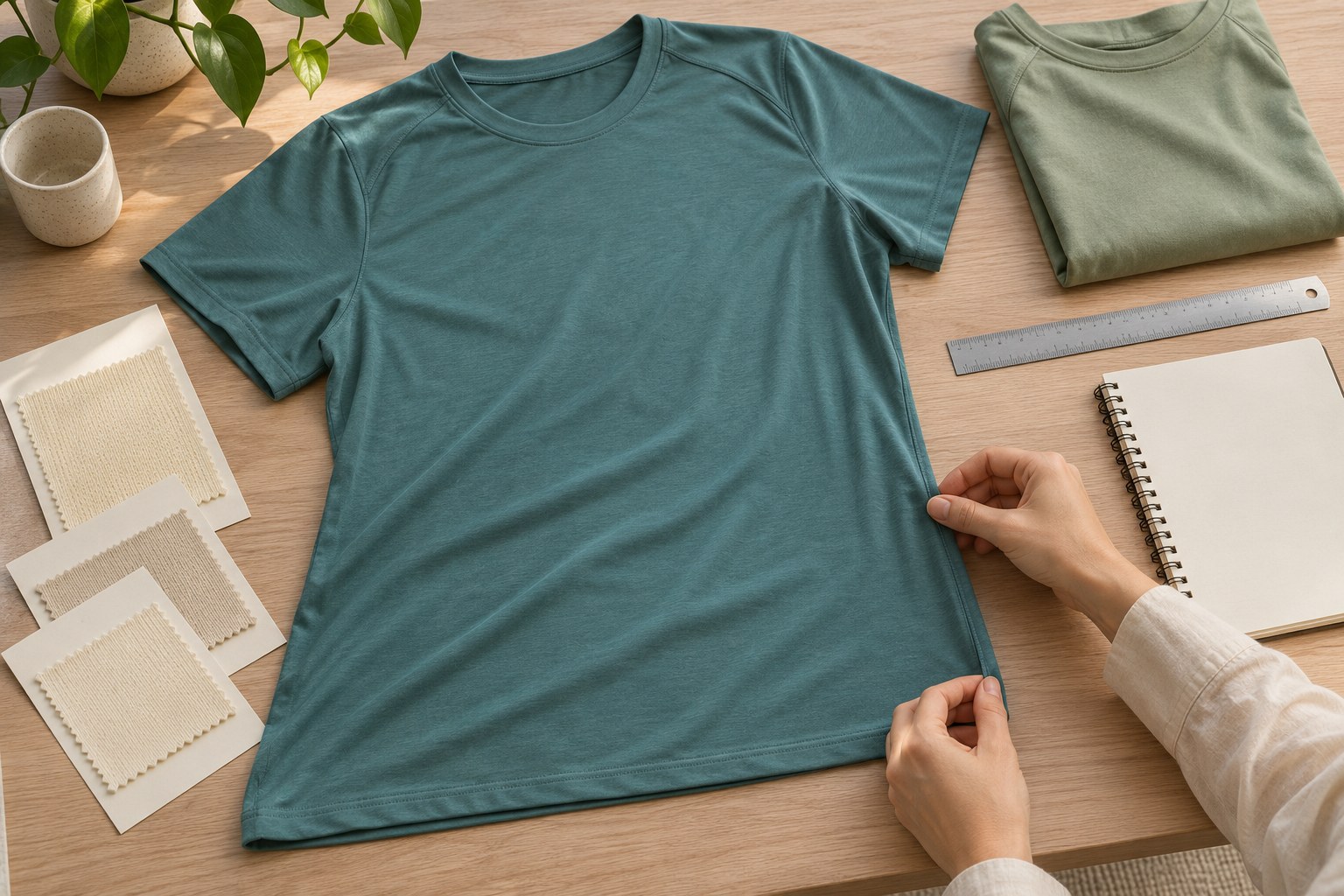
A simple wash-review record
Record the sample ID, fabric lot, wash and drying settings, number of cycles, conditioning conditions, before-and-after dimensions, seam photos and reviewer decision. Use the same agreed measurement procedure each time.
Illustrative calculation: a body length changing from 70 cm to 68 cm is a change of (68 − 70) ÷ 70 × 100 = −2.9%. This example explains the calculation; it is not an Ohsure result or a universal acceptance limit.
What affects cost, MOQ and lead time?
Compare quotes against the same specification and delivery basis. A lower garment price can exclude material development, testing, labels or freight that another quote includes.
- Material: fiber route, blend, construction, weight, stock availability, custom color and material minimums.
- Development: pattern work, sample rounds, size-set review, washing trials and logo trials.
- Evidence: laboratory testing, document verification and any additional work needed to support a proposed claim.
- Production: style complexity, number of colorways, order allocation, trims, labels and packaging.
- Delivery: packing volume, transport arrangement, destination and the agreed allocation of shipping-related costs.
Ohsure's published starting MOQ is 100 pieces per style per color, with mixed sizes available; final requirements are subject to project confirmation. One style in three colors therefore represents 300 pieces at that starting level, not 100 pieces divided freely across all three colors. A custom fabric or dye lot may have a separate minimum. See the custom activewear manufacturing service.
Request a timeline with separate milestones for material confirmation, color approval, sampling, revision, testing, bulk production and delivery. Ask whether quoted days are working or calendar days and which approval starts each stage. Sample timing is confirmed after reviewing the design, materials and customization requirements. Bulk-production timing depends on approved specifications, material availability and the production schedule.
Budget on an agreed order basis: garments + development + testing + branding and packaging + applicable delivery and import costs. Ask which charges are included, one-time, repeatable or refundable; avoid assuming a standard price premium for every bamboo-derived fabric.
Common mistakes when sourcing bamboo activewear
- Approving a material from a photo. Request a specification and swatch; softness and origin cannot be verified visually.
- Using “bamboo” as the complete composition. Confirm the manufactured-fiber identity, blend percentages and destination-market wording.
- Treating absorbency as proof of fast drying. Specify and evaluate the property your garment needs.
- Copying a generic antibacterial claim. Obtain relevant evidence before making the claim.
- Checking only the unwashed sample. Review washed fit, surface appearance, seams and branding under agreed care conditions.
- Accepting a certificate without matching its scope. Verify validity, covered article and the connection to the actual order.
- Approving a sample without controlling substitutions. Document the fabric code and require review of changes to yarn, finish, color or composition.
A manufacturer's perspective: turn the fabric story into a production specification
Ohsure's documented services include OEM, ODM and private-label garment development, material selection, sampling, branding and packaging. Its listed material options include bamboo-based fabrics. Availability of a particular blend, lyocell route, finish or certified material still requires project confirmation.
For a bamboo-derived T-shirt, a useful development discussion connects three decisions: the fabric and its documents, the pattern and seams, and the care conditions used for approval. Review those decisions together so that a preferred hand feel does not obscure a problem with washed fit or neckline stability.
Ohsure's quality-control service describes raw-material checks, printing inspection, semi-finished sampling and finished-garment inspection. Buyers should agree the applicable tolerances, inspection sampling and test requirements for their order. These service descriptions do not establish a particular independent laboratory result.
Use the fabric selection guide to begin the material discussion, then review labels, hangtags and packaging through the private-label service. Approve the final claim wording alongside the material evidence.
Frequently asked buyer questions
Is bamboo fabric a natural fiber?
That depends on processing. Mechanically extracted bamboo differs from regenerated cellulose made using bamboo feedstock. Ask for the generic fiber identity and processing documentation rather than treating every bamboo-derived textile as the same fiber.
Is bamboo viscose the same as bamboo lyocell?
No. They describe different production routes. Confirm the process, composition and supplier records. Neither term alone proves the finished garment's performance or the environmental impact of a specific supply chain.
Is bamboo-derived activewear naturally antibacterial?
Do not assume it is. A bamboo-origin statement is insufficient evidence for an antibacterial claim on processed fabric. Request testing relevant to the supplied material and keep any claim within the tested conditions.
Can bamboo fabric be used for gym leggings?
Only approve it after evaluating the actual construction for support, stretched opacity, recovery, seams and wash behavior. A fabric suitable for a relaxed top may fail the requirements of a close-fitting legging.
Does STANDARD 100 prove the fabric is sustainable?
It addresses testing for harmful substances within its certification scope. It does not independently prove bamboo origin or every environmental claim. Verify the certificate and request separate evidence for other statements.
What is Ohsure's starting MOQ?
The published starting point is 100 pieces per style per color, with mixed sizes available. Confirm the selected material, color, branding and packaging requirements because project-specific minimums may differ.
How long does sample development take?
Request a project-specific schedule after the design, fabric and customization review. Include time for material sourcing, color approval, sample revisions and testing, and confirm the event that starts the quoted timeline.
What should I request before paying for bulk production?
Request the approved sample and specification, fabric identity and origin records, relevant reports, agreed inspection criteria, final label wording, quotation and production milestones. Record how changes and nonconformities will be handled.
Build a sourcing brief that gets a useful response
Include these details in your inquiry
Garment and activity · target sales market · fiber identity and blend · fabric construction and weight · colorways · size range and quantities per style/color · measurements · branding · care requirements · required tests and documents · intended claims · target delivery date and destination.
Start with Ohsure's bamboo-derived clothing development range and custom activewear manufacturing service. Ask the team to confirm the proposed fabric, evidence, sample plan, MOQ and schedule against that brief.