
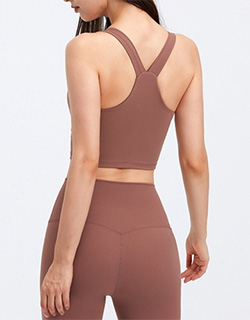
TENCEL™ for Activewear: Performance, Comfort and Manufacturing Considerations
A practical guide to choosing lyocell and modal fabrics, validating performance, and moving from a soft swatch to a production-ready garment.
TENCEL™ fibers can suit activewear when softness, moisture absorption and drape matter. Choose a lyocell or modal blend around the garment’s activity level, then verify drying, stretch recovery, opacity and wash stability. For sourcing, confirm genuine branded fiber documentation, fabric availability and branding permissions before approving samples or making product claims.
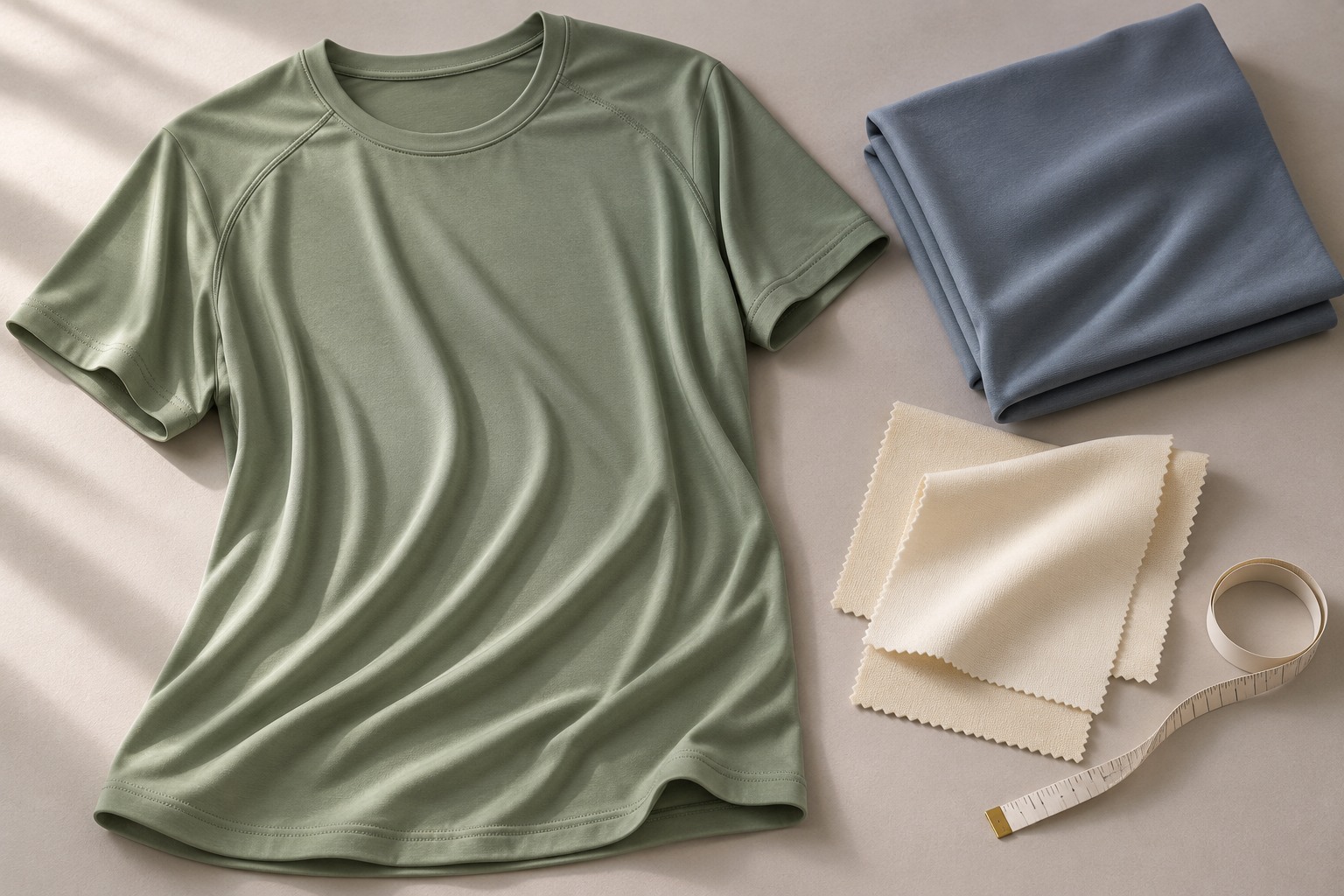
What is TENCEL™, and why does the exact fiber matter?
TENCEL™ is Lenzing’s textile fiber brand, including branded lyocell and modal fibers. Lyocell and modal are generic fiber names; a supplier offering either material is not automatically offering TENCEL™. Both are regenerated cellulose fibers made using wood-derived raw material. They are manufactured fibers, rather than fibers used directly in their harvested form.
Lenzing describes its TENCEL™ Lyocell fibers in terms of moisture uptake and strength, and its TENCEL™ Modal fibers in terms of softness and moisture control. These are fiber-level characteristics. Yarn, knitting, dyeing, finishing and garment construction determine how those characteristics translate into a wearable product.
For a technical specification, write the generic fiber composition and percentages, then identify any verified branded component separately. “TENCEL fabric” alone leaves the fiber type, blend and construction unresolved. A clear brief might request a lyocell/elastane jersey for a relaxed training top, with the exact composition, fiber origin and approved branding to be confirmed during sourcing.
A useful starting point: select the garment’s job first. A fluid studio top, a running base layer and a compression legging need different fabric behavior, even if they share a soft hand feel.
Which material route fits your activewear collection?
The table below is an editorial sampling guide, not a ranking based on Ohsure laboratory results. Compare finished fabrics at relevant weights and constructions before selecting a winner.
| Fabric route | Reason to consider it | Possible application | Critical approval check |
|---|---|---|---|
| TENCEL™ Lyocell blend | A candidate when moisture absorption, smooth touch and drape are priorities | Training tees, studio tops, light layers | Drying after realistic wetting, surface appearance after washing, seam stability |
| TENCEL™ Modal blend | A candidate when soft next-to-skin comfort is central | Low-impact tops, recovery apparel, lounge-to-studio styles | Neckline recovery, garment growth and wash appearance |
| Cellulosic/synthetic/elastane blend | A route for balancing comfort with stretch and activity-specific performance | Fitted training tops or other stretch styles | Recovery, abrasion, moisture transport and claim evidence for the actual blend |
| Polyester/elastane or nylon/elastane comparator | A useful benchmark when training performance is the main purchasing criterion | High-sweat or close-fitting garments | Compare drying, support, opacity and comfort against the cellulosic candidate |
| Cotton-based comparator | A useful benchmark for familiar everyday hand feel | Casual tees and post-workout apparel | Compare wet comfort, shape retention and care requirements |
For an initial collection, a relaxed tee is a practical evaluation vehicle: it allows wearers to assess drape, damp feel and care performance without also solving the support requirements of a sports bra. Explore Ohsure’s custom T-shirt product range for garment formats, then request the proposed material separately. The category page does not establish TENCEL™ availability for every listed style.
What performance can you reasonably expect?
Softness and drape can support comfort-led design
A soft, fluid fabric is worth evaluating for garments worn during gentle movement and for extended everyday use. However, a swatch that feels appealing in the hand may hang differently when cut into a long tee or a fitted top. Assess the complete silhouette, including neckline, hem and any pockets, both before and after washing.
Moisture absorption does not establish a drying claim
Moisture absorption, movement of liquid through a fabric and evaporation are different behaviors. Lenzing’s TENCEL™ Active leaflet describes moisture management at fiber level. Buyers still need finished-fabric evidence before promising quick drying, superior wicking or a cooler workout.
For a high-sweat tee, compare candidates under the same wetting, temperature, humidity and airflow conditions. Keep the starting fabric mass and water application recorded. Different fabric weights can change the result substantially, so a thin candidate and a heavy comparator cannot isolate a fiber effect.
Stretch, recovery and support need separate checks
A knitted fabric can extend without recovering well. Elastane content is one design variable, alongside yarn choice, stitch structure and finishing. For fitted styles, measure recovery after repeated extension and inspect knees, elbows, necklines and waistbands after wear. Do not infer compression or sports-bra support from a fiber name or stretch percentage.
Surface appearance depends on fiber grade and processing
Discuss fibrillation control when specifying lyocell: fine surface fibrils can influence the visual finish. Lenzing’s lyocell fiber portfolio distinguishes low-fibrillation and non-fibrillating types. Ask which grade the mill proposes and assess the actual washed fabric. Fibrillation and pilling are separate observations; approve both surface character and resistance to visible wear.
Environmental statements need a defined scope
A fiber supplier’s environmental statement does not automatically apply to an entire garment containing other fibers, dyes, prints, sewing thread and trims. Use evidence that names the specific material and the relevant conditions. Avoid turning a fiber-level claim into “this whole garment is biodegradable” or a numerical environmental saving without product-level support.
How to develop a TENCEL™ activewear garment: seven steps
Define the use case and the claim
State the activity, climate, fit, care expectation and intended sales wording. “Soft studio tee” and “quick-dry running tee” require different evidence. Name your benchmark garment and identify which properties must improve, match or remain acceptable.
Build a complete fabric brief
Request fiber type, full blend percentages, target fabric weight with tolerance, construction, usable width, finish, color and source reference. Ask whether the proposal uses available stock fabric or requires new knitting or dyeing. Keep the material reference consistent across the quotation, sample and bulk approval.
Verify fiber identity and branding eligibility
Ask the supplier to connect the proposed fabric to its branded-fiber documentation. Check the issuing body, reference number, named company, material scope and validity where applicable. A generic composition report identifies fiber content; it does not by itself establish TENCEL™ brand origin.
Before using branded product claims or hangtags, check the relevant approval route. Lenzing distinguishes product and marketing licenses in its brand-protection guidance. Confirm the current requirements for your intended use before producing packaging.
Approve fabric and garment samples
Evaluate the intended production material, color and decoration rather than a convenient substitute alone. Review cutting stability, seam puckering, neckline shape, drape and opacity in the garment. If a substitute is necessary for the first fit sample, document what still requires approval in the final fabric.
Run wash, wear and performance checks
Agree the method, wash and dry conditions, number of cycles and pass criteria before testing. Combine a practical wear trial with laboratory evaluation when needed for a claim or procurement requirement. A short internal wear trial supports selection but does not replace independent evidence for an advertised performance result.
Lock the production reference
Retain the approved garment, swatch, shade reference, measurement chart, artwork and care instructions. Record the chosen material and prohibit unapproved substitutions. Require a review if the mill, fiber grade, finish or blend changes.
Connect bulk inspection to the approved sample
Confirm inspection stages, sampling rules, tolerances and handling of failed results in writing. Check bulk shade and weight against the reference, and inspect finished measurements and decoration. Hold shipment approval until the agreed issues are resolved.
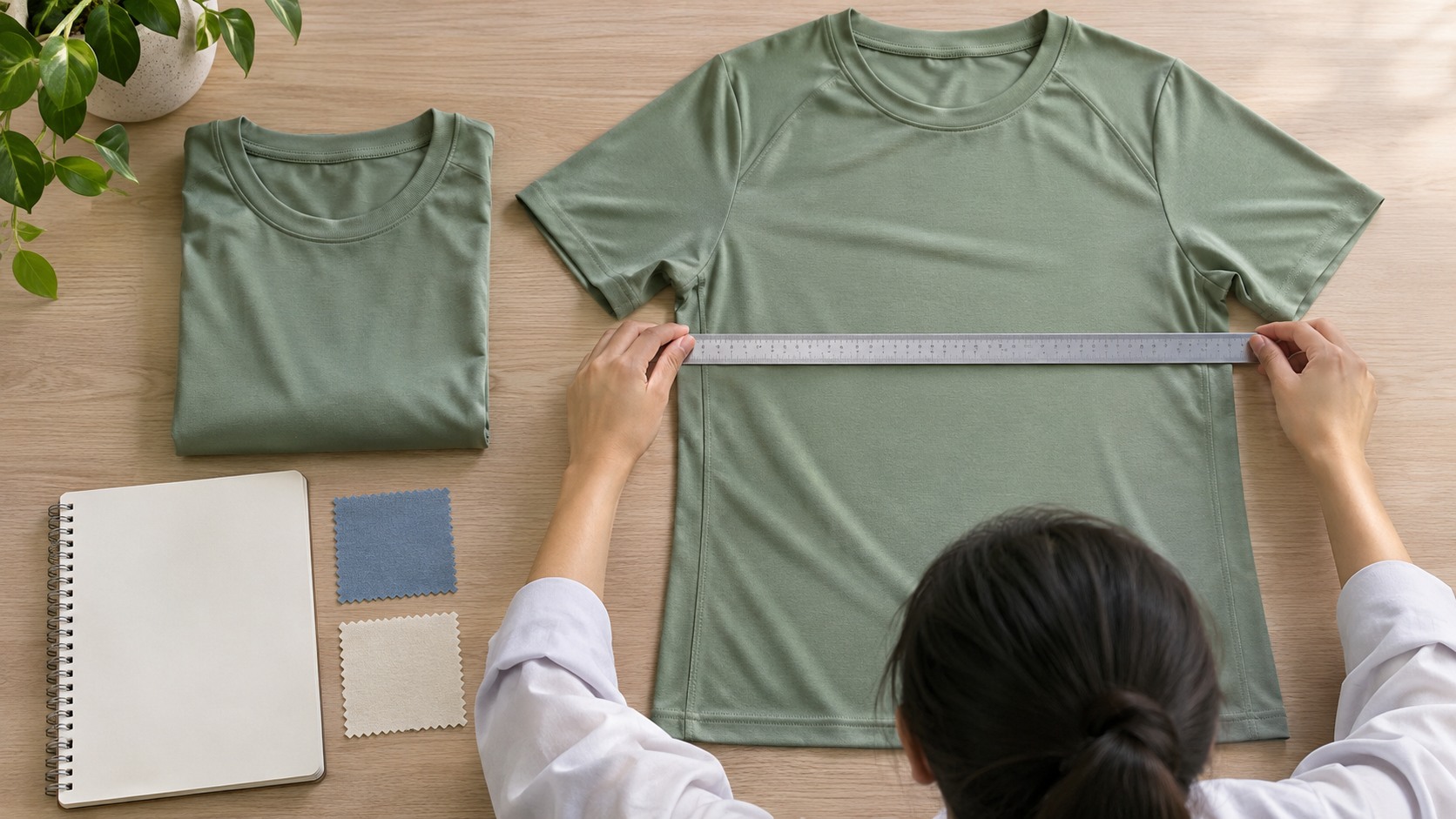
A sample approval matrix you can reuse
Complete this matrix with your manufacturer before ordering tests. Limits should reflect the product brief; the table does not prescribe a universal activewear standard.
| Check | Record before testing | Approve or revise against |
|---|---|---|
| Wash stability | Measurement points, starting dimensions, care cycle and drying method | Agreed dimensional tolerance; twisting, hem and neckline appearance |
| Stretch recovery | Direction, extension, hold time, repetitions and recovery interval | Agreed residual growth; relevant garment fit after use |
| Moisture and drying | Fabric reference, weight, water application and environmental conditions | Benchmark result under the same protocol and the intended claim |
| Opacity | Color, lighting, underlayer and intended extension | Coverage during the movement required by the brief |
| Surface and color | Test method, care cycles and reference photos | Agreed appearance, pilling, shade and color-transfer requirements |
| Decoration | Artwork, application process, location and sample fabric | Adhesion, puckering, cracking and hand feel after care and extension |
Calculate dimensional change consistently
Dimensional change (%) = (after-care measurement − original measurement) ÷ original measurement × 100.
Illustrative example: a 70 cm body length measuring 68.6 cm after the agreed care cycle has changed by −2%. This is arithmetic for the worksheet, not an Ohsure test result or an acceptance limit. Report width and length separately and judge both against the agreed tolerance.
What affects cost, MOQ and lead time?
There is no reliable universal price premium for a “TENCEL™ activewear” order. A meaningful quotation needs the exact fabric, garment, quantity, color plan and documentation requirements. Compare quotations using the same specifications and commercial scope.
| Variable | Potential cost or timing effect | Question to ask |
|---|---|---|
| Fiber, yarn and fabric source | Special sourcing or custom knitting adds dependencies before sampling | Is the exact fabric available, and what material minimum applies? |
| Color and order split | Custom dyeing and additional colors can create separate minimums | Which MOQ applies to each style, color and fabric? |
| Pattern and decoration | Additional panels, trims, revisions and branding affect development work | Which sample rounds and decoration trials are included? |
| Testing and documentation | External testing, retesting and branding review need budget and schedule space | Who arranges each check, pays the fee and releases approval? |
| Freight and delivery scope | Transport, destination and included charges change the landed cost | What trade terms, delivery responsibilities and exclusions apply? |
Ohsure’s published starting MOQ is 100 pieces per style per color, with mixed sizes available; final requirements are subject to project confirmation. That starting point does not guarantee the availability or minimum order of a particular branded fabric. For example, two styles in three colors at 100 pieces for each style/color combination would total 600 garments before any separate material constraints.
Confirm sample timing after the design, materials and customization requirements have been reviewed. Confirm bulk-production timing against approved specifications, material availability and the production schedule. Add fabric sourcing, approval rounds, testing, any necessary brand permissions and transport to the launch calendar rather than treating the sewing period as the total lead time.
Compare total cost per accepted unit
For internal planning, divide the agreed garment cost plus development, testing, packaging, freight and applicable import charges by the expected accepted quantity. Identify which items are already included in the garment quote to avoid double counting. This exposes why the lowest unit sewing price may not produce the lowest project cost.
Common mistakes when sourcing TENCEL™ activewear
- Using the brand name as the entire fabric specification. Record the fiber type, percentages, fabric reference and verified origin.
- Choosing from hand feel alone. Approve the washed garment, neckline, drape and surface as well as the original swatch.
- Assuming more cellulosic content always improves performance. Compare complete constructions against the activity brief; no blend ratio is a universal winner.
- Promising quick drying without a defined comparison. State what was tested, how, and against which comparator before adopting the claim.
- Approving one fabric and producing another. Lock the source and reference, with written approval for changes.
- Ordering hangtags before checking permissions. Resolve the relevant branded-material approval route before printing.
- Applying fiber evidence to the whole garment. Verify the scope of environmental or performance claims, including blend components and trims.
Manufacturing perspective: working with Ohsure
Ohsure’s fabric guide lists modal, and its site includes Modal/Spandex among its material categories. Those listings provide a starting point for a sourcing discussion, but do not confirm a particular TENCEL™ fabric, certificate or approved product claim. Ask the team to establish the exact material option before developing the collection around it.
Its quality-control page describes raw-material checks, printing-process inspection, semi-finished sampling inspection and finished-garment inspection. These provide useful points at which to agree shade, weight, wash stability, measurements and decoration checks. A described inspection activity is not an independent test report for your order.
For development discussions, prepare a design reference, measurement chart, material brief, quantity by style and color, branding artwork, target market and required evidence. Ohsure’s custom activewear manufacturing service covers OEM/ODM development; its private-label service is relevant when planning labels and packaging. Confirm material feasibility, approval responsibilities and the commercial quote together.
Copy-ready inquiry brief
“We are developing [garment] for [activity and market]. Please propose lyocell or modal fabric options with the full composition, weight, construction, finish and material reference. If TENCEL™ branded fibers are proposed, please identify the supporting documentation and relevant branding approval route. Our planned order is [quantity] per style/color. Please separate garment MOQ, fabric/color minimums, sample charges, testing costs and estimated timing after material review.”
The workflow recommendations in this guide are buyer-facing editorial guidance based on the supplied fact library and public service descriptions. They are not a claimed Ohsure customer case, internal operating procedure or record of completed TENCEL™ production.
FAQ: TENCEL™ activewear sourcing
1. Is TENCEL™ the same as lyocell?
No. TENCEL™ is a brand that includes lyocell and modal fibers. Lyocell is a generic fiber name. Ask which fiber type is proposed and verify the branded origin separately.
2. Should I choose lyocell or modal for a studio top?
Sample both if softness and drape are your main priorities. Compare the finished garments for fit, neckline recovery, wet comfort and wash appearance. The better choice depends on the actual fabric and your brief.
3. Can a TENCEL™ blend be used for high-sweat training?
It is a candidate for development, including in blends with other fibers. Validate moisture transport, drying and wear comfort in the intended construction before claiming that it suits demanding training.
4. Is it suitable for leggings or sports bras?
Only after the complete design meets its support, recovery, opacity and durability requirements. Fiber identity alone cannot establish compression or impact support. Test the intended size range and movements.
5. Does Ohsure offer verified TENCEL™ fabric?
The supplied fact library and public modal listings do not establish that for a specific project. Request the proposed fabric reference and supporting source documents directly before approving a branded-material specification.
6. Can I order 100 pieces in several colors?
Ohsure’s published starting MOQ is 100 pieces per style per color, with mixed sizes available. Multiple colors are separate combinations. Confirm project requirements and any fabric minimum before ordering.
7. What care instructions should the garment carry?
Use instructions validated for the finished blend, dye, decoration and trims. Agree wash and dry conditions during sample approval. Do not copy a generic TENCEL™ care instruction onto every garment.
8. Can I call an elastane blend biodegradable?
Do not infer whole-garment biodegradability from evidence for one fiber. Confirm the scope, components and applicable conditions of any evidence before making that claim.