
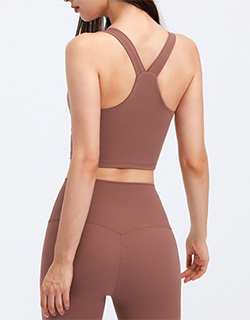
The Complete Guide to Custom Activewear Manufacturing: From Idea to Delivery
Direct answer: Custom activewear manufacturing moves from a controlled brief and specification through sampling, bulk production, inspection and delivery. Approve each gate in writing before committing the next tranche of money or material.
Direct answer
Custom activewear manufacturing turns a product concept into repeatable, saleable garments through eight controlled stages: project definition, technical specification, material and construction review, quotation, sampling, pre-production approval, bulk production and quality control, and shipping. The safest route is to approve each stage in writing before committing the next tranche of money or material.
For Ohsure projects, current public pages list a standard bulk MOQ of 100 pieces per style per color, with sizes mixed within that style-color combination, and a typical sample delivery time of 7–12 days. These are planning references, not a universal quotation. Fabric minimums, custom colors, construction, decoration, testing, packaging, revisions and destination can change quantity, cost and timing.
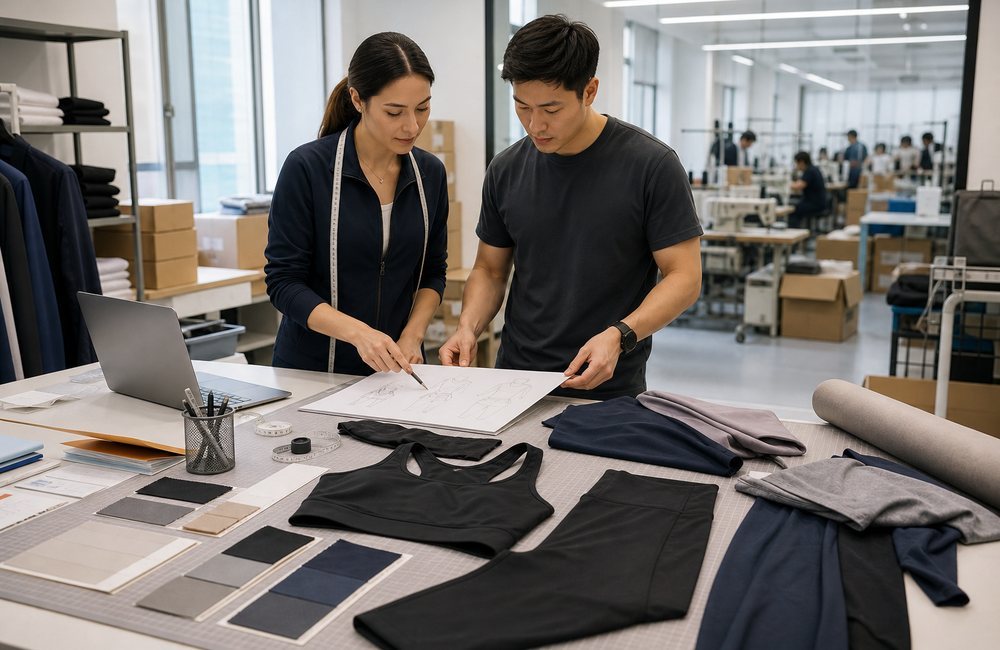
Custom activewear manufacturing at a glance
| Stage | Buyer input | Manufacturer output | Approval evidence |
|---|---|---|---|
| 1. Product brief | Customer, use case, range, target cost and date | Feasibility questions and project route | Dated brief with open decisions |
| 2. Technical specification | Sketches, measurements, construction and branding | Tech review and pattern plan | Version-controlled tech pack |
| 3. Materials | Composition, GSM, stretch, hand feel and test needs | Fabric, trim and color options | Approved swatch, material code and color |
| 4. Quote | Quantity by style, color and size; delivery country | Price, MOQ, lead-time assumptions and terms | Comparable written quotation |
| 5. Sampling | Feedback by measured checkpoint | Prototype, fit or pre-production sample | Signed sample comments and final approval |
| 6. Pre-production | PO, size ratio, artwork and packaging | Production file and material approvals | Approved PP sample and order specification |
| 7. Bulk and QC | Inspection standard and tolerance | Cutting, decoration, sewing, finishing and inspection | QC records and corrective actions |
| 8. Shipping | Labels, cartons, documents and trade term | Packing list and shipment handover | Quantity reconciliation and shipping documents |
1. Define the commercial brief before designing details
A factory cannot optimize a product without knowing what success means. State the target customer, activity, climate, price position, sales channel, first-order quantity and required arrival date. A yoga legging intended for studio use has different opacity, recovery and seam requirements from a running tight or maternity legging.
Separate requirements into three classes: must have, preferred and open to factory recommendation. This gives the manufacturer room to propose an achievable material or construction without quietly changing a critical feature.
2. Choose OEM, ODM or private label deliberately
| Route | What the buyer supplies | Best fit | Main control point |
|---|---|---|---|
| OEM / cut-and-sew | Original design and detailed specifications | Brands needing differentiated fit or construction | Tech pack accuracy and sample approval |
| ODM | Concept and desired modifications | Teams needing design and development support | Ownership, originality and change record |
| Private label | Branding, colors and packaging for an existing base | Fast validation with lower development complexity | Base-style availability and repeat-order continuity |
The labels are used differently across suppliers. Ask the manufacturer to describe the actual work included, the ownership of patterns and artwork, and what can be reused for future orders.
3. Build a production-ready tech pack
A useful tech pack is a controlled instruction set, not a mood board. It normally includes front and back flats, construction callouts, bill of materials, measurement chart with tolerances, size range and grading rules, color references, logo files and placements, label and packaging specifications, and a revision log.
- Use a style code and revision date on every file.
- Measure from named points and show how each point is taken.
- Specify fabric performance as well as composition.
- Provide vector artwork and actual logo dimensions.
- Mark unresolved decisions instead of allowing assumptions.
4. Select fabric by use case and test method
Composition alone does not predict performance. Two nylon-elastane fabrics can differ in weight, knit, stretch direction, recovery, opacity, abrasion resistance, pilling, colorfastness and hand feel. Evaluate a coded swatch and keep that material identity in the production specification.
| Requirement | Question to define | Possible evidence |
|---|---|---|
| Coverage | Must it remain opaque at the intended stretch? | Stretch-opacity or squat assessment under controlled light |
| Recovery | How quickly should it return after extension? | Dimensional and recovery test |
| Moisture management | Is wicking or quick drying required? | Named laboratory or agreed comparative method |
| Color durability | What wash, rubbing and perspiration exposure applies? | Colorfastness test with acceptance level |
| Surface durability | Where will friction occur? | Pilling or abrasion test appropriate to the product |
Ohsure's public custom-manufacturing page lists cotton, nylon, polyester, elastane blends, bamboo, rayon, recycled fabrics and organic cotton among available routes. For custom colors, it describes lab-dip approval before bulk dyeing. Confirm the exact fabric code, supplier, color route and repeat-order status in the project record.
5. Compare quotations on the same basis
A unit price is meaningful only when its scope is known. Record the currency and trade term, then identify whether the price includes pattern work, samples, fabric, trims, decoration, labels, packaging, testing, inspection, cartons, freight, duties and taxes.
A simple planning model is: landed project cost = development + bulk goods + testing/inspection + packaging + freight + duties/taxes + contingency. Divide the landed project cost by the number of saleable units—not merely the ordered units—to estimate landed cost per saleable garment. This is a planning formula; use current quotations and local import advice for real decisions.
6. Treat sampling as risk reduction
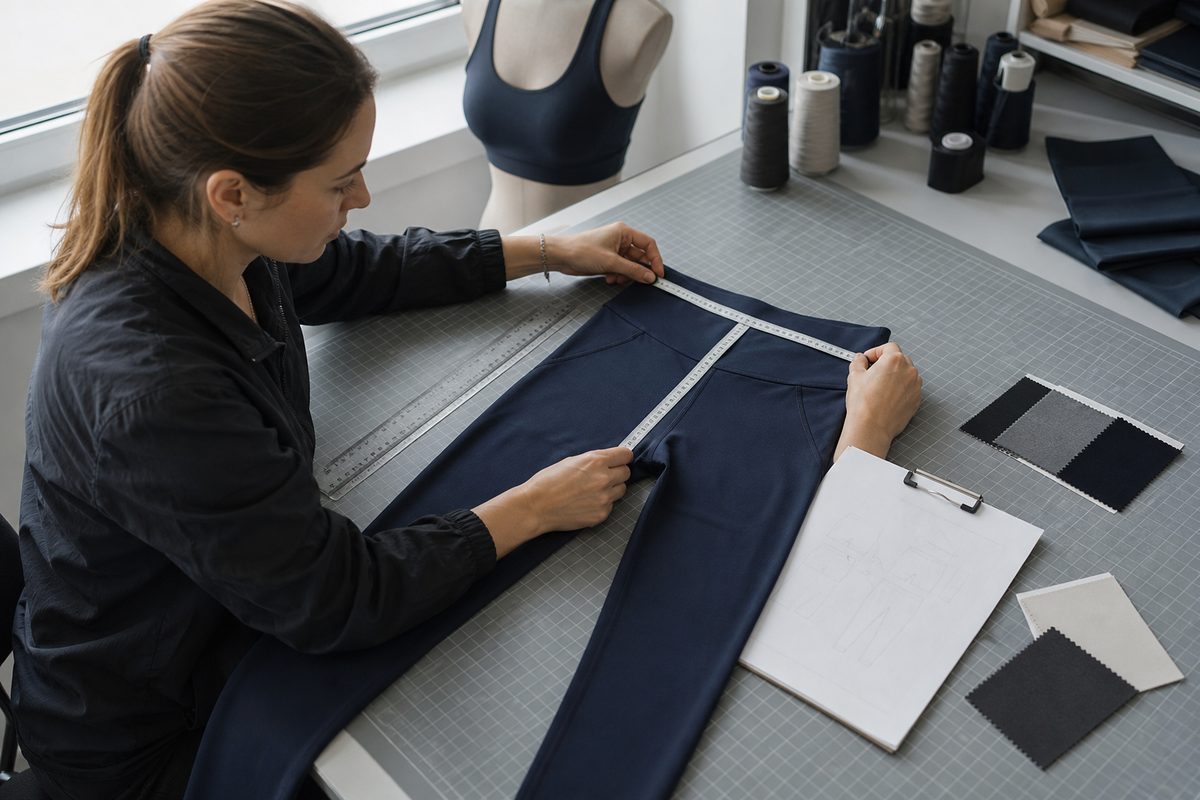
Sampling should resolve fit, function, construction, appearance and manufacturability before bulk cutting. Ohsure's public sample guidance describes a sequence from concept and material selection to pattern/prototype, testing and pre-production approval. Its homepage states that sample delivery is usually 7–12 days. Revision cycles, custom materials and shipping can extend the overall development calendar.
- Review the sample against the current tech-pack version.
- Measure every agreed point rather than relying only on appearance.
- Test the garment in the intended movement and care conditions.
- Annotate photos and consolidate feedback into one document.
- State which points pass, fail or remain open.
- Approve a named final sample as the bulk reference.
7. Freeze the pre-production specification
Before bulk production, reconcile the purchase order, approved sample, bill of materials, measurement chart, grading, color, artwork, labels, packaging, size ratio and delivery terms. If any approved sample component cannot be used in bulk, require a documented substitution and reapproval before cutting.
This is also the point to define production timing. A quoted lead time should state its start condition—such as receipt of deposit, final sample approval and arrival of materials—and should distinguish manufacturing time from international transit and customs clearance.
8. Control bulk production and quality
Quality control should compare production with the approved specification at several points. Ohsure publicly describes fabric inspection before cutting, checks of printing or embroidery before sewing, and inspection of finished garments for measurements and sewing before packing. The buyer should still agree the sampling plan, tolerances, defect definitions, reporting method and remedy for non-conformance.
- Incoming: verify fabric, shade, trims and artwork materials.
- Pre-line: confirm cutting, decoration placement and construction instructions.
- In-line: detect repeat defects early enough for correction.
- Final: verify measurements, workmanship, appearance, quantity and packing.
- Release: close corrective actions and reconcile documents before shipment.
9. Plan packaging, freight and delivery as part of the product
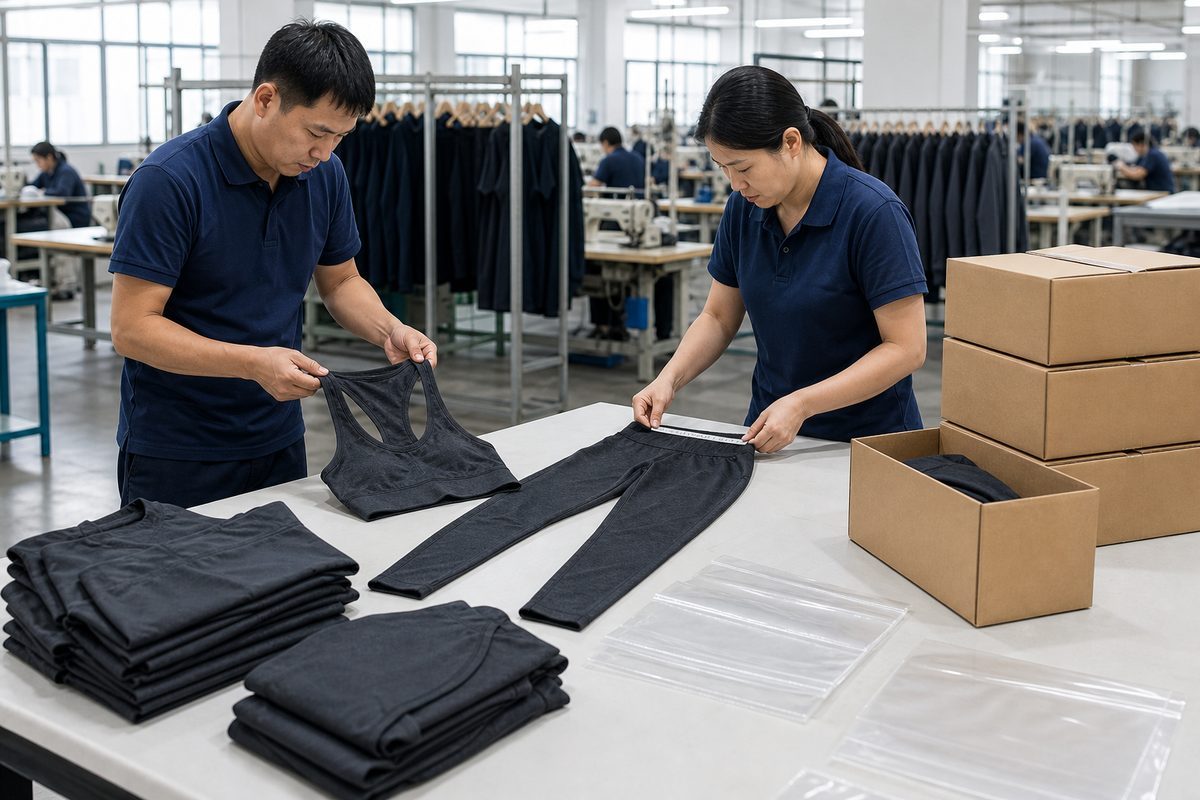
Provide folding method, label placement, polybag or alternative packaging, barcode data, carton limits and shipping marks. Confirm who books freight, who handles export and import formalities, when risk transfers, and which documents are supplied. Delivery date means the date goods reach the agreed place—not merely the factory completion date.
Original tool: manufacturing project readiness score
Score each line from 0 to 2: 0 = undefined, 1 = partly defined, 2 = approved and documented. A score below 12 suggests that a reliable bulk quote is premature; 12–16 supports sampling with open items tracked; 17–20 indicates a stronger basis for pre-production review. This is a planning aid, not a guarantee of production success.
| Readiness item | 0 | 1 | 2 |
|---|---|---|---|
| Target customer, activity and price position | Unknown | Broadly described | Written and agreed |
| Style sketches and construction | References only | Partial callouts | Controlled tech pack |
| Measurements and grading | Absent | Base size only | Chart, POM and tolerances |
| Fabric and performance | Composition only | Swatch shortlisted | Coded fabric and tests approved |
| Colors and branding | Concept only | Artwork supplied | Color and placements approved |
| Quantity plan | Total estimate | By style/color | By style/color/size |
| Cost scope | Target only | Unit quote | Comparable landed-cost model |
| Quality plan | “Good quality” | General checks | Tests, tolerances and remedies |
| Packaging and compliance | Unknown | Partly specified | Destination-ready requirements |
| Calendar and approvals | Launch wish | Milestones listed | Owners, gates and buffers agreed |
Common failure modes
- Requesting a final quote from reference images without specifications.
- Approving fit visually without measurements or movement testing.
- Adding colors after quotation without recalculating MOQ and material minimums.
- Using the approved sample but changing bulk fabric, decoration or trims.
- Assuming “production time” includes material procurement and international delivery.
- Comparing ex-factory and delivered prices as though they contain the same costs.
- Shipping without a written final inspection and quantity reconciliation.
Frequently asked questions
How much information do I need before contacting a manufacturer?
You can start with a clear concept, reference images, target quantity, price position and delivery country. For a dependable quote and sample, add measurements, fabric performance, construction, artwork, labels and packaging requirements.
What is Ohsure's standard MOQ?
Its current public pages state 100 pieces per style per color, with mixed sizes. Confirm the exact counting rule after the factory reviews your materials, colors, construction and branding.
How long does a custom activewear sample take?
Ohsure's homepage currently states sample delivery is usually 7–12 days. Total development time can be longer when fabric sourcing, custom dyeing, revisions, tests or international shipping are required.
Should I choose stock fabric or develop a custom fabric?
Stock or already-approved material can reduce development time and minimum-risk. Custom knitting, finishing or dyeing may provide differentiation but can add mill minimums, testing and calendar risk.
When is a sample ready for bulk production?
When fit, measurements, fabric, color, construction, branding and packaging are approved against one dated specification and unresolved changes are closed or explicitly recorded.
How should I compare two factories?
Give both the same specification and quantity matrix, then compare sample accuracy, material traceability, QC plan, communication, lead-time assumptions, cost inclusions, capacity evidence and remedies—not unit price alone.
What should be inspected before shipping?
At minimum: workmanship, measurements, appearance, color, decoration, labels, packaging, quantities and cartons against the approved sample, purchase order and inspection standard.
Bottom line
A successful custom activewear project is a sequence of documented decisions. Define the use case, control the tech pack, approve a coded material and sample, compare costs on the same basis, freeze pre-production details, inspect bulk goods and plan delivery with realistic buffers. Ohsure's published services cover design support, fabric sourcing, branding, production, inspection, packaging and logistics; the written project quotation and approvals should define what applies to a specific order.
To prepare your own brief, review Ohsure's Products, read About Us, or use Contact Us to confirm the current production route.