
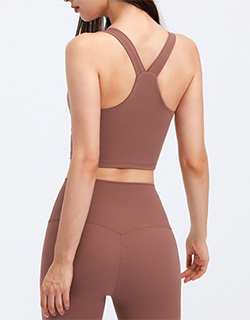
Activewear Manufacturing Cost Calculator: Estimate Your First Collection
First-collection planning tool
Estimate the Manufacturing Budget Before You Request Quotes
Estimate a first activewear collection by separating repeating garment costs from one-time development, minimum-order exposure, quality control and logistics. The practical planning formula is: total collection budget = bulk production + branding and packaging + development + testing and inspection + freight and import costs + contingency. Use accepted sellable units—not merely ordered units—when calculating the final cost per piece.

Activewear Manufacturing Cost Calculator
Enter your own figures in a spreadsheet or quotation comparison sheet using the rows below. Supplier prices differ by product, material, construction, quantity, branding, destination and delivery term, so the calculator uses buyer-supplied inputs rather than universal market averages.
| Input | How to calculate it | Example input |
|---|---|---|
| Ordered units | Total pieces across approved style-color-size combinations | 300 units |
| Bulk garment unit price | Quoted cut-and-sew price including the stated fabric and trims | $12.80 |
| Branding and packaging per unit | Logo application, labels, hangtags, bags, stickers and barcodes | $1.45 |
| One-time development | Patterns, samples, revisions, courier and logo setup not credited later | $750 |
| Testing and inspection | Laboratory work, pre-shipment inspection and any planned retest allowance | $420 |
| Freight, duty and clearance | Shipping, insurance, duty, brokerage and delivery to your warehouse | $1,350 |
| Contingency rate | Planning reserve applied to the subtotal for defined uncertainty | 8% |
| Expected reject or shortage rate | Planning allowance used to estimate accepted sellable units | 3% |
Production subtotal = ordered units × (bulk garment unit price + branding and packaging per unit)
Pre-contingency subtotal = production subtotal + development + testing and inspection + freight, duty and clearance
Estimated total budget = pre-contingency subtotal × (1 + contingency rate)
Accepted sellable units = ordered units × (1 − expected reject or shortage rate)
Estimated cost per sellable unit = estimated total budget ÷ accepted sellable units
Worked Example for a 300-Piece First Collection
Using the illustrative inputs above, production equals 300 × ($12.80 + $1.45), or $4,275. Adding $750 development, $420 testing and inspection, and $1,350 logistics produces a $6,795 pre-contingency subtotal. An 8% reserve brings the estimated budget to $7,338.60.
With a 3% reject or shortage allowance, the plan expects 291 sellable units. The estimated cost becomes $25.22 per sellable unit. These figures demonstrate the method only. They are not Ohsure quotations, recommended retail prices or general market benchmarks.
Define the Collection Before You Enter Costs
A total quantity can hide the structure that drives manufacturing cost. A 300-piece order might be one style in one color, or three styles in two colors with five sizes. The second plan creates more pattern work, material allocation, cutting bundles, labels, approvals and production changeovers.
Style and color count
List every unique style-color combination. Confirm whether the manufacturer's MOQ applies per style, per color or to the entire order.
Size ratio
Allocate quantities by size before requesting a final quote. Large sizes and an uneven ratio can change fabric consumption and marker efficiency.
Material route
State the fabric article, composition, weight, finish and color route. In-stock material and custom dyeing create different minimums and cash exposure.
Use the detailed guide to check whether your MOQ is counted per style, color or size, then compare in-stock and custom-dyed fabric before locking the material input.

Costs That Belong Outside the Garment Unit Price
| Cost group | Typical scope question | Budget treatment |
|---|---|---|
| Development | How many samples and revision rounds are included, and which fees are credited? | Keep one-time costs visible instead of hiding them in the bulk unit price. |
| Excess materials | Does the paid fabric or trim minimum exceed planned consumption? | Record ownership, usable balance, storage terms and likely reorder use. |
| Testing | Which tests are required for the product and target market? | Budget the agreed scope, sample dispatch and possible retest responsibility. |
| Inspection | Who inspects, at which production stage, and under what sampling plan? | Add the inspection fee and any travel or reinspection charges. |
| Logistics | What is the named handover point and delivery term? | Include every cost from that point to the final warehouse. |
| Payment and currency | Which currency, deposit schedule and bank charges apply? | Model conversion, transfer charges and timing separately. |
How to Compare Supplier Quotes
- Normalize the product specification. Send every supplier the same construction, fabric, size range, branding and packaging scope.
- Normalize quantity structure. Compare the same style-color-size quantities, not only the same total pieces.
- Separate fixed and repeating costs. Identify sample, pattern, logo setup and testing charges separately from per-piece costs.
- Normalize the delivery boundary. A factory-gate price and a delivered warehouse cost are not directly comparable.
- Use accepted sellable units. Include the agreed quality standard and a reasonable planning allowance for shortages or rejected pieces.
- Record exclusions. Ask each supplier to state what the quote does not include and how long the price remains valid.
For more detail, use the guide to sample, fabric and branding cost allocation and compare the output with the 100-piece custom activewear budget framework.
Frequently Asked Questions
Is this calculator a supplier quotation?
No. It is a planning framework using the buyer's own inputs. A final quotation requires a defined specification, quantities, material route, branding, packaging, quality scope, destination and delivery term.
Should I enter MOQ or my sales forecast?
Enter the actual quantity you intend to order, then confirm it satisfies every relevant garment, fabric, color, logo, label and packaging minimum. Model the sales forecast separately.
Why calculate cost per sellable unit?
Budget and margin depend on units available for sale. A shortage or rejected quantity spreads fixed and total costs across fewer acceptable pieces.
Should leftover fabric count as zero cost?
No. Record the cash paid and assess whether the balance is owned, usable, correctly stored and likely to support a future reorder. Do not assume it retains full value.
How much contingency should a startup use?
There is no universal percentage. Base the reserve on unresolved specifications, currency exposure, testing risk, freight uncertainty and the maturity of the supplier relationship. Keep the chosen rate visible.
Can the lowest calculated cost identify the best supplier?
No. Compare specification compliance, sample quality, communication, lead-time assumptions, quality controls, delivery boundary and commercial terms alongside cost.
Planning Rule
Do not start with a target unit price and force every unknown into it. Define the collection, collect comparable inputs, show fixed and repeating costs separately, add the full logistics path, and divide the final budget by expected sellable units. The estimate then becomes a useful decision tool instead of a misleading headline number.