
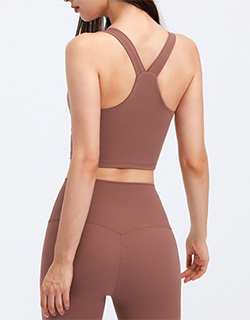
How Long Does Custom Activewear Manufacturing Take? Complete Timeline Guide
CUSTOM ACTIVEWEAR MANUFACTURING TIMELINE
How long does custom activewear manufacturing take? A realistic first-order program usually needs about 8–14 weeks from a confirmed brief to warehouse arrival. The exact schedule depends on sample revisions, fabric availability, order complexity, factory capacity, quality approval and shipping method. Ohsurewear publicly states that a first sample commonly takes about 7–10 working days and custom gym wear bulk production typically takes 25–40 days after sample approval. These are planning ranges, not unconditional delivery guarantees.
Custom Activewear Lead Time at a Glance
Lock specifications, materials, colors, branding and size requirements.
Pattern development, cutting, sewing, finishing and internal review.
Correct fit, construction, fabric, color or logo details before approval.
Material preparation, cutting, sewing, finishing, inspection and packing.
Transit varies substantially by courier, air freight, sea freight and customs.
Direct answer: If the design is production-ready, materials are available and one sample round is approved, the factory portion may be completed in roughly 5–8 weeks. For a first custom collection delivered internationally, an 8–14 week planning window is safer.
What Does Manufacturing Lead Time Actually Include?
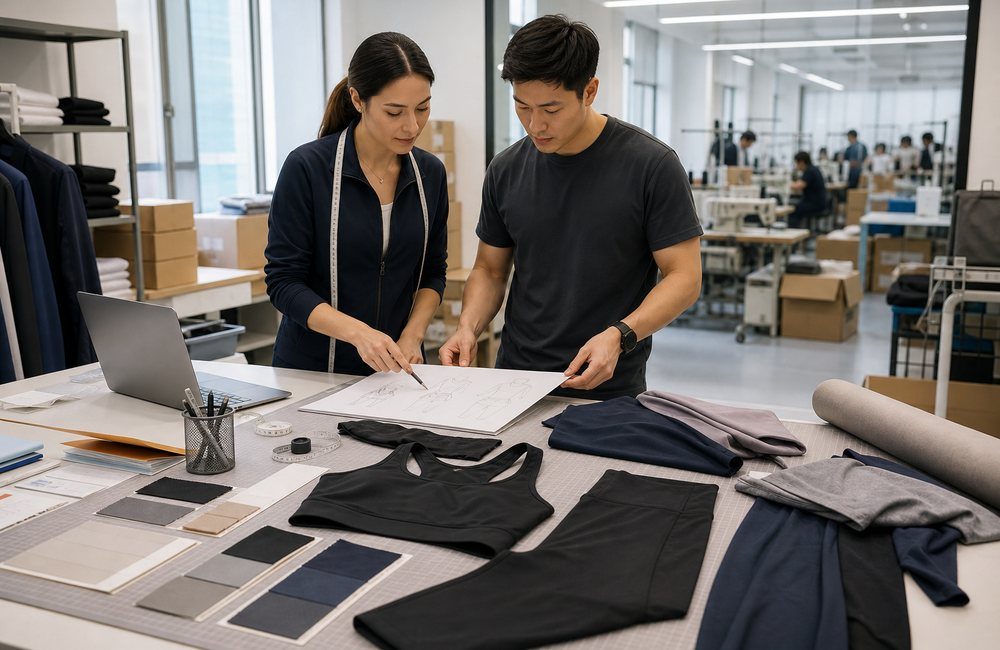
Custom activewear manufacturing lead time is not simply the number of days spent sewing garments. A reliable project calendar begins when the manufacturer receives a usable brief and ends when finished goods reach the buyer’s agreed destination. It should separate product development, approvals, production and logistics because each phase has a different owner and risk profile.
Brands planning their first order should start with a clear custom activewear manufacturing process. A complete tech pack, approved material references, size chart, logo files, packaging requirements and target delivery date allow the factory to identify dependencies before quoting a schedule.
Time used to turn the confirmed specification into a physical prototype. It may exclude courier transit and the buyer’s review time.
Time from final approval and order readiness to completed, inspected and packed garments.
The complete calendar from project brief through sampling, production, freight, customs clearance and warehouse receipt.
Stage-by-Stage Custom Sportswear Production Timeline
1. Product Brief and Tech Pack Confirmation: About 1–7 Days
The schedule becomes meaningful only after the product is sufficiently defined. The factory reviews garment sketches, measurements, construction, fabric composition and weight, color references, logo technique, label placement, packaging and order quantity. Missing decisions create open dependencies rather than production progress.
A simple private-label style based on an existing pattern can move faster than a fully custom compression garment, bonded jacket or engineered seamless product. When comparing estimates, confirm whether the quoted start date means inquiry receipt, deposit receipt, material confirmation or final pre-production approval.
2. Material Sourcing and Lab Dips: About 3–15+ Days
Available stock fabric may be confirmed quickly. Custom-dyed fabric, proprietary blends, special finishes, recycled-content documentation, custom elastic or unique trims can take longer. Lab dips, strike-offs and performance testing may also add approval cycles.
Fabric procurement is often on the critical path because pattern cutting cannot begin until the correct production material is available and accepted. Material minimums can also affect the activewear minimum order quantity, color allocation and purchasing plan.
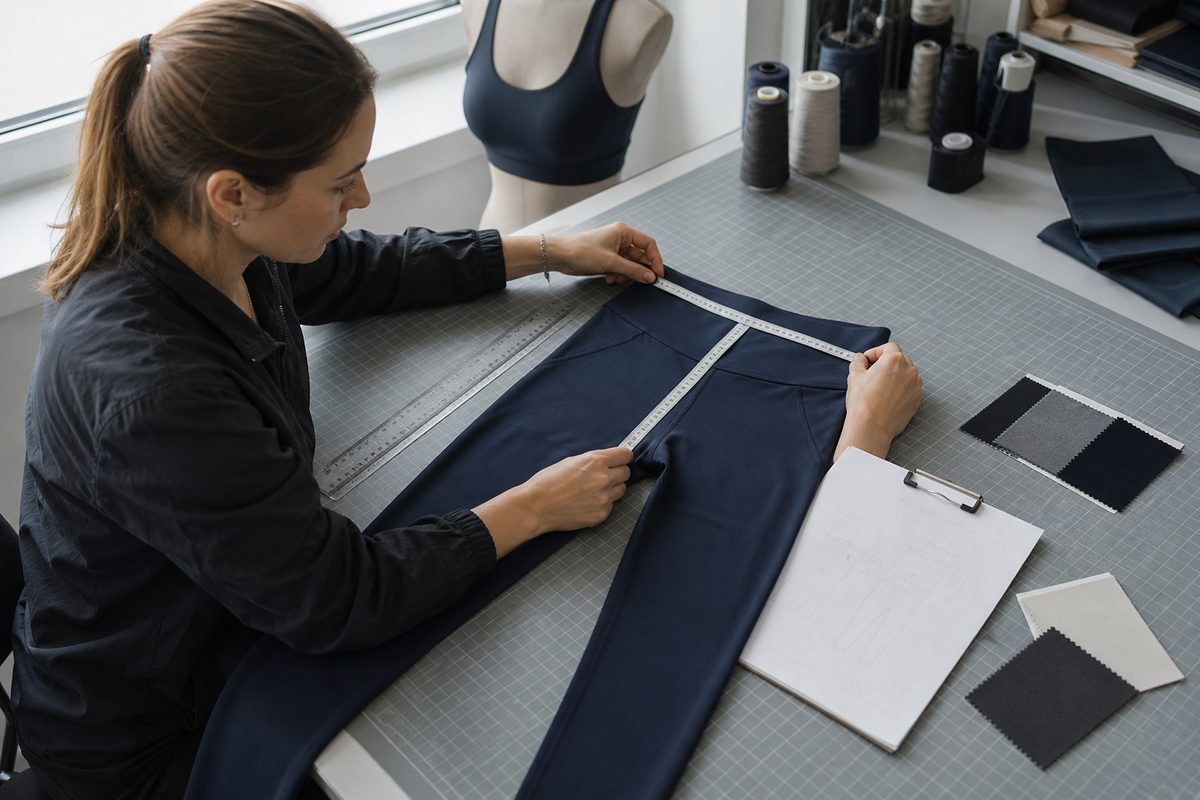
3. Initial Sample Development: About 7–10 Working Days
After specifications and workable materials are confirmed, the manufacturer develops or adjusts the pattern, cuts and sews the prototype, applies branding, finishes the garment and conducts an internal check. Ohsurewear’s public guidance commonly places initial sample development at approximately 7–10 working days, depending on complexity.
Ask what the term “sample” means in the quotation. A fit sample, size-set sample, color sample, sales sample and pre-production sample solve different problems. Courier time to the buyer and the buyer’s own wear-test period are usually separate from factory sample-making time.
4. Sample Review and Revisions: About 3–7+ Days per Round
The buyer should review measurements, fit, mobility, opacity, compression, seam comfort, stretch recovery, branding position and appearance after washing. Feedback is most efficient when it is consolidated into one annotated document with measurements and photographs.
One approval round keeps the timeline compact. Multiple decision-makers, incomplete comments or a change of fabric after fitting can restart earlier work. Production should not proceed on verbal approval alone: identify the approved sample version and record every accepted deviation.
5. Pre-Production Readiness: About 3–10+ Days
Before bulk cutting, the factory confirms the purchase order, deposit, color and size breakdown, bill of materials, labels, packaging, approved sample and inspection standard. Production fabric and trims may require incoming inspection. Custom material procurement may overlap earlier stages, but it should not be assumed to be complete without written confirmation.
The buyer can follow a documented activewear project workflow from inquiry to delivery to make responsibilities and approval gates visible.
6. Bulk Production: Typically About 25–40 Days After Approval
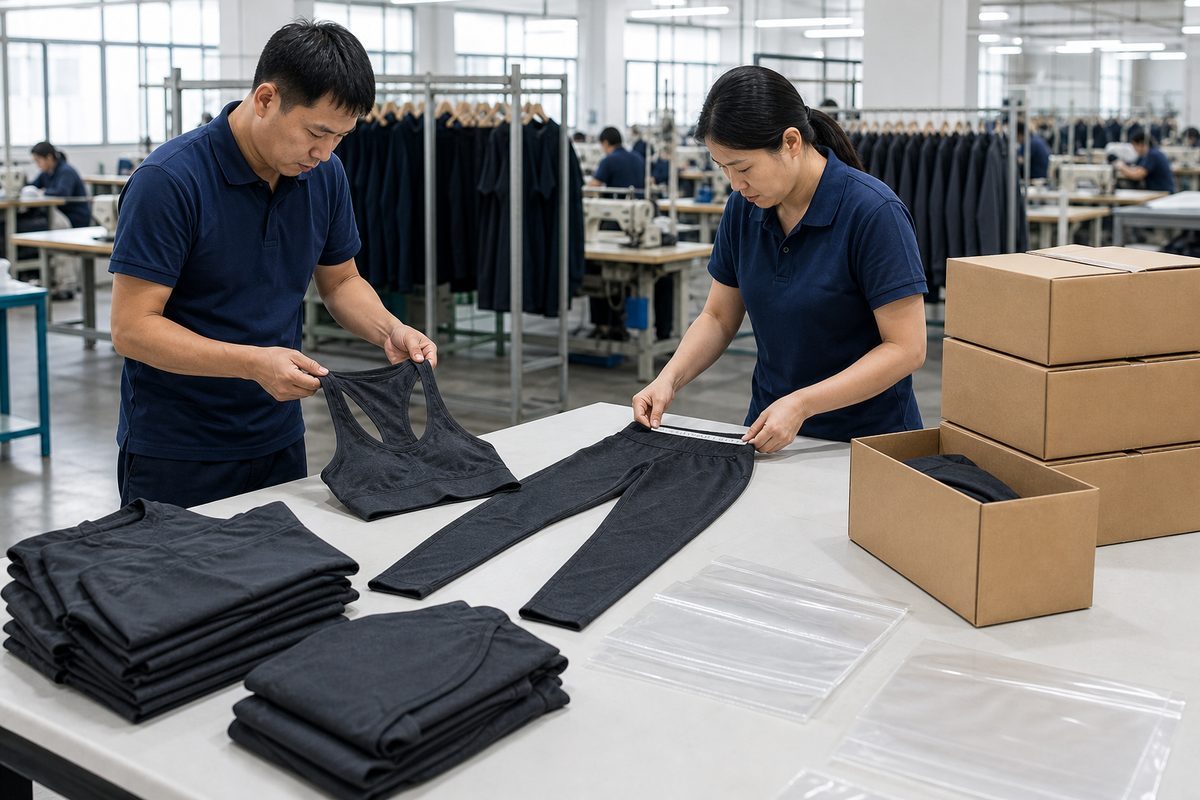
Ohsurewear’s published guidance states that custom gym wear bulk production commonly takes about 25–40 days after sample approval. The range can change with order size, number of styles and colors, construction complexity, material readiness and the factory’s confirmed production schedule.
Bulk production includes more than sewing. A practical production plan covers material release, spreading and cutting, bundling, printing or embroidery, assembly, in-line inspection, finishing, measurement checks, final inspection and packing. A quoted lead time should state whether quality inspection and packing are included.
Capacity is not the same as an available production slot
A factory may have substantial annual output but still have limited availability during a specific month. Review how activewear manufacturing capacity is calculated, then request a style-specific schedule tied to material readiness and final approval.
7. Quality Control and Packing: About 3–5 Days, Often Partly Overlapping
In-line checks should occur during manufacturing, while final inspection takes place when the order is sufficiently complete. The inspection plan may cover quantity, measurements, workmanship, color and shade, labeling, packaging and any agreed performance tests.
Do not compress inspection time merely to recover an earlier delay. Instead, define acceptance criteria at the beginning and use the factory’s fabric, sample and bulk production quality controls as checkpoints throughout the calendar.
8. Freight and Customs: About 5–40+ Days
Express courier or air freight may take roughly 5–10 days in suitable lanes, while sea freight commonly needs around 20–40 days or longer. These are broad planning ranges. Booking availability, origin handling, destination congestion, customs inspection, import documentation and last-mile delivery can change the result.
Specify the Incoterm, named place, cargo-ready date and who controls freight. “Production complete” is not the same milestone as “shipped,” “arrived at port,” “customs cleared” or “received at warehouse.”
Example Calendar: Working Backward from a Launch Date
Suppose a brand needs finished goods in its warehouse by 1 September. A safer planning calendar works backward from that warehouse date rather than forward from the day an inquiry is sent.
| Target milestone | Illustrative timing | Control question |
|---|---|---|
| Warehouse receipt | 1 September | Is time reserved for receiving and inventory checks? |
| Freight, customs and delivery | Early August onward | Which shipping method and Incoterm apply? |
| Final inspection and cargo ready | Late July | Who approves release, and what happens if defects are found? |
| Bulk manufacturing | Mid-June to late July | Is the production slot confirmed after all approvals? |
| Final sample approval | Early to mid-June | Is there enough time for one additional revision? |
| Development begins | May | Are the tech pack, materials and branding files ready? |
This is an illustration, not a promise for a specific order. A new collection with custom-dyed fabric or several sample rounds should begin earlier. Repeat orders using approved patterns and available materials may move faster.
What Makes Activewear Production Take Longer?
- Incomplete specifications: unclear measurements, construction or branding create repeated confirmation cycles.
- Custom materials: special yarns, dyeing, finishes, printed fabric and unique trims add supplier dependencies.
- Complex construction: seamless knitting, bonded seams, molded components and multi-panel compression designs require specialized processes.
- Too many SKUs: each style, color and size combination increases planning, material and quality-control complexity.
- Late design changes: changes after sample approval may affect patterns, consumption, price and production readiness.
- Peak-season capacity: public holidays, seasonal order concentration and booked lines reduce schedule flexibility.
- Testing or compliance: buyer-specific lab tests, labeling checks and market requirements need explicit time.
- Slow approvals: the factory cannot control the time a buyer takes to review samples, colors or documents.
- Failed inspection: sorting, repair, replacement or reinspection can delay cargo release.
- Freight disruption: missed cutoffs, vessel changes, customs holds and last-mile constraints occur after manufacturing.
How to Reduce Lead Time Without Increasing Quality Risk
- 01Send a production-ready brief.
Include the tech pack, measurement chart, reference sample, fabric requirements, Pantone colors, artwork, packaging and forecast quantity.
- 02Separate required features from preferences.
This helps the manufacturer propose available materials or construction alternatives when a component would delay the critical path.
- 03Confirm one decision owner.
Consolidated feedback prevents contradictory comments and shortens sample approval cycles.
- 04Reserve materials and capacity deliberately.
Ask what payment, approval and documentation are required before fabric purchasing or line booking becomes firm.
- 05Use milestone-based reporting.
Track material readiness, cutting, in-line inspection, finishing, final inspection and cargo-ready status rather than relying on one final due date.
- 06Keep a launch buffer.
A buffer protects photography, wholesale delivery and campaign dates without forcing the factory to skip quality gates.
Speed also has a cost dimension. Use a complete custom activewear cost and landed-price calculation to evaluate rush materials, premium freight and the inventory impact of delayed delivery.
Frequently Asked Questions
How long does it take to make a custom activewear sample?
Ohsurewear publicly indicates that an initial sample commonly takes about 7–10 working days after workable specifications and materials are confirmed. Material sourcing, courier transit, buyer review and additional revisions may extend the total sampling phase.
How long does bulk activewear production take?
A practical Ohsurewear planning range is about 25–40 days after sample approval. The confirmed lead time should be written into the order and tied to material readiness, quantity, style complexity, production capacity, inspection and packing scope.
Can a custom activewear order be completed in 30 days?
It may be possible for a simple repeat style with approved patterns, available materials, an open production slot and fast shipping. Thirty days is generally aggressive for a first fully custom international order because sampling, approvals and logistics sit outside sewing time.
When does the factory lead-time clock start?
There is no universal start point. Confirm whether it begins after deposit, final sample approval, production material approval, purchase-order confirmation or receipt of all components. The order should state this milestone explicitly.
Does the quoted production time include shipping?
Usually not unless the quotation clearly says so. Separate the ex-factory or cargo-ready date from freight booking, international transit, customs clearance and final delivery.
What information is needed for an accurate lead-time estimate?
Provide the style count, order quantity, size and color breakdown, tech packs, fabrics, trims, branding methods, packaging, testing requirements, target market, delivery location and required warehouse date.
Key Takeaway
A realistic custom activewear timeline is a chain of approvals and dependencies, not one factory number. For initial planning, allow around 7–10 working days for the first sample, additional time for review and revisions, roughly 25–40 days for bulk production after approval, and a separate 5–40+ day logistics window. A complete first-order program often needs about 8–14 weeks from a confirmed brief to warehouse arrival.
Before committing to a launch date, ask for a written milestone schedule that names the start condition, material status, approval owner, production slot, inspection method, cargo-ready date and shipping assumption. That schedule is more useful than any generic promise of “fast delivery.”