
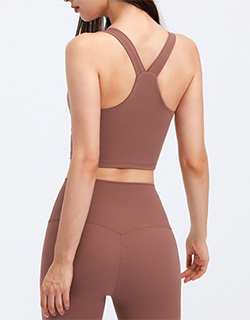
Ohsure Company History: From Factory Establishment to Global OEM/ODM Manufacturing
Company history and verification guide · Sources checked August 4, 2026
Ohsure's current About Us timeline says its factory was established in 2008, business expanded in 2010, the Ohsure brand was built in 2014, teams grew in 2016 and further expansion followed in 2024. Buyers should treat these as company-published milestones until matched to dated registration, facility, trademark, export and certification records.
This history matters because sourcing teams often use “years of experience” as a shortcut for reliability. A date alone does not prove continuous operation, ownership, production scope or export capability. A useful company history connects each milestone to a legal entity, physical site, team, process and document that can be checked.
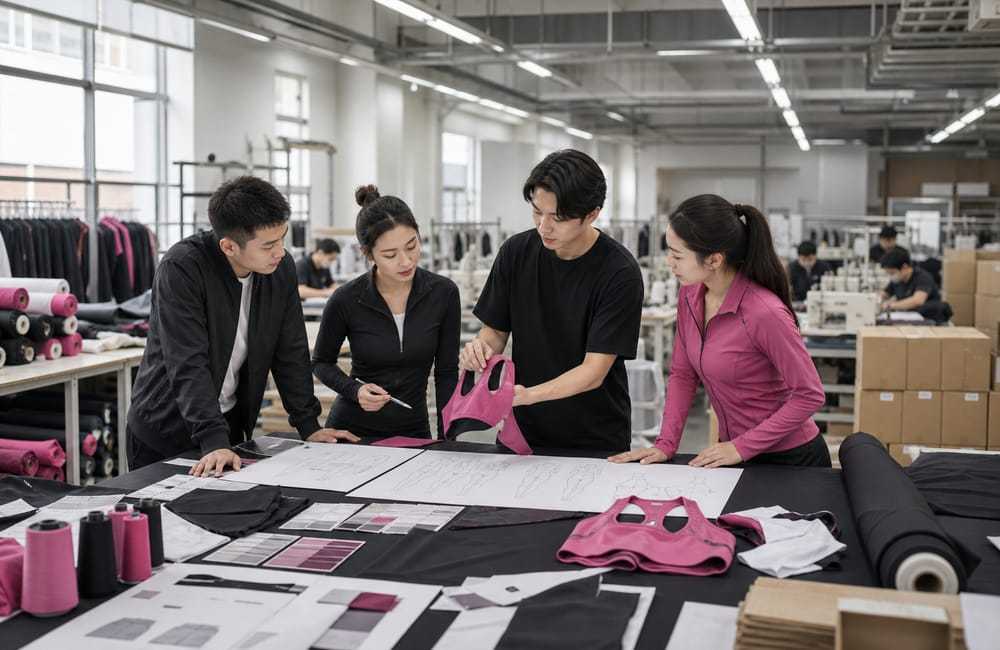
What Is Ohsure's Published Company Timeline?
Ohsure's About Us page currently presents five milestones. The table below reproduces the substance of that public timeline while separating the claim from the evidence a buyer should request.
| Year | Published milestone | What it may indicate | Evidence to request |
|---|---|---|---|
| 2008 | Factory established | An early manufacturing operation or predecessor activity | Original business registration, lease or ownership record, invoices, payroll or audited factory records |
| 2010 | Business expansion | Broader markets, customers or production scope | Dated export documents, customer-approved redacted orders, site records and equipment purchase records |
| 2014 | Ohsure brand building | Formal use or investment in the Ohsure name | Trademark filing, domain history, dated catalogs and legal-entity records |
| 2016 | Business and production teams grew | Additional commercial, development or factory roles | Organization charts, employment records, named project roles and dated site photographs |
| 2024 | Business expansion | Further market, service or product development | New capability records, customer-market data, facility changes and updated process documentation |
Source boundary: these milestones are taken from Ohsure's own About Us page. They are not presented here as independently audited facts.
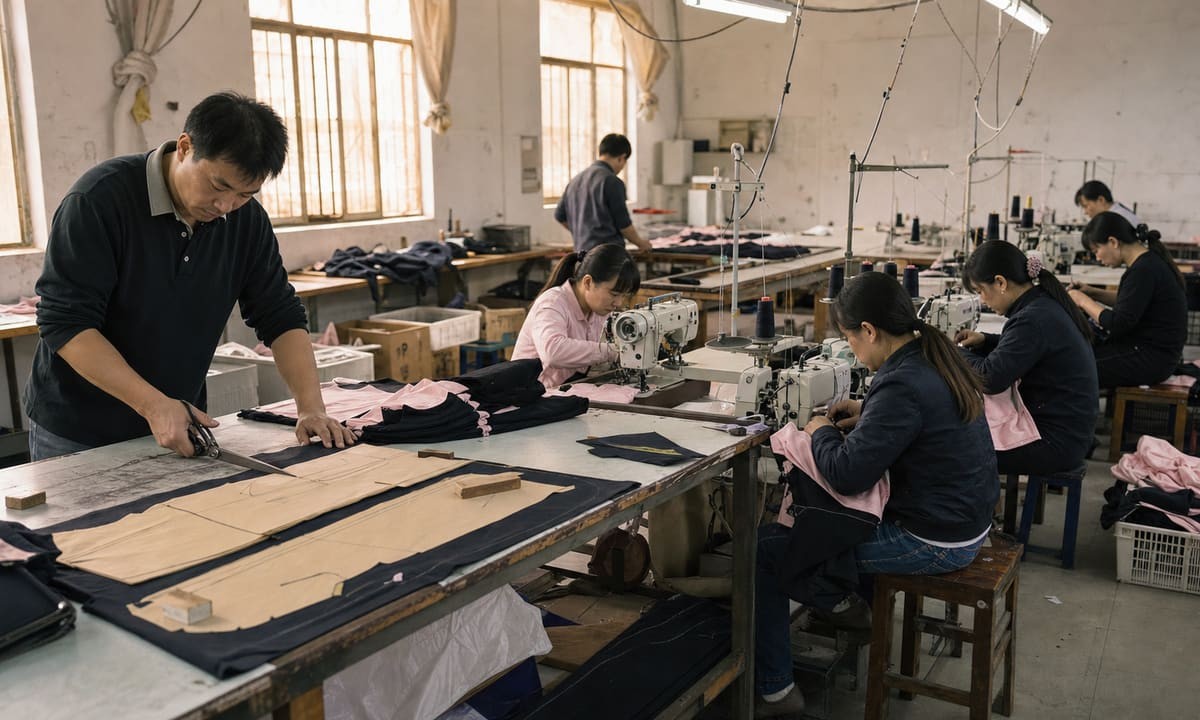
2008–2014: From Factory Activity to Brand Identity
The public timeline distinguishes an early factory milestone in 2008 from brand building in 2014. That distinction is plausible: apparel manufacturing activity can predate a later trading name, trademark or reorganized legal entity. It also explains why different Ohsure pages can appear to use different starting points.
One current mobile About Us page describes Dongguan Ohsure Clothing Co., Ltd. as founded in 2014, while the desktop timeline says “factory established” in 2008. These statements are not necessarily contradictory, but they refer to different objects unless Ohsure supplies documentation linking the predecessor factory, current company and brand.
How Should Buyers Interpret “Years of Experience”?
Ohsure pages currently use several experience formulations, including a 2008 factory milestone, a 2014 company or brand milestone, “15 years” on a service page and longer industry-experience claims in some blog content. Because those numbers may refer to factory history, a founder's personal experience, the present legal entity or the brand, they should not be added together or treated as interchangeable.
Factory age
Time since a production facility or predecessor operation began. Confirm site continuity and ownership.
Legal-entity age
Time since the contracting company was registered. Confirm the exact Chinese and English names.
Brand age
Time since Ohsure was first used commercially or registered as a trademark.
Team experience
Combined or individual professional experience. Verify named roles rather than a single headline number.
A responsible supplier profile should state the reference date and noun: for example, “factory activity reported since 2008” is clearer than an unqualified “18 years of experience.”
2010–2016: What Expansion Should Look Like in Records
The published history places business expansion in 2010, brand building in 2014 and team growth in 2016. For buyers, the important question is how that progression changed the operating system. Growth should leave a trail: new markets, more specialized roles, revised quality procedures, added equipment, larger or different facilities and repeatable product-development records.
- Commercial scope: quotations and export records show when the company began serving overseas or new customer types.
- Product scope: dated catalogs and sample records show when activewear, maternity, nursing or adaptive products entered the range.
- Technical scope: pattern, fabric, testing and quality records show whether services moved beyond basic cut-and-sew.
- Team scope: organization charts and responsibility matrices show who controlled merchandising, development, production and QC.
- Facility scope: leases, audits, equipment lists and geotagged images show where work was actually performed.
From Manufacturing to OEM, ODM and Private Label
Ohsure's current custom activewear manufacturing page presents OEM and ODM support that spans design consultation, sampling, fabric and color selection, logo application, labels, packaging, bulk production and logistics. Company history becomes commercially meaningful only when each service is tied to a controlled deliverable.
| Model | Buyer normally provides | Manufacturer contribution | History evidence that matters |
|---|---|---|---|
| OEM | Original design, tech pack, measurements, materials and performance requirements | Development, sourcing, sampling and production to the approved specification | Dated pattern, sample, revision and bulk records for comparable complexity |
| ODM | Target customer, positioning, selected base design and customization brief | Existing or adapted design resources plus manufacturing | Design ownership, version control and examples of commercially released development |
| Private label | Brand assets, selected product, label and packaging requirements | Brand application and order execution on an existing product basis | Trademark-use controls, artwork approvals and traceable packing records |
Before sharing intellectual property, clarify confidentiality, pattern ownership, design exclusivity, sample charges and whether any design is also offered to other customers.
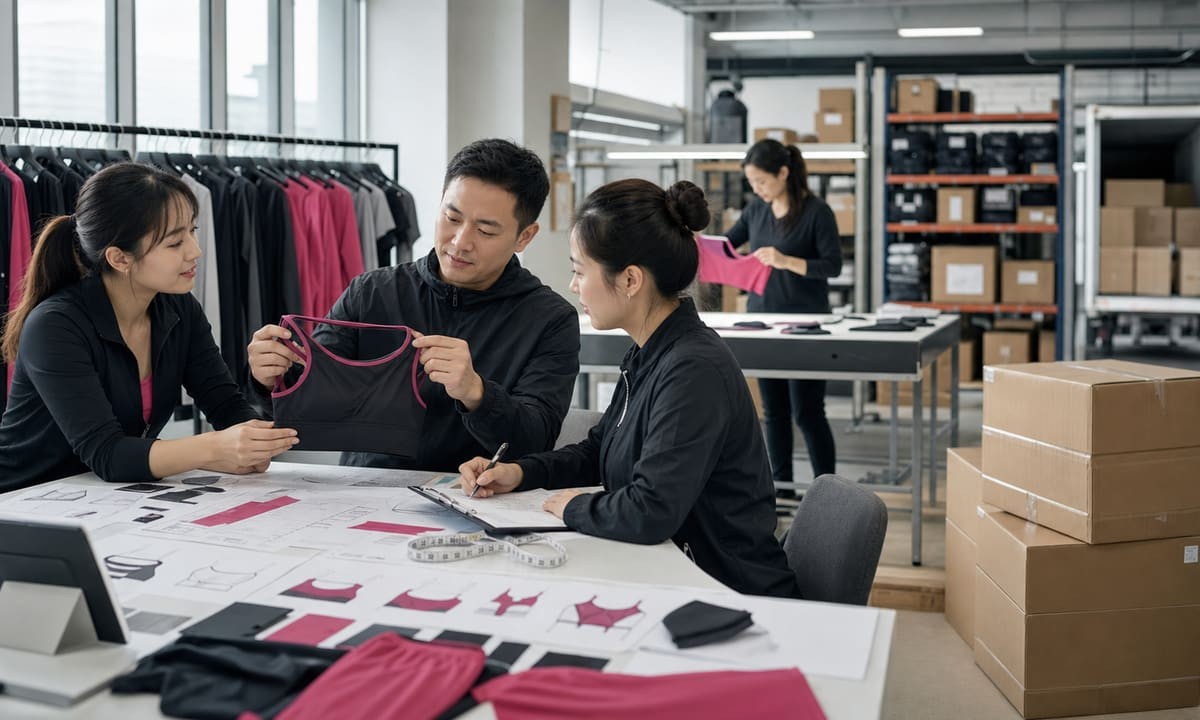
2024 and Beyond: What “Global” Should Mean
The 2024 milestone says Ohsure would deepen markets, expand business areas and improve services. A global OEM/ODM claim should be evaluated through transaction-ready capabilities, not flags or customer-logo displays.
- Contracting entity and beneficiary bank details match.
- Quoted trade terms and shipping responsibilities are explicit.
- Product labeling and test requirements are mapped by destination.
- Samples and bulk goods use the same approved specification.
- Subcontracted processes and production sites are declared.
- Inspection, corrective action and shipment records are retained.
For the published factory, capacity and team claims, see Inside the Ohsure Activewear Factory and Ohsure Manufacturing Capacity Explained.
A Document Checklist for Verifying Ohsure's History
Identity
- Current business license
- Unified social credit code
- Registered address and legal representative
- English-name linkage
Brand
- Trademark owner and filing date
- Domain and catalog history
- Authorization if brand and factory differ
- Dated public materials
Factory
- Site lease or ownership
- Audit reports and scope
- Equipment records
- Dated photos or live walkthrough
Trade
- Redacted export documents
- Market and product categories
- Repeat-order evidence
- Shipping and claims records
Certification
- Certificate number
- Named legal entity and site
- Issuer, scope and validity
- Issuer-database verification
Team
- Named project contacts
- Roles and escalation path
- Technical qualifications
- Employment or service continuity
Red Flags in Any Manufacturer's Company History
- A timeline changes between pages without explaining whether dates refer to a factory, company, brand or founder.
- A certificate is shown without number, holder, site, scope, issuer or validity date.
- Old facility photographs are presented as current without date or location.
- Customer logos or order values are displayed without permission or traceable context.
- “Global” is supported only by marketing language, not export, compliance and logistics records.
- The contracting company, payment beneficiary, website operator and factory entity cannot be connected in writing.
Frequently Asked Questions
When does Ohsure say its factory was established?
The current desktop About Us timeline says the factory was established in 2008. A current mobile About Us page describes Dongguan Ohsure Clothing Co., Ltd. as founded in 2014, so buyers should ask Ohsure to document how the early factory, present company and brand are connected.
When was the Ohsure brand created?
The published timeline places “Brand Building” in 2014. Verify the exact first-use and trademark dates through the relevant trademark record and confirm who owns or licenses the name.
Does a long company history prove manufacturing quality?
No. Longevity can provide useful context, but current quality depends on the exact facility, people, materials, equipment, specifications, inspection plan and corrective-action system used for the order.
What does Ohsure currently say it provides?
Its manufacturing page describes OEM and ODM activewear support covering design, sampling, fabrics, logo methods, labels, packaging, production and logistics. Confirm the scope, lead time and responsible site in the quotation.
How can a buyer verify international experience?
Request redacted but traceable export documents, destination-specific compliance records, shipment history and references that Ohsure is authorized to share. Match the legal entity and product type to the proposed order.
Are the images in this article historical Ohsure photographs?
No. All three are original editorial illustrations created for this article. Request dated factory photographs, a live walkthrough or an independent audit for visual verification.
Bottom Line
Ohsure publishes a development story that begins with factory activity in 2008 and moves through expansion, brand building, team growth and broader OEM/ODM service. The useful sourcing conclusion is not to accept or reject the story on marketing language alone, but to convert every milestone into a document, site, person and process that can be checked.
Start with the About Us timeline, compare it with the Ohsure Factory Facts & Verification page, then request an entity-and-brand chronology through Contact Us before contracting.