
Activewear Fabric Test Report: Nylon vs Polyester Blends
Activewear fabric comparison
Compare nylon-spandex and polyester-spandex as finished fabric candidates under the same test conditions. Record composition, construction, color, GSM and finishing before measuring stretch, recovery, moisture behavior and durability. Select against the garment brief and agreed limits; a fiber name or a single average cannot establish which candidate is suitable for production.
Report status: awaiting original test data. No traceable sample records or laboratory results have been supplied for this comparison. The tables below are a proposed report framework, not completed test results. No winning blend or product-performance claim is established.
1. Define the Question Before Selecting Samples
A fabric comparison can answer two different questions. A purchasing trial asks which available quality suits a particular garment. A controlled material study asks what changes when one material variable changes. The first can compare commercially different constructions, but it cannot attribute every performance difference to nylon or polyester alone.
Choose the intended activity, garment type, target fit, care label and required appearance first. If candidate A is brushed and heavier while candidate B is smooth and lighter, retain those differences in the report. Describe the outcome as a comparison of those finished qualities. Do not present it as proof that every fabric in one fiber family outperforms the other.
The nylon versus polyester selection guide helps build a shortlist. This report framework adds the evidence needed to assess actual candidates. The activewear fabric guide provides the broader specification context.
2. Establish a Traceable Sample Register
Assign a unique identifier to each physical sample before sending it to the laboratory. Keep the supplier declaration separate from any independently verified measurement. The labels N and P below identify proposed comparison groups only; they do not imply that samples have been received or tested.
| Required field | N: nylon-spandex candidate | P: polyester-spandex candidate |
|---|---|---|
| Supplier quality code, roll and lot | Awaiting sample record | Awaiting sample record |
| Declared composition and verification evidence | Awaiting composition record | Awaiting composition record |
| Knit structure, yarn details and finish | Awaiting construction record | Awaiting construction record |
| Color, dye lot and production stage | Awaiting lot record | Awaiting lot record |
| Measured mass per area (g/m²) and usable width | Not measured | Not measured |
| Fabric face, length and width directions | Awaiting marked sample | Awaiting marked sample |
| Received date, quantity and retained reference | Not recorded | Not recorded |
Photograph the sample label beside the material, and preserve the link between that label, the laboratory report and the retained swatch. Ask the laboratory how much material it needs for the selected tests and repeat measurements. Cutting several pieces from one small swatch does not establish consistency across multiple production rolls.
Use a matched sampling plan for the two candidates. Record where specimens were taken and which lots they represent. If only one lot per candidate is available, state that limitation explicitly. More readings from that lot improve the description of that lot; they do not automatically support a claim about the supplier’s entire output.
3. Agree Methods and Conditions Before Testing
Commission the same applicable procedure for both candidates. The laboratory should confirm the edition, amendments, material scope, specimen count, preparation and reporting requirements. Public method summaries identify the purpose of a test; they do not provide a complete execution procedure.
| Question | Method route to discuss | Record beside the result |
|---|---|---|
| Elasticity and related properties | ISO 20932-1, straight strip or loop procedure as applicable | Direction, geometry, loading conditions, cycle and recovery time |
| Abrasion to specimen breakdown | ISO 12947-2 Martindale procedure where applicable | Loading, abrasive, inspection intervals and endpoint |
| Liquid moisture management | AATCC TM195 | Selected indices, test face, conditions and individual results |
| Drying under a defined heated-plate setup | AATCC TM201 | Exact procedure, conditions, endpoint and reporting units |
| Pilling and surface change | AATCC TM195 is not a pilling test; agree a suitable pilling method separately | Method, exposure, rating scale and assessment photographs |
| Color, dimensions and care durability | Agree relevant colorfastness and laundering procedures | Care treatment, cycle count, conditioning and before/after records |
ISO 20932-1 covers fabric elasticity using strips or loops and excludes narrow fabrics. ISO 12947-2 concerns specimen breakdown under abrasion and excludes coated fabrics, including laminates. Confirm suitability if the candidate has a coating or laminate.
AATCC TM195 addresses liquid moisture management. The AATCC standards catalogue lists TM201 for heated-plate drying rate. Keep moisture transport, drying and abrasion as separate outputs. A good result in one does not supply a missing result in another.
Attach a conditions sheet identifying the laboratory, report number, instrument and verification records, conditioning environment, specimen dimensions, orientation and any deviations. For comparisons after washing, specify the care treatment before the test begins. Keep untreated reference material and distinguish unwashed, washed and reconditioned states in every file name and table.
4. Record Raw Results Before Writing the Conclusion
The result table deliberately contains no performance numbers. Replace each pending entry with traceable measurements only after the corresponding report is available. Record the agreed acceptance criterion alongside the result so the final decision can be checked without reconstructing an email conversation.
| Output | N candidate | P candidate | Decision basis |
|---|---|---|---|
| Mass per area, g/m² | Not tested | Not tested | Agreed specification and tolerance |
| Force at agreed extension, by direction | Not tested | Not tested | Same specimen geometry and working point |
| Residual growth after stated cycle and rest | Not tested | Not tested | Method definition and agreed limit |
| Liquid moisture management indices | Not tested | Not tested | End-use criteria for selected indices |
| Drying result under chosen procedure | Not tested | Not tested | Same conditions and units |
| Abrasion endpoint / pilling assessment | Not tested | Not tested | Separate criteria for each test |
| Color change / staining after specified treatment | Not tested | Not tested | Separate ratings and agreed minimums |
| Dimensional change after stated care exposure | Not tested | Not tested | Direction-specific limits |
| Garment fit, coverage and movement | Not assessed | Not assessed | Documented prototype protocol |
For numerical outputs, retain the individual readings, valid specimen count, summary statistic and a measure of variation appropriate to the method. Preserve the original units. For visual ratings, retain the individual assessments and the required reference photographs or rating basis rather than inventing decimal precision.
Use “not tested” when no test was performed, “not reported” when an expected field is absent from the supplied report, and “not applicable” only with a reason. None of these labels means zero or pass. If an instrument reaches its test limit without observing the endpoint, preserve the laboratory’s qualified notation instead of treating the limit as an exact failure value.
Investigate an unusual reading before excluding it. Retain the original value, reason for any exclusion, retest conditions and revised result. A tidy average should never hide a failure that matters to the garment brief.

5. Turn the Results Into an Application Decision
Use a decision sequence that keeps mandatory requirements separate from preferences. First verify sample identity and test comparability. Next apply the agreed acceptance rules. Then compare the candidates that remain acceptable on hand feel, appearance, price and sourcing practicality. Finally confirm the selected quality in a garment.
| Evidence pattern | Appropriate action |
|---|---|
| Mandatory result is missing | Keep that requirement unassessed and request the missing report |
| Tests use different procedures or conditions | Arrange a comparable retest before ranking the results |
| A candidate fails an agreed essential requirement | Investigate, revise or reject it for that application |
| Both meet essential requirements | Compare fit, appearance and commercial terms |
| Difference is small relative to observed variation | Avoid a definitive ranking without sufficient evidence |
| Fabric passes but prototype coverage is unacceptable | Review pattern, extension, color and construction together |
Define the acceptance rule before reading the results. A requirement may apply to every specimen, to a method-defined summary or to a stated proportion of a sample. Those are different rules. If the decision sits close to a limit, ask the laboratory how uncertainty and the agreed decision rule affect the conclusion.
For numerical measurements, an exploratory difference can be recorded as mean N minus mean P, in the original units. Its sign does not by itself mean better or worse. Higher force may be desirable for one fit brief and restrictive for another. Avoid converting ordinal appearance grades into a percentage performance advantage.
No application recommendation can yet be assigned to the two proposed candidates. The evidence fields are empty. When data becomes available, state the approved use, tested conditions and exceptions rather than declaring a universal winner.
6. Verify the Garment and Bound the Findings
Make prototypes from the identified fabric lots using recorded pattern revisions. Assess the intended size range, movements and care conditions. The stretch-recovery testing guide supports mechanical evaluation; the squat-proof assessment guide addresses coverage under a separate protocol.
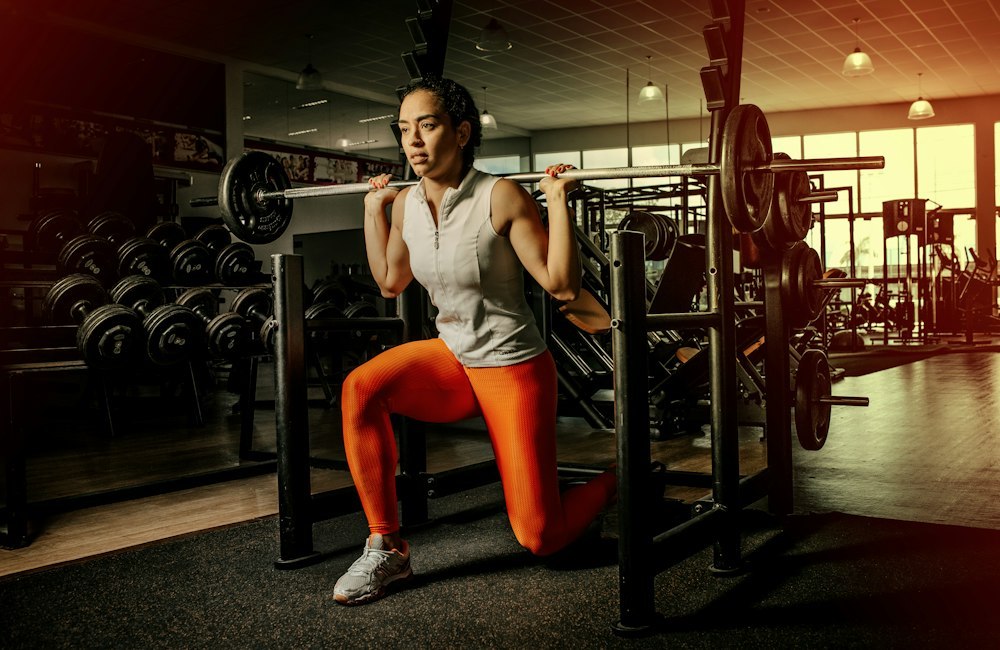
Keep observations such as waistband rolling, seam restriction, transparency and surface appearance separate from laboratory outputs. A test specimen has no waistband or seam, and its loading arrangement differs from that of a worn garment. A photograph of a person exercising also cannot verify the garment’s fiber composition or establish a measured performance result.
The eventual report should identify the tested lots and colors, sample count, test dates, laboratory scope, methods and deviations. State which sizes or exposures were not examined. Limit any conclusion to the tested materials and conditions unless additional evidence supports a broader claim.
This framework provides no evidence for medical compression, protection, sustainability certification or lifetime durability. Such claims require their own appropriate records and scope. Commercial availability, minimum quantities, prices and lead times also remain unconfirmed until the project team supplies a current quotation.
7. Prepare the Ohsure Review Package
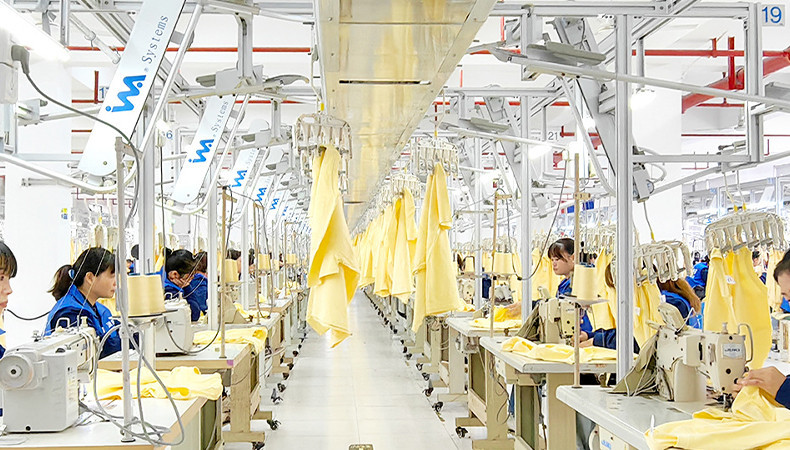
For an Ohsure sportswear development project, provide the garment brief, candidate fabric references, target colors, pattern or technical drawings, care instructions and acceptance criteria. Ask the team to confirm sample availability, the testing provider, costs, timing and who will approve the report. This is a proposed coordination workflow, not a claim that these tests have already been performed in-house.
Keep five linked records: the sample register, approved test plan, original laboratory reports, prototype assessment and signed material decision. Record the responsible reviewer and decision date. Preserve the approved sample so a later material substitution can be reviewed against a known reference.
Before bulk approval, identify which checks will be repeated on production material and how lots will be sampled. If a supplier changes yarn, finish, color process or construction, review whether the existing evidence still applies. Testing a development swatch does not automatically approve a changed bulk quality.
Frequently Asked Questions
Which blend won this comparison?
No winner has been established. Original sample records and measured results have not been supplied, so both candidates remain unassessed.
Can matching spandex percentages make the comparison fair?
Matching percentages alone is insufficient. Record construction, mass per area, finish, color, direction and test conditions; disclose any remaining differences.
Can a moisture-management result substantiate a quick-dry claim?
Use a drying procedure appropriate to the intended claim. Liquid transport and drying are separate measurements, even when both matter to comfort.
How many specimens should we test?
Use the selected method’s requirements and an agreed sampling plan. Also define how many lots and colors the conclusion is intended to represent.
Can we compare two supplier certificates directly?
Only after checking sample identity, methods, conditions, units and reporting basis. Missing or incompatible information may require a matched retest.
Can this document be published as an original data report now?
No. It currently documents the comparison framework. A completed original report requires traceable samples, test results, limitations and responsible technical review.
Report Responsibility and Source Scope
Method links above describe the purpose and scope of the proposed tests. Obtain complete applicable standards for laboratory execution. The sample register, result table and decision record are editorial templates; they contain no original experimental findings.